

Project Number: 5489
Adhesive Flash-Off Oven for Polyurethane Wheel Manufacturing
.webp?width=1400&name=5489%20KOOPS%20(3).webp)
.webp?width=1400&name=5489%20KOOPS%20(4).webp)
.webp?width=1400&name=5489%20KOOPS%20(5).webp)
.webp?width=1400&name=5489%20KOOPS%20(6).webp)
.webp?width=1400&name=5489%20KOOPS%20(7).webp)
Overview
This oven was developed as the adhesive flash-off stage within an automated polyurethane wheel manufacturing line. This part of the process required a dedicated low-temperature thermal module capable of safely removing adhesive-related volatile constituents before the next stage of manufacturing.
Although the oven operates at a lower temperature than adjacent preheat, cure, and post-cure systems in the line, it was engineered around a very specific duty. The process was not simply gentle warming — it was controlled volatile removal under Class A architecture, integrated into an automated production environment with indexed handling and transfer coordination.
The machine was designed as a stand-alone process module within the larger line. It accepts product from upstream automation, advances the load through a sequenced flash-off path, and discharges product in a prepared state for the next manufacturing operation — making it a critical transition point between upstream material-preparation activity and downstream polyurethane processing.
The customer process requirement was to provide a controlled flash-off stage for adhesive-related volatile material before downstream polyurethane wheel manufacturing steps. The process needed to remove unwanted volatile constituents without disrupting line timing, product sequencing, or automation flow.
Because the machine sat inside an automated production system, the oven had to function as more than a thermal enclosure. It had to accept product from transfer hardware, maintain repeatable conveyor positioning, coordinate with adjacent line equipment, and safely move product through a low-temperature volatile-management process.
PROCESS OBJECTIVE
- Remove adhesive-related volatile constituents before downstream polyurethane processing.
- Maintain controlled low-temperature airflow appropriate for solvent-bearing flash-off duty.
- Provide Class A safety architecture to manage adhesive-related vapors correctly.
- Function as a coordinated module within a fully automated production line rather than as a stand-alone oven.
HANDLING AND INTEGRATION REQUIREMENTS
- Accept product from upstream transfer hardware with repeatable conveyor positioning.
- Maintain line timing and product sequencing throughout the flash-off stage.
- Discharge product in a prepared state for the next downstream manufacturing operation.
- Coordinate with adjacent line equipment through line-level controls integration.
The oven was engineered around a low-temperature flash-off process operating at 105°F to 110°F with a 130°F maximum design temperature. Although the operating band is modest compared with surrounding cure and post-cure equipment in the line, the process required deliberate airflow and safety design because the machine serves a volatile-management function.
TEMPERATURE AND HEAT INPUT
- Operating temperature range: 105°F to 110°F.
- Maximum design temperature: 130°F.
- Total installed electric heat: 81 kW.
- Heat source: electric resistance heat.
AIRFLOW DELIVERY
- Recirculation fan: one New York Blower 278 PLR plug fan.
- Recirculation airflow: approximately 16,000 CFM.
- Airflow supports active low-temperature convection to complete the flash-off duty within production-line timing requirements.
PROCESS EXHAUST
- Exhaust provided through a PQ15 exhauster rated at approximately 920 CFM.
- Exhaust motor: 0.75 hp.
- Exhaust strategy, purge logic, and airflow verification governed by Class A architecture.
SAFETY CLASSIFICATION
- Class A oven design governs purge logic, airflow proving, process interlocks, exhaust sizing, and all safety-related design decisions.
- The Class A architecture applies specifically because the flash-off process involves solvent-bearing adhesive vapors.
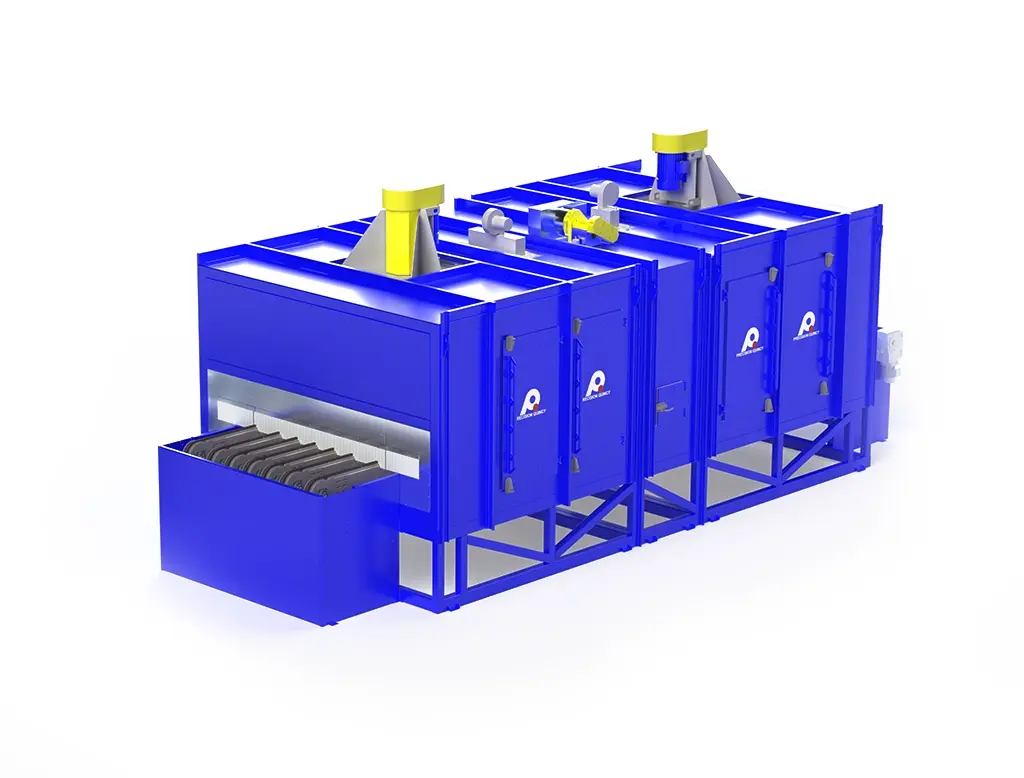
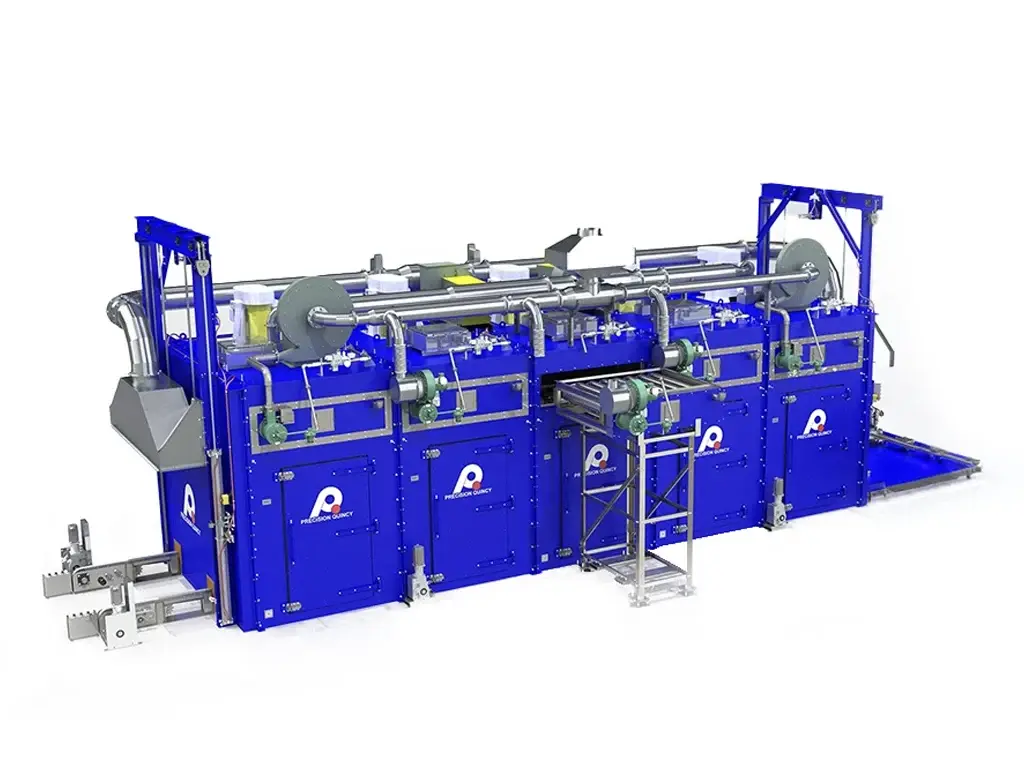
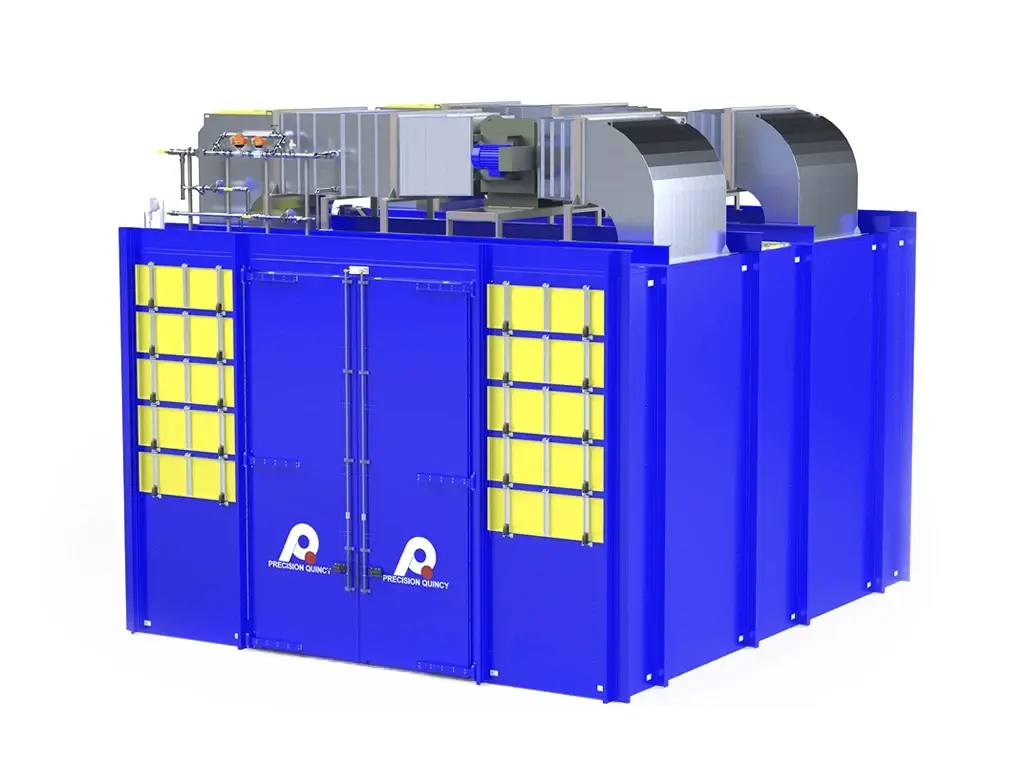
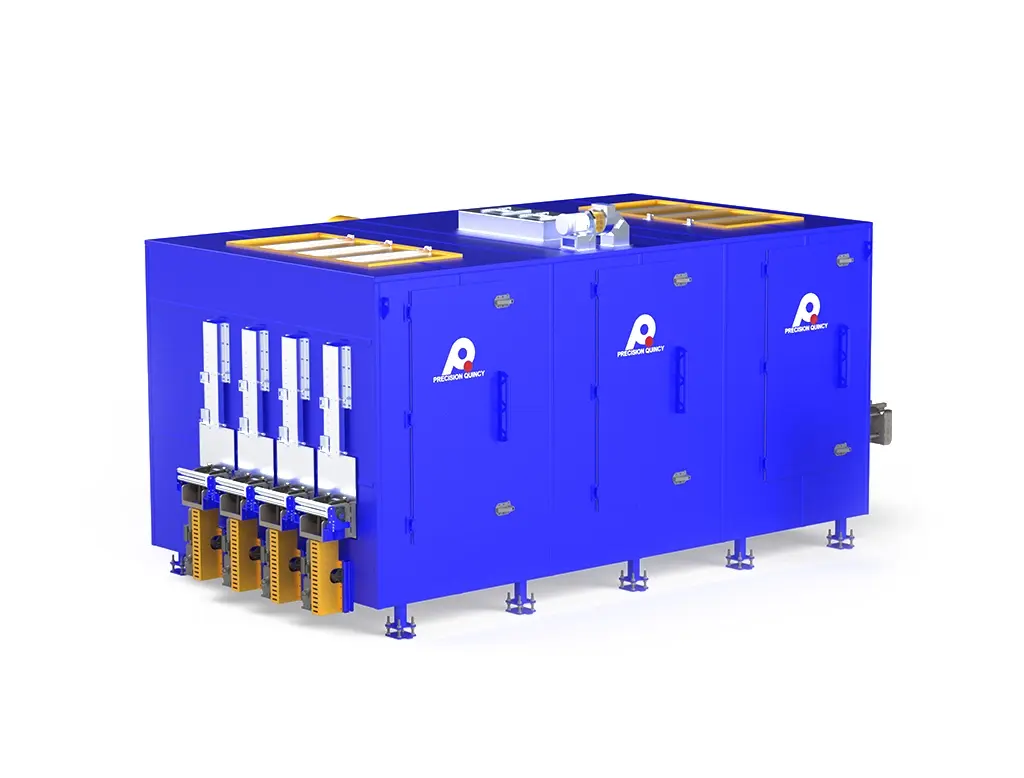
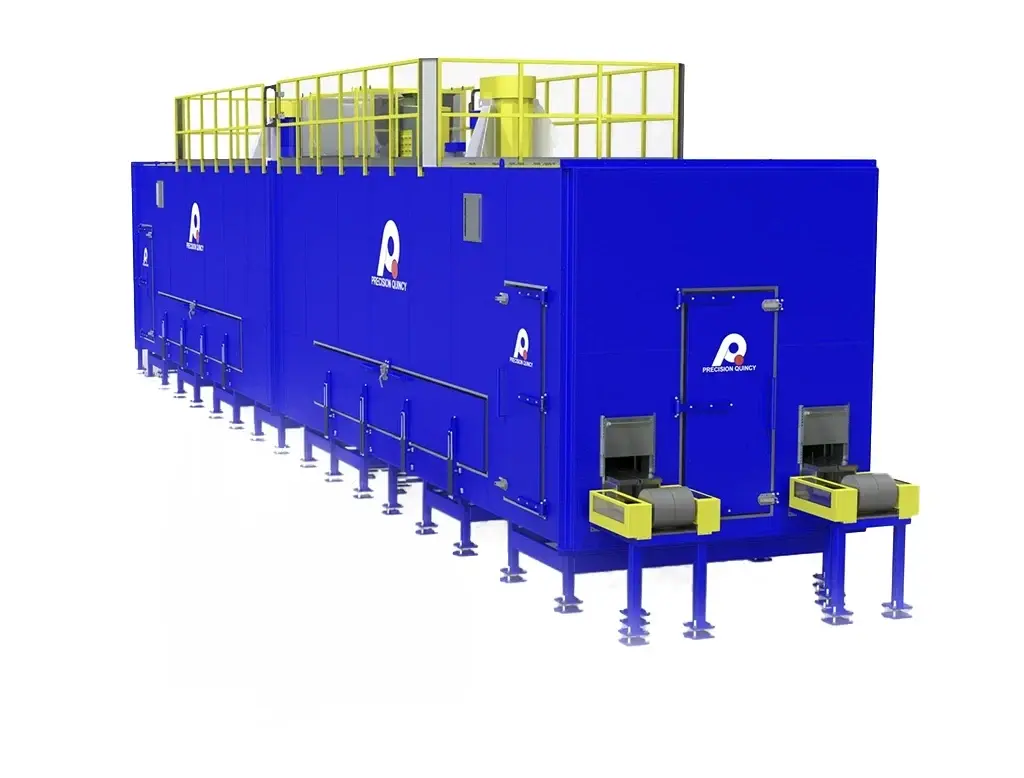
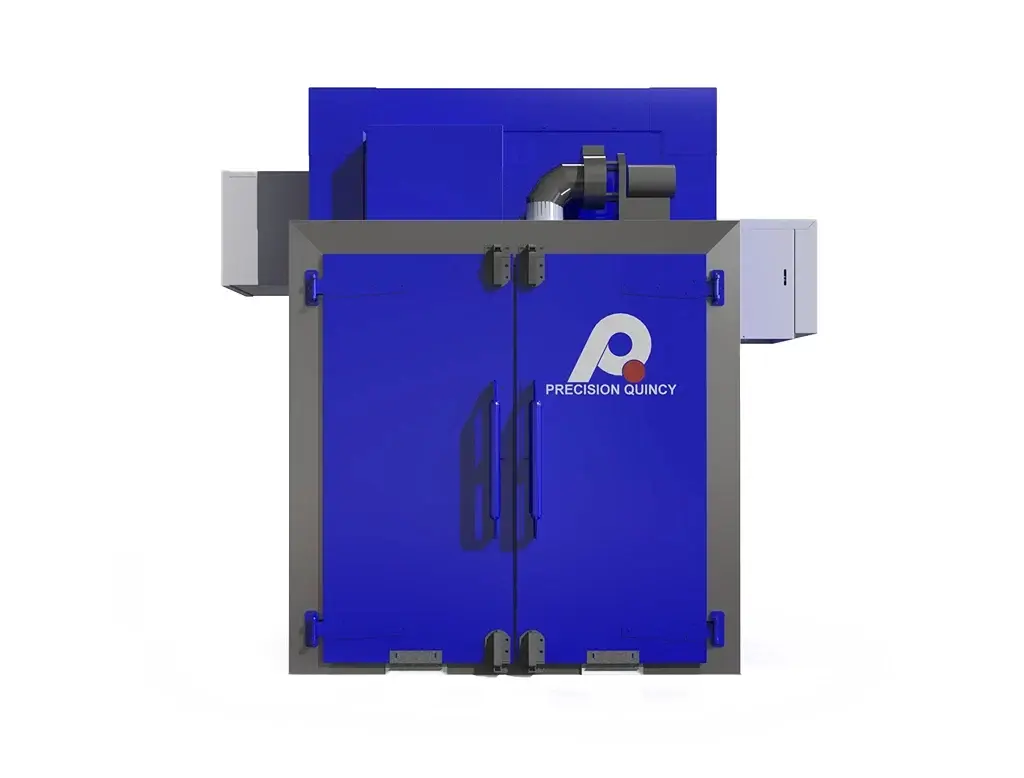
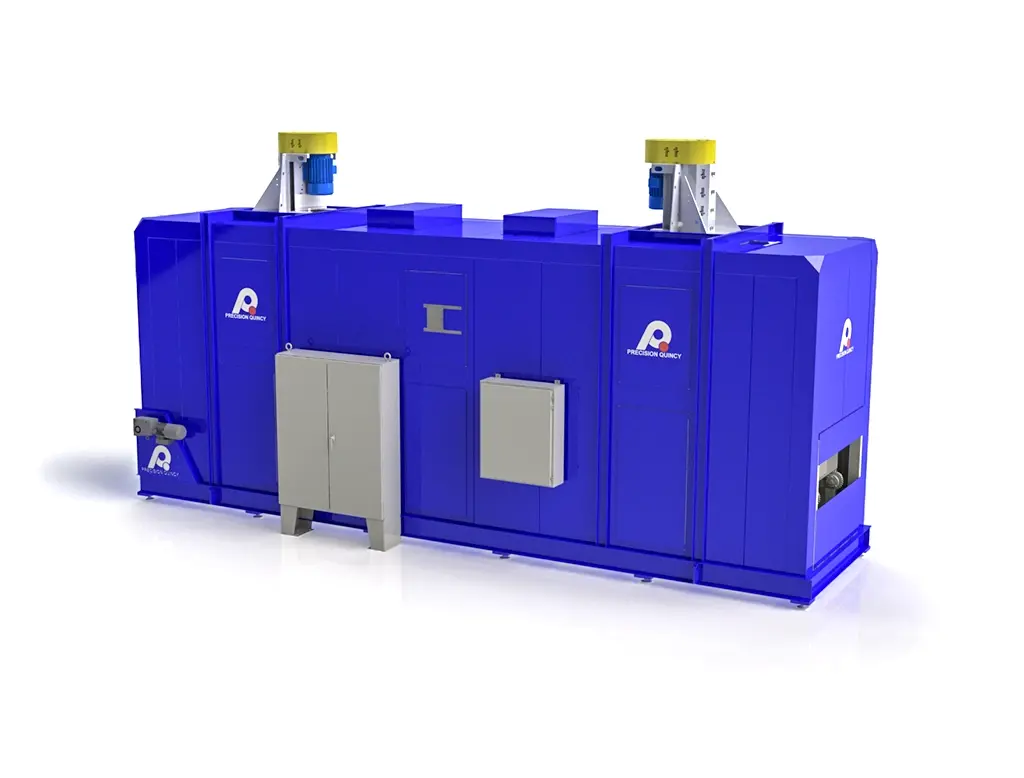
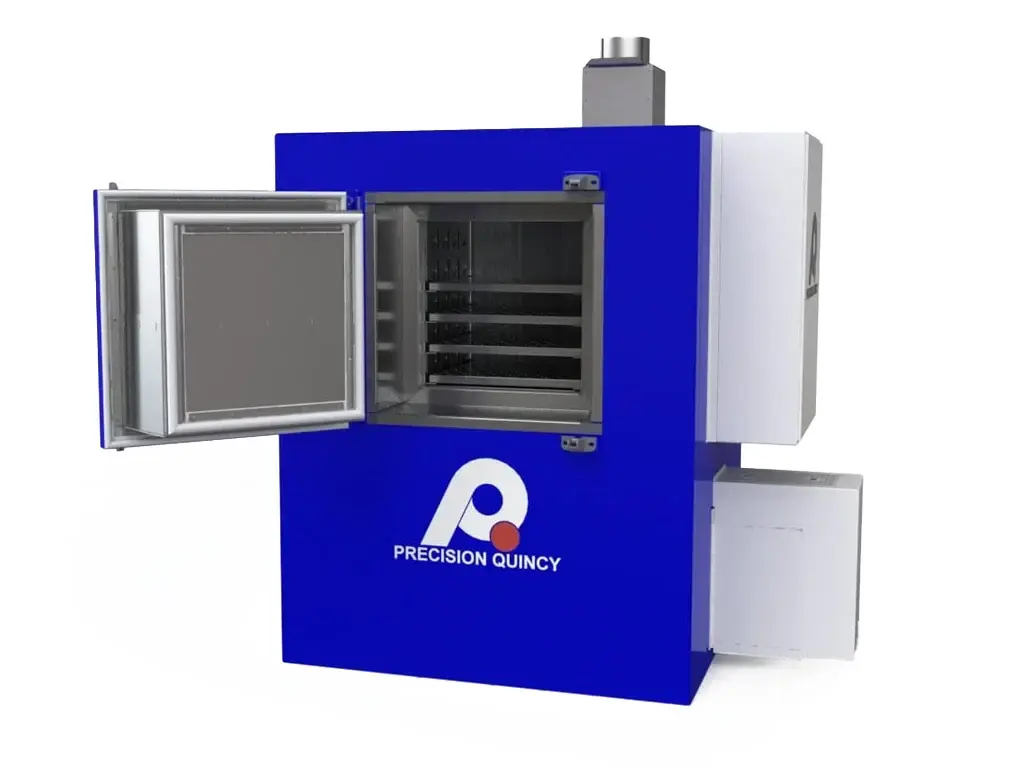
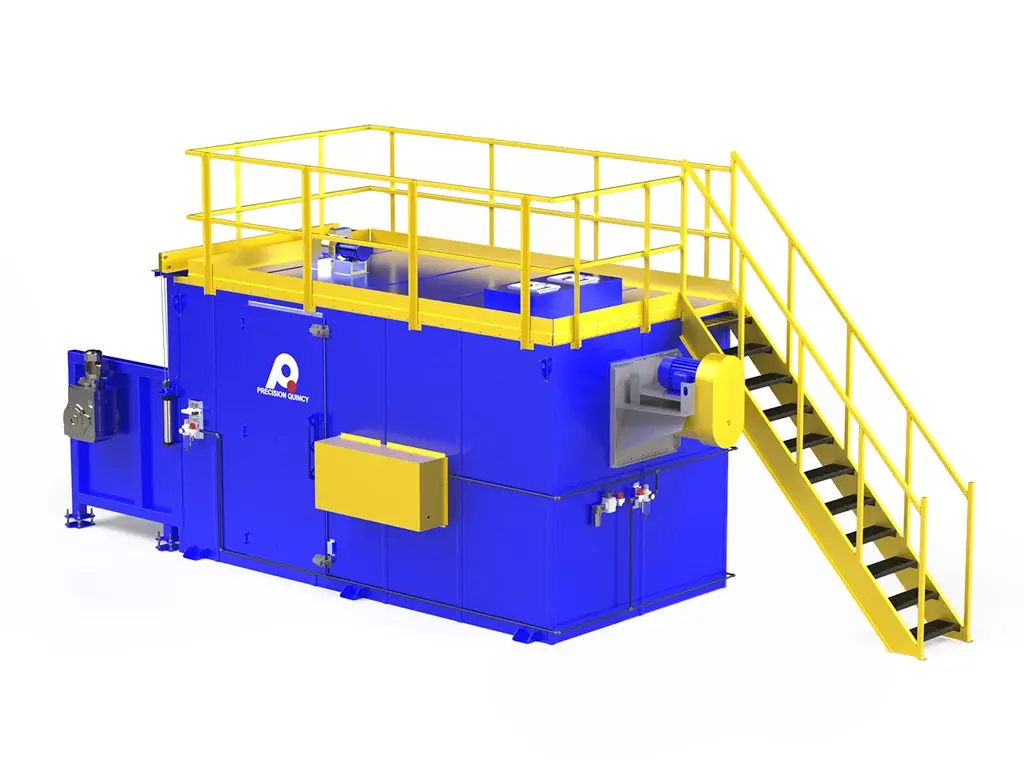
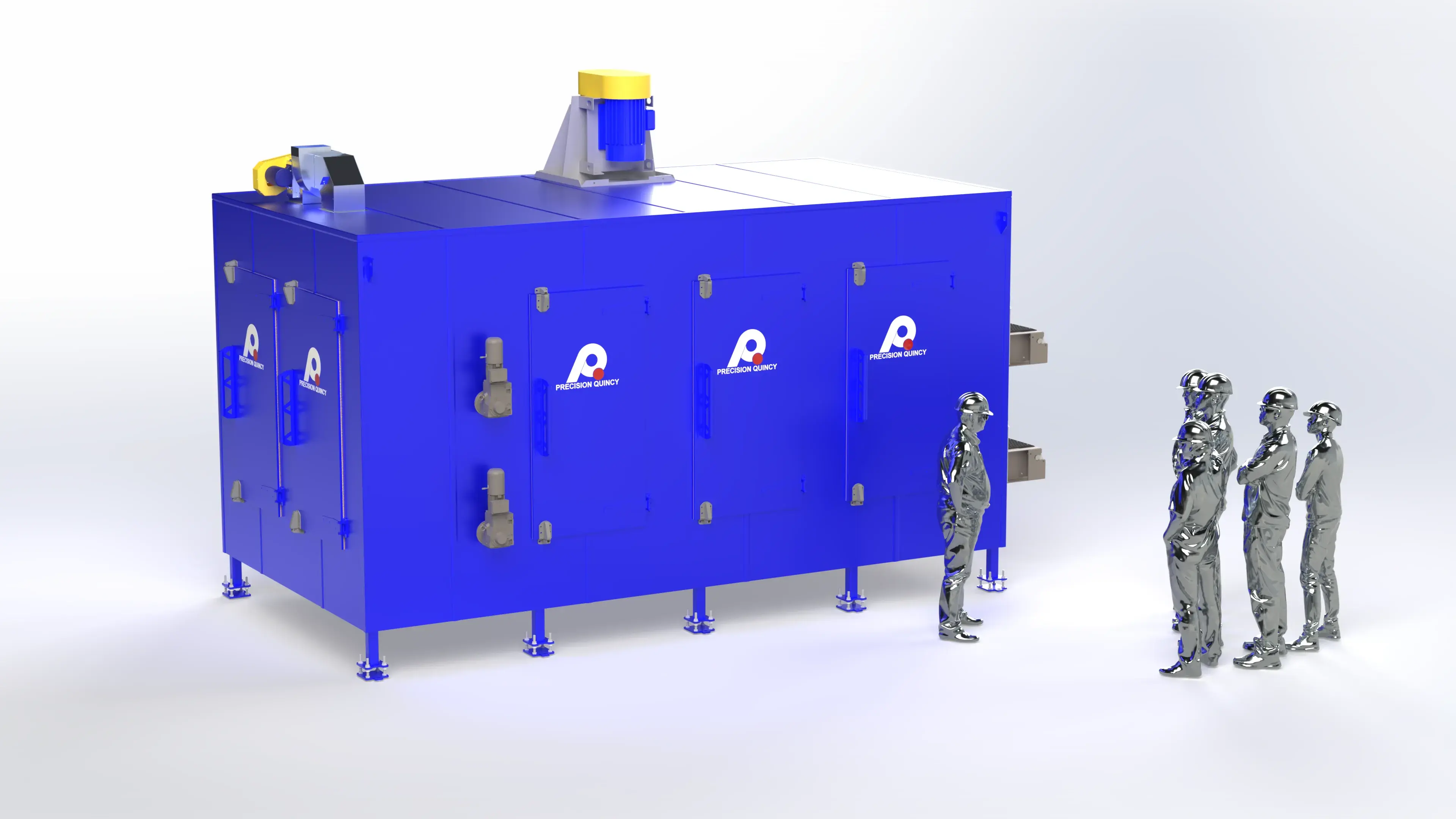
The oven was engineered as a compact, line-integrated flash-off module using structural steel reinforced pan-style oven construction. That shell approach provides the rigidity and thermal containment required for repeated automated cycling, conveyor penetrations, transfer interfaces, and low-temperature Class A service.
OVERALL EQUIPMENT CONCEPT
- Electrically heated Class A flash-off oven designed as a coordinated process module within an automated polyurethane wheel manufacturing system.
- Structural steel reinforced pan-style oven shell construction.
- Approximate overall dimensions: 241.59 in. deep × 129.27 in. wide × 157.50 in. high.
CONVEYOR AND HANDLING ARCHITECTURE
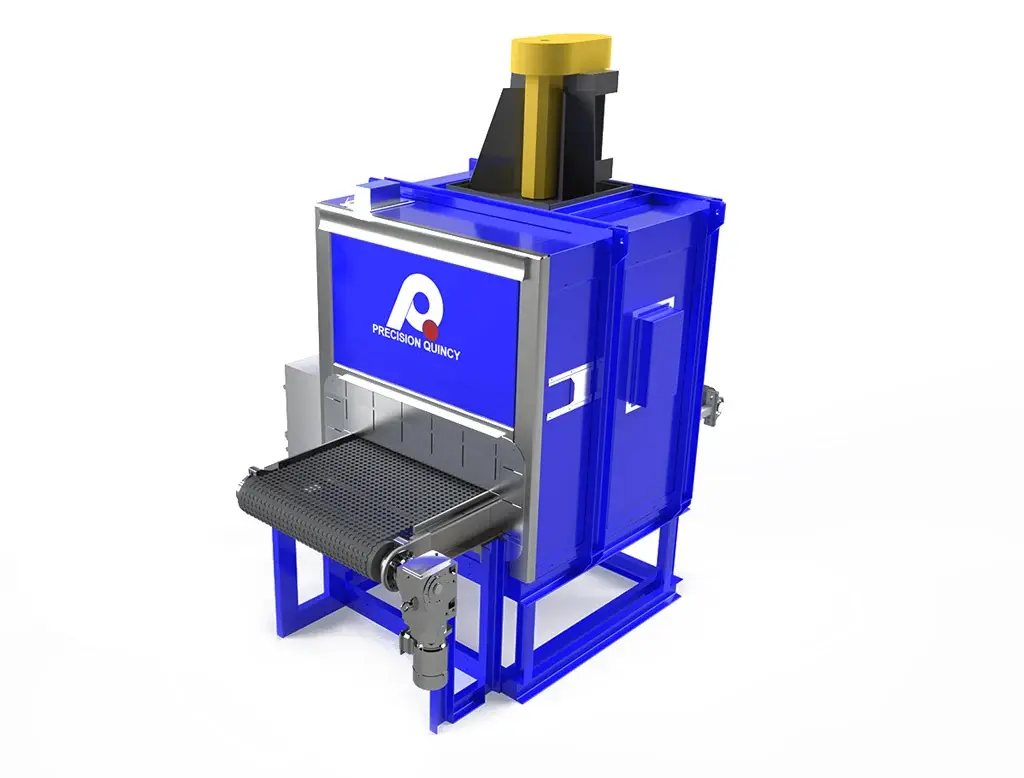
- Two-level, four-conveyor main product-handling arrangement with two steel roller transfer conveyors.
- Main conveyors: four steel 1 × 1 heavy-duty flat-wire belt conveyors, each rated for approximately 1,000 lb maximum product load.
- Transfer conveyors: two steel roller conveyors, each rated for approximately 120 lb maximum load.
- Architecture preserves product sequencing while bridging between adjacent manufacturing stages within the flash-off dwell period.
HEATING AND AIRFLOW ARCHITECTURE
- Electric resistance heat — 81 kW total installed capacity.
- Recirculation fan: one New York Blower 278 PLR plug fan delivering approximately 16,000 CFM.
- Low-temperature forced convection supports controlled and uniform volatile removal across the product load.
EXHAUST AND CLASS A ARCHITECTURE
- Process exhaust via PQ15 exhauster at approximately 920 CFM, 0.75 hp motor.
- Class A design governs purge sequencing, airflow proving interlocks, exhaust management, and process safety hardware throughout.
CONTROLS ARCHITECTURE
- Allen-Bradley line-integrated controls platform consistent with the broader automated production system.
- Remote-mounted NEMA 12 control enclosure.
- Distributed field integration with safety interlocks, purge functionality, airflow proving, and operator interface capability.
- Controls architecture coordinates flash-off module operation with adjacent upstream and downstream line equipment.
| OVEN CONFIGURATION | |
|---|---|
| Type | Electric-heated Class A flash-off oven |
| Application | Adhesive-related volatile flash-off before downstream polyurethane processing |
| Safety Class | Class A (NFPA 86) |
| Overall Dimensions | 241.59 in. D × 129.27 in. W × 157.50 in. H |
| Shell Construction | Structural steel reinforced pan style |
| THERMAL SYSTEM | |
|---|---|
| Operating Temperature | 105°F – 110°F |
| Maximum Temperature | 130°F |
| Heat Source | Electric resistance heat |
| Total Heat Input | 81 kW |
| Recirculation Fan | New York Blower 278 PLR plug fan |
| Recirculation Airflow | ~16,000 CFM |
| Exhaust Fan | PQ15 exhauster — 920 CFM |
| Exhaust Motor | 0.75 hp |
| VOC Duty | Solvent-bearing adhesive flash-off process |
| CONVEYOR / HANDLING SYSTEM | |
|---|---|
| Conveyor Arrangement | Two-level layout — four steel 1×1 HD flat-wire belt conveyors + two steel roller transfer conveyors |
| Main Conveyor Capacity | ~1,000 lb max product load per main conveyor |
| Transfer Conveyor Capacity | ~120 lb max per transfer conveyor |
| Process Style | Two-level, line-integrated flash-off module with transfer coordination |
| CONTROLS & ELECTRICAL | |
|---|---|
| Electrical Service | 480V / 3PH / 60Hz |
| Control Cabinet | Remote-mounted NEMA 12 enclosure |
| Control Architecture | Allen-Bradley line-integrated controls platform |
| Safety Features | Purge logic, airflow proving, Class A process interlocks and protection hardware |
| PROCESS NOTES | |
|---|---|
| Process Role | Low-temperature removal of adhesive-related volatiles before downstream polyurethane operations |
| Integration Role | Coordinated flash-off stage inside an automated wheel production line |
| NFPA Classification | Class A |