

Project Number: 5597
Architectural Glass Heat Soak Oven for EN 14179-1 Architectural Glass Heat Soak Testing
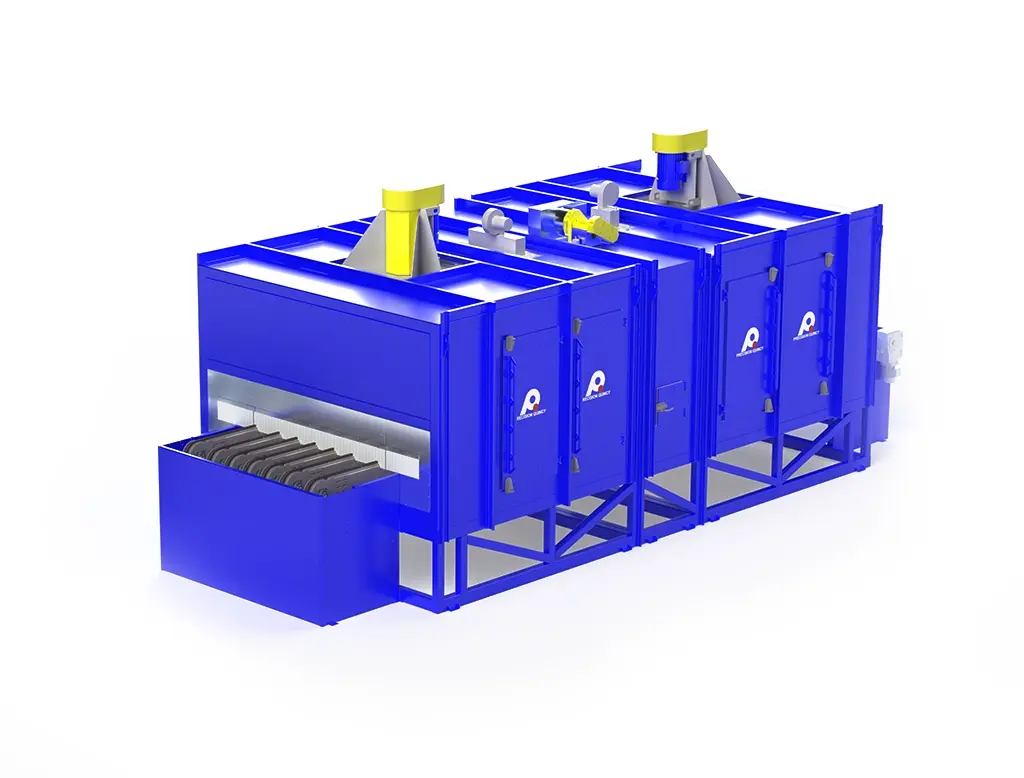
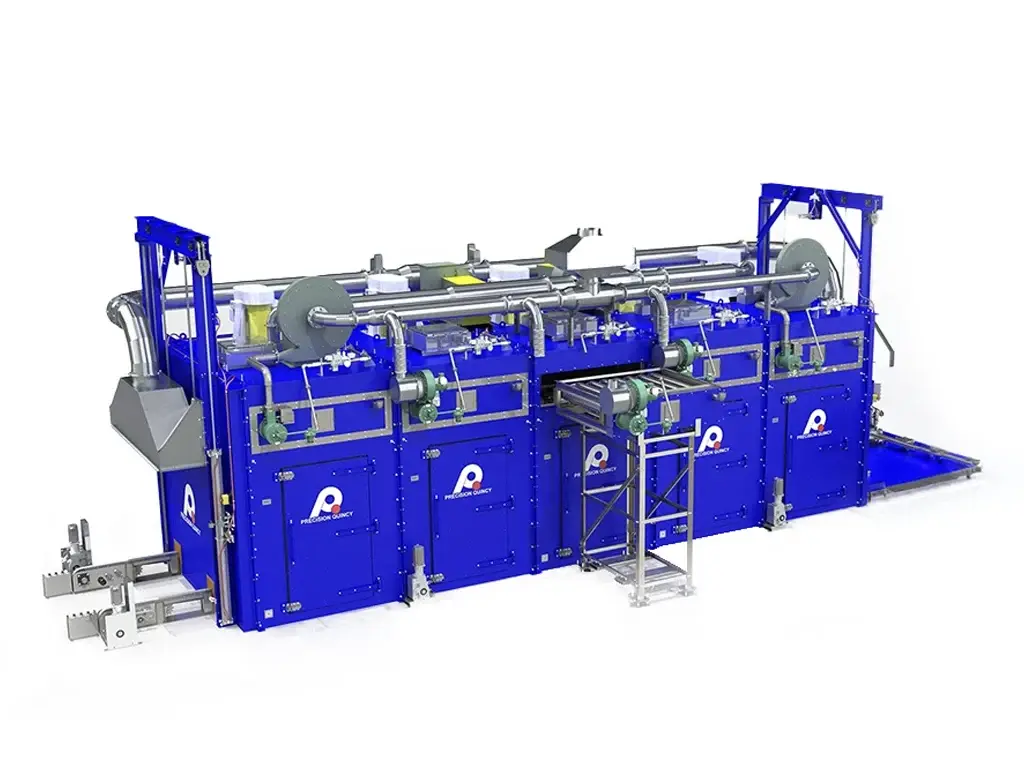
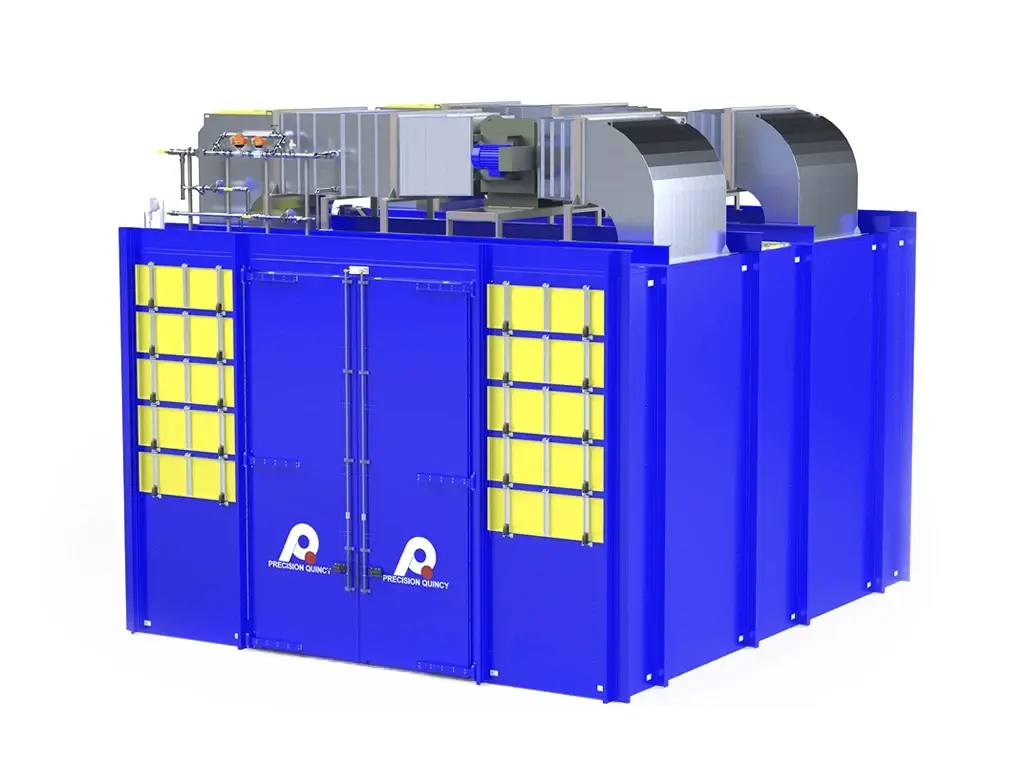
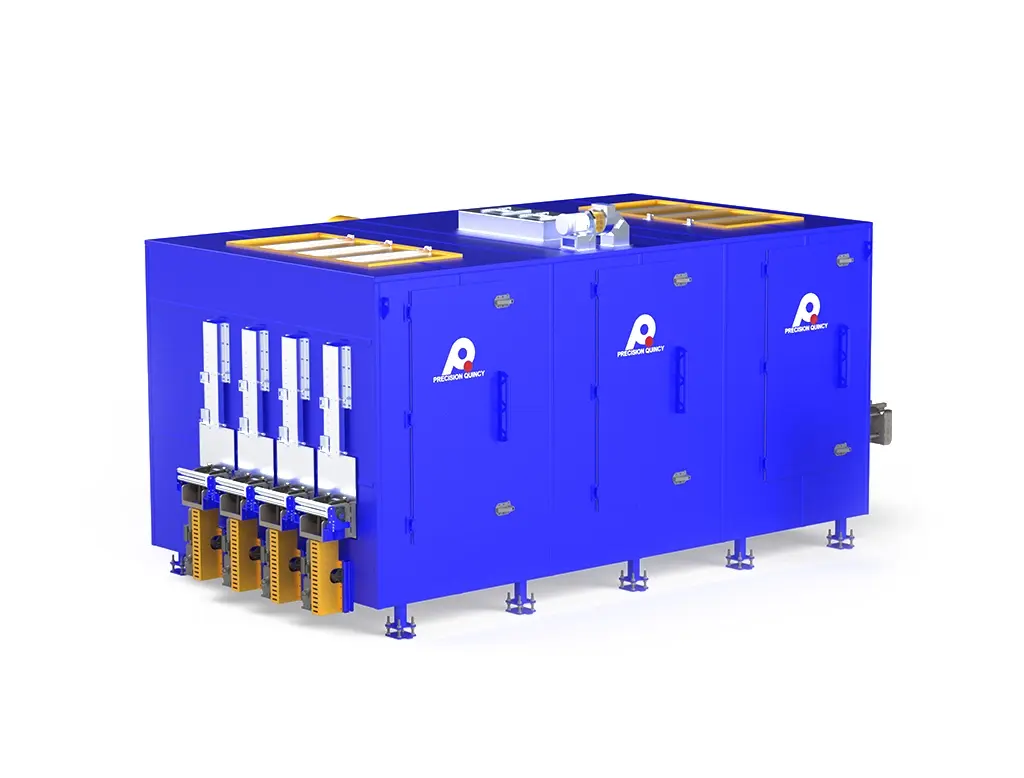
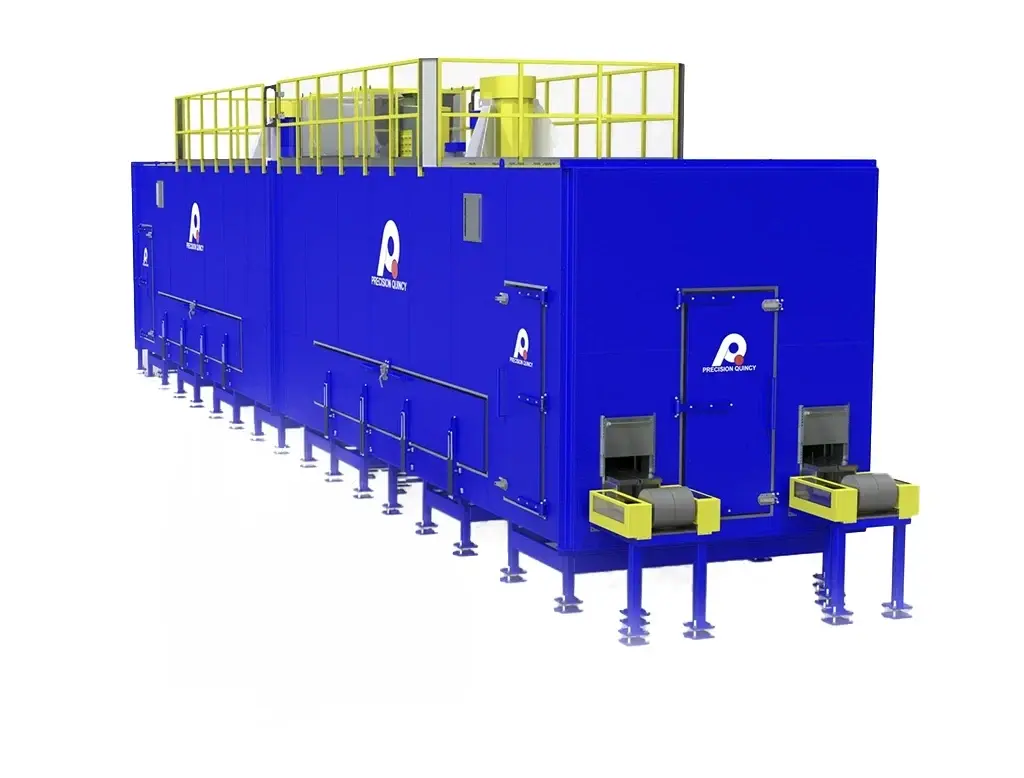
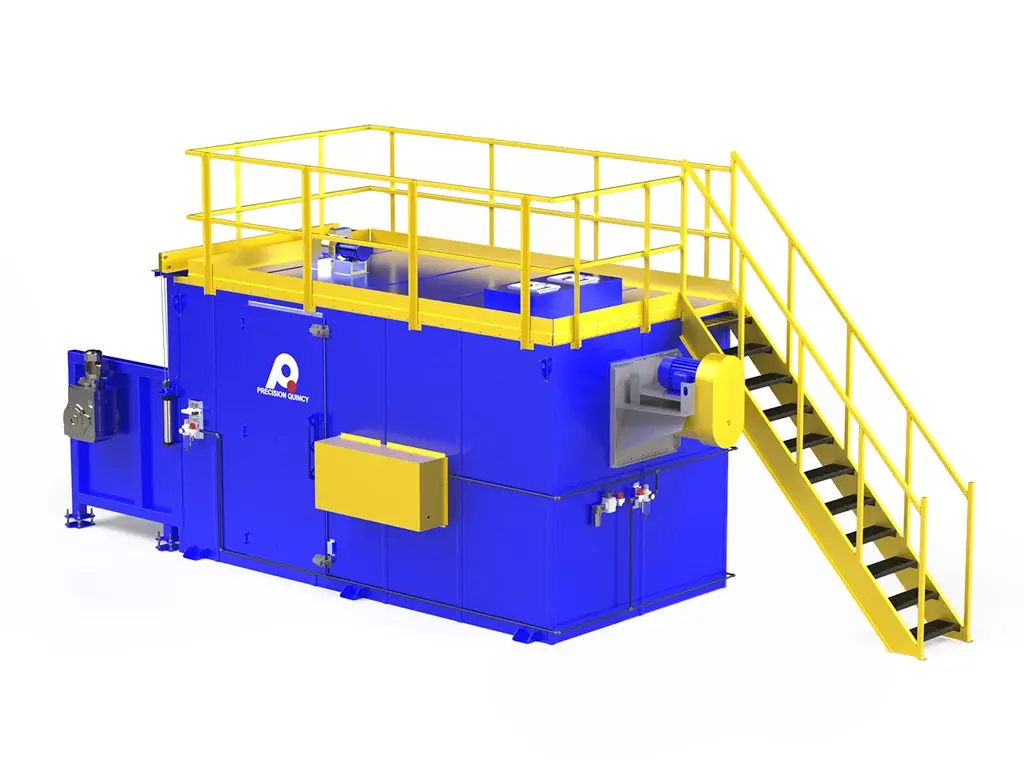
Natural-gas-heated walk-in batch oven engineered for EN 14179-1 architectural glass heat soak testing—featuring back-mounted heat chamber, combination horizontal-vertical airflow at 21,500 CFM through a guided A-frame glass cart, 1,500,000 BTU/hr Eclipse burner, 392°F–608°F operating range with ±10°F uniformity, 20-point Type J product thermocouple monitoring, and NFPA 86 Class A safety architecture.
.webp?width=1400&name=5597%20TRISTAR%20(2).webp)
.webp?width=1400&name=5597%20TRISTAR%20(3).webp)
.webp?width=1400&name=5597%20TRISTAR%20(4).webp)
.webp?width=1400&name=5597%20TRISTAR%20(5).webp)
.webp?width=1400&name=5597%20TRISTAR%20(6).webp)
.webp?width=1400&name=Untitled%20Project%20(2).webp)
Overview
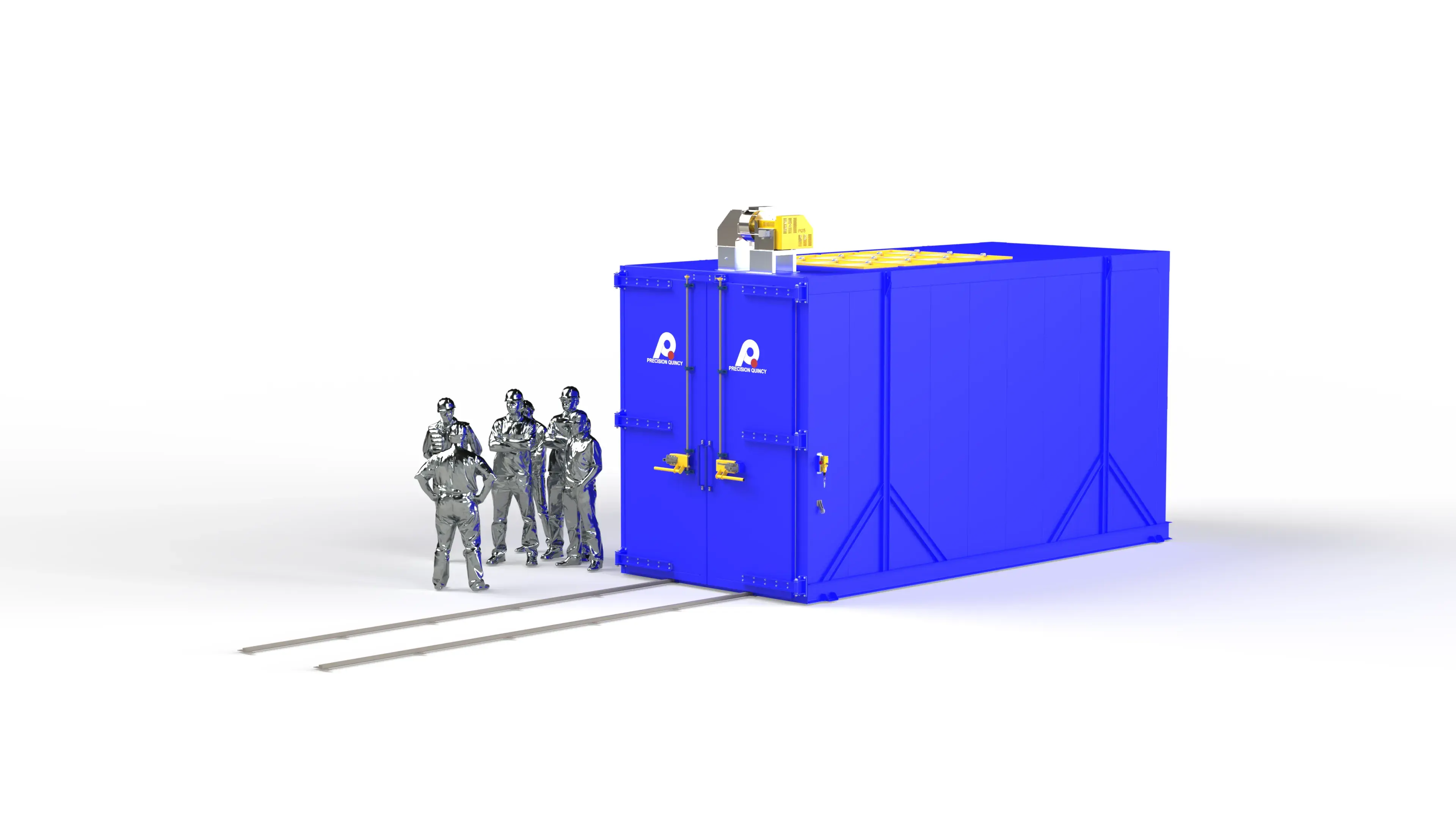
A natural-gas-heated walk-in batch oven was engineered for the heat soak testing of architectural glass in accordance with the EN 14179-1 heat soak process. In this application, heat soaking serves as a 100% screening process intended to reduce the risk of delayed spontaneous breakage in service caused by nickel sulfide inclusions or similar latent defects within thermally toughened glass. The system was developed to process large glass sheets in a controlled high-temperature batch environment using a guided A-frame cart that enters and exits the oven on a fixed straight-line path.
The oven was built around a glass-cart-based work zone handling sheets up to 96 in × 144 in, with a maximum total glass load of 10,000 lb. The process design supports glass thicknesses from 0.125 in to 0.75 in, with a documented cart capacity of 34 sheets at 0.25 in thickness arranged 17 sheets per side. Heated circulation air is driven into the bottom of the A-frame cart, then forced upward through the spaces between the panes of glass before returning to the oven circulation path. This makes the cart itself part of the airflow architecture and allows the process air to move through the glass load rather than bypassing it.
The equipment was designed for an operating range of 392°F to 608°F, with a maximum temperature of 650°F and a required workroom uniformity of ±10°F. To deliver that performance, a back-mounted natural gas heat chamber was used with an Eclipse AirHeat/AH 150 burner rated at 1,500,000 BTU/hr and a New York Blower 338 PLR plug fan delivering 21,500 CFM at 2.5 in. w.c. through a combination horizontal-vertical airflow pattern. The system includes 20 Type J thermocouple jack points for product monitoring throughout the heat soak cycle.
The equipment was developed for a glass processing operation requiring the heat soak testing of architectural glass before final field use.
APPLICATION REQUIREMENT
- The equipment had to process architectural glass sheets through EN 14179-1 heat soak testing as a 100% batch thermal screening process.
- The process is intended to reduce the risk of spontaneous breakage in service associated with nickel sulfide inclusions and similar latent defects within thermally toughened glass.
WORK CHAMBER / LOAD REQUIREMENT
- Maximum glass size: 96 in × 144 in. Glass thickness range: 0.125 in to 0.75 in.
- Maximum glass load: 10,000 lb.
- Documented cart loading basis at 0.25 in glass: 34 sheets total, arranged 17 per side on an A-frame cart.
PROCESS REQUIREMENT
- The system had to support repeatable batch heat soak processing of loaded glass carts.
- The cart was required to move straight in and straight out of the oven on a guided path—not repositioned laterally or turned within the oven.
- The oven had to force process air through the glass pack by delivering heated air into the bottom of the cart and directing it upward through the spaces between panes.
SAFETY REQUIREMENT
- The oven was required to be designed as an NFPA 86 Class A unit.
- The equipment required appropriate exhaust, combustion, purge, and control architecture for safe natural-gas-fired operation.
- Explosion relief provisions had to remain unobstructed as part of the safety design.
UTILITY / SITE REQUIREMENT
- Required electrical service: 480V / 3PH / 60Hz. Full load amperage: 33.0 A FLA.
- Required fuel: natural gas. Gas inlet pressure: 2 PSI. Gas flow basis: 1,500 CFH.
- Design elevation basis: below 1,000 ft.
INSTALLATION / SHIPMENT REQUIREMENT
- Facility access basis: 12 ft × 16 ft dock/door access.
- The oven was designed for field installation with the oven body, cart, and track components shipped as separated major sections.
These thermal process requirements were established from the need to heat soak large architectural glass loads in a controlled, high-temperature batch environment under the EN 14179-1 process basis.
TEMPERATURE CAPABILITY
- Operating range: 392°F to 608°F. Maximum operating temperature: 650°F.
- Required workroom temperature uniformity: ±10°F.
PROCESS BASIS
- The thermal process basis is architectural glass heat soak testing under EN 14179-1 as a 100% thermal screening process.
- The application requires repeatable heating of large glass loads while maintaining controlled airflow through the spaces between panes throughout the heat soak cycle.
HEAT INPUT REQUIREMENT
- Heat source: natural gas. Burner: Eclipse AirHeat/AH 150. Burner capacity: 1,500,000 BTU/hr.
- Natural gas inlet pressure: 2 PSI. Natural gas flow basis: 1,500 CFH. Design elevation basis: below 1,000 ft.
AIRFLOW DELIVERY REQUIREMENTS
- Required airflow style: combination horizontal-vertical airflow.
- Recirculation airflow basis: 21,500 CFM at 2.5 in. w.c.
- Heated process air is introduced into the bottom of the A-frame cart and forced upward through the glass load before returning to the oven circulation path.
EXHAUST / VENTILATION BASIS
- Exhaust airflow: 700 CFM during normal operation; 1,300 CFM during cooldown.
- Exhaust fan: PQ15 exhauster delivering up to 1,300 CFM at 1 in. w.c.; 2 HP motor.
- Motorized fresh-air and exhaust dampers support purge, process operation, and cooldown sequencing.
- Maximum volatile load basis: no VOC allowed. Oven classification: NFPA 86 Class A.
THERMAL INSTRUMENTATION / CONTROL BASIS
- Primary temperature controller: WATLOW F4T ramp/soak controller.
- Product temperature monitoring: 20 thermocouple jack points. Thermocouple type: Type J.
To deliver the customer and thermal process requirements for this EN 14179-1 glass heat soak application, the following equipment concept and architecture was developed.
OVERALL CONCEPT
- One natural-gas-heated walk-in batch oven designed for architectural glass heat soak testing under EN 14179-1.
- The design uses a back-mounted heat chamber and a guided straight-track A-frame glass cart as the loading concept, making the cart integral to the airflow architecture.
HEATING ARCHITECTURE
- Heat source: natural gas. Burner: Eclipse AirHeat/AH 150 at 1,500,000 BTU/hr.
- Gas inlet pressure: 2 PSI. Gas flow basis: 1,500 CFH. Design elevation: below 1,000 ft.
AIRFLOW / RECIRCULATION ARCHITECTURE
- Airflow pattern: combination horizontal-vertical airflow.
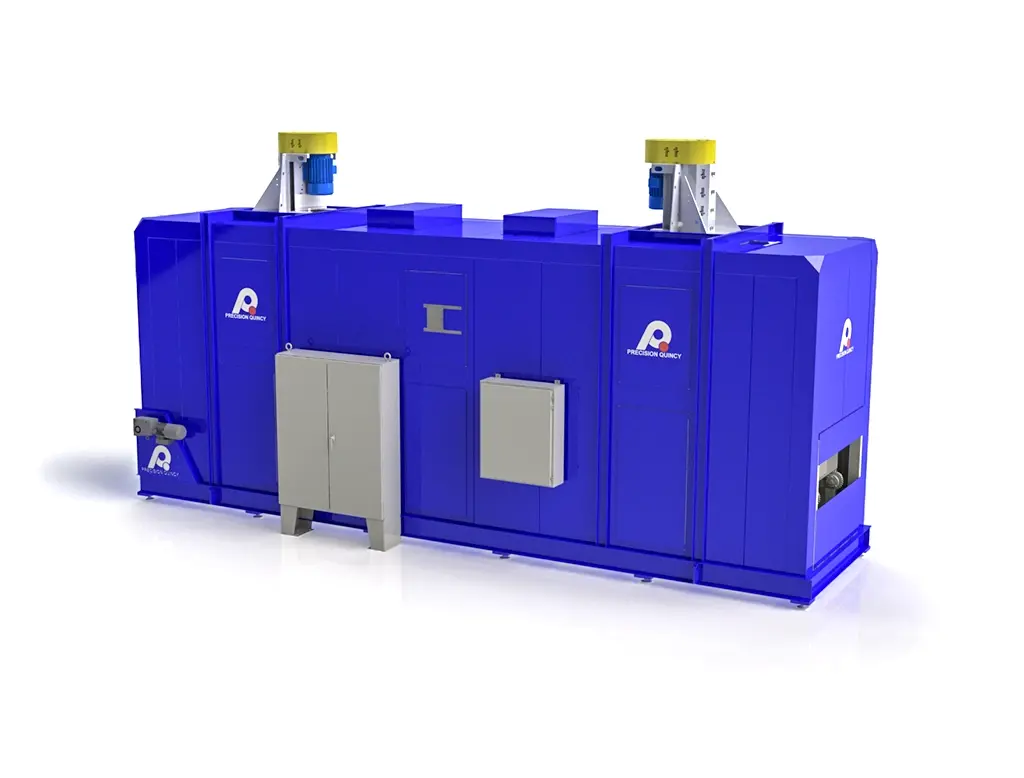
- Recirculation fan: New York Blower 338 PLR plug fan—21,500 CFM at 2.5 in. w.c.; 20 HP motor.
- Heated air is delivered into the bottom of the A-frame cart, forced upward through the glass pack, and returned to the recirculation path—the cart functions as part of the airflow architecture.
- Exhaust fan: PQ15 exhauster—700 CFM during normal operation / 1,300 CFM during cooldown; 2 HP motor.
- Motorized fresh-air and exhaust dampers support purge, process operation, and cooldown sequencing.
CHAMBER / CONSTRUCTION ARCHITECTURE
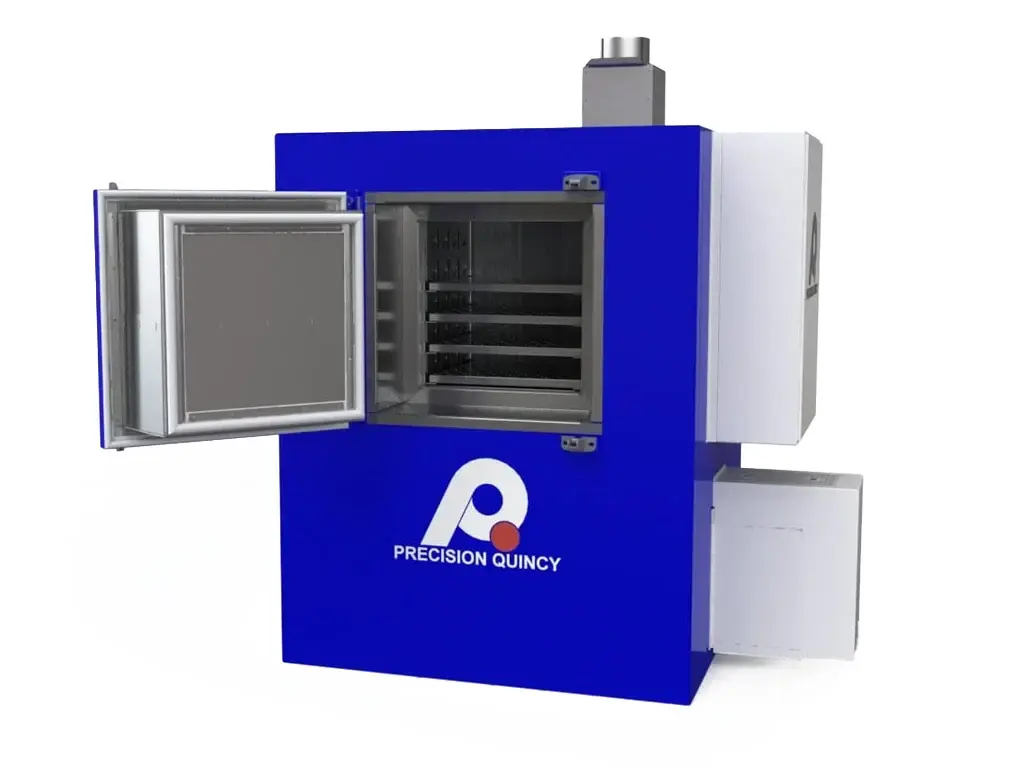
- Construction style: insulated panel construction.
- Wall system thickness: 6 in. Insulation: 6-inch, 6 lb density mineral wool.
- Interior material: aluminized steel. Exterior finish: PQ Blue.
- Insulated floor with cart guide tracks and rails to support repeatable straight-in / straight-out A-frame cart movement.
DOOR / ACCESS ARCHITECTURE
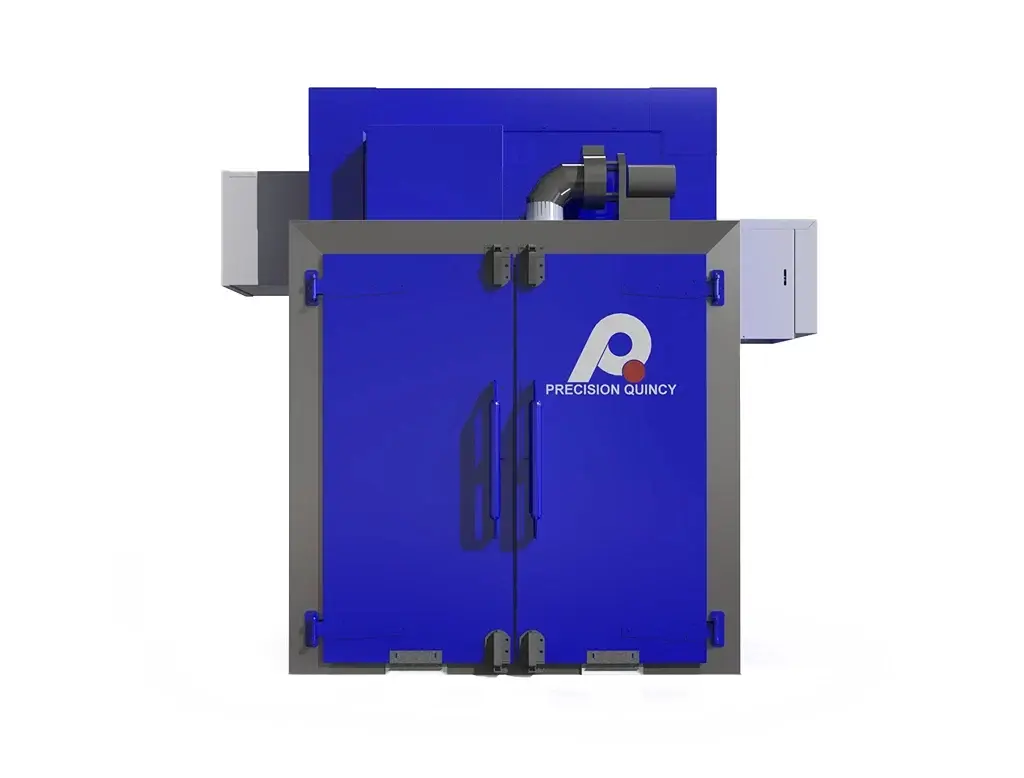
- Door style: bi-parting insulated doors.
- The floor and guide-track arrangement support repeatable loading and unloading of the A-frame glass cart on a fixed straight-line path.
CONTROLS ARCHITECTURE
- Primary temperature controller: WATLOW F4T ramp/soak controller.
- PLC platform: Allen-Bradley Micro850.
- Control enclosure: NEMA 1, ANSI 61 gray finish.
- The control package includes Ethernet-connected controls, USB access, and 20 Type J product thermocouple jack points for heat soak monitoring throughout the cycle.
SAFETY / COMPLIANCE ARCHITECTURE
- Oven classification: NFPA 86 Class A. Applicable standards: NFPA 79, NFPA 86, UL 508A.
- Safety architecture includes airflow switches, gas pressure switches, combustion-chamber and work-area excess-temperature protection, flame safety, proof of closure, double blocking valves, purge interlocks, and explosion relief provisions.
SHIPPING / INSTALLATION ARCHITECTURE
- Equipment designed for field installation with the oven body, cart, and track components shipped as separated major sections.
| OVEN CONFIGURATION | |
|---|---|
| Type | Natural-gas-heated architectural glass heat soak oven |
| Quantity | 1 oven |
| Application | EN 14179-1 architectural glass heat soak testing |
| Maximum glass size | 96 in × 144 in |
| Glass thickness range | 0.125 in to 0.75 in |
| Maximum product load | 10,000 lb |
| Cart loading basis | 34 sheets at 0.25 in thickness; 17 sheets per side |
| Cart type | Guided straight-track A-frame glass cart |
| Heat chamber arrangement | Back-mounted heat chamber |
| THERMAL HEAT POWER SYSTEM | |
|---|---|
| Operating temperature range | 392°F to 608°F |
| Maximum operating temperature | 650°F |
| Temperature uniformity | ±10°F |
| Heat source | Natural gas |
| Burner | Eclipse AirHeat / AH 150 |
| Burner capacity | 1,500,000 BTU/hr |
| Natural gas inlet pressure | 2 PSI |
| Natural gas flow basis | 1,500 CFH |
| Design elevation | Below 1,000 ft |
| RECIRCULATION / AIRFLOW SYSTEM | |
|---|---|
| Airflow pattern | Combination horizontal-vertical airflow |
| Recirculation fan | New York Blower 338 PLR plug fan |
| Recirculation airflow | 21,500 CFM |
| Recirculation static pressure | 2.5 in. w.c. |
| Recirculation fan motor | 20 HP |
| Load airflow concept | Bottom-entry upward flow through the A-frame glass pack; cart integral to airflow architecture |
| EXHAUST SYSTEM | |
|---|---|
| Exhaust fan | PQ15 exhauster |
| Exhaust airflow — normal operation | 700 CFM |
| Exhaust airflow — cooldown | 1,300 CFM |
| Exhaust static pressure | 1 in. w.c. |
| Exhaust fan motor | 2 HP |
| Damper architecture | Motorized fresh-air and exhaust dampers for purge, process, and cooldown sequencing |
| CONSTRUCTION MATERIALS / SHELL SYSTEM | |
|---|---|
| Shell style | Insulated panel construction |
| Wall thickness | 6 in |
| Insulation | 6-inch, 6 lb density mineral wool |
| Interior material | Aluminized steel |
| Exterior finish | PQ Blue |
| Floor feature | Insulated floor with cart guide tracks and rails |
| Door style | Bi-parting insulated doors |
| SAFETY & COMPLIANCE | |
|---|---|
| Classification | NFPA 86 Class A |
| VOC basis | No VOC allowed |
| Gas train | Double blocking valves with proof of closure |
| Explosion relief | Included as part of oven safety architecture; must remain unobstructed |
| Applicable standards | NFPA 79, NFPA 86, UL 508A |
| CONTROLS & ELECTRICAL | |
|---|---|
| Temperature controller | WATLOW F4T ramp/soak controller |
| PLC | Allen-Bradley Micro850 |
| Thermocouples | Type J |
| Product monitoring | 20 thermocouple jack points |
| Control cabinet | NEMA 1; ANSI 61 gray finish |
| Connectivity | Ethernet-connected controls; USB access |
| Primary power | 480V / 3PH / 60Hz |
| Full load amperage | 33.0 A FLA |
| PROCESS SUMMARY | |
|---|---|
| Product | Architectural glass sheets |
| Market / application | Architectural glass heat soak testing |
| Process standard | EN 14179-1 |
| Process type | Batch heat soak screening — 100% thermal screening process |
| Process context | Screening to reduce risk of spontaneous breakage from nickel sulfide inclusions and similar latent defects in thermally toughened glass |
| Key verification | Repeatable airflow through the glass pack, controlled temperature across the 392°F–608°F operating range, combustion safety compliance, and documented heat soak cycle via 20-point product thermocouple monitoring |