

Project Number: 5680
C-Line X2 Electric Class A Cabinet Oven for Aerospace Adhesive Curing
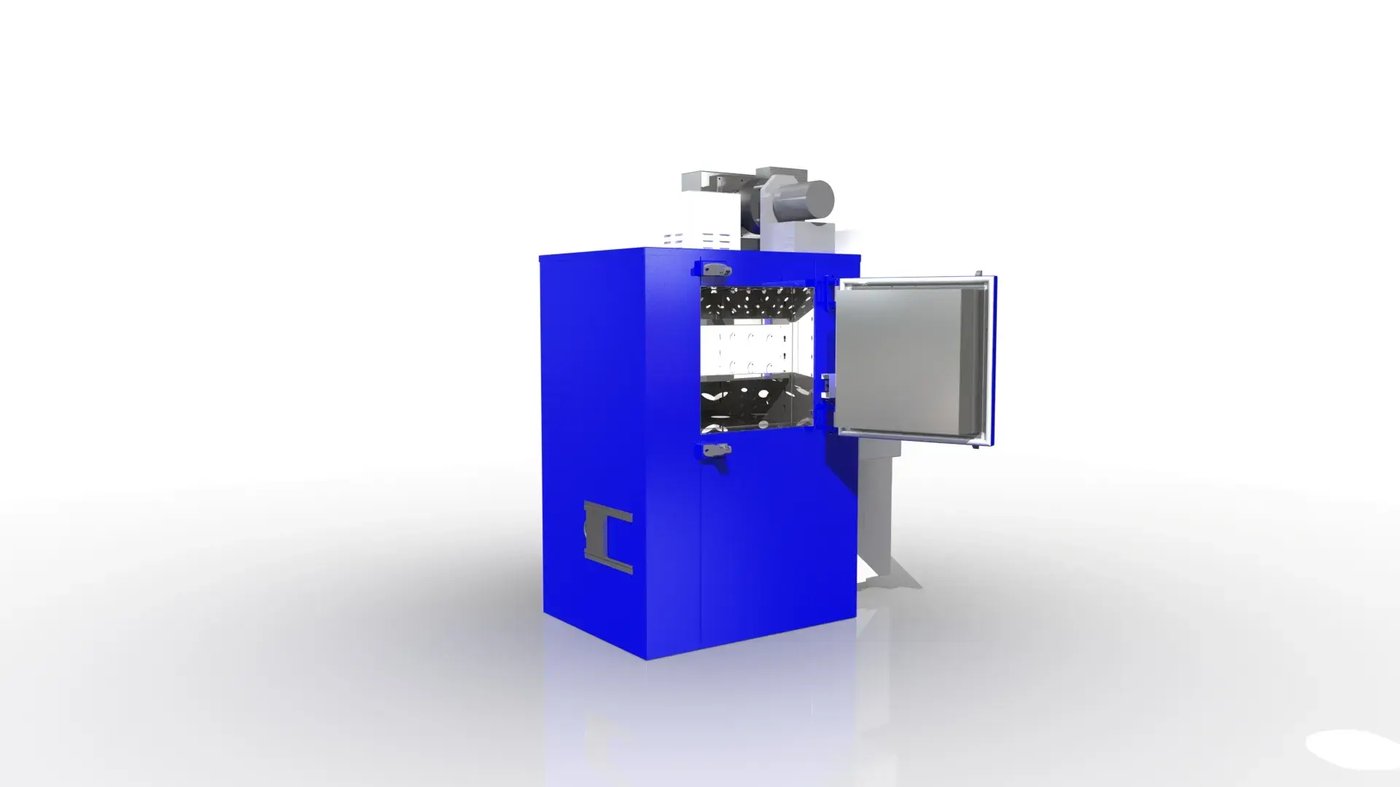
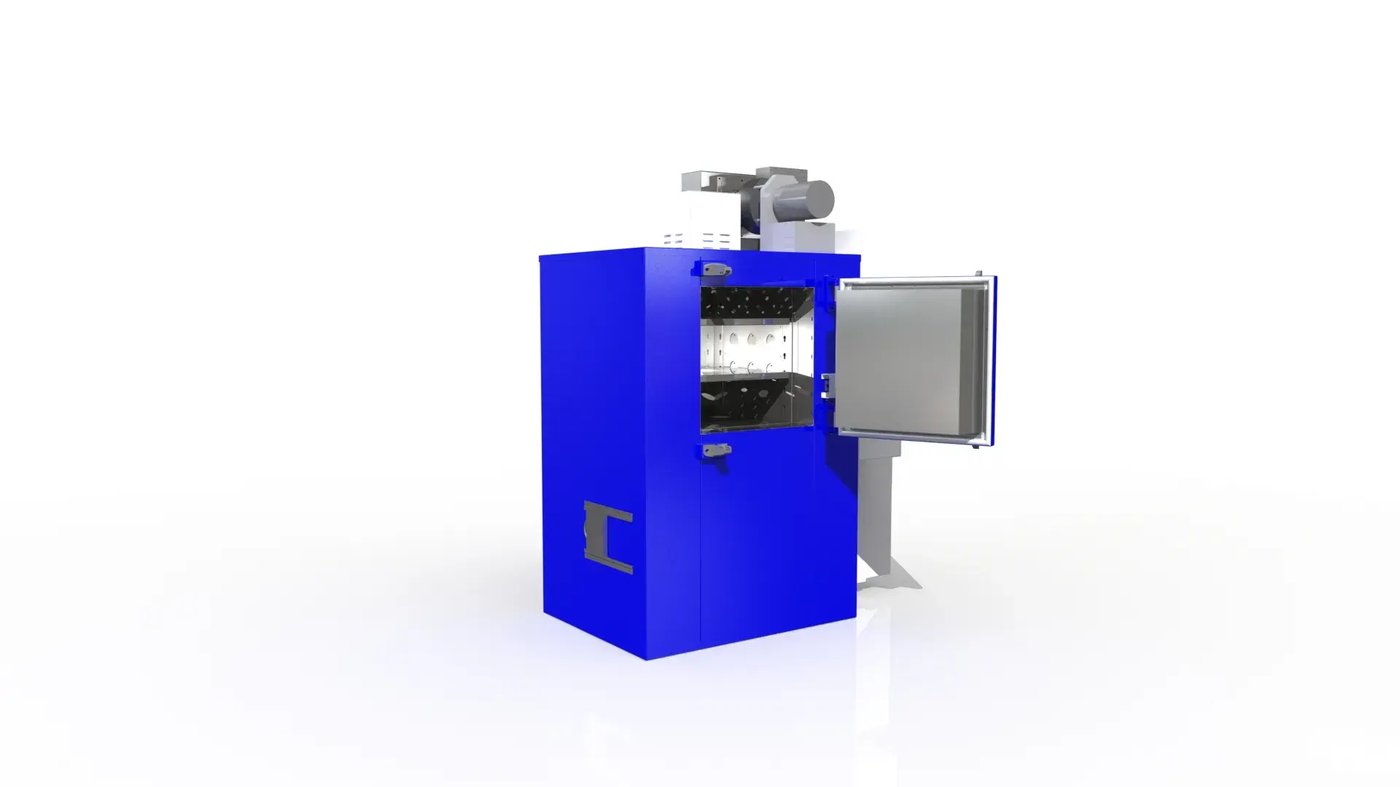
Overview
The project was developed for the customer, a major aerospace manufacturer serving commercial aviation, defense, and advanced aerospace applications. Based on the documented process information and customer background, this oven supported adhesive-curing work associated with aerospace components, assemblies, or bonded subassemblies in a controlled batch format.
The oven was built around a 20 in W × 20 in D × 20 in H work chamber with an operating range of 250°F to 650°F, a maximum temperature of 650°F, and a required work-zone uniformity of ±10°F. The final design used full horizontal airflow, 18 kW total electric heat, a PQ1 powered exhaust system, and a Watlow F4T ramp/soak temperature controller in a NEMA 1 UL508A open industrial control panel.
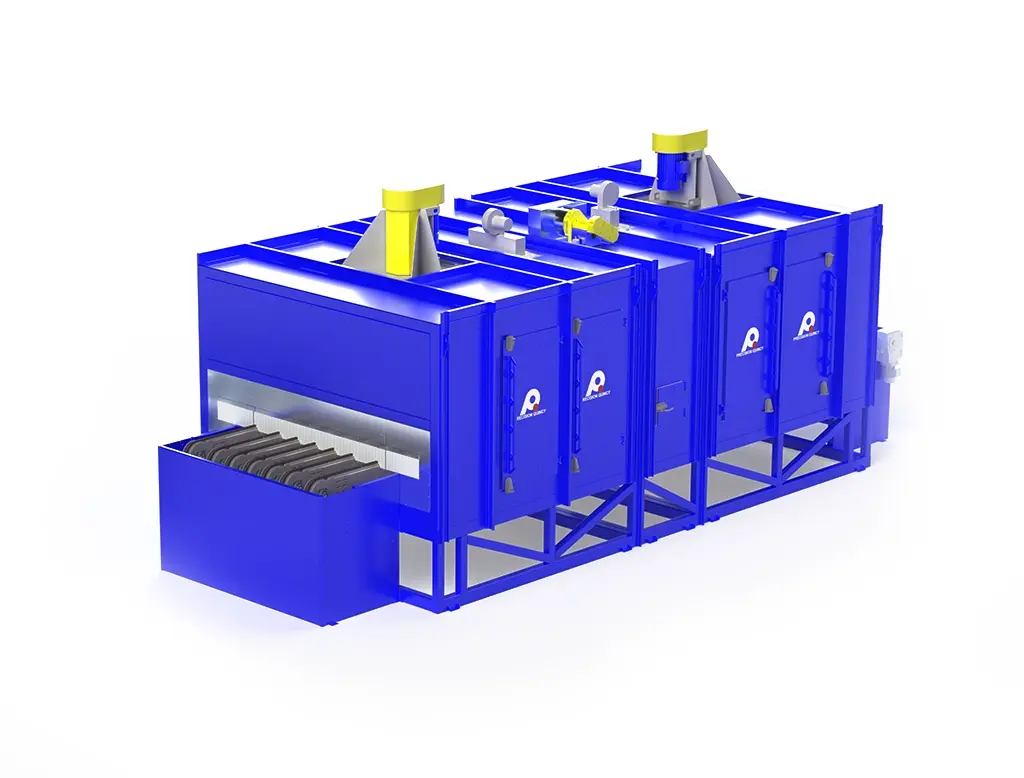
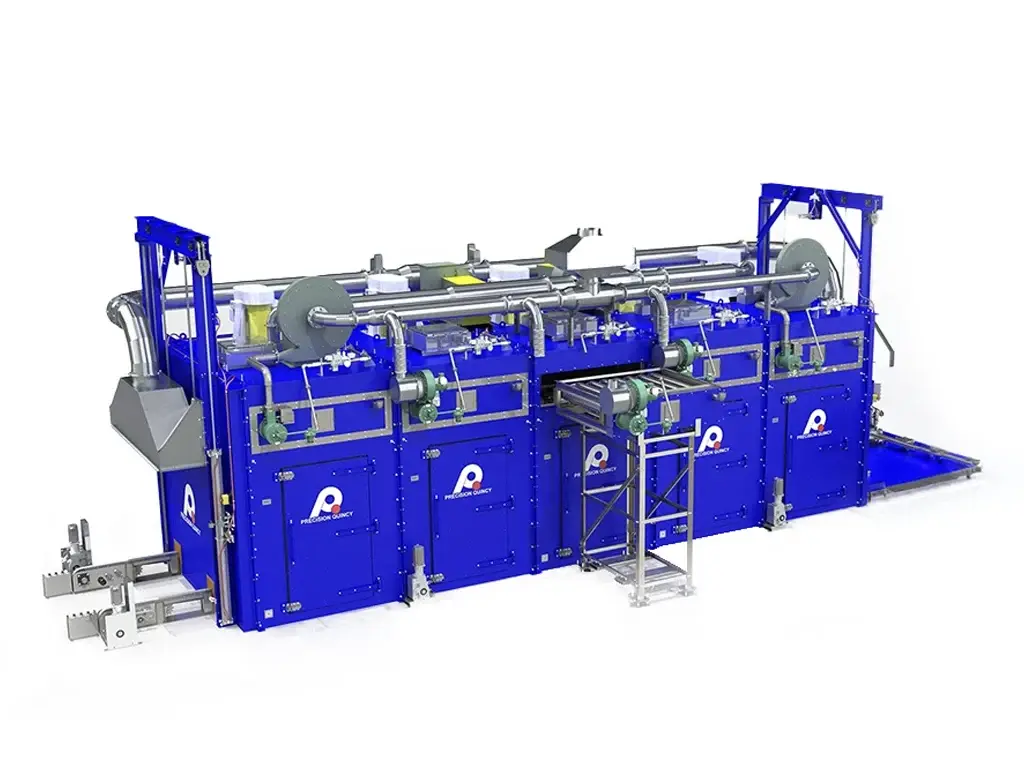
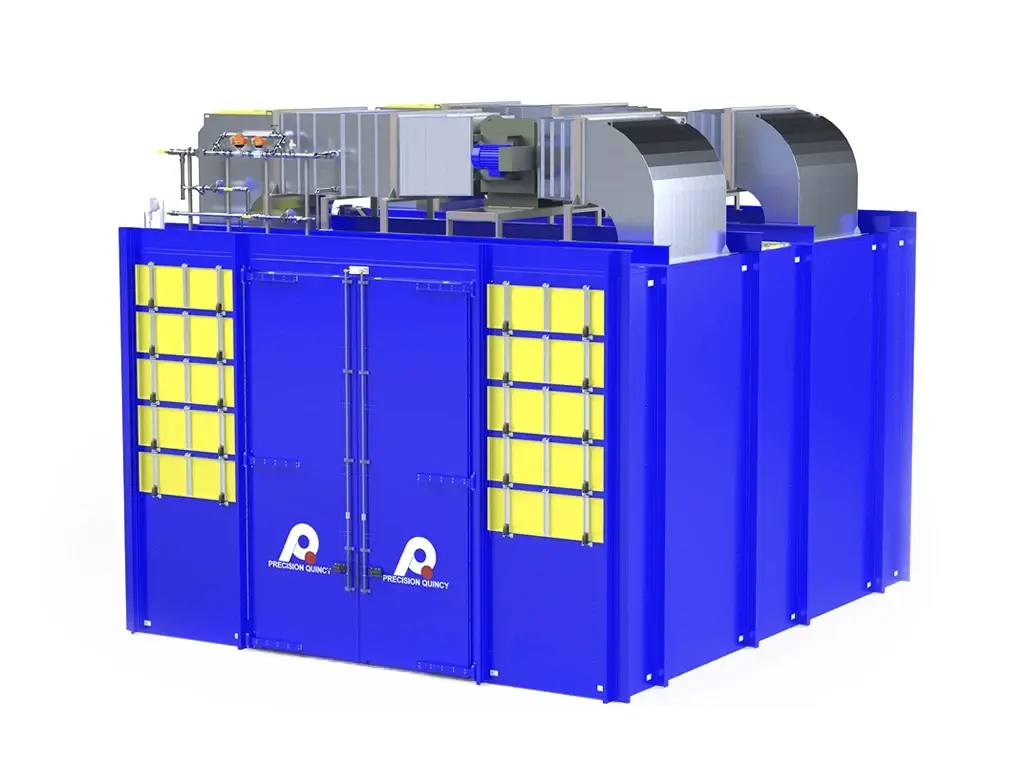
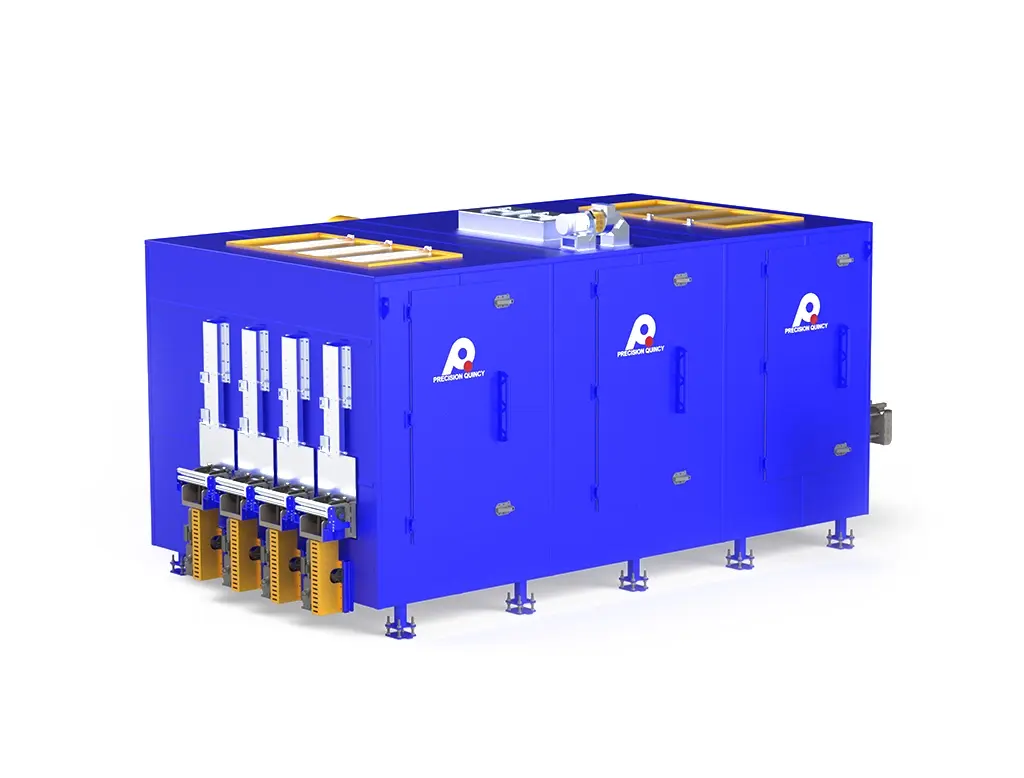
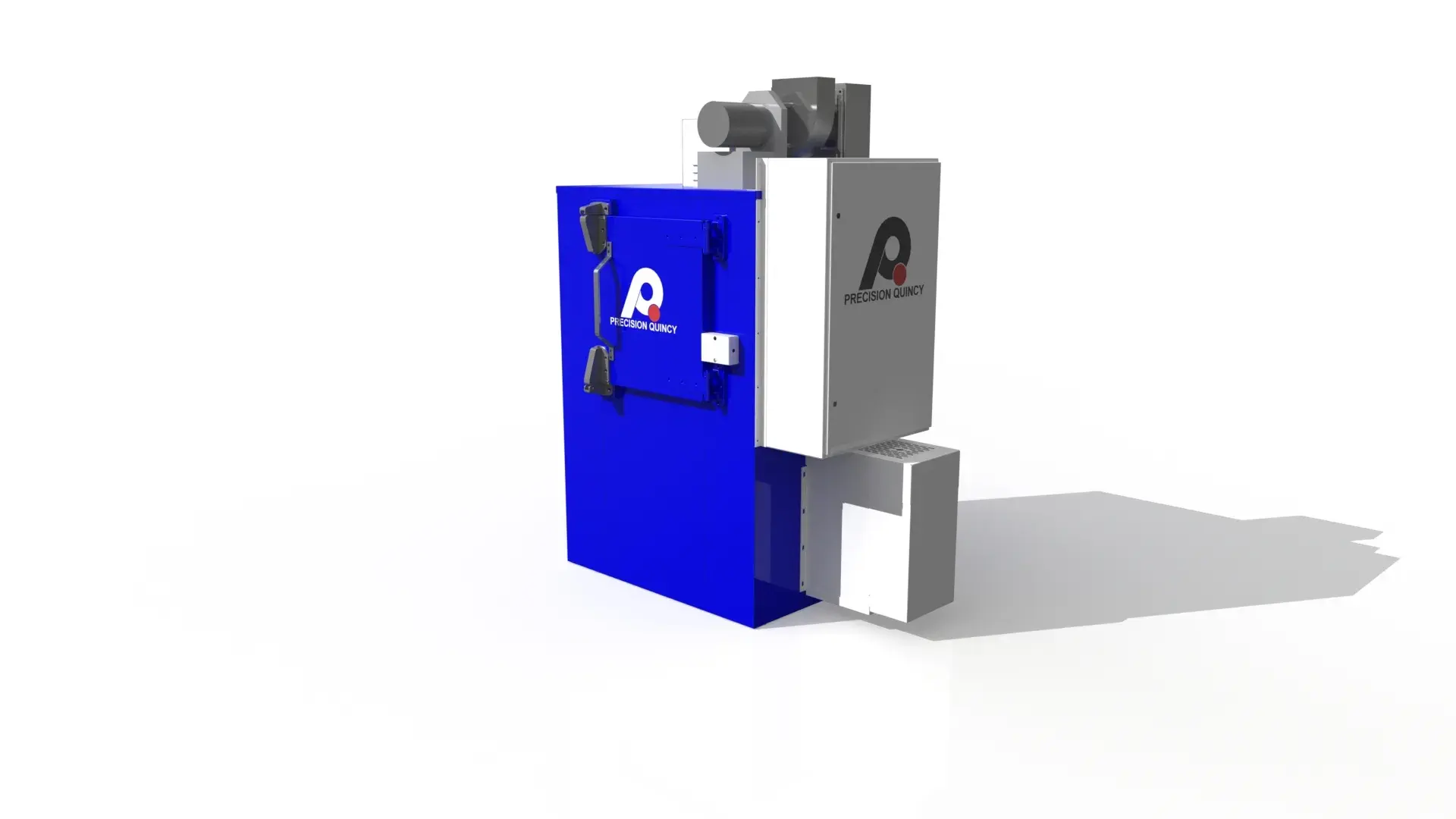
What made the project stand out was the way the equipment package was arranged. Rather than using a conventional fixed side cabinet, the oven was built as a C-Line X2 platform with a face-mounted control enclosure that slid out from the front of the oven for service access. That approach allowed the controls to stay integrated with the machine while preserving the ability to place ovens side by side in tighter manufacturing layouts.
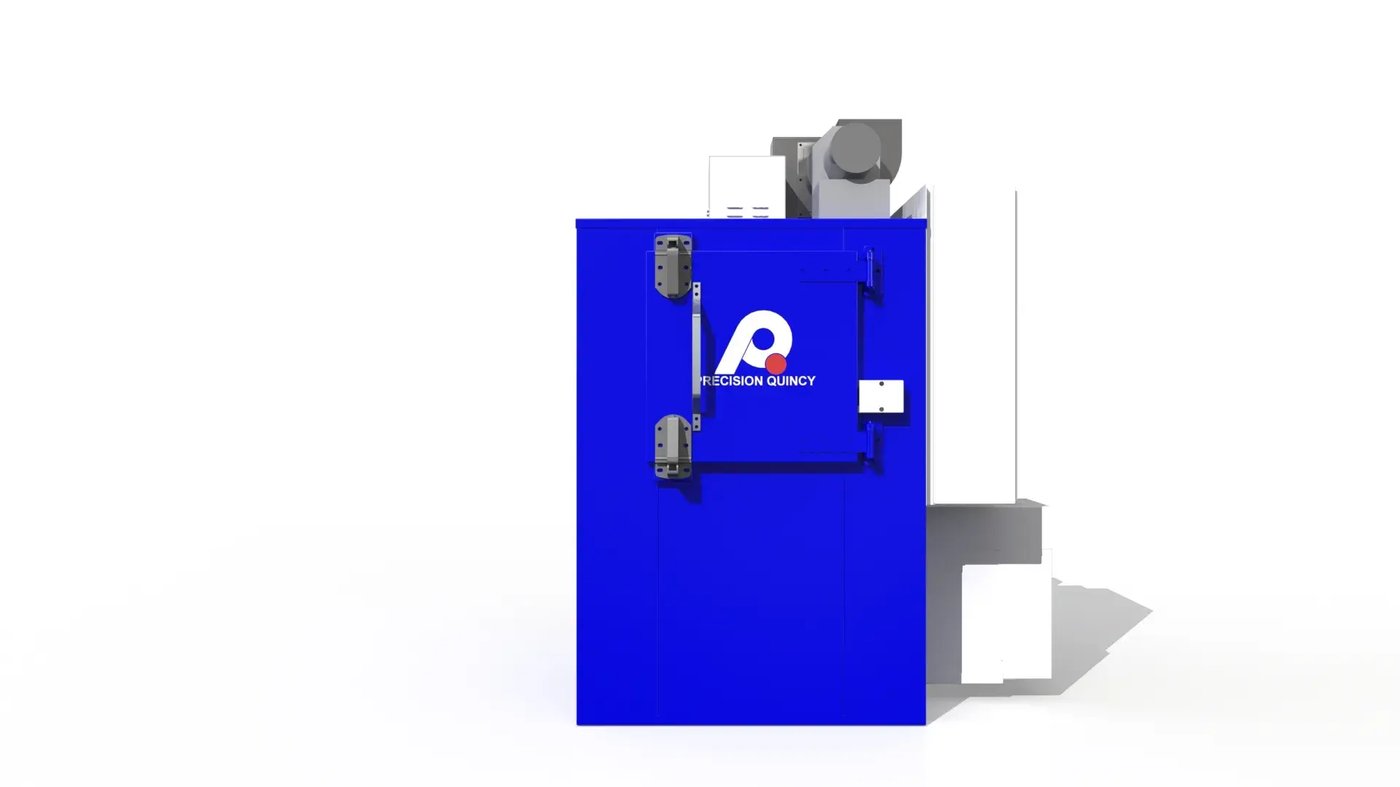
The finished build also showed a factory-assembled one-piece shipment, compact overall proportions, and a structural cabinet-oven architecture intended to support repeatable thermal performance, straightforward service access, and a cleaner installation footprint.
The project required a compact batch curing oven sized for controlled processing of aerospace adhesive or glue in a manufacturing environment where repeatability, footprint, and access all mattered.
APPLICATION REQUIREMENT
- The oven had to support adhesive-curing work in an aerospace manufacturing setting.
- The process had to accommodate glue or adhesive-bearing parts, fixtures, or bonded assemblies requiring controlled heat exposure.
- The machine needed to support programmable cure profiles rather than simple fixed-temperature operation.
WORK CHAMBER / LOADING REQUIREMENT
- Required work chamber: 20 in W × 20 in D × 20 in H.
- The oven had to support shelf-loaded batch processing in a compact cabinet format.
- The included shelf package had to provide flexibility for different load arrangements, including three 100 lb shelves and one 250 lb shelf.
- Product and fixture loading had to minimize restriction of the horizontal airflow path through the work area.
FOOTPRINT / LAYOUT REQUIREMENT
- The customer needed a compact cabinet oven footprint suitable for aerospace production space.
- The oven layout had to support dense equipment placement.
- Service access had to be maintained without forcing permanent side access space for a traditional fixed control cabinet.
OPERATOR / MAINTENANCE REQUIREMENT
- The oven had to allow front loading and unloading through the insulated front door set.
- Operators needed straightforward access to temperature control and main operating devices from the front of the machine.
- Maintenance personnel needed practical access to the controls package for troubleshooting and service.
QUALITY / CONTROL REQUIREMENT
- The process required repeatable temperature control across the work chamber.
- The oven had to provide programmable ramp/soak capability for defined cure cycles.
- The machine had to support a uniform thermal environment appropriate for aerospace adhesive processing.
SAFETY / ENVIRONMENTAL REQUIREMENT
- The oven had to be configured as a Class A unit.
- The process required powered exhaust, purge sequencing, airflow proving, and interlocked heat enable.
- The documented solvent-load basis was 0.13 gal/batch o-xylene equivalent.
UTILITY / SITE REQUIREMENT
- Required electrical service: 230V / 1PH / 60Hz.
- Building access basis allowed shipment through 12 ft W × 16 ft H dock doors.
The project required a compact high-performance curing process based on horizontal forced convection, controlled electric heat input, Class A ventilation, and programmable thermal sequencing.
TEMPERATURE REQUIREMENT
- Operating temperature basis: 250°F to 650°F.
- Maximum temperature basis: 650°F.
- Required work-zone uniformity: ±10°F.
AIRFLOW / HEAT-TRANSFER REQUIREMENT
- Airflow direction basis: full horizontal airflow.
- The process required forced-convection heat transfer across the work chamber.
- Chamber air velocity through the work area was approximately 720 FPM.
- That air velocity supported the heat transfer needed for even temperature distribution across shelf-loaded product within the compact chamber volume.
HEAT-INPUT REQUIREMENT
- Heat source: electric resistance heat.
- Installed heat basis: 18 kW total.
- Heating arrangement basis: two 9 kW heater banks.
- The process required staged electric heat delivery coordinated through the temperature-control system.
VENTILATION REQUIREMENT
- The process required Class A exhaust and purge sequencing.
- Powered exhaust basis: 190 CFM at 1 in. W.c.
- Maximum solvent-load basis: 0.13 gal/batch o-xylene equivalent.
- Heat could only be enabled after the airflow and purge requirements were satisfied.
CONTROL / SEQUENCING REQUIREMENT
- Primary process control basis: ramp/soak temperature control.
- The process required a defined sequence that started the exhaust fan, started the recirculation fan, completed a purge, and then enabled the heat banks.
- The oven had to support running a programmed profile after the purge and airflow conditions were satisfied.
INSTRUMENTATION / SAFETY REQUIREMENT
- The process used Type J work-area thermocouples for temperature sensing.
- The oven required an independent excess-temperature controller for thermal safety.
- If any required safe operating condition was not met, the heat had to shut off.
COOLDOWN REQUIREMENT
- The process required continued fan operation during cooldown.
- The operating sequence required cooling the oven to below 150°F before shutting off the fans.
- The equipment also carried a warning not to shut down the fans when the oven temperature was above 250°F.
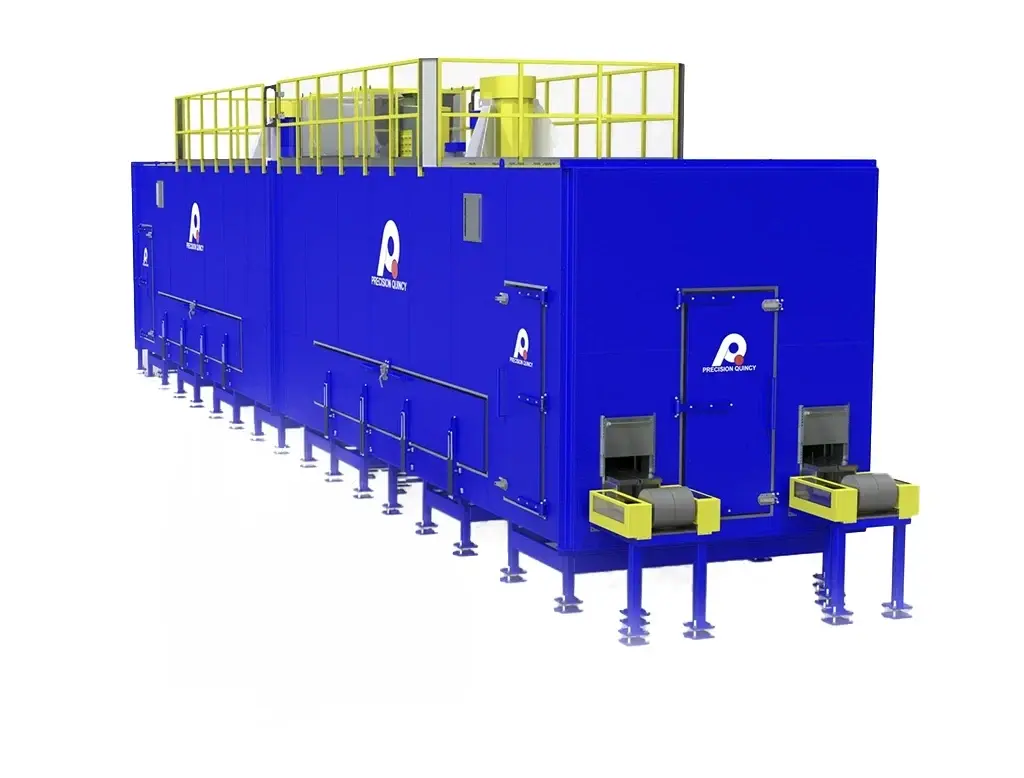
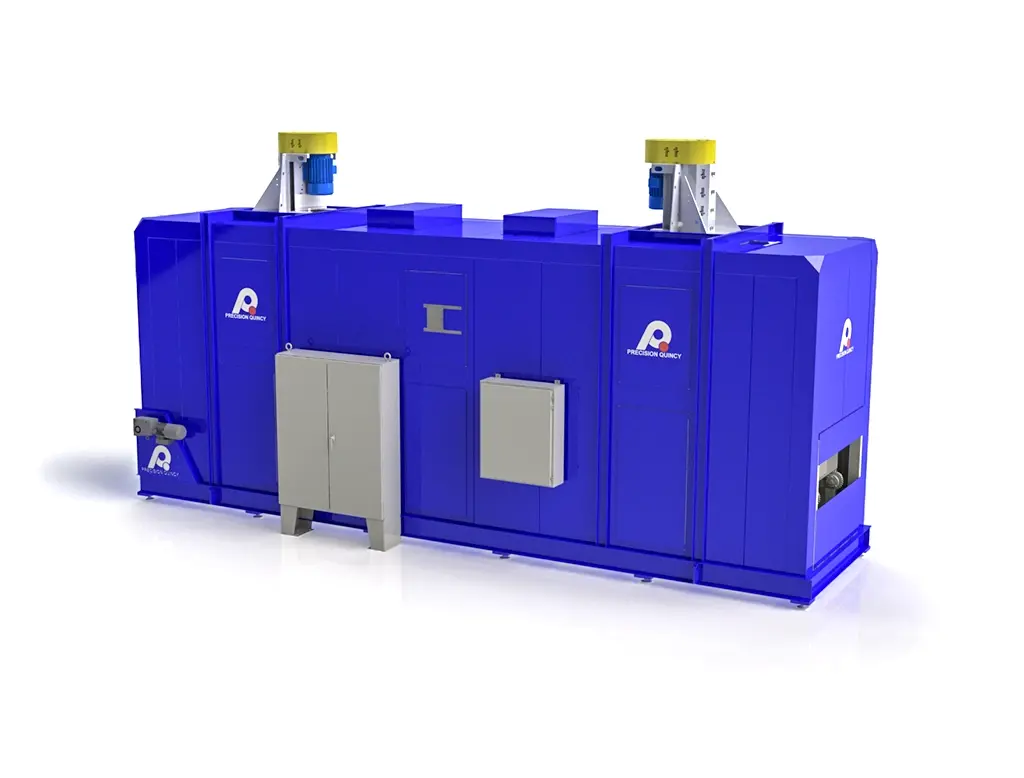
To satisfy those requirements, Precision Quincy configured the project as a C-Line X2 electric Class A cabinet oven with horizontal airflow, integrated front-service controls, a structural tube-frame shell, and one-piece factory assembly.
OVERALL CONCEPT
- One electric Class A cabinet oven.
- Compact front-loading batch configuration.
- C-Line X2 platform with integrated structural and controls architecture.
HEATING ARCHITECTURE
- Heat source: electric resistance heat.
- Total installed heat: 18 kW.
- Heating split into two 9 kW heater banks.
- Each heat bank used three 3000 W elements.
- Heat output was controlled through solid-state relays with backup contactors.
AIRFLOW ARCHITECTURE
- Airflow pattern: full horizontal airflow.
- Recirculation system based on a Jan-Air 12.19 × 4 RB recirculation fan.
- Final design basis called for 2,000 CFM at 2 in. W.c.
- The airflow circuit was arranged to push heated air horizontally through the work chamber and back through the recirculation path.
EXHAUST / VENTILATION ARCHITECTURE
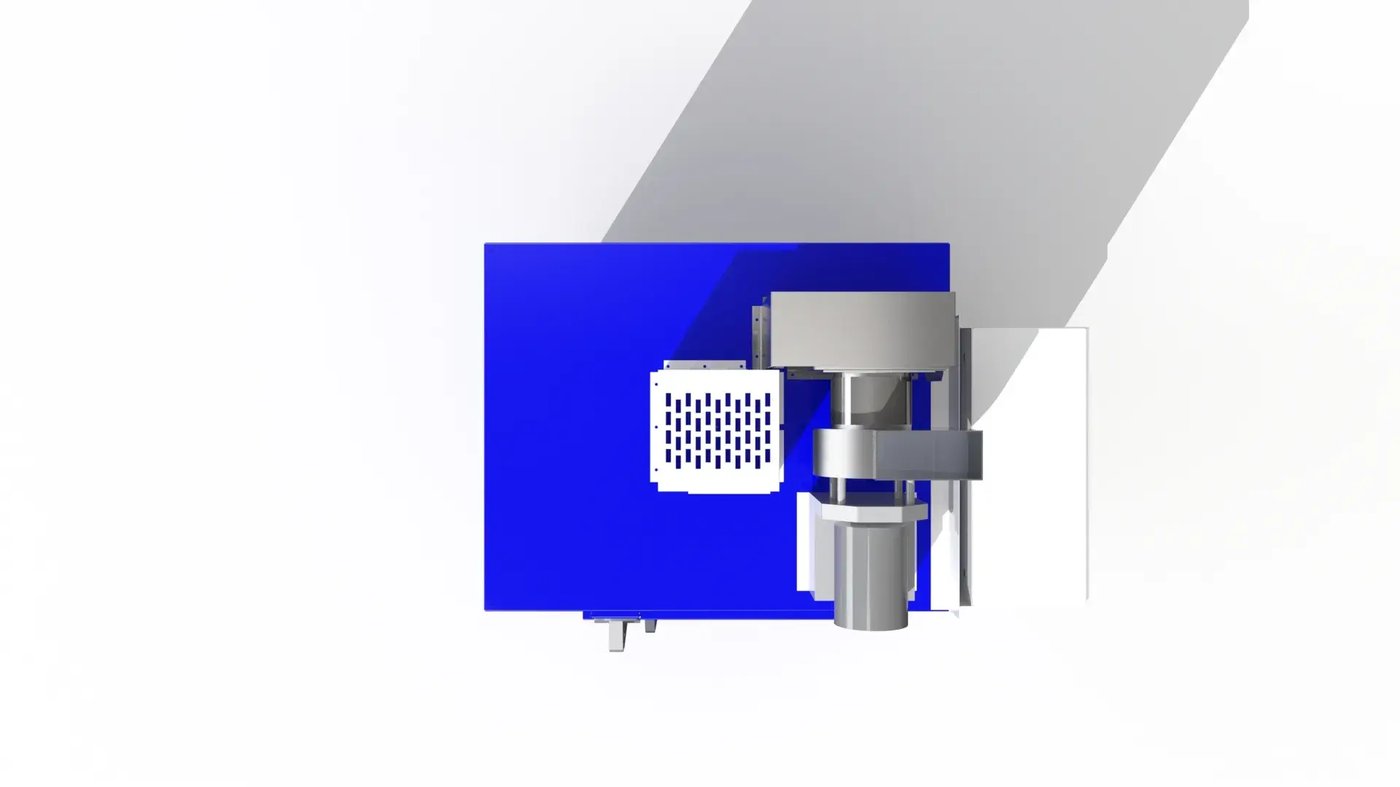
- Class A exhaust based on a PQ1 exhauster delivering 190 CFM at 1 in. W.c.
- Integrated fresh-air inlet at the oven body.
- Exhaust airflow proving, recirculation airflow proving, and purge timing were interlocked with the heat system.
CHAMBER / SHELL ARCHITECTURE
- Internal work chamber: 20 in W × 20 in D × 20 in H.
- The oven used a structural steel tube frame rather than a simple skin-supported cabinet construction.
- The shell used separate inner and outer wall systems.
- Wall construction was 7 in thick, consisting of 6 in of 6 lb mineral wool plus 1 in of 8 lb Superwool.
- Interior material was unpainted aluminized steel.
- Exterior finish was PQ Gray (RAL 7042).
DOOR / LOADING ARCHITECTURE
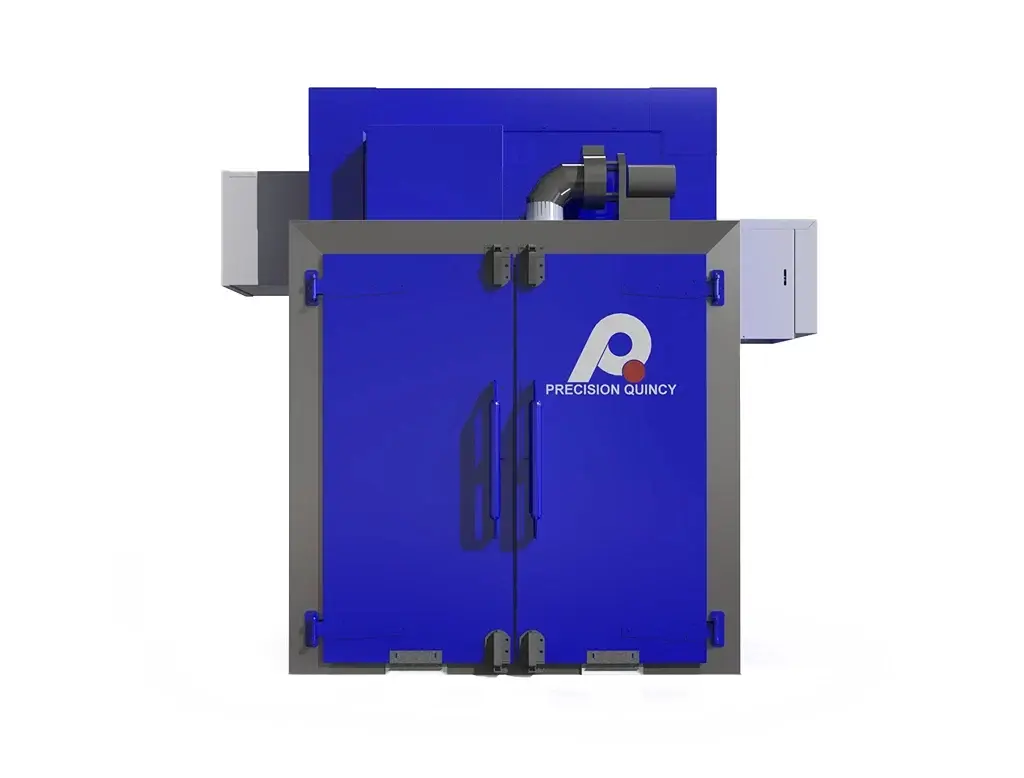
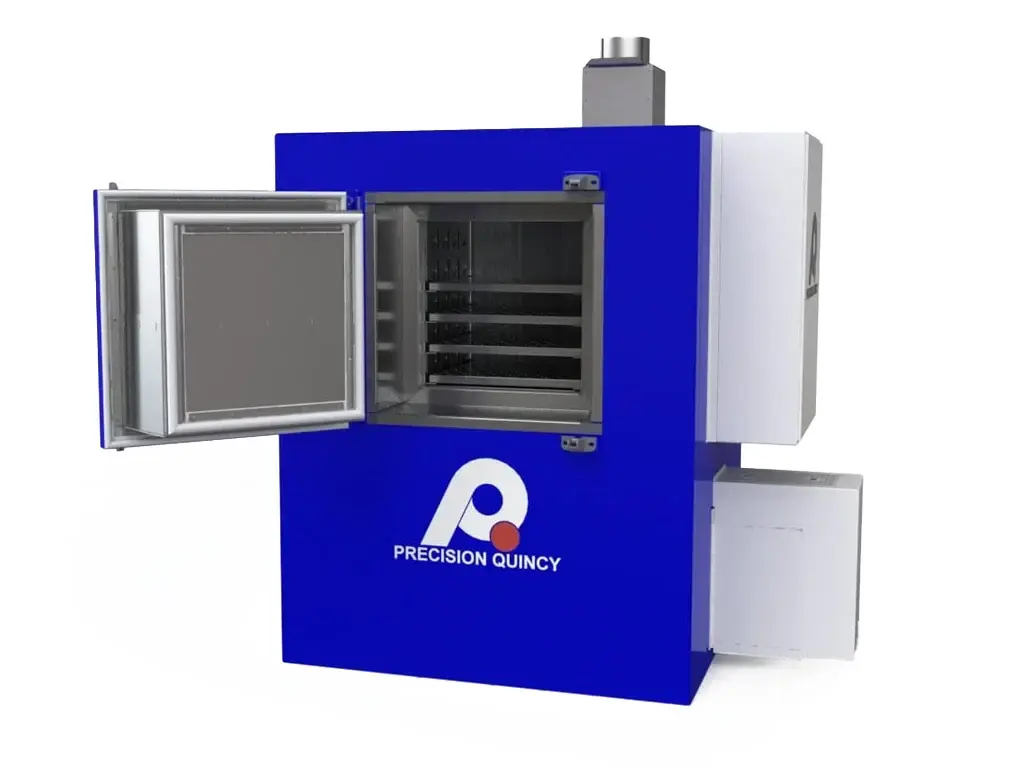
- The oven used a front swing-door access arrangement for batch loading and unloading.
- The shelf package included three 100 lb shelves and one 250 lb shelf.
- The chamber was positioned above the lower structure to provide an elevated front loading height.
C-LINE INTEGRATED CONTROLS ARCHITECTURE
- The defining feature of this project was the integrated slide-out control cabinet.
- The control enclosure was built into the front face of the oven structure and could be pulled forward from the machine for service access.
- After the cabinet was extended, the enclosure door opened to expose the full subpanel and component layout.
- This arrangement allowed the oven to retain front-service electrical access while still supporting side-by-side equipment placement.
- The build photos showed the finished machine with the cabinet extended, confirming the service concept in the completed equipment.
CONTROLS ARCHITECTURE
- Watlow F4T ramp/soak controller for main temperature control.
- Gefran 650L excess-temperature controller.
- NEMA 1 UL508A open industrial control panel.
- Panel-mount USB port.
- Separate operator controls for exhaust fan, recirculation fan, and each heater bank.
- Panel indication for purge complete, fan on, and heater bank on status.
- Enclosure cooling fan and integrated disconnect arrangement.
SAFETY ARCHITECTURE
- Applicable standards basis: NFPA 79, NFPA 86, UL508A.
- Safety logic included:
- Exhaust airflow proving
- Recirculation airflow proving
- Timed purge before heat enable
- Excess-temperature shutdown
- Heat shutdown if required safe operating conditions were not met
SHIPPING / INSTALLATION ARCHITECTURE
- The oven was built as a factory-assembled one-piece shipment.
- The build photos showed the completed unit secured in a wood shipping frame.
- The compact overall package supported practical shipment and move-in without field reassembly of a separate control cabinet.
| OVEN CONFIGURATION | |
|---|---|
| Platform | C-Line X2 |
| Assembly | C8-202020-A Electric Class A Oven |
| Type | Electric Class A cabinet oven |
| Quantity | 1 oven |
| Application | Aerospace adhesive / glue curing |
| Airflow Pattern | Full horizontal |
| Work Chamber | 20 in W × 20 in D × 20 in H |
| Chamber Capacity | 4.63 cu ft |
| Front Access | Swing-door batch loading |
| THERMAL SYSTEM | |
|---|---|
| Operating Temperature Range | 250°F to 650°F |
| Maximum Temperature | 650°F |
| Uniformity | ±10°F |
| Heat Source | Electric resistance heat |
| Installed Heat | 18 kW total |
| Heater Banks | 2 × 9 kW |
| Element Basis | 6 total elements, 3000 W each |
| RECIRCULATION / AIRFLOW SYSTEM | |
|---|---|
| Airflow Pattern | Full horizontal airflow |
| Recirculation Fan | Jan-Air 12.19 × 4 RB |
| Recirculation Performance | 2,000 CFM at 2 in. W.c. |
| Estimated Chamber Air Velocity | ~720 FPM |
| Recirculation Motor | 1.5 HP |
| Fresh Air Inlet | Integrated into oven body |
| EXHAUST / VENTILATION SYSTEM | |
|---|---|
| Oven Classification | Class A |
| Exhaust Fan | PQ1 exhauster |
| Exhaust Performance | 190 CFM at 1 in. W.c. |
| Exhaust Motor | 0.75 HP |
| Maximum Solvent Load | 0.13 gal/batch o-xylene equivalent |
| Design Elevation | < 1000 ft |
| CONSTRUCTION / SHELL SYSTEM | |
|---|---|
| Structural Concept | Structural steel tube-frame cabinet oven |
| Wall Thickness | 7 in |
| Insulation | 6 in of 6 lb mineral wool + 1 in of 8 lb Superwool |
| Inner / Outer Architecture | Separate inner and outer wall systems |
| Interior Material | Unpainted aluminized steel |
| Exterior Finish | PQ Gray (RAL 7042) |
| Control Panel Finish | PQ Gray (RAL 7042) |
| DIMENSIONS | |
|---|---|
| Overall Width | 63.14 in |
| Overall Depth | 44.83 in |
| Overall Height | 75.91 in |
| Oven Body Width | 63.14 in |
| Oven Body Depth | 39.12 in |
| Oven Body Height | 62.07 in |
| Work Area Height | 20.00 in |
| Work Area Width | 20.00 in |
| Work Area Depth | 20.00 in |
| Height to Work Area | 35.00 in |
| Door Swing | 20.33 in |
| Control Enclosure Clearance | 38.00 in |
| Exhaust Outlet | 7.50 in × 3.38 in |
| LOADING / SHELVING | |
|---|---|
| Standard Shelves | 3 × 100 lb capacity |
| Heavy Shelf | 1 × 250 lb capacity |
| Shelf Loading Note | Load to be evenly distributed on shelf |
| CONTROLS & ELECTRICAL | |
|---|---|
| Power Supply | 230V / 1PH / 60Hz |
| Full Load Amps | 96.7 A |
| Control Enclosure | NEMA 1 |
| Panel Listing Basis | UL508A Open Industrial Control Panel |
| SCCR | 5,000 A |
| Main Temperature Controller | Watlow F4T ramp/soak |
| Excess Temperature Controller | Gefran 650L |
| Thermocouples | Type J |
| Purge Timer | Eagle BRE8A6 |
| Disconnect | 200A non-fused disconnect |
| Distribution Block | 175A |
| Panel Features | USB port, purge complete light, fan-on lights, heater-bank lights |
| Heat Control | SSRs with backup contactors |
| Airflow Proving | Exhaust and recirculation airflow switches |
| Enclosure Cooling | Panel cooling fan |
| SHIPMENT / SITE BASIS | |
|---|---|
| Shipment Style | Factory-assembled one-piece unit |
| Shipping Dock Door Basis | 12 ft W × 16 ft H |
| Receiving Dock Door Basis | 12 ft W × 16 ft H |
| Lifting Points | 4 |
| NOTABLE DESIGN FEATURES | |
|---|---|
| Feature | Description |
| C-Line Platform | Next-generation cabinet-oven architecture |
| Slide-Out Controls | Front-service integrated control cabinet |
| Dense Layout Capability | Supported side-by-side oven placement |
| Structural Shell | Tube-frame construction with separate inner and outer walls |
| Process Flexibility | Ramp/soak temperature-profile capability |
| Class A Safety | Exhaust, purge, airflow proving, and interlocked heat enable |