

Project Number: 5536
Conveyorized Electric Motor Stator Curing Oven for EV Motor Manufacturing
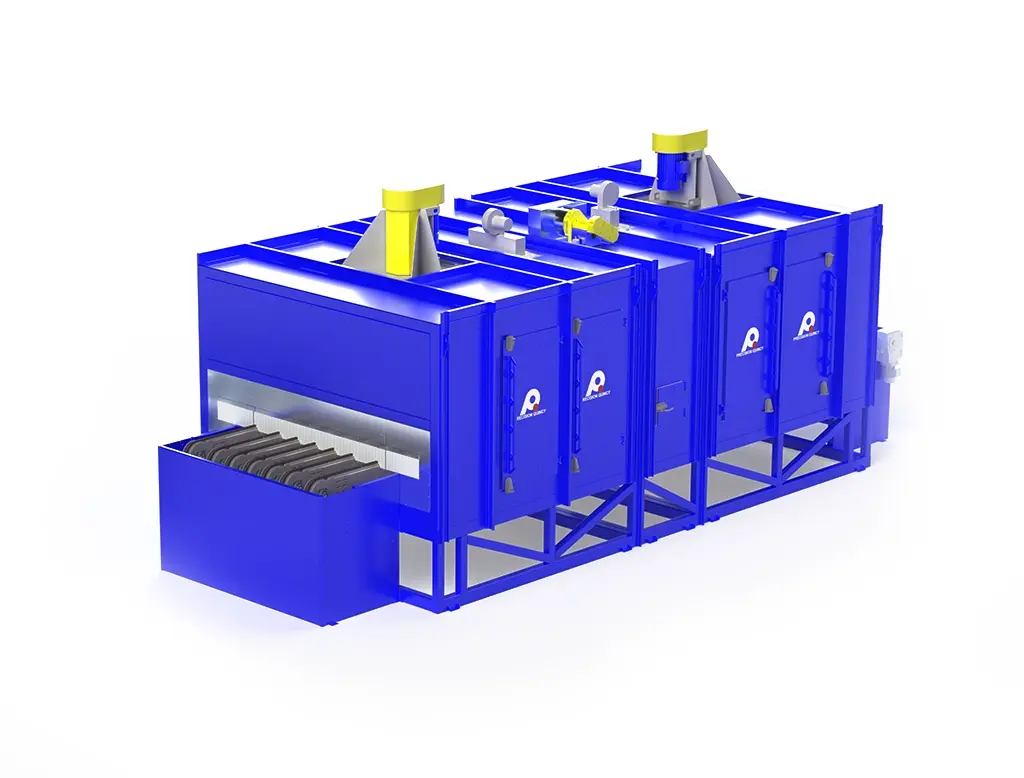
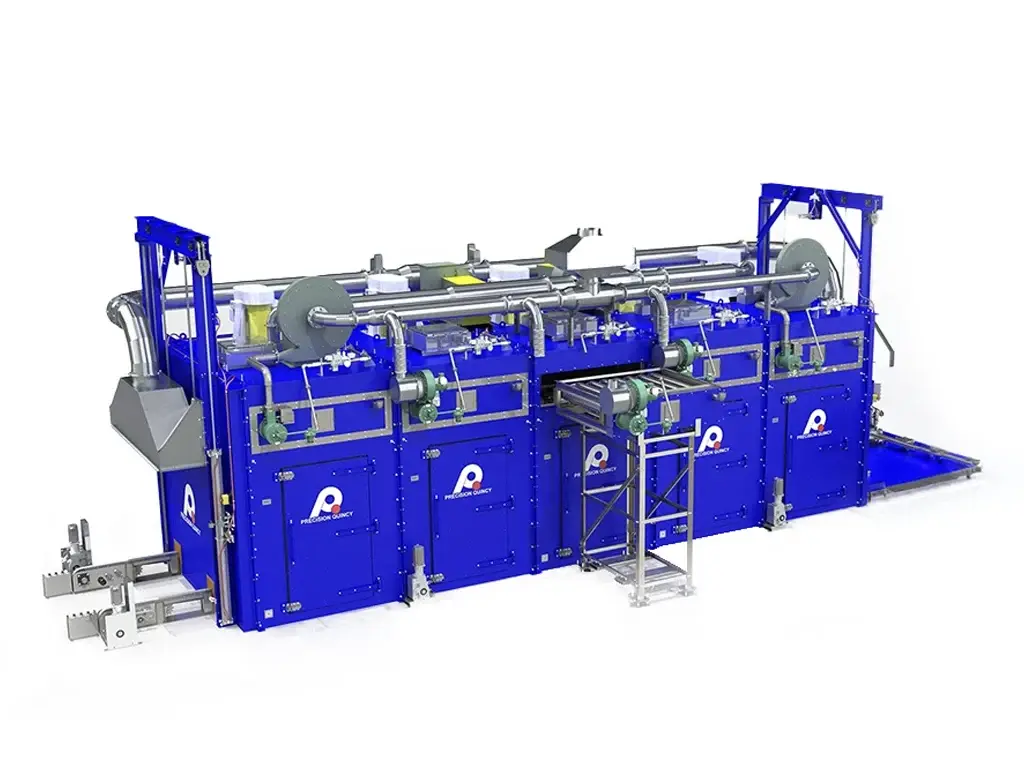
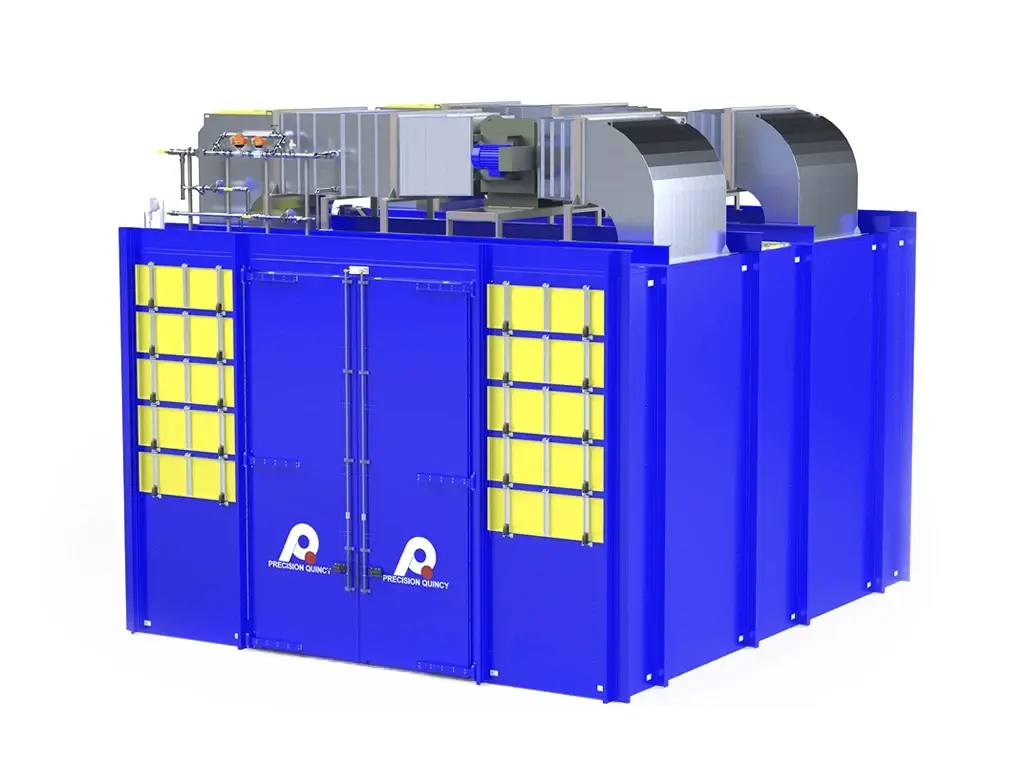
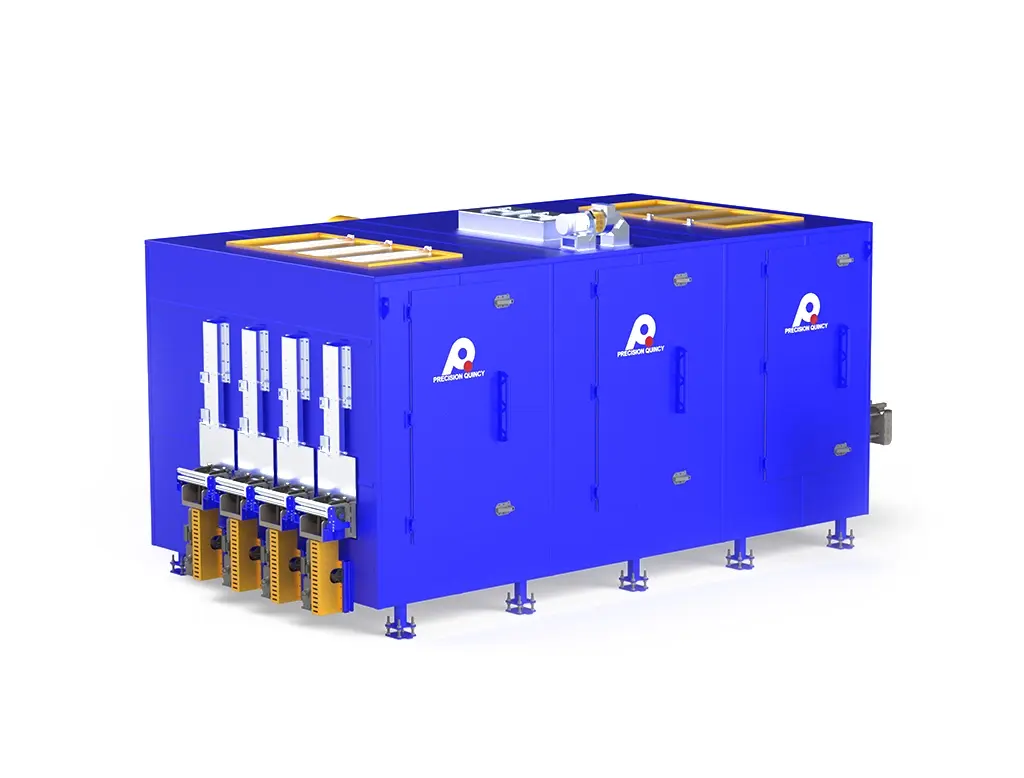
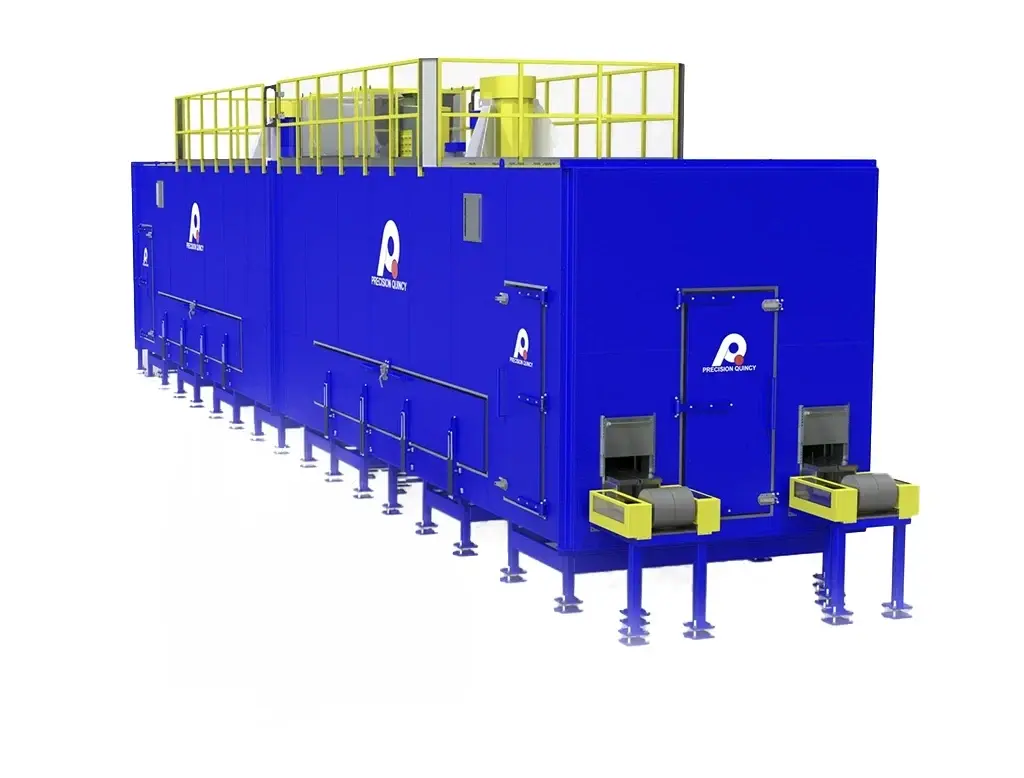
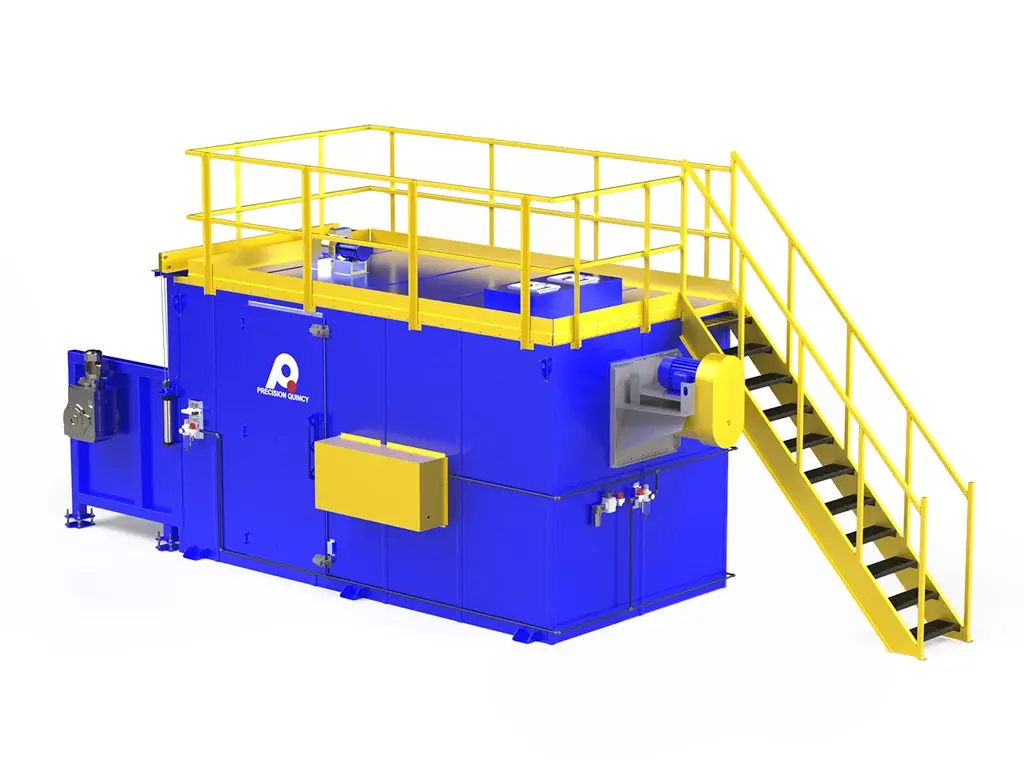
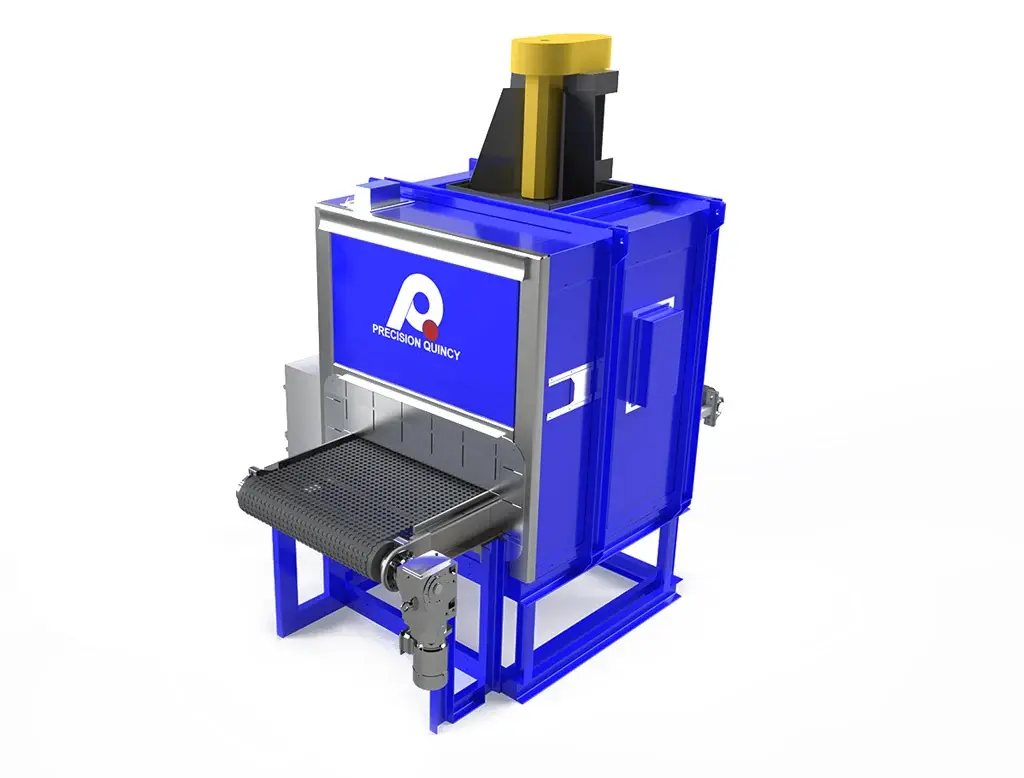
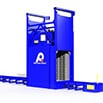
Conveyorized indexed electric Class A oven engineered for robotic loading of heavy motor stators within an automated EV-motor manufacturing cell — featuring 13 internal product stations at 20 in. index, 356°F operation, 126 kW electric resistance heating, 10,241 SCFM vertical bottom-up airflow, pneumatically actuated vertical guillotine doors, tray-centering clamps for repeatable robotic handoff, Allen-Bradley Kinetix 5500 servo-driven conveyor, CompactLogix PLC with PanelView Plus 7 HMI, and an approximately 25,000 lb structural-steel assembly.
_Featured.webp)
.webp?width=1400&name=5536%20FELSOMAT%20(2).webp)
.webp?width=1400&name=5536%20FELSOMAT%20(3).webp)
.webp?width=1400&name=5536%20FELSOMAT%20(4).webp)
.webp?width=1400&name=5536%20FELSOMAT%20(5).webp)
.webp?width=1400&name=5536%20FELSOMAT%20(6).webp)
.webp?width=1400&name=5536%20FELSOMAT%20(7).webp)
.webp?width=1400&name=5536%20FELSOMAT%20(8).webp)
Overview
A conveyorized electric oven was engineered for integration into an automated electric-vehicle motor manufacturing cell. The process centered on stators used in EV motor production, with robotic loading and unloading as part of the overall cell architecture. Rather than serving as a conventional stand-alone heat-up oven, the intended concept was a controlled holding and curing chamber, with parts expected to arrive already preheated before entering the oven.
That process intent shaped the overall equipment strategy. The system was configured as an indexed conveyor oven with vertical bottom-up airflow, electric heat, and robotic tray presentation outside the heated chamber. The oven was built to hold a repeating stream of fixtures in known positions, maintain process temperature, and support integration with automated handling while preserving service access, thermal containment, and repeatable conveyor positioning.
The resulting system combined a single heated chamber with 13 internal index positions, a servo-driven conveyor with Allen-Bradley Kinetix 5500 drive, pneumatically actuated vertical guillotine entrance and exit doors, and a remote-mounted CompactLogix-based controls architecture. The design emphasized repeatable motion control, controlled airflow through the work zone, and automation-ready integration rather than manual batch loading.
The process requirement was to cure electric-motor stators within an automated EV-motor manufacturing cell. Each stator weighed approximately 66 lb, and the system had to handle a total batch mass of approximately 4,752 lb. The oven had to function as one element within a robotic load/unload sequence, with all product handling automated rather than manual.
APPLICATION REQUIREMENT
- The equipment had to cure stators used in electric-vehicle motor production as part of an automated
manufacturing cell. - The process was designed around automated tray-based handling with robotic load and unload, requiring the oven to function as one integrated module within the broader cell architecture.
- Production rate basis: approximately 111 parts per hour.
ROBOTIC INTERFACE REQUIREMENT
- Repeatable robotic interaction at the load and unload position was a key requirement. Product trays had to present in a precisely known location outside the oven chamber so the robotic system could reliably place and remove parts.
- The conveyor position had to be mechanically repeatable, and the tray-holding arrangement had to center and secure the tray during robotic engagement.
- A pneumatic positioning system was required to push the customer tray into the correct location for robotic pickup and placement, creating a mechanically repeatable handoff point between the oven conveyor and the surrounding automated cell.
PROCESS CONCEPT REQUIREMENT
- The intended process concept was not to raise cold parts from ambient to cure temperature. Parts were expected to enter the oven already preheated, making the oven function as a heated holding and curing chamber within the broader production cell.
- The oven therefore had to maintain process temperature and controlled residence time across all internal stations rather than deliver aggressive heat-up from ambient.
SAFETY / CLASSIFICATION REQUIREMENT
- The oven was required to be designed as an NFPA 86 Class A unit to accommodate the VOC-bearing process conditions associated with the curing material system.
- VOC loading basis: approximately 164 grams per hour.
UTILITY REQUIREMENT
- Required electrical service: 480V / 3PH / 60Hz. Full load amperage: approximately 188 A.
- Required pneumatic supply: 60 PSI minimum.
The thermal process requirements were established from the need to cure electric-vehicle motor stators in a controlled indexed-conveyor holding chamber within an automated manufacturing cell.
TEMPERATURE CAPABILITY
- Operating temperature: 356°F. Maximum operating temperature: 450°F.
- Empty-chamber uniformity: ±15°F setpoint.
PROCESS BASIS
- The thermal process basis is curing and controlled thermal holding of preheated EV motor stators within an automated manufacturing cell.
- Because parts arrived preheated, the oven's thermal role was to maintain parts within the required curing environment across the full residence time rather than drive a cold-part heat-up from ambient.
HEAT INPUT REQUIREMENT
- Heat source: electric resistance heat. Total installed heat: 126 kW across four heater banks.
- Heater bank distribution: Banks 1 and 2 at 27 kW each; Banks 3 and 4 at 36 kW each.
AIRFLOW DELIVERY REQUIREMENTS
- Airflow pattern: vertical bottom-up. Heated air driven upward through the product zone and tray structure.
- Total circulated air volume: approximately 10,241 SCFM.
- Recirculation fan: New York Blower 278 PLR plug fan — 10,250 CFM at 3.5 in. w.c.; 10 HP motor.
- Supply and return concept: pressurized supply plenum with adjustable air ports and matched return plenum system.
EXHAUST / VENTILATION BASIS
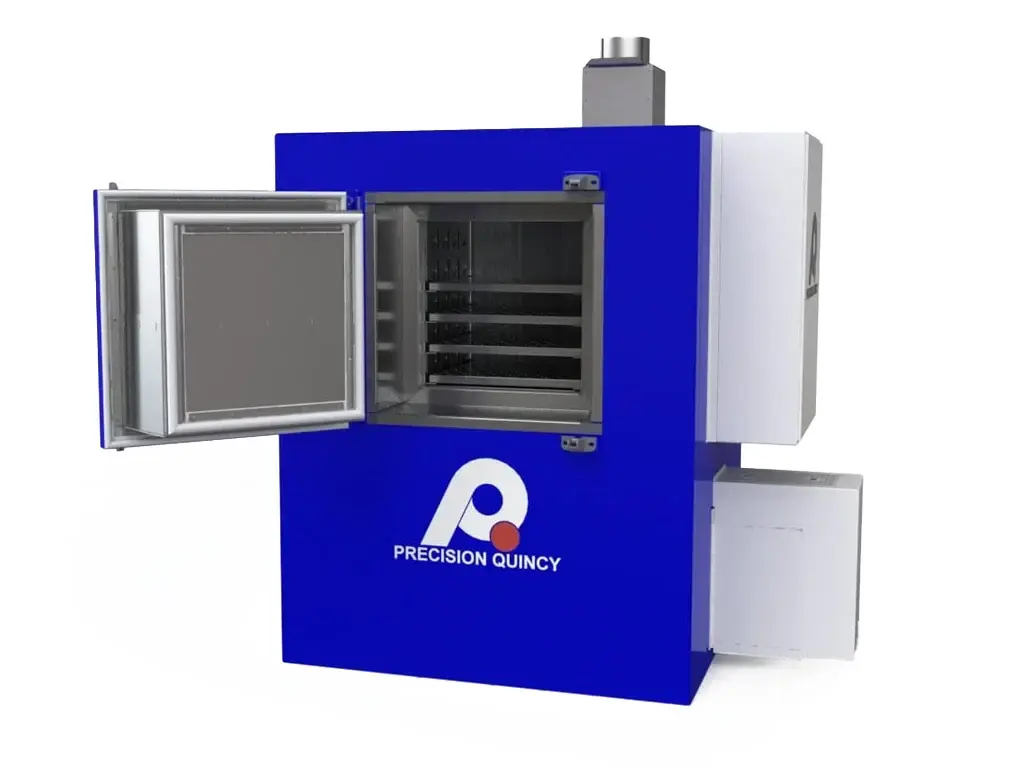
- Exhaust fan: PQ1 exhauster — approximately 155 CFM at 1 in. w.c.; 0.75 HP motor. Exhaust opening: 3.5 in. × 7.5 in.
- Oven classification: NFPA 86 Class A. VOC loading basis: approximately 164 grams per hour.
To deliver the process requirements for this EV motor stator curing application, the following equipment concept and architecture was developed.
OVERALL CONCEPT
- One conveyorized indexed electric Class A oven with 13 internal product stations and a 20 in. product index, integrated into an automated EV-motor manufacturing cell with robotic load and unload.
- The design emphasized repeatable motion control, controlled bottom-up airflow, and automation-ready tray positioning rather than manual batch loading.
HEATING ARCHITECTURE
- Heat source: electric resistance heat. Total installed heat: 126 kW across four heater banks (27 kW / 27 kW / 36 kW / 36 kW).
- Heat control: solid-state relay control per bank. Process controller: Watlow F4T. Overtemperature protection: Gefran controller.
AIRFLOW / RECIRCULATION ARCHITECTURE
- Airflow pattern: vertical bottom-up.
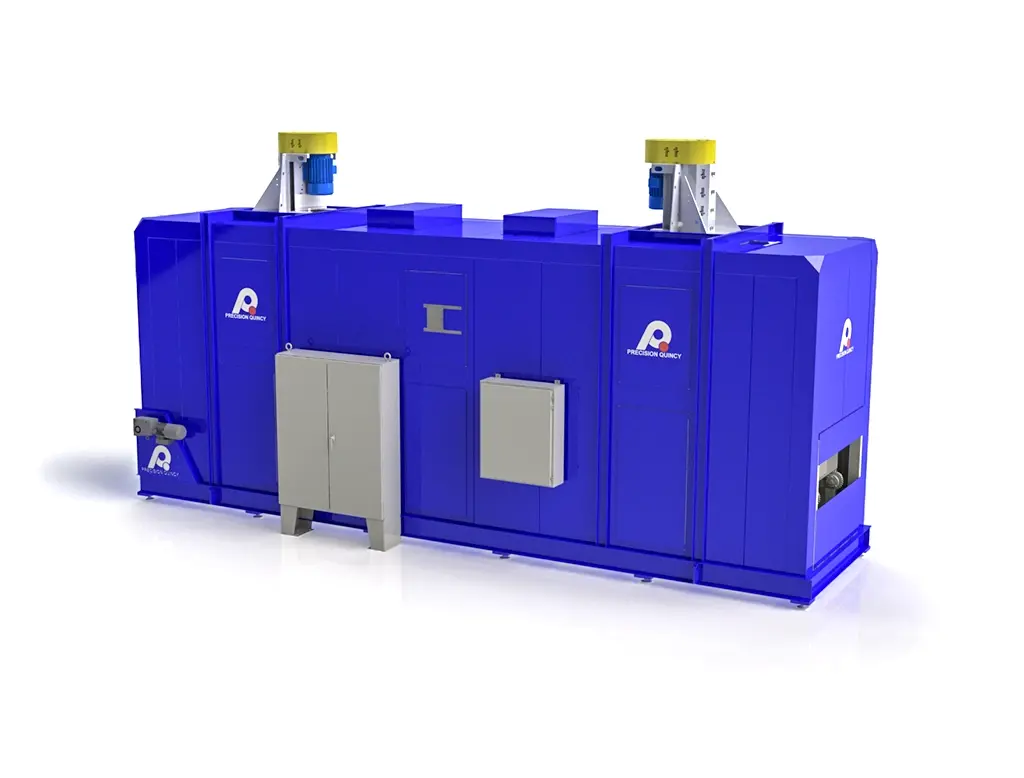
- Recirculation fan: New York Blower 278 PLR plug fan — 10,250 CFM at 3.5 in. w.c.; 10 HP motor; Allen-Bradley PowerFlex 525 VFD.
- Exhaust: PQ1 exhauster — approximately 155 CFM at 1 in. w.c.; 0.75 HP motor.
CONVEYOR / HANDLING ARCHITECTURE
- Conveyor type: Conveyor type: double-pitch, oversized-roller, carbon-steel chain with positive-engagement sprockets and automatic pneumatic tensioning. Custom-built roller chain guides.
- Drive: Allen-Bradley VPL motor with Kinetix 5500 servo drive. Conveyor speed during index: 13 ft/min. Total index time: approximately 14.94 seconds. Belt return path inside the heated chamber.
- Load/unload position: 12 o'clock position of the drive sprocket, outside the oven chamber.
- Tray-centering concept: clamps/locking mechanisms with adjustable hard stops and pneumatic positioning for robotic pickup and placement.
SHELL / CONSTRUCTION ARCHITECTURE
- Work chamber dimensions: approximately 142 in. L × 76 in. W × 46 in. H.
- Overall exterior dimensions: (oven body only): approximately 172 in. L × 88 in. W × 78 in. H. Overall system dimensions: approximately 250 in. L × 106 in. W × 110 in. H.
- Main wall construction: 6 in. thick with 6 in. of 6 lb mineral wool. Front wall: 4 in. thick with 4 in. of 6 lb mineral wool.
- Interior: aluminized steel. Exterior: carbon steel, Precision Quincy Blue finish. Approximate shipping weight: 25,000 lb.
DOOR / ACCESS ARCHITECTURE
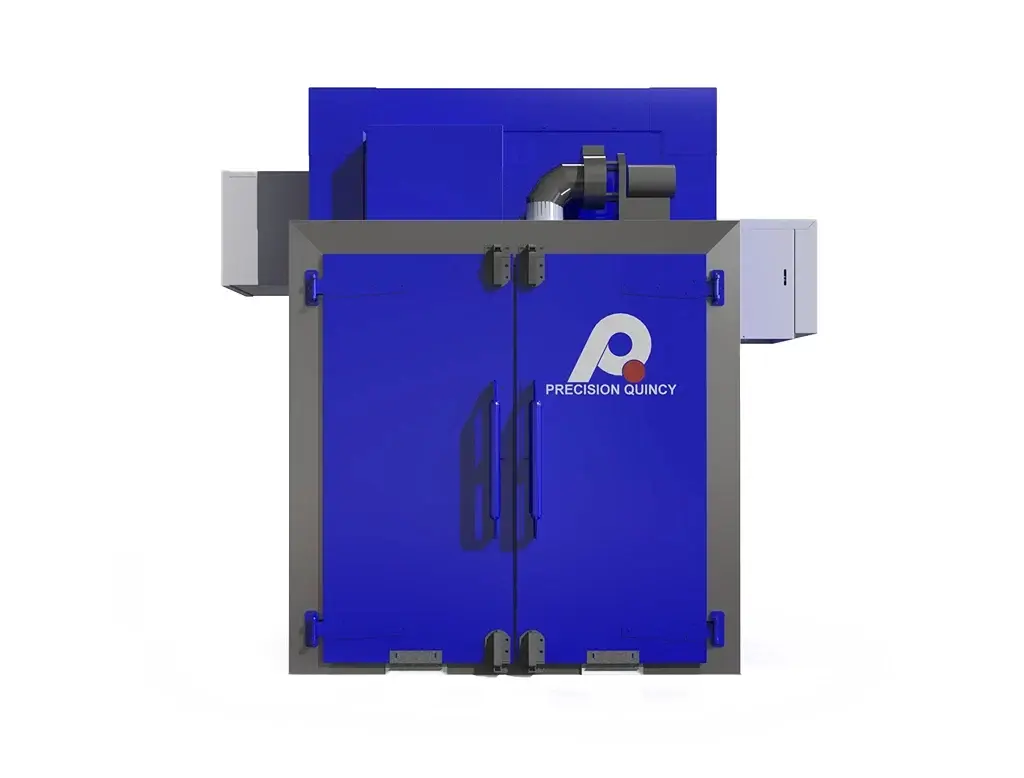
- Entrance and exit doors: pneumatically actuated vertical guillotine doors.
- Two side access doors on the oven body with Allen-Bradley SensaGuard interlocks.
- Conveyor opening width: 68 in. each end. Conveyor height: 47.5 in. above finished floor.
CONTROLS ARCHITECTURE
- PLC: Allen-Bradley CompactLogix 5069-L330ER. HMI: Allen-Bradley PanelView Plus 7 Standard, 10 in.
- Temperature controller: Watlow F4T. Overtemperature control: Gefran. Fan drives: Allen-Bradley PowerFlex 525 VFDs.
- Conveyor servo drive: Allen-Bradley Kinetix 5500 with VPL motor.
- Controls architecture: remote-mounted NEMA 12 high-voltage and low-voltage control enclosures with separate oven junction box and external network-device mounting panel.
- Safety: Allen-Bradley SensaGuard interlocks on side access doors; exhaust and recirculation airflow switches; ATC purge timer; local E-stop affecting conveyor operation.
- Applicable standards basis: NFPA 79, NFPA 86, UL 508A.
| OVEN CONFIGURATION | |
|---|---|
| Type | Conveyorized indexed electric Class A oven |
| Application | EV motor stator curing within automated manufacturing cell |
| Internal Stations | 13 stations inside oven |
| Product Index | 20 in. |
| Product Chamber Dimensions | 142 in. L × 76 in. W × 46 in. H |
| Exterior Dimensions (Oven Body) | Approx. 172 in. L × 88 in. W × 78 in. H |
| Overall System Dimensions | Approx. 250 in. L × 106 in. W × 110 in. H |
| Conveyor Opening Width | 68 in. each end |
| Conveyor Height | 47.5 in. above finished floor |
| Chain Spacing | 63 in. |
| Approx. Shipping Weight | 25,000 lb |
| THERMAL HEAT POWER SYSTEM | |
|---|---|
| Operating Temperature | 356°F |
| Maximum Temperature | 450°F |
| Empty-Chamber Uniformity | ±15°F setpoint |
| Heat Source | Electric resistance heat |
| Total Heat Power | 126 kW |
| Heater Bank Distribution | Banks 1 & 2: 27 kW each; Banks 3 & 4: 36 kW each |
| Oven Classification | NFPA 86 Class A |
| VOC Loading | Approx. 164 grams/hr |
| RECIRCULATION / AIRFLOW SYSTEM | |
|---|---|
| Airflow Pattern | Vertical bottom-up |
| Total Circulated Air Volume | Approx. 10,241 SCFM |
| Recirculation Fan | New York Blower 278 PLR plug fan |
| Recirculation Fan Capacity | 10,250 CFM at 3.5 in. w.c. |
| Recirculation Fan Motor | 10 HP |
| Fan Drive | Allen-Bradley PowerFlex 525 VFD |
| Supply / Return Concept | Pressurized supply plenum with adjustable air ports and matched return plenum |
| EXHAUST SYSTEM | |
|---|---|
| Exhaust Fan | PQ1 exhauster |
| Exhaust Volume | Approx. 155 CFM at 1 in. w.c. |
| Exhaust Fan Motor | 0.75 HP |
| Exhaust Opening | 3.5 in. × 7.5 in. |
| CONVEYOR / HANDLING SYSTEM | |
|---|---|
| Conveyor Type | Double-pitch, oversized-roller, carbon-steel chain |
| Conveying Motion | Indexed |
| Drive | Allen-Bradley VPL motor with Kinetix 5500 servo drive |
| Conveyor Speed | 13 ft/min during index |
| Index Timing | Approx. 14.94 seconds total index time |
| Sprockets | Positive-engagement sprockets |
| Belt Tension | Automatic pneumatic tensioning |
| Chain Guides | Custom-built roller chain guides |
| Belt Return Path | Inside heated chamber |
| Load / Unload Position | 12 o'clock position of drive sprocket, outside oven chamber |
| Tray Positioning | Tray-centering clamps / locking mechanisms with adjustable hard stops and pneumatic positioning for robotic loading and unloading |
| CONSTRUCTION MATERIALS / FINISH | |
|---|---|
| Primary Structure | Carbon steel structural frame internal to insulated walls |
| Interior | Aluminized steel |
| Exterior | Carbon steel; Precision Quincy Blue finish |
| Main Wall Construction | 6 in. thick with 6 in. of 6 lb mineral wool |
| Front Wall Construction | 4 in. thick with 4 in. of 6 lb mineral wool |
| Door Type | Pneumatically actuated vertical guillotine doors (entrance and exit) |
| SAFETY & COMPLIANCE | |
|---|---|
| NFPA 86 Classification | Class A |
| Applicable Standards | NFPA 79, NFPA 86, UL 508A |
| Access Door Safety | Allen-Bradley SensaGuard interlocks on side access doors |
| Airflow Safety | Exhaust and recirculation airflow switches |
| Work-Area High Limit | Gefran overtemperature controller |
| Purge Control | ATC purge timer |
| Emergency Stop | Local control-enclosure E-stop affecting conveyor operation |
| CONTROLS & ELECTRICAL | |
|---|---|
| Facility Voltage | 480V / 3PH / 60Hz |
| Full Load Amperage | Approx. 188 A |
| Pneumatic Supply | 60 PSI minimum |
| PLC | Allen-Bradley CompactLogix 5069-L330ER |
| HMI | Allen-Bradley PanelView Plus 7 Standard, 10 in. |
| Temperature Controller | Watlow F4T |
| Overtemperature Control | Gefran |
| Fan Drives | Allen-Bradley PowerFlex 525 VFDs |
| Conveyor Servo Drive | Allen-Bradley Kinetix 5500 with VPL motor |
| Controls Architecture | Remote-mounted NEMA 12 high-voltage and low-voltage enclosures with separate junction box and network-device panel |
| PROCESS SUMMARY | |
|---|---|
| Product | Electric-vehicle motor stators |
| Market / Application | EV motor manufacturing |
| Process Type | Indexed curing and controlled thermal holding within an automated manufacturing cell |
| Part Mass | 66 lb per part; 4,752 lb total batch mass |
| Production Rate | Approx. 111.1 parts/hr |
| Fixture / Tray | Customer robotic fixtures with pneumatic tray-centering and positioning for robotic load/unload |
| Testing / Validation | Factory preassembly, wiring checkout, operational test, and chamber balancing / uniformity adjustment prior to shipment |
| Key Verification Concept | Repeatable servo-driven index timing, pneumatic tray-centering accuracy, bottom-up thermal delivery, and VOC-compliant Class A exhaust control within an automated cell |