

Project Number: 5267
Dual-Oven Natural Gas-Fired Convection Curing System for Laboratory Sink Mold Partial Cure
Overview
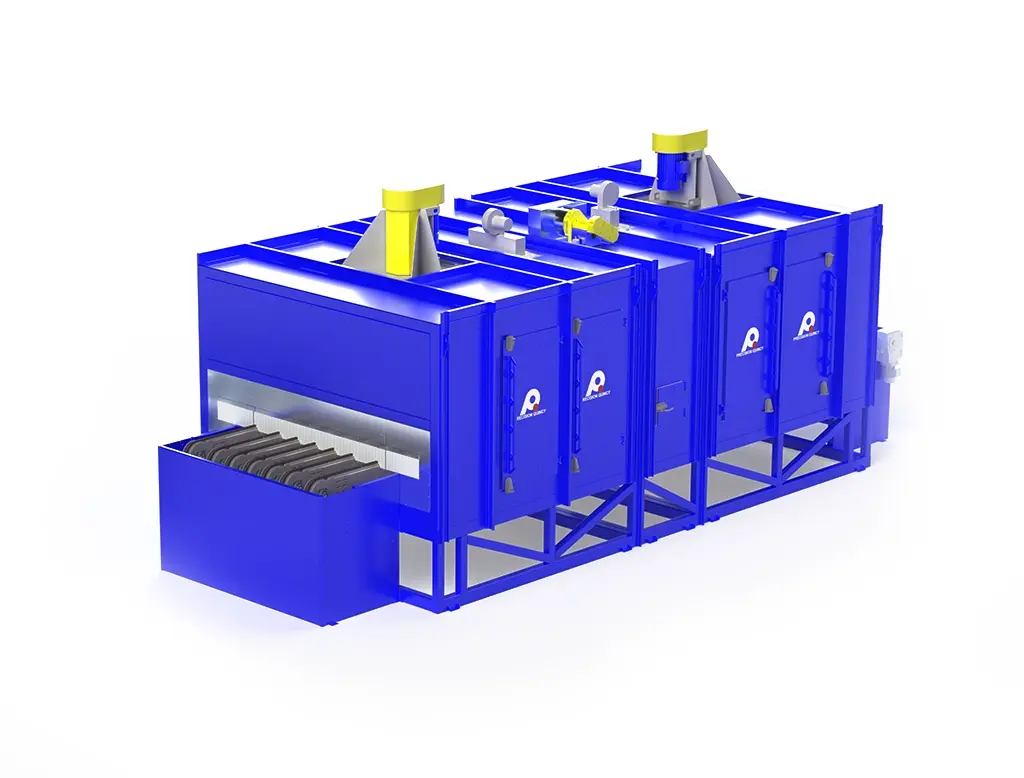
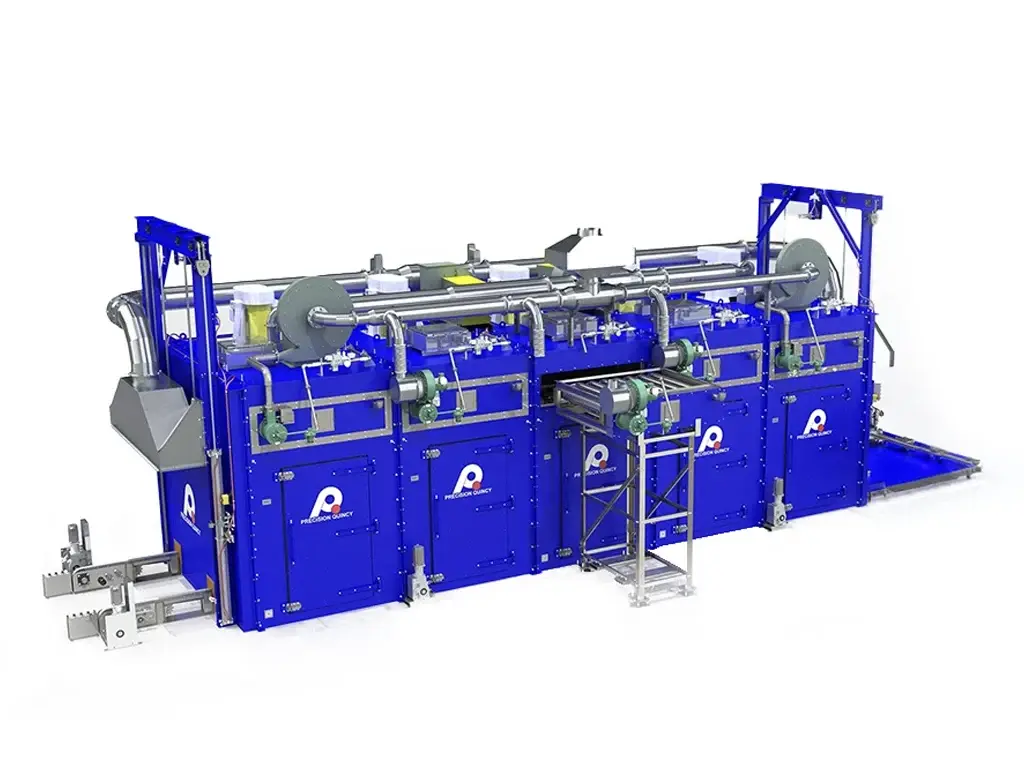
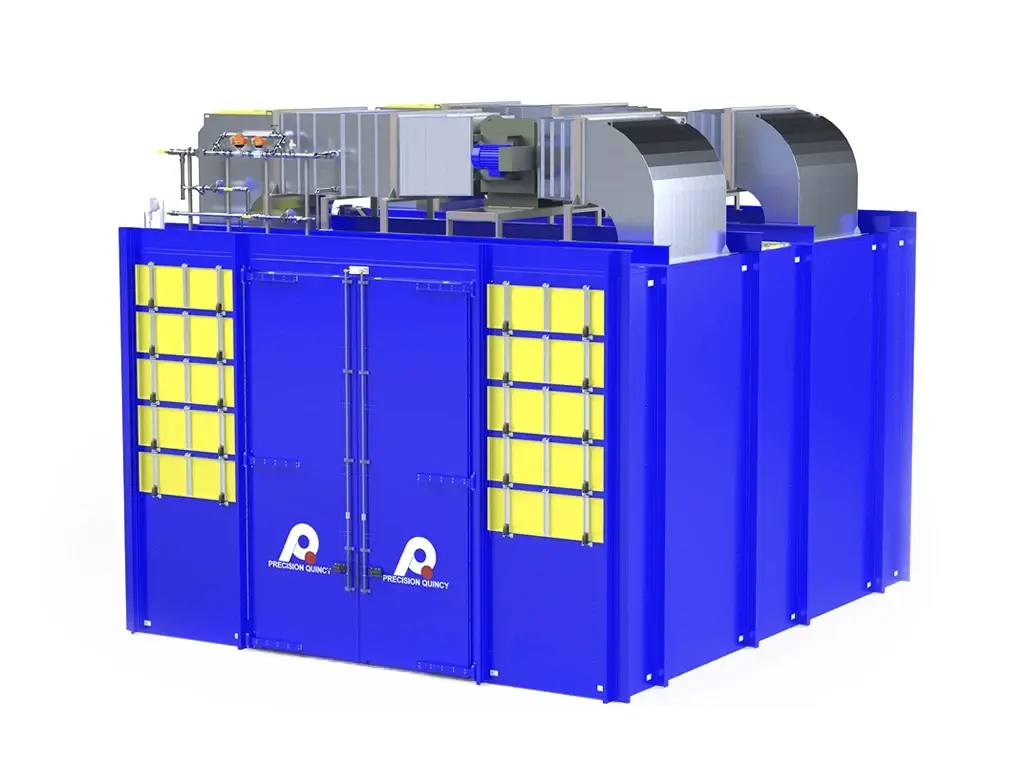
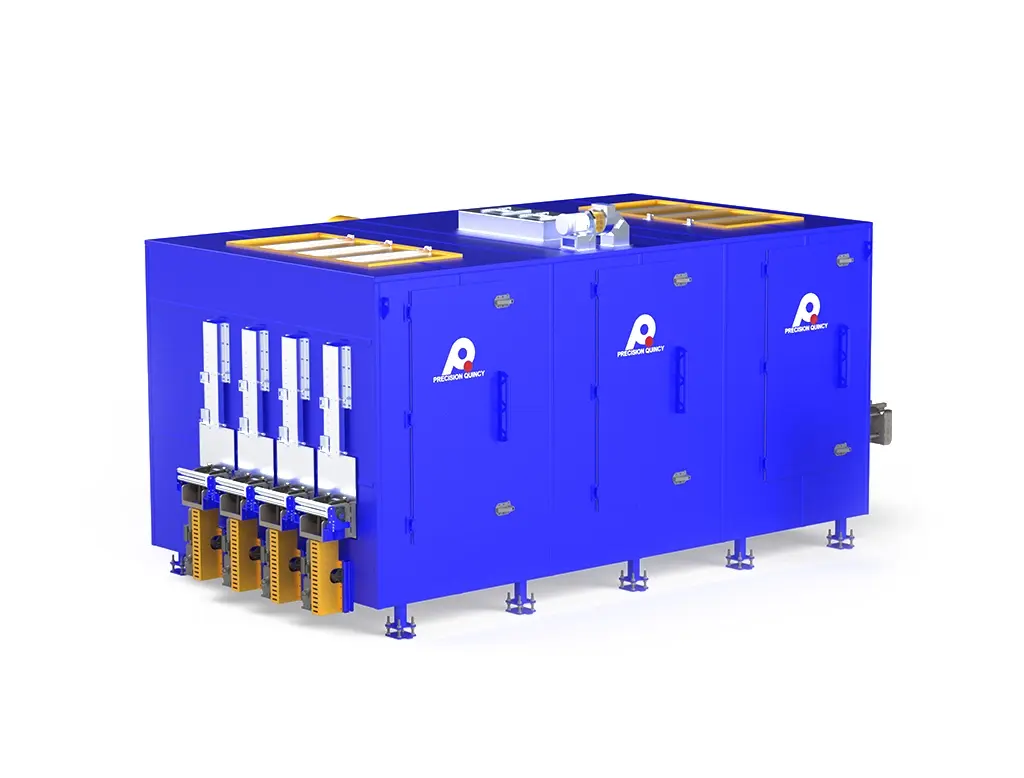
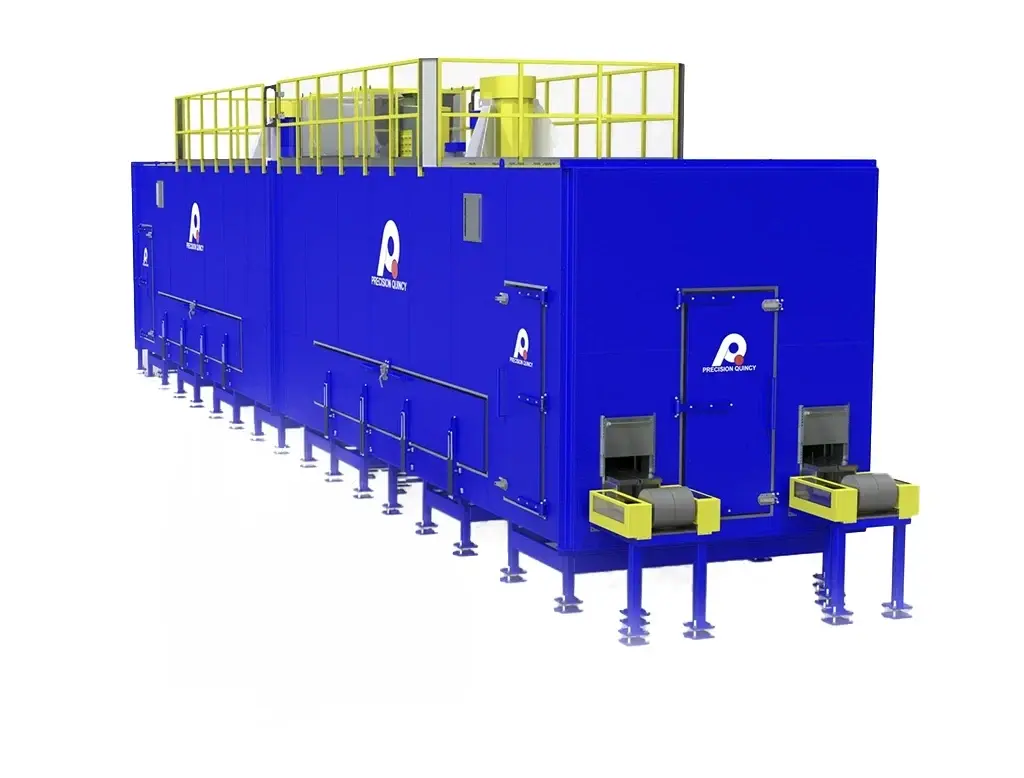
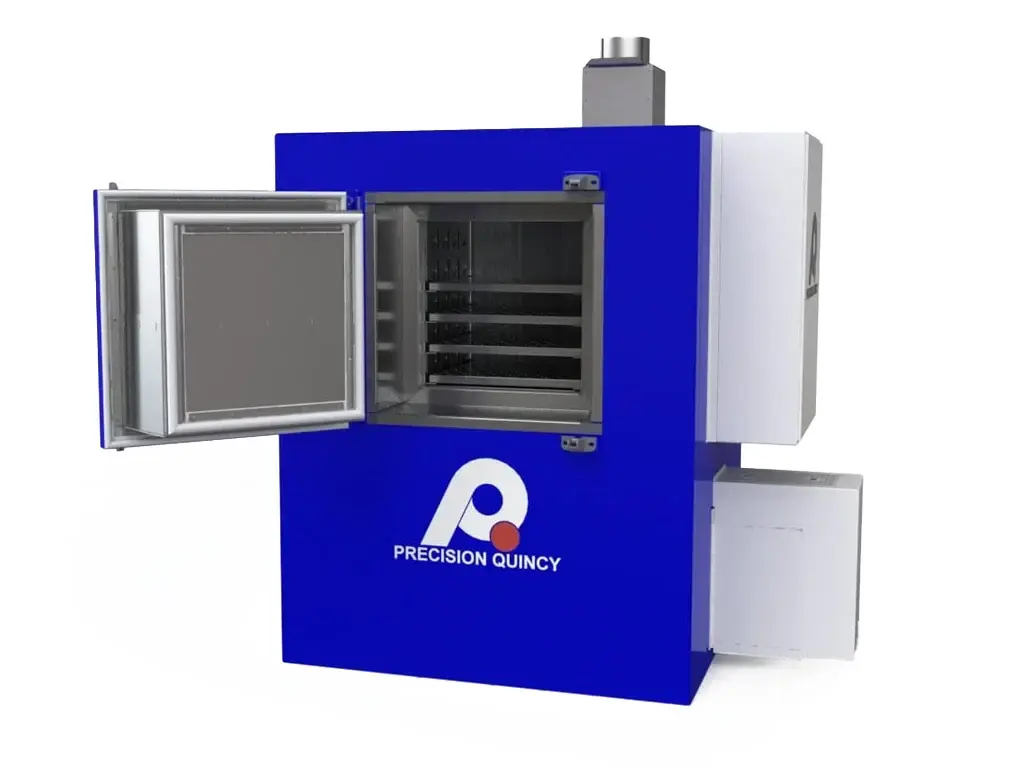
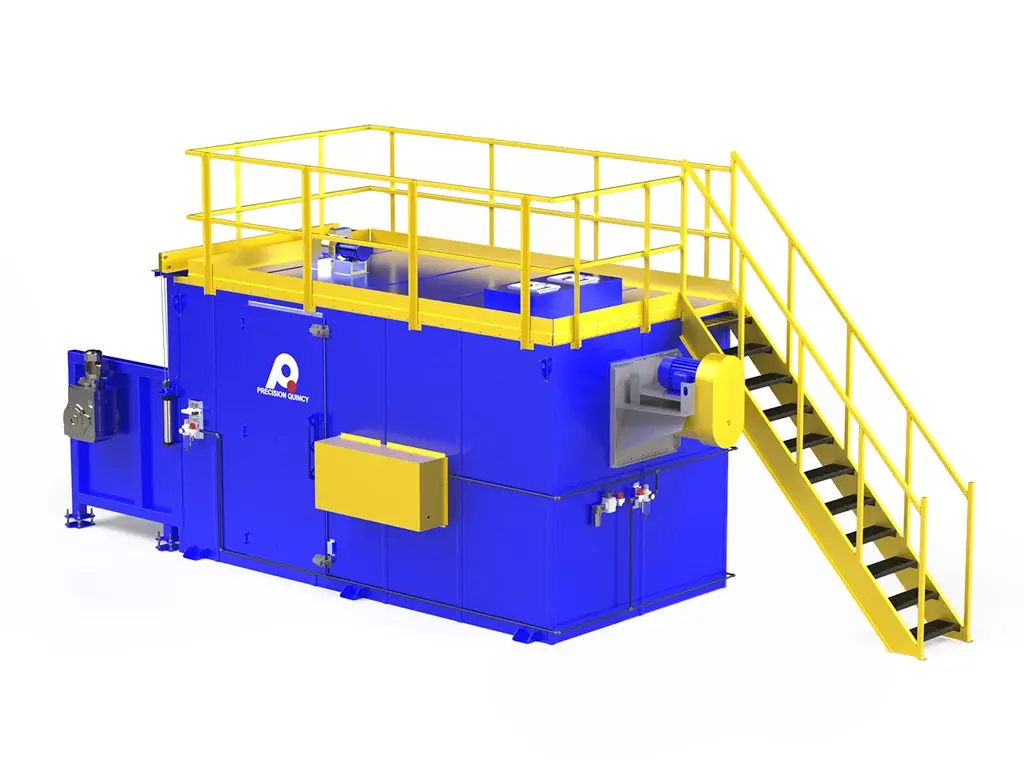
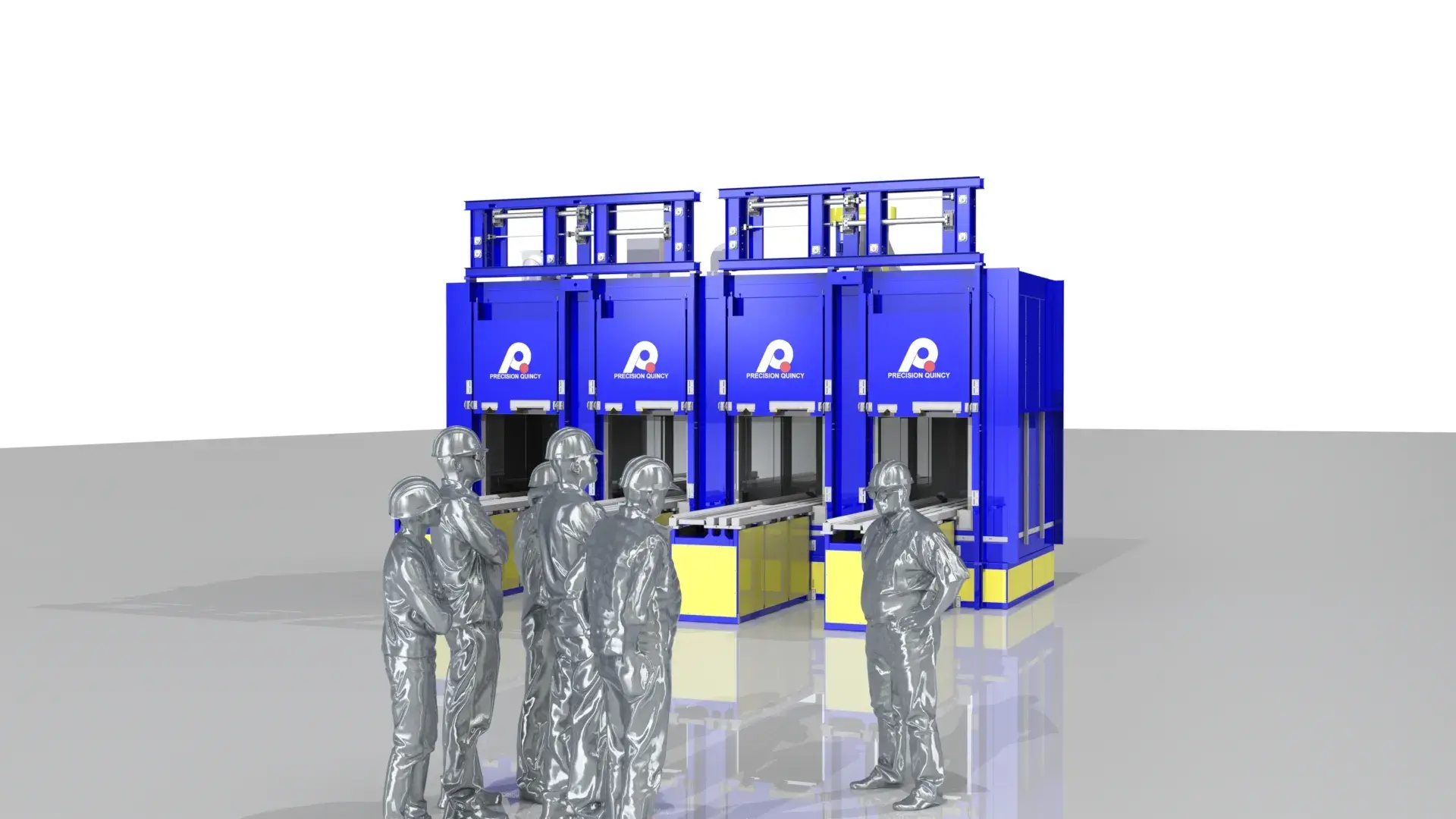
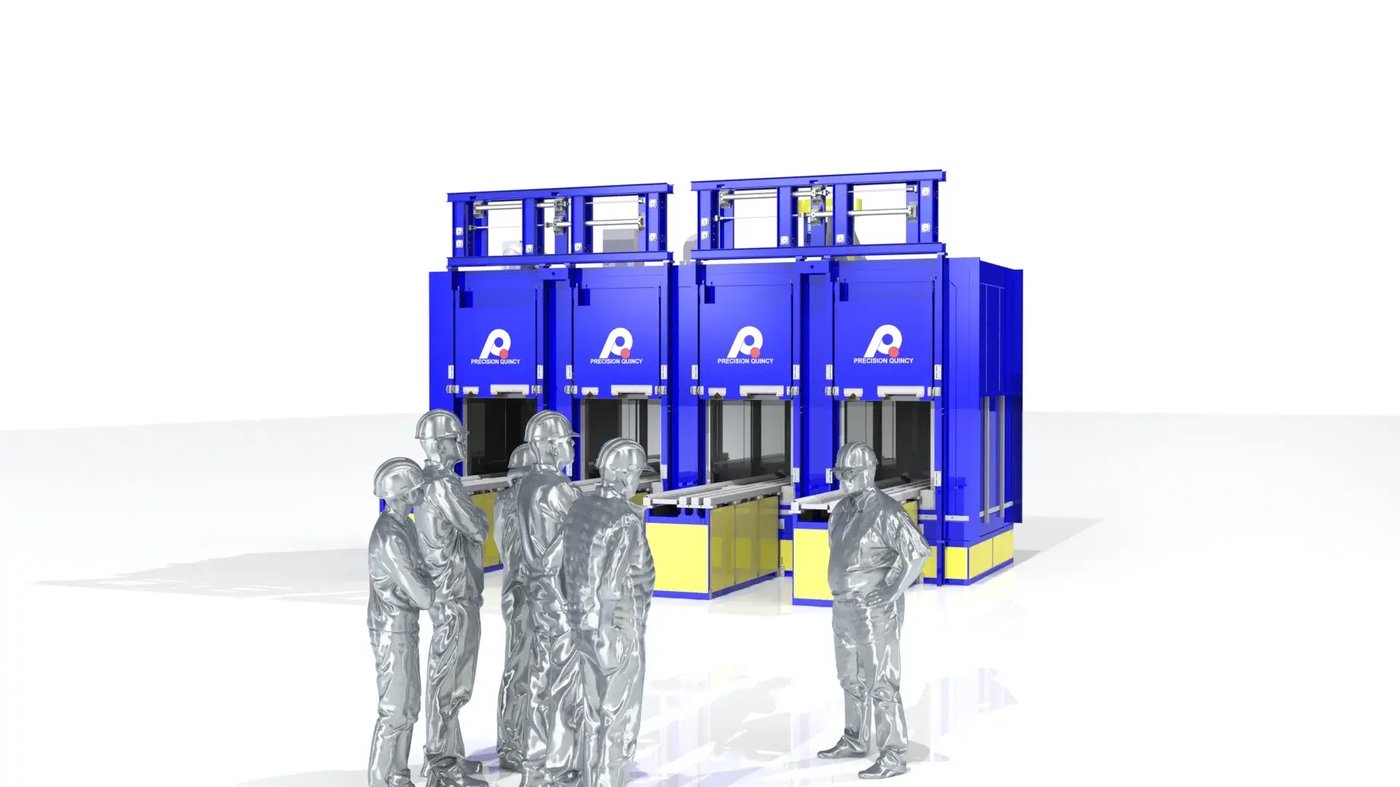
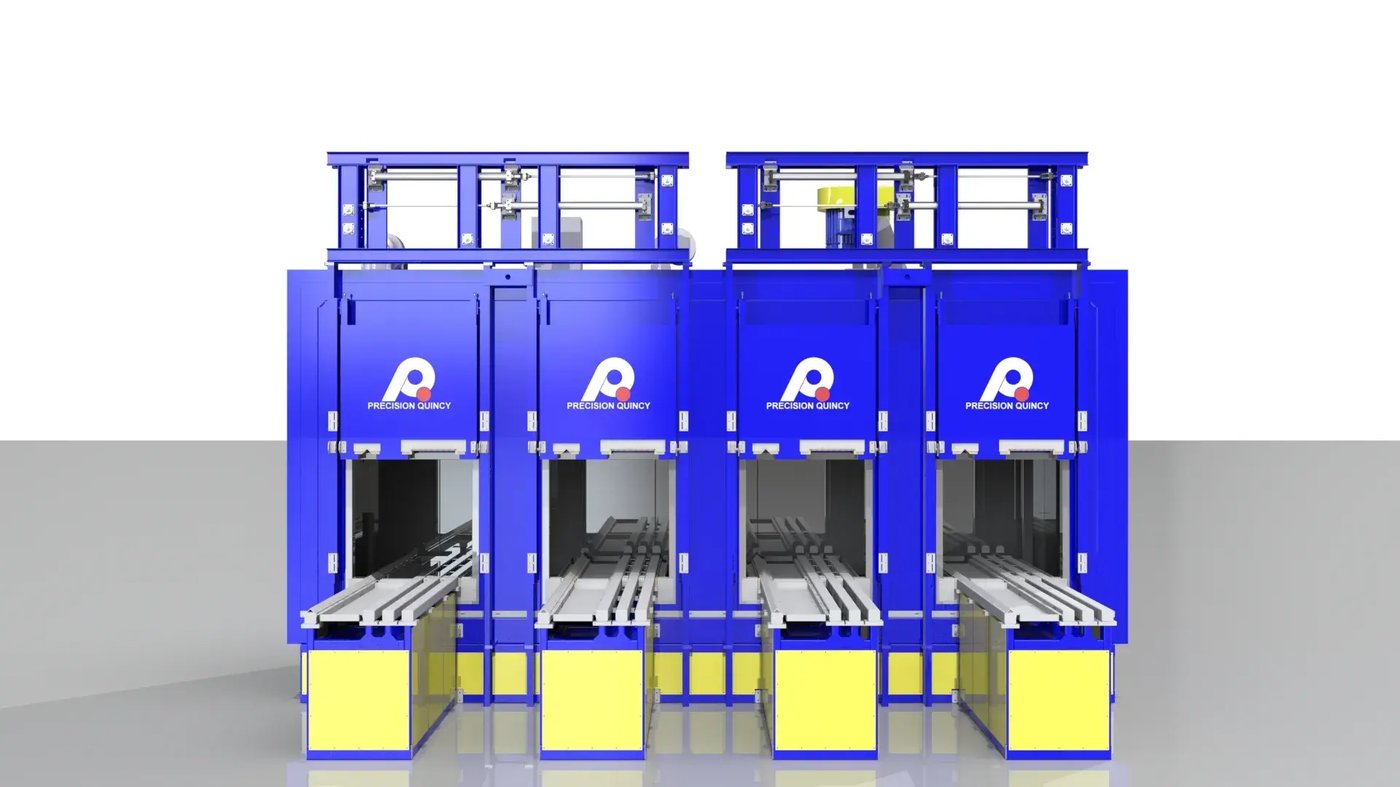
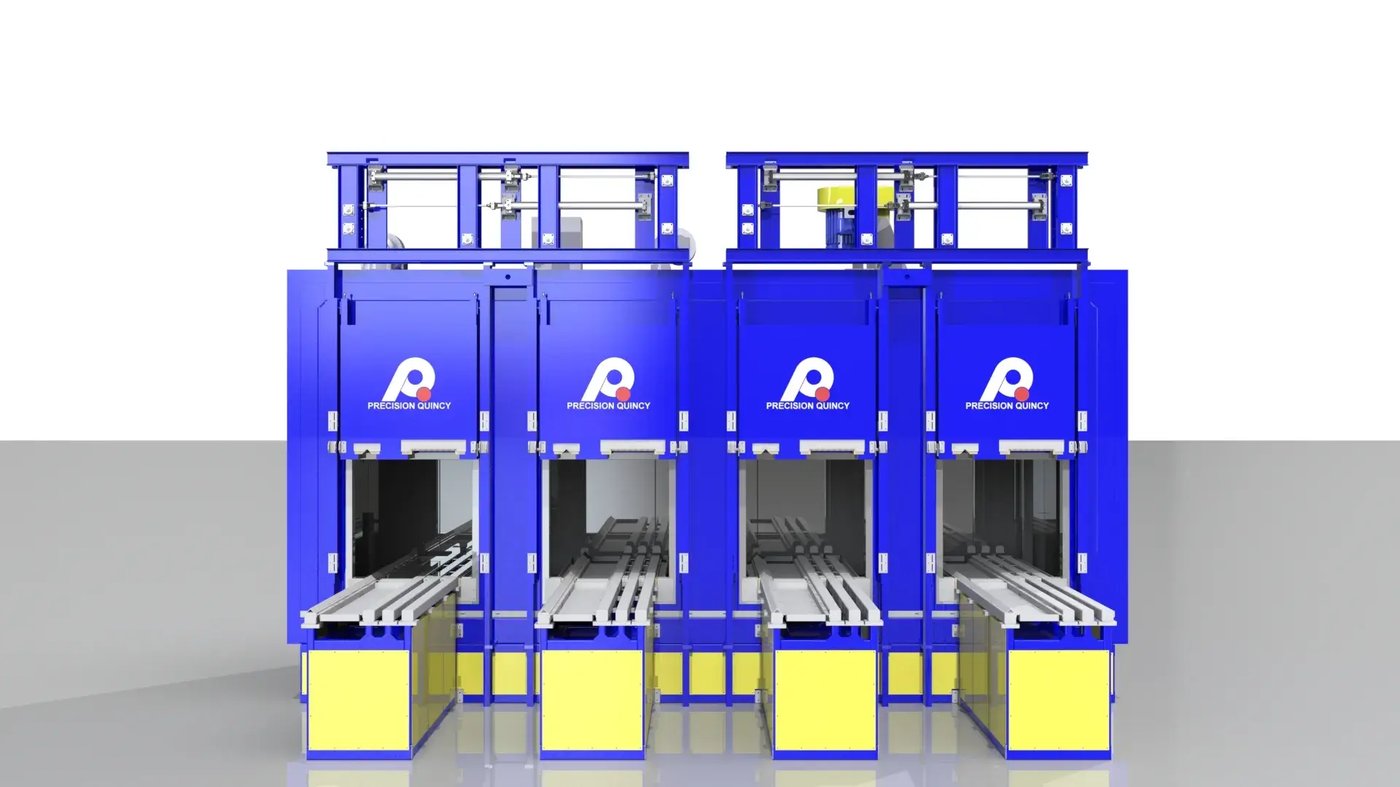
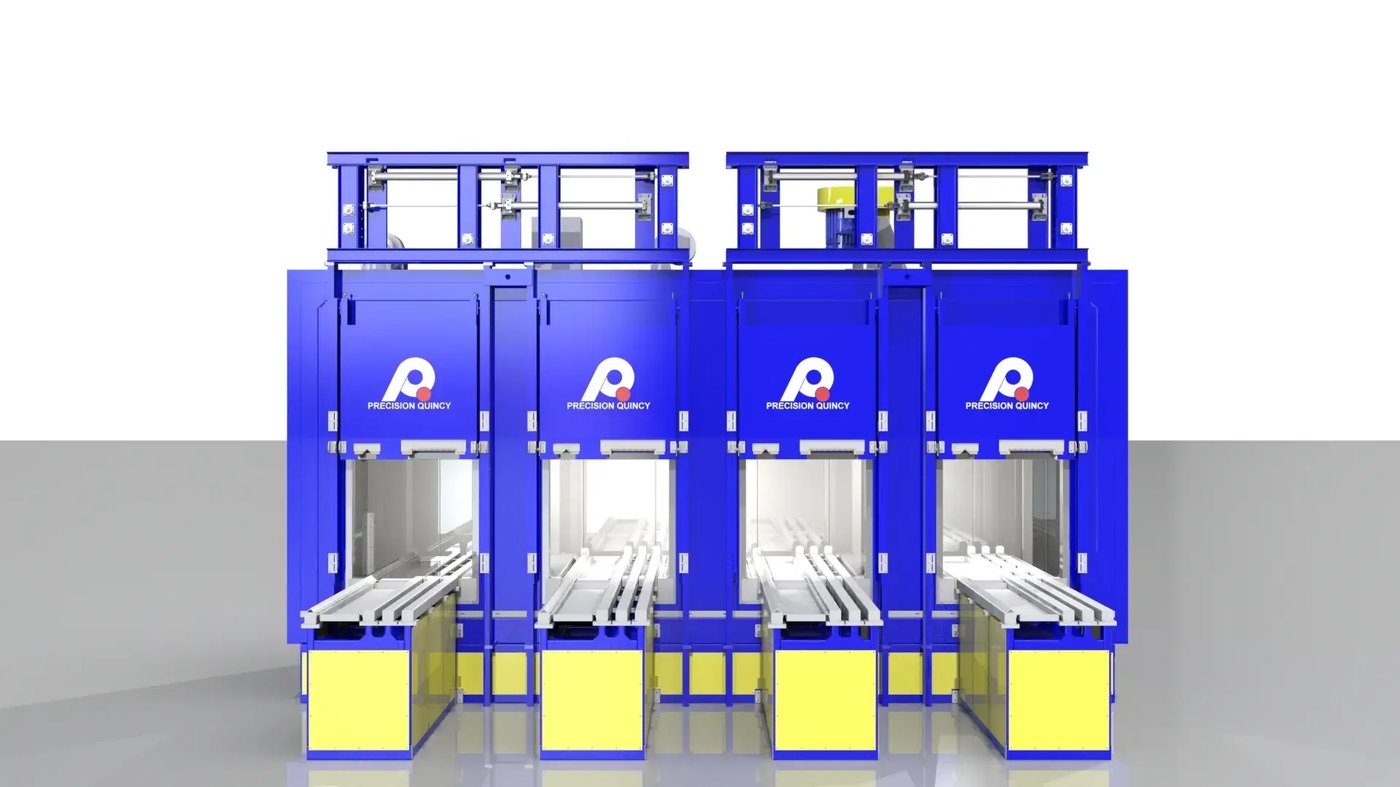
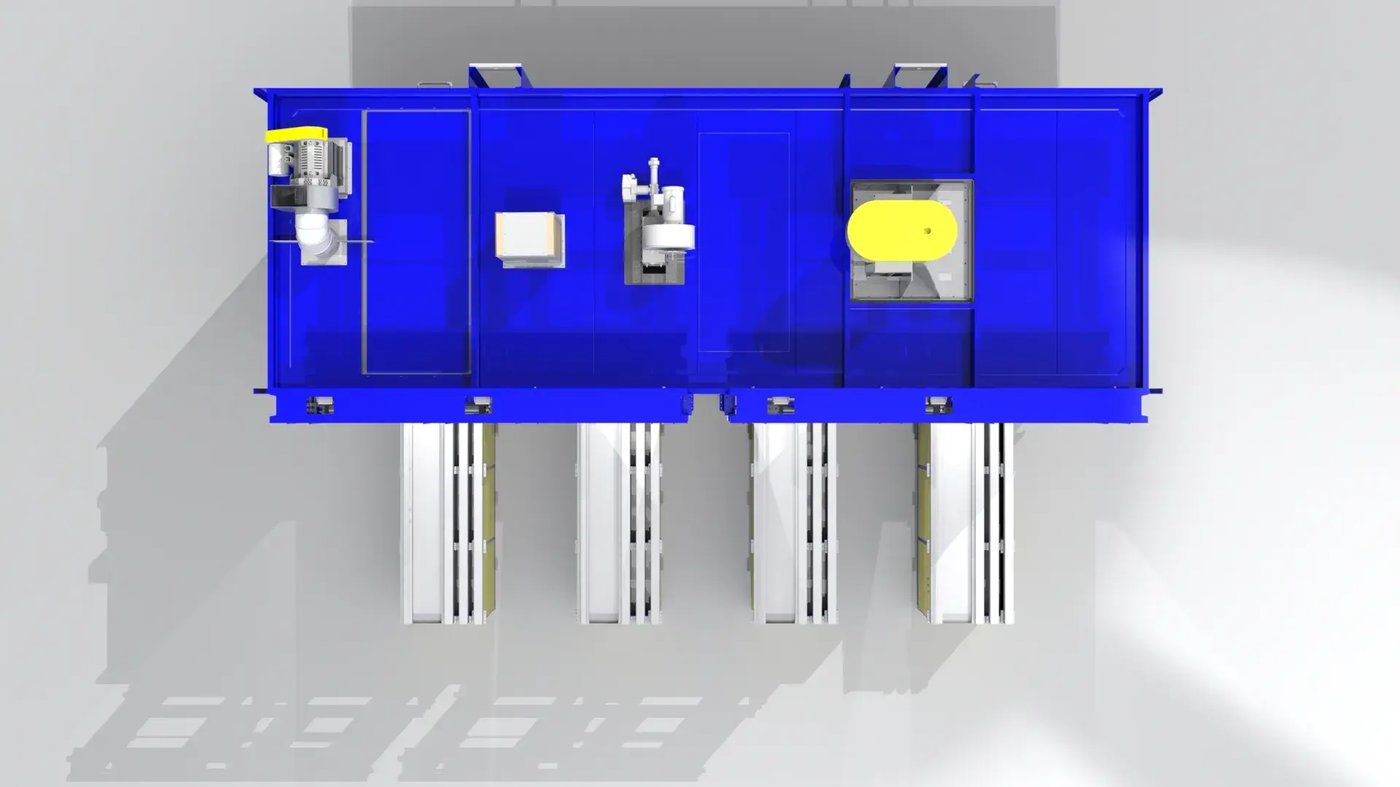
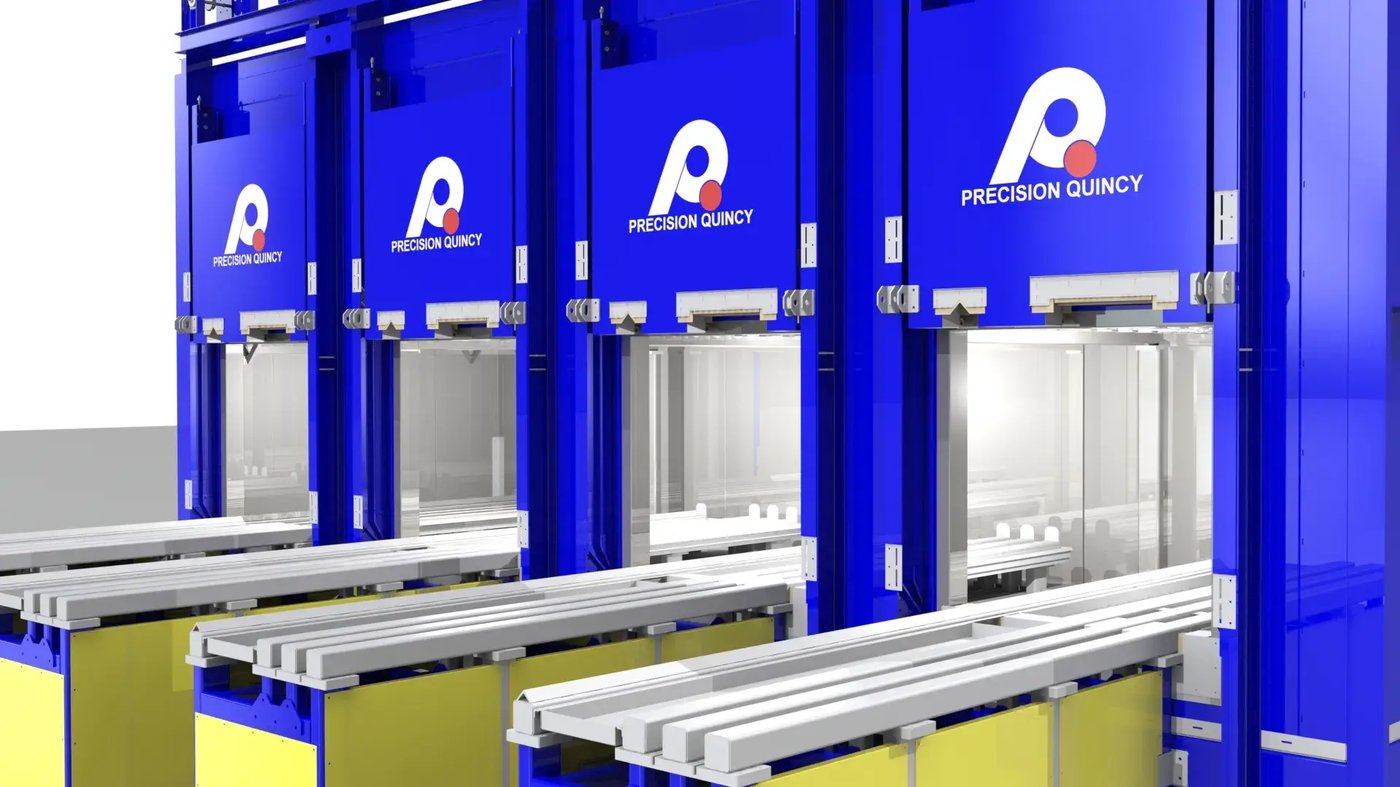
The customer manufactures chemically resistant laboratory sinks and countertop components for educational and industrial lab environments. To support reliable production using a proprietary resin system in aluminum molds, Precision Quincy engineered a dual-oven convection curing system that performs the partial-cure step prior to a separate post-cure process. Each oven provides four sink cavities and is designed around top-down vertical downflow airflow delivered through slot-nozzle supply ducting.
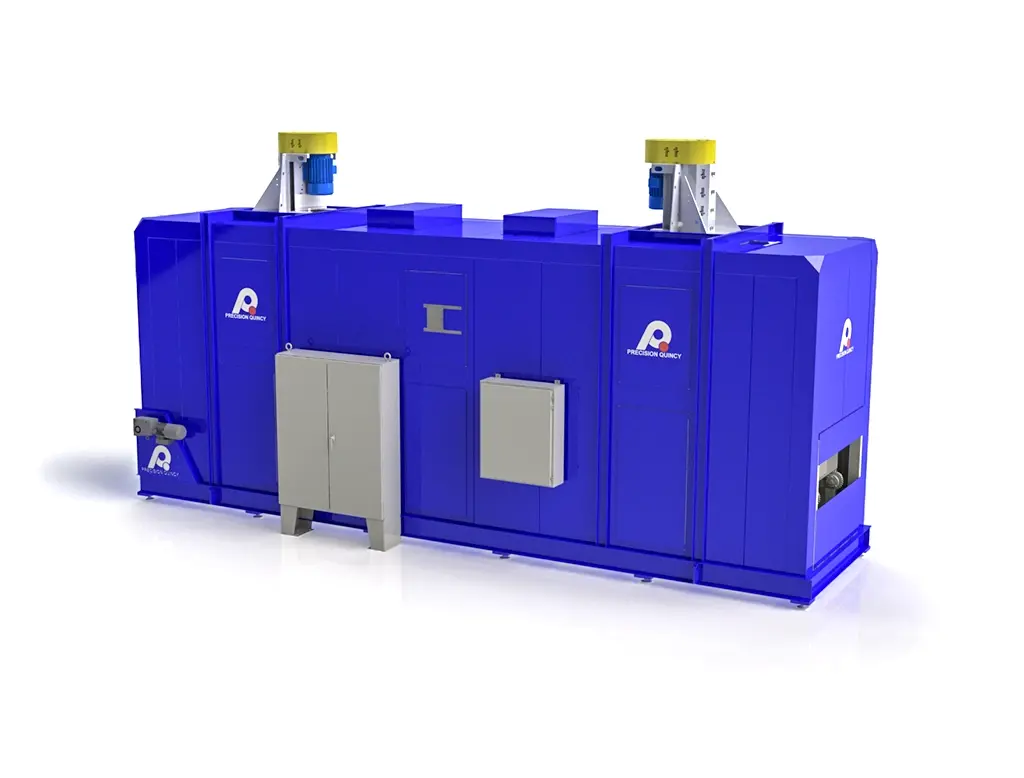
This airflow architecture provides strong, even convection heat transfer while avoiding high-intensity impingement that could disturb the product surface. Convection performance is produced by a roof-mounted New York Blower (NYB) 27 PLR recirculation fan (15 HP) rated at 14,000 CFM @ 4.0 in. w.c., delivering approximately 2,800 FPM discharge velocity and supporting ±10°F air temperature uniformity at a typical operating setpoint of 265°F (maximum capability 450°F). Heat is supplied by an Eclipse AH150 burner providing 1.5 MMBTU/hr per oven (3.0 MMBTU/hr total installed for two ovens).
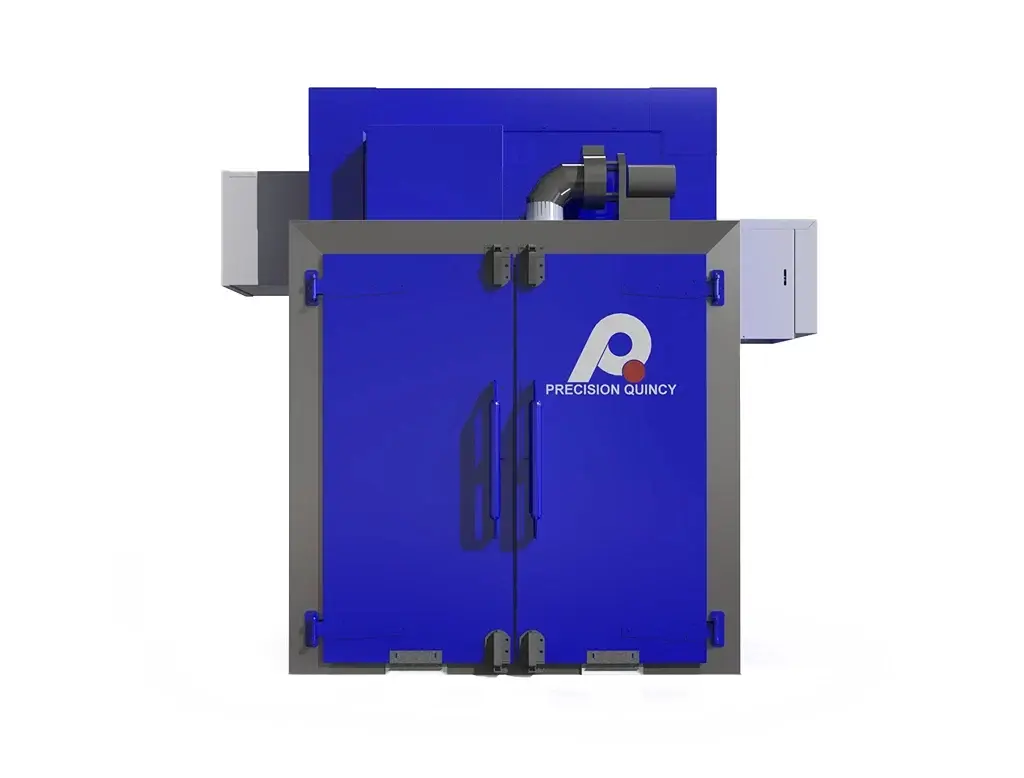
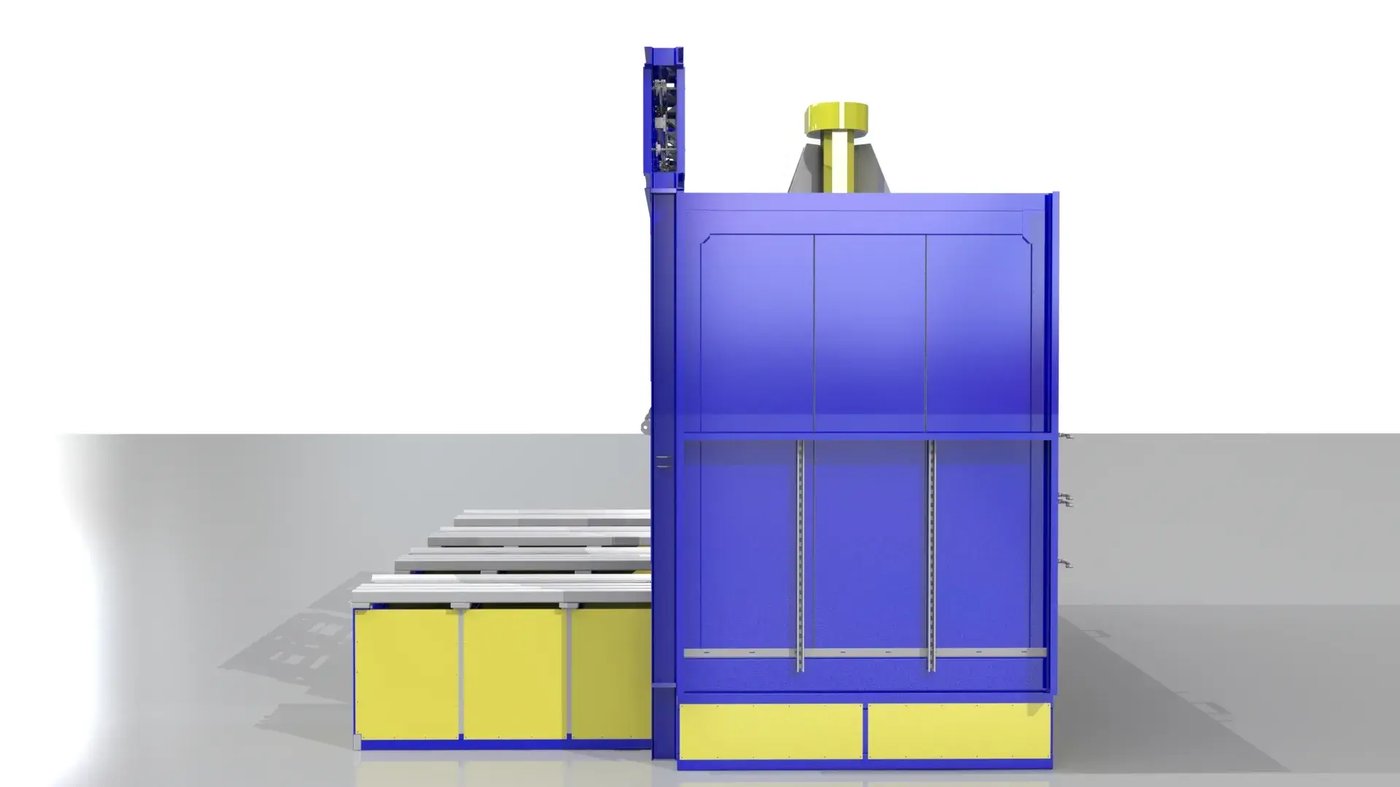
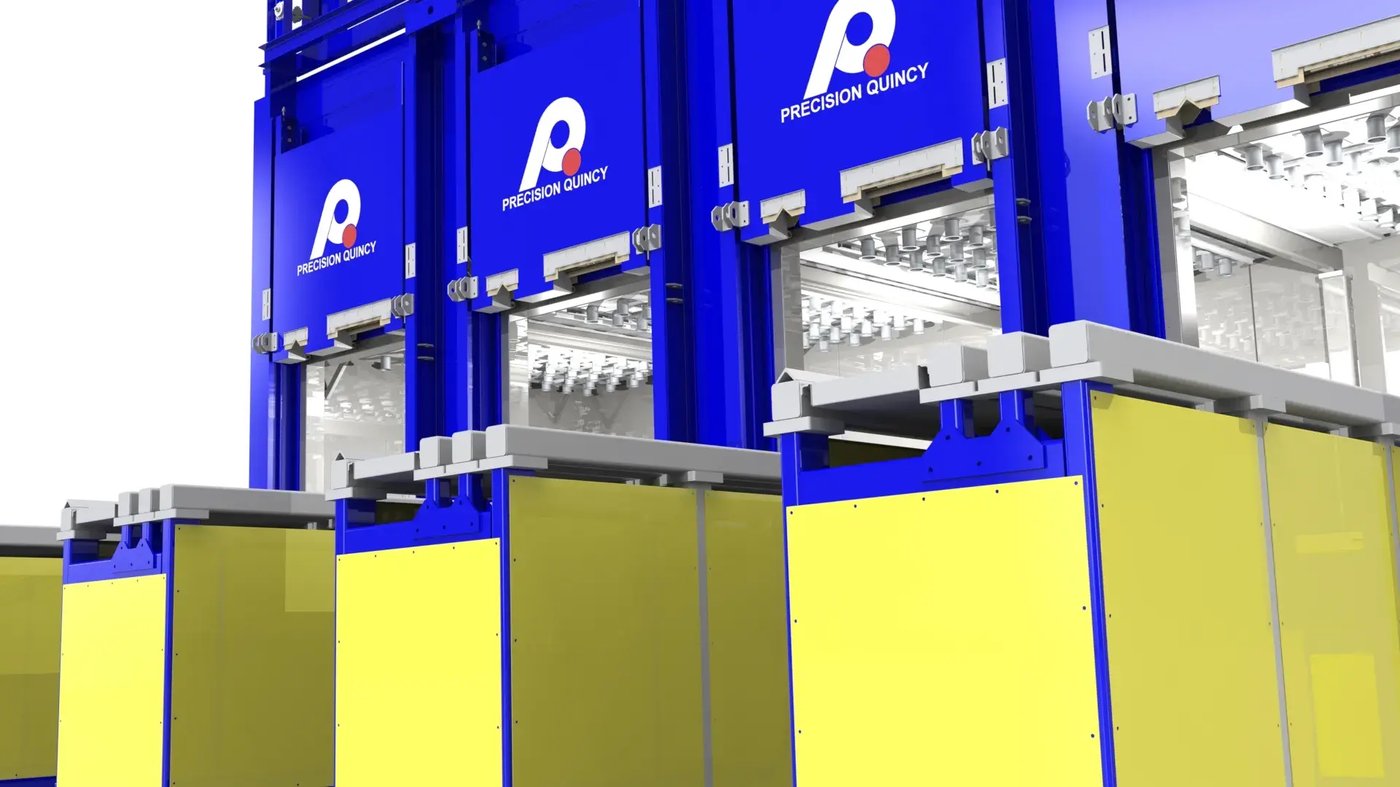
VOCs generated during curing are managed using a dedicated exhaust system with a PQ15 exhaustor providing 1,065 CFM total exhaust per oven, with purge and safety interlocks implemented per NFPA 86 Class A compliance. For production handling, molds are loaded onto built-in carts/trolleys that ride on V-groove rails with V-groove casters and are moved by hand in and out of each oven. The ovens are elevated on a stand with a 38 in cart/rail load height; loading rails extend 78 in outside the oven for staging, with an internal track length of 72.5 in. Each oven uses a low-headroom vertical lift door actuated by four horizontally mounted pneumatic cylinders through an engineered chain-and-sprocket mechanism. Removable drip pans beneath the load path support safe containment and cleanup of resin drips. Oven construction uses structurally reinforced insulated wall panels, 4 in thick, filled with 6 lb/ft³ mineral wool. Overall oven dimensions are 270 in W × 172 in D × 168 in H. System controls use an Allen-Bradley Micro850 PLC with a 10 in touchscreen HMI and an SSI 804 temperature controller.
The customer required a curing system to support production of chemically resistant laboratory sinks (e.g., drop-in and undermount styles) used in laboratory countertops, where parts are produced using a sand + proprietary resin system placed in aluminum molds. This equipment performs a partial-cure step before parts proceed to a separate post-cure process in other equipment.
PROCESS OBJECTIVE (PARTIAL CURE)
- Advance molded sink parts to the required partial-cure state (stable for handling and downstream post-cure).
- Maintain consistent results across multiple sink styles and mold geometries.
CAPACITY / PRODUCTION CONCEPT
- Capacity basis: 8 cavities total (implemented as (2) ovens, each with (1) 4-cavity chamber).
PRODUCT INTEGRITY CONSTRAINT
- Airflow must provide heat transfer without disturbing the product surface (basis for avoiding high-intensity impingement).
LOAD HANDLING / MATERIAL HANDLING
- Molds are placed onto built-in carts/trolleys that ride on V-groove rails with V-groove casters.
- Carts/trolleys are moved by hand in and out of each oven.
WORK ENVELOPE BASIS (PER CAVITY)
- Work area: 36 in H × 36 in W × 60 in D.
VOC / SAFETY-DRIVEN REQUIREMENTS
- The curing process produces VOC; equipment must safely manage VOC in accordance with NFPA 86 and applicable codes.
- The system must tolerate possible resin drips/spills and support safe containment/cleanup.
OPERATING TEMPERATURE ENVELOPE
- Typical operating temperature (partial cure): 265°F.
- Maximum equipment temperature capability: 450°F.
HEATING CAPACITY (THERMAL INPUT BASIS)
- Heat source: natural gas.
- Heat input basis: 1.5 MMBTU/hr per 4-cavity oven.
- Total installed heat input for the full system: 3.0 MMBTU/hr (2 ovens × 1.5 MMBTU/hr; basis: 8 cavities total).
TEMPERATURE CONTROL / UNIFORMITY
- Air temperature uniformity requirement: ±10°F.
- Control temperature measurement: control thermocouple located in the middle of the supply duct.
- High-limit temperature: 450°F maximum (Partlow high limit controller).
AIRFLOW DELIVERY (CONVECTION PERFORMANCE)
- Airflow direction: vertical downflow (top-down) into each cavity.
- Supply distribution: slot-nozzle supply ducting over the cavities.
- Discharge air velocity basis: ~2,800 FPM.
- Recirculation airflow basis: 14,000 CFM @ 4.0 in. w.c.
- Return air path basis: return air flows up the sides back toward the burner/heat section.
VOC MANAGEMENT (PROCESS-OFFGAS CONTROL)
- Dedicated exhaust for VOC control: 1,065 CFM total per oven.
- Exhaust device: PQ15 exhaustor.
- VOC ventilation basis: exhaust/hooding maintained per NFPA 86 requirements.
- Purge and safety interlocks: provided per NFPA 86 Class A compliance requirements.
SPILL / DRIP TOLERANCE (RESIN HANDLING REALITY)
- The system must tolerate resin drips/spills without creating an unsafe condition; containment/cleanup provisions are addressed in the equipment architecture.
To deliver the thermal process requirements (which deliver the customer process requirements), Precision Quincy implemented a natural gas-fired, recirculating convection curing oven system with 8 total cavities (implemented as (2) ovens, each with (1) 4-cavity chamber), where each oven includes its own vertical lift door for loading/unloading.
MATERIAL HANDLING (HOW LOADS MOVE THROUGH THE SYSTEM)
- Carts/trolleys ride on V-groove rails (with V-groove casters) and are moved by hand.
- Rail/track arrangement: four tracks with spacing basis of 15 in / 20 in / 25 in.
- Cart/rail load height: 38 in above floor.
- Loading rail extension outside oven: 78 in.
- Internal track length: 72.5 in.
- Oven is mounted on a stand to establish the rail height and loading interface.
AIRFLOW ARCHITECTURE (HOW THE OVEN ACHIEVES THE REQUIRED CONVECTION)
- Airflow direction: vertical downflow (top-down) into each cavity.
- Recirculation fan arrangement: roof-mounted New York Blower (NYB) 27 PLR recirculation fan with a vertical shaft (15 HP).
- Fan discharge path: fan discharges horizontally, then airflow is turned 180° and delivered vertically downward through slot-nozzle supply ducting above the cavities.
- Return path: air returns up the sides of the duct/chamber and is routed back to the heat section (burner inlet region).
- Recirculation basis: 14,000 CFM @ 4.0 in. w.c., with discharge velocity basis ~2,800 FPM.
HEATING SYSTEM
- Burner basis: (1) Eclipse AH150 burner per oven.
- Heat input basis: 1.5 MMBTU/hr per 4-cavity oven.
- Total installed heat input: 3.0 MMBTU/hr (2 ovens × 1.5 MMBTU/hr; basis: 8 cavities total).
VOC EXHAUST / SAFETY
- Exhaust for VOC control: PQ15 exhaustor, 1,065 CFM total per oven.
- Explosion relief in the roof.
DOOR SYSTEM
- Door type: vertical lift door per oven.
- Low-headroom actuation: four pneumatic cylinders mounted horizontally with an engineered chain and sprocket mechanism to achieve door travel with reduced ceiling height.
- Pneumatic supply: 80 PSI.
SPILL / DRIP MANAGEMENT
- Removable drip pans located beneath the load path to capture resin drips/spills.
CONSTRUCTION / SHELL
- Construction: structurally reinforced insulated wall panels.
- Panel thickness: 4 in.
- Insulation: 6 lb/ft³ mineral wool.
- Overall dimensions: 270 in W × 172 in D × 168 in H.
CONTROLS
- Temperature controller: SSI 804.
- PLC: Allen-Bradley Micro850.
- Operator interface: 10 in touchscreen HMI for door operation and system interaction.
| SYSTEM CONFIGURATION | |
|---|---|
| Type | Batch, recirculating convection curing oven system (partial cure) |
| Process | Partial cure of laboratory sinks produced from sand + proprietary resin in aluminum molds; post-cure performed in separate equipment |
| System Capacity | 8 cavities total (2 ovens × 4 cavities) |
| Oven / Chamber Configuration | 4 cavities per oven ((1) chamber per oven) |
| Work Envelope (per cavity) | 36 in H × 36 in W × 60 in D |
| Typical Operating Temperature | 265°F |
| Maximum Temperature Capability | 450°F |
| Temperature Uniformity (Air) | ±10°F |
| Maximum Load Weight (per oven) | 300 lb max |
| Airflow Direction at Product | Vertical downflow (top-down) |
| Overall Oven Dimensions | 270 in W × 172 in D × 168 in H |
| THERMAL SYSTEM (NATURAL GAS HEATING) | |
|---|---|
| Heat Source | Natural gas |
| Heat Input (per 4-cavity oven) | 1.5 MMBTU/hr |
| Total Installed Heat Input (System) | 3.0 MMBTU/hr (2 ovens × 1.5 MMBTU/hr) |
| Burner Arrangement | (1) Eclipse AH150 burner per oven |
| Temperature Controller | SSI 804 |
| Control Thermocouple Location | Middle of supply duct |
| CONVECTION / AIRFLOW SYSTEM | |
|---|---|
| Recirculation Fan Arrangement | Roof-mounted New York Blower (NYB) 27 PLR recirculation fan with vertical shaft |
| Fan Motor | 15 HP |
| Fan Airflow | 14,000 CFM |
| Fan Static Pressure | 4.0 in. w.c. |
| Discharge Velocity Basis | ~2,800 FPM |
| Supply Ducting | Slot-nozzle supply ducting above cavities |
| Airflow Path | Fan discharges horizontally, turns 180°, then delivers vertical downflow into cavities; return air flows up the sides back to the heat section |
| Airflow Proving | Airflow switch on every fan |
| VOC VENTILATION / EXHAUST | |
|---|---|
| VOC Exhaust Airflow | 1,065 CFM total per oven |
| Exhaust Device | PQ15 exhaustor |
| Hooding / Ventilation Basis | VOC exhaust/hooding maintained per NFPA 86 requirements |
| Purge & Safety Interlocks | Provided per NFPA 86 Class A compliance requirements |
| MATERIAL HANDLING (RAILS, CARTS, DOORS) | |
|---|---|
| Cart / Trolley Type | Built-in carts/trolleys, moved by hand |
| Rail Type | V-groove rails with V-groove casters |
| Track Count / Layout | Four tracks |
| Track Spacing Basis | 15 in / 20 in / 25 in |
| Cart / Rail Load Height | 38 in |
| External Rail Extension | 78 in outside oven |
| Internal Track Length | 72.5 in |
| Door Type | Vertical lift door per oven |
| Low-Headroom Actuation | Four pneumatic cylinders mounted horizontally with engineered chain + sprocket mechanism |
| Pneumatic Supply | 80 PSI |
| SPILL / DRIP MANAGEMENT | |
|---|---|
| Drip / Spill Containment | Removable drip pans located beneath the load path |
| CONSTRUCTION / SHELL | |
|---|---|
| Panel Construction | Structurally reinforced insulated wall panels |
| Panel Thickness | 4 in |
| Insulation | 6 lb/ft³ mineral wool |
| Oven Support | Oven mounted on stand |
| SAFETY & COMPLIANCE | |
|---|---|
| Applicable Standard | NFPA 86 |
| NFPA 86 Classification | Class A |
| Explosion Relief | Explosion relief in the roof |
| High Limit Temperature Control | Partlow high limit controller (450°F maximum) |
| Safety Chain / Interlocks | Per NFPA 86 |
| CONTROLS & ELECTRICAL | |
|---|---|
| PLC / System Controls | Allen-Bradley Micro850 |
| Operator Interface | 10 in touchscreen HMI |
| Temperature Control | SSI 804 |
| Electrical Service | 480 V / 3-phase / 60 Hz |