

Project Number: 5668
Dual-Zone Conveyorized Coating Cure Oven for High-Throughput Fastener Finishing
Overview
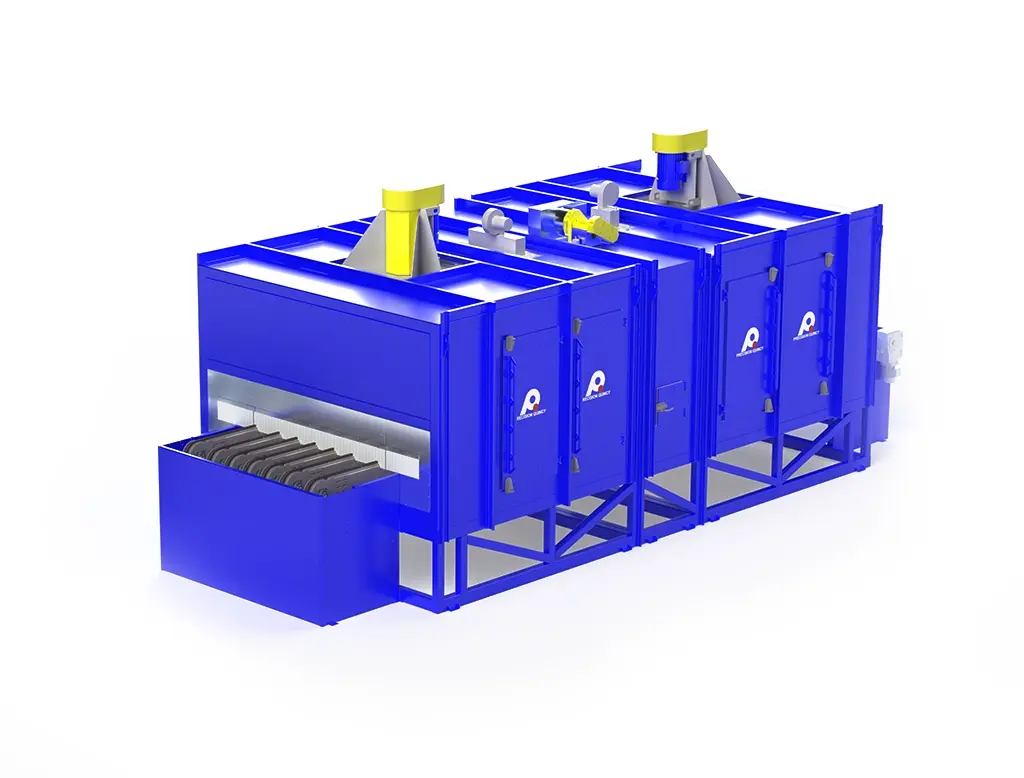
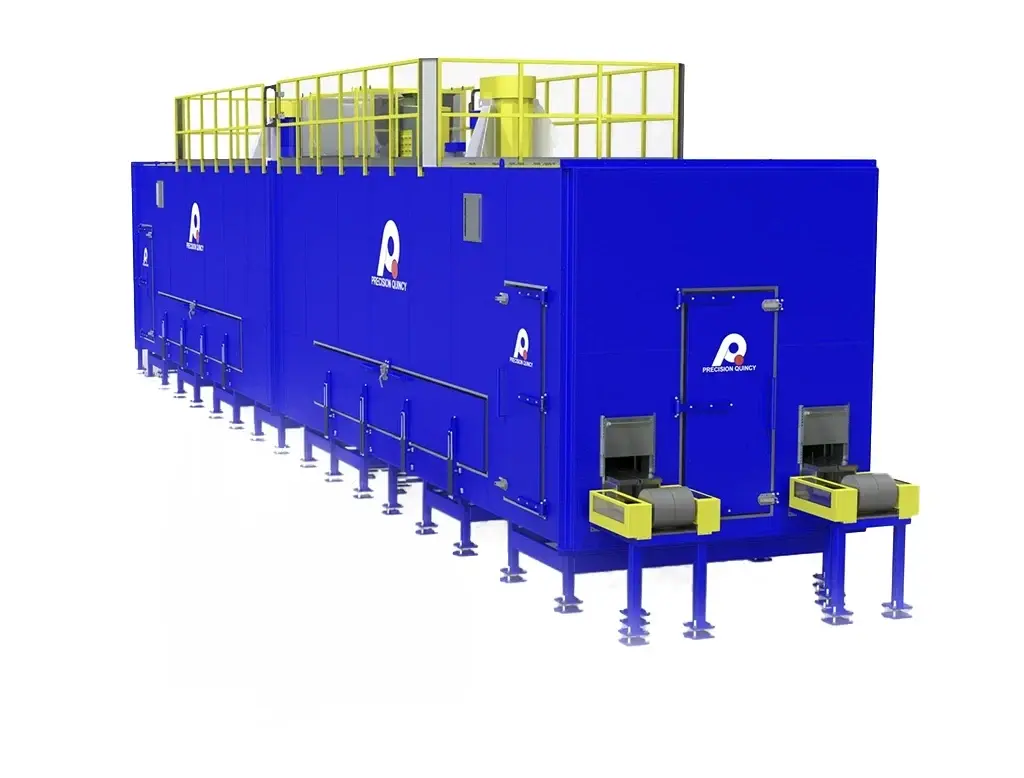
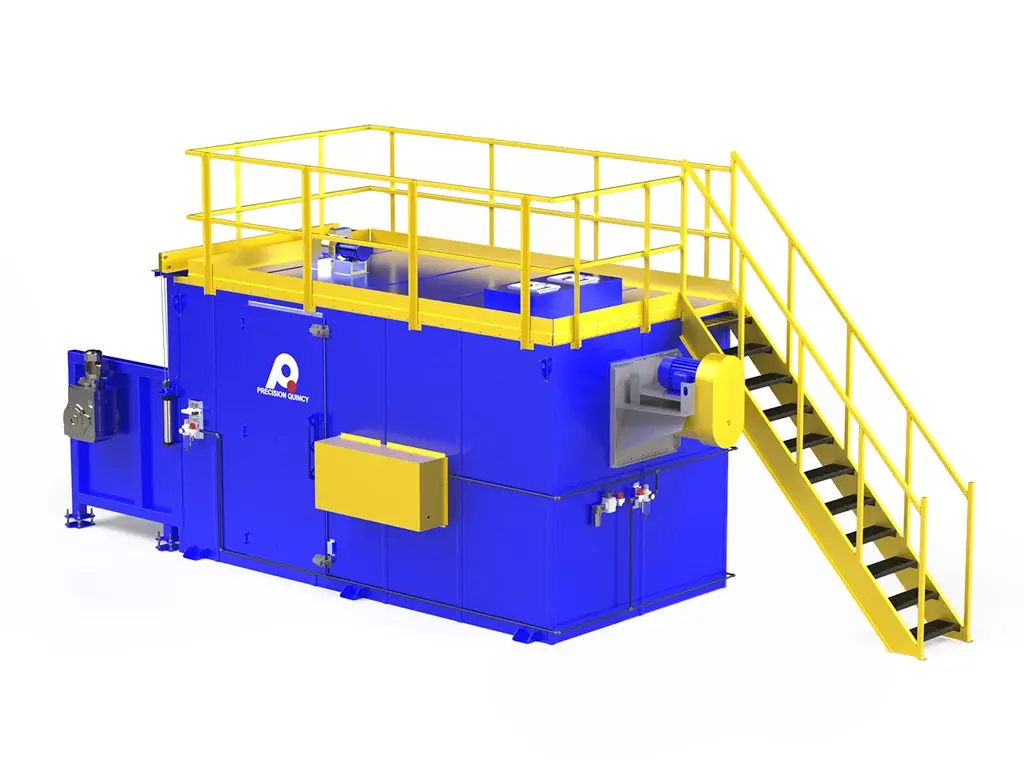
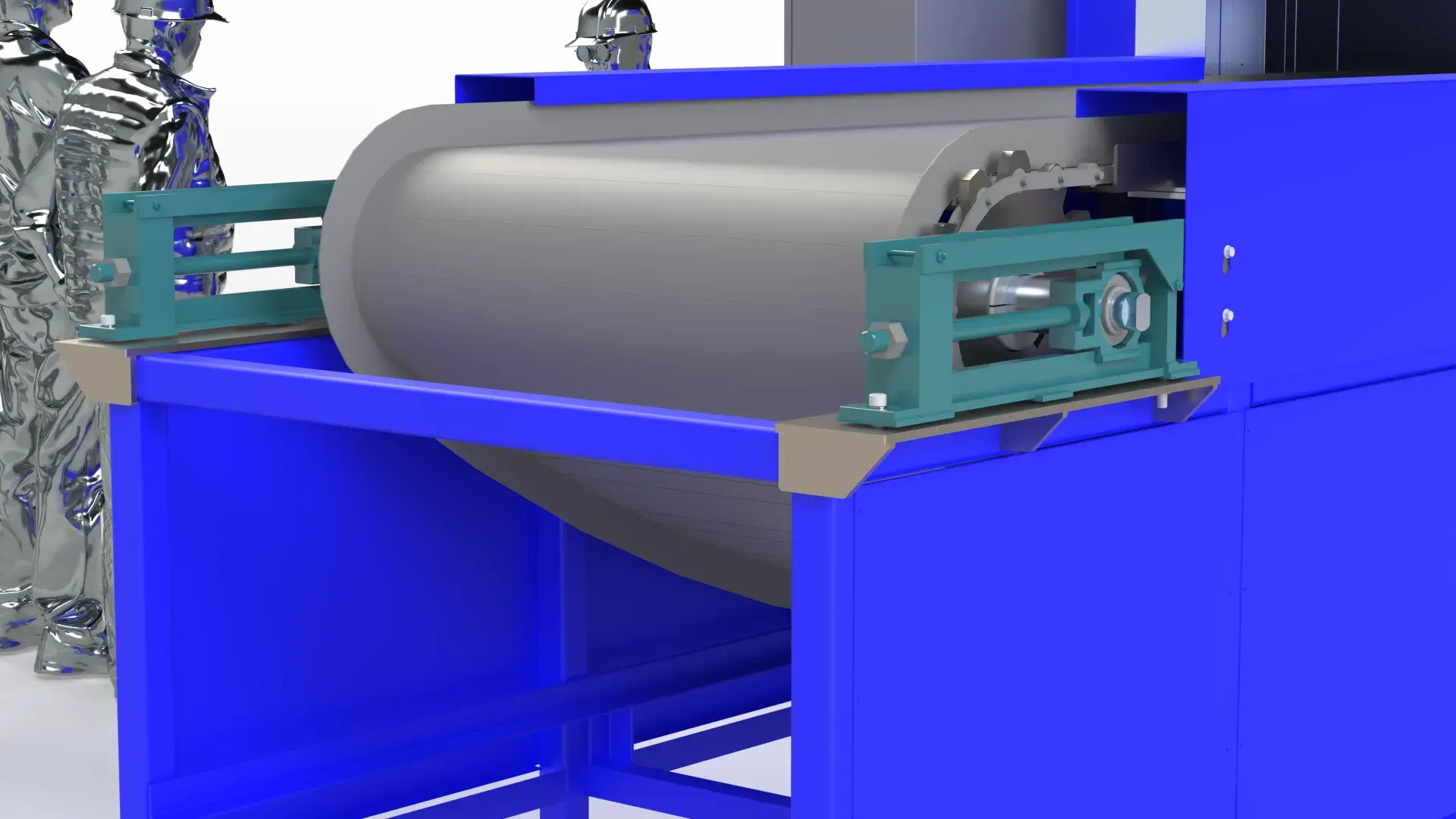
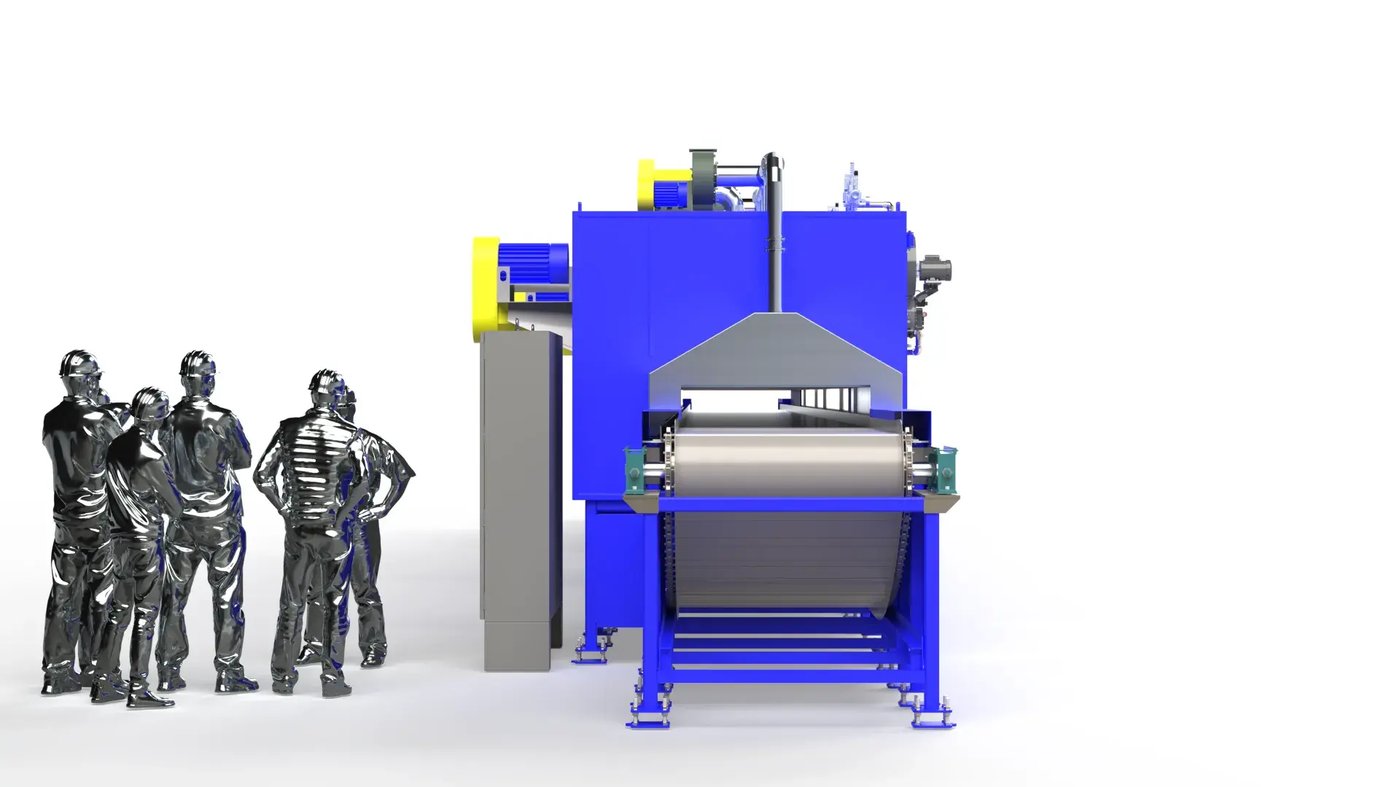
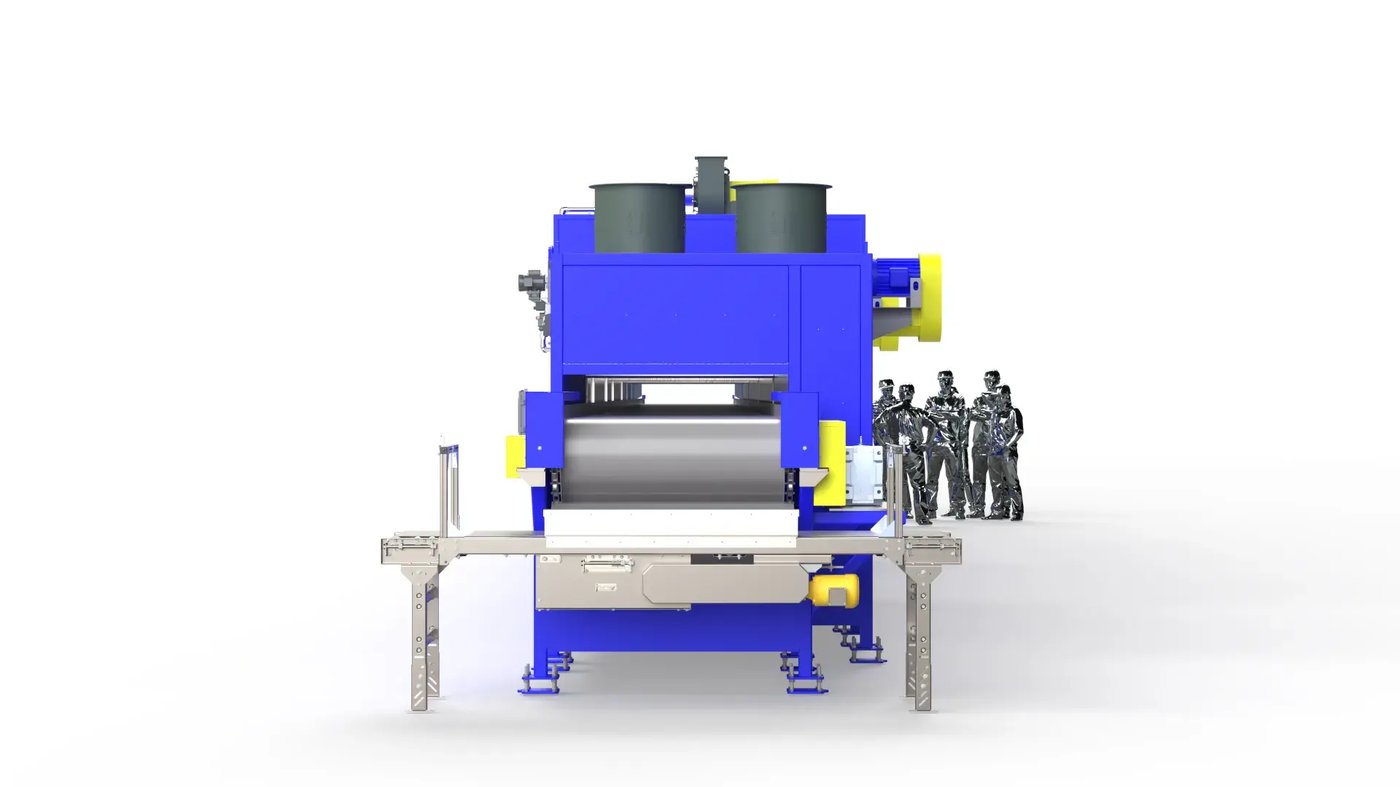
The project for Allcoat was developed as a continuous conveyorized cure system for miscellaneous fasteners requiring a controlled preheat, elevated-temperature final cure, and post-process forced cooling prior to unload. The equipment was configured around a 48-inch conveyor surface with 3-inch side walls and a 60-inch conveyor elevation to support continuous product flow, high loading density, and straightforward integration into the customer’s finishing operation.
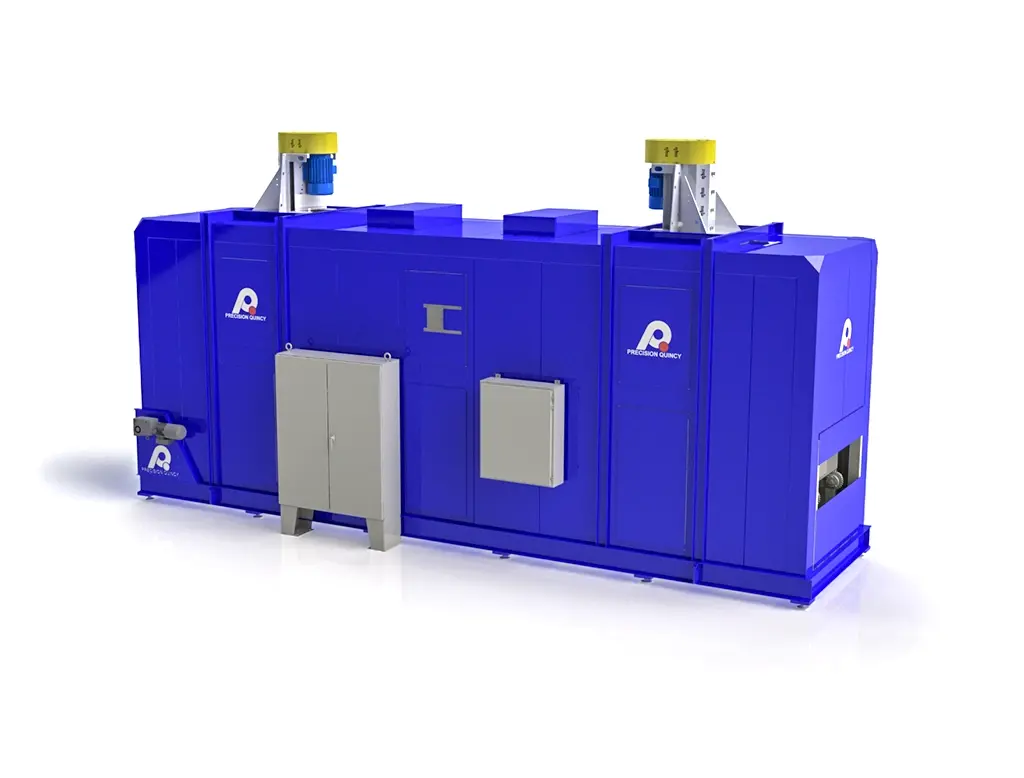
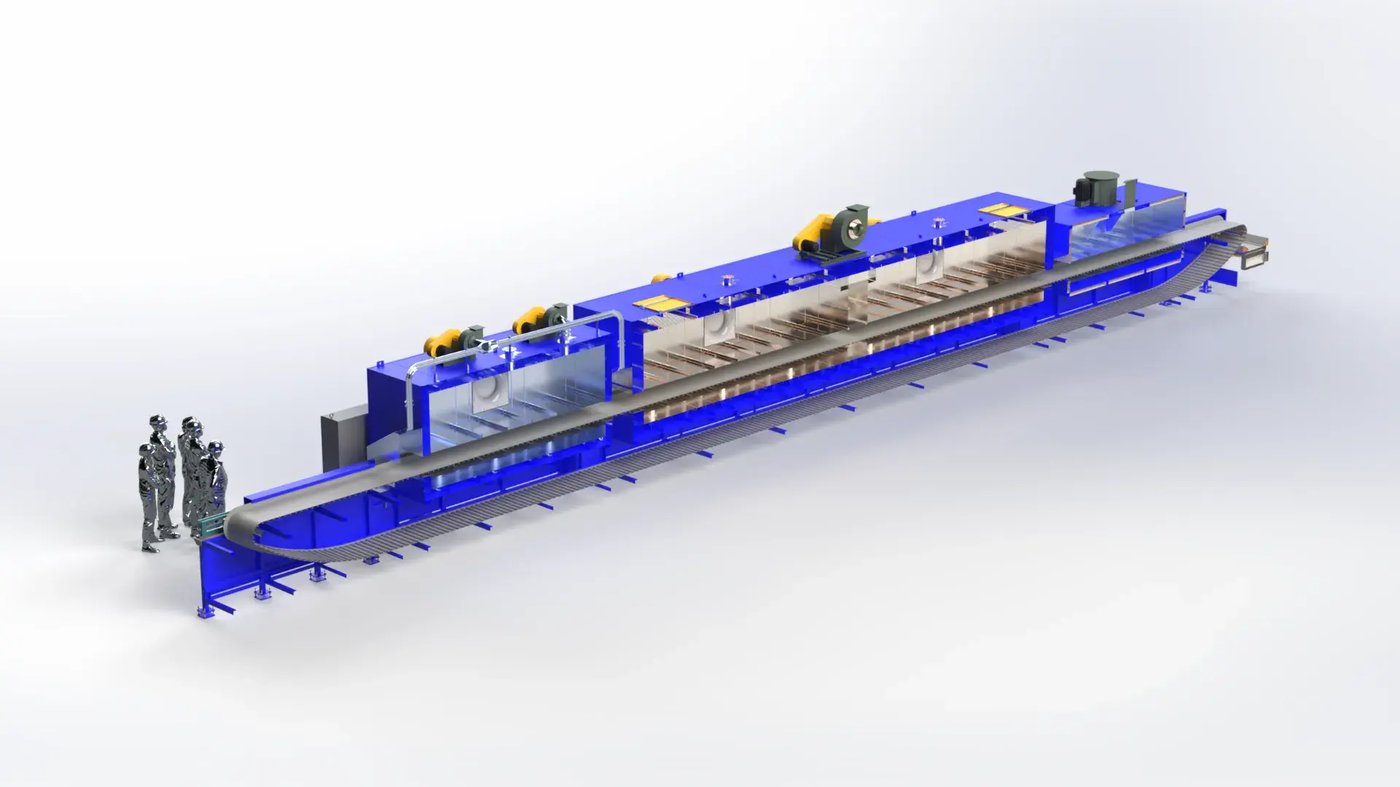
The system architecture uses one preheat stage followed by a two-zone high-heat oven and an integral forced-air cooler. Bottom-up vertical airflow, high recirculation volume, direct-fired natural-gas heating, and tuned exhaust management were used to support coating cure performance while maintaining Class A safety requirements. The final concept combines durable insulated construction, staged combustion, adjustable airflow distribution, integrated controls, and a reversing unload conveyor to deliver a high-capacity continuous process platform optimized for coated fastener production.
The customer required a continuous in-line curing system for coated miscellaneous fasteners and similar coated small parts in a high-volume automotive supply environment. The line needed to support sustained production at approximately 9,000 lb/hr nominal throughput while fitting into a fully automated finishing operation with robotic loading and coordinated line control.
From a material-handling standpoint, the system needed to accept continuously loaded product, move it through preheat, final cure, and cooling, then discharge it in a controlled manner for downstream handling. The process required a wide conveyor path with side containment suitable for loose or bulk-handled fasteners, plus stable product transfer through each section of the line.
The customer process also required compatibility with a larger plant-wide automation architecture rather than a stand-alone manually operated oven. In practice, the curing equipment functions as one part of a broader automated coating line in which loading, unloading, and line coordination are handled in conjunction with a larger PLC-controlled system.
Facility and use requirements included elevated conveyor working height, safe operator access at loading and unloading, service access for maintenance, coordinated exhaust tie-ins, and a long linear arrangement compatible with the available plant layout. Because the application involves coating cure, the system also had to satisfy Class A process safety requirements appropriate for solvent-bearing work.
The thermal process required a staged cure profile consisting of an initial preheat stage followed by a higher-temperature final cure stage, then a forced-cooling stage to reduce product temperature before discharge. The preheat zone operates from 200°F to 350°F with a 450°F maximum design temperature. The dual-zone high-heat oven operates from 350°F to 700°F with an 850°F maximum design temperature.
To achieve coating cure across a dense moving bed of miscellaneous fasteners, the process required strong recirculated vertical airflow directed bottom-up through the load. The preheat section provides approximately 12,000 CFM of recirculated airflow, and the high-heat section provides approximately 24,000 CFM total recirculated airflow across the two cure zones. The stated supply-air temperature uniformity target is ±15°F.
The thermal design basis includes direct-fired natural-gas heating, staged by section. The preheat stage is rated at 1,500,000 BTU/hr. The high-heat section uses two heating zones rated at 1,500,000 BTU/hr each, for 3,000,000 BTU/hr total in the final cure oven.
The process basis also includes solvent-bearing coating cure at a maximum VOC loading of 0.5 gal/hr in each heated stage, requiring coordinated exhaust capacity for safe oven operation. At the nominal 12 in/min conveyor speed, the process provides approximately 12 minutes in preheat, 34 minutes in high heat, and 12 minutes in cooling, with an overall conveyor speed range of 6 to 30 in/min to support process flexibility.
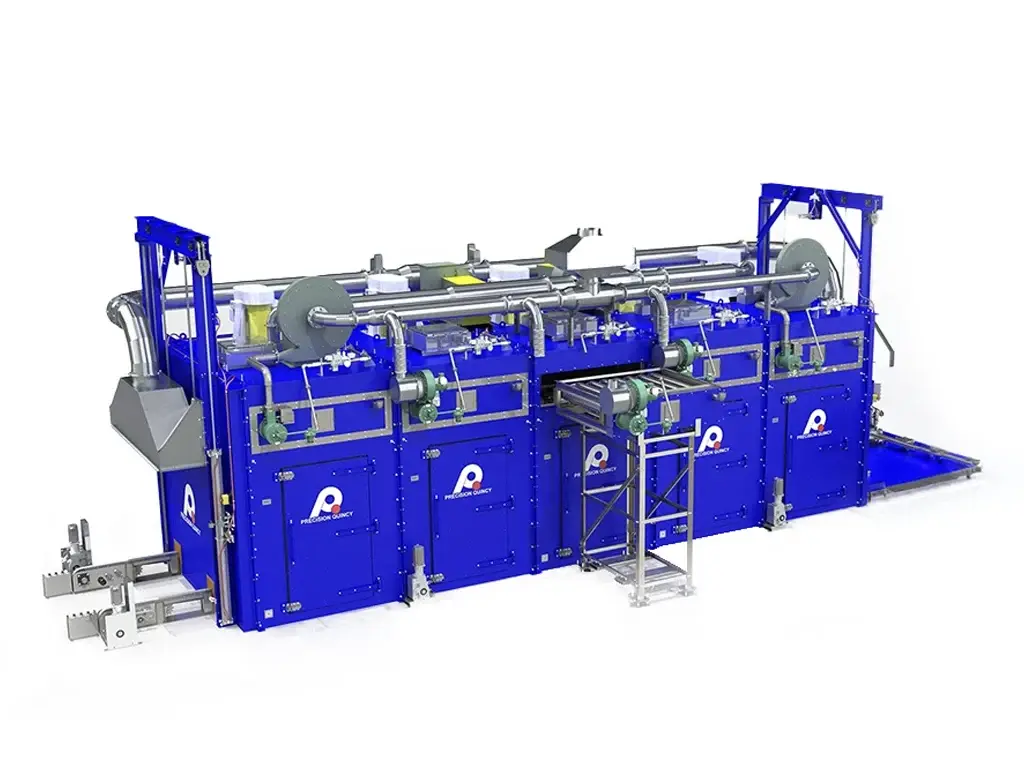
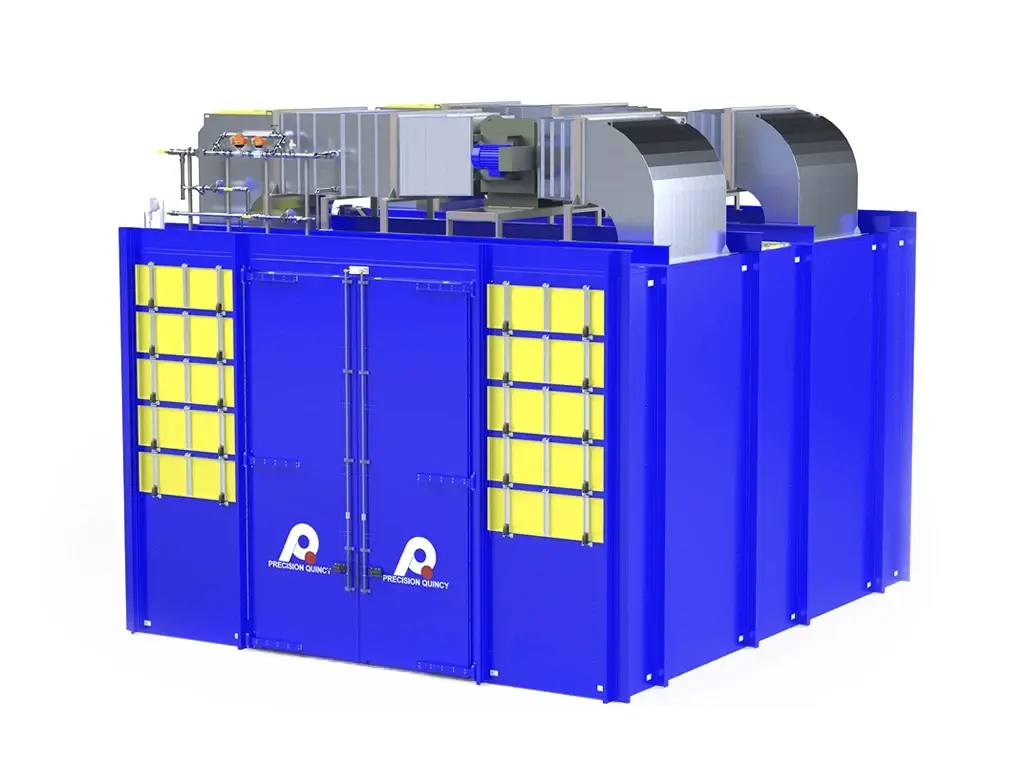
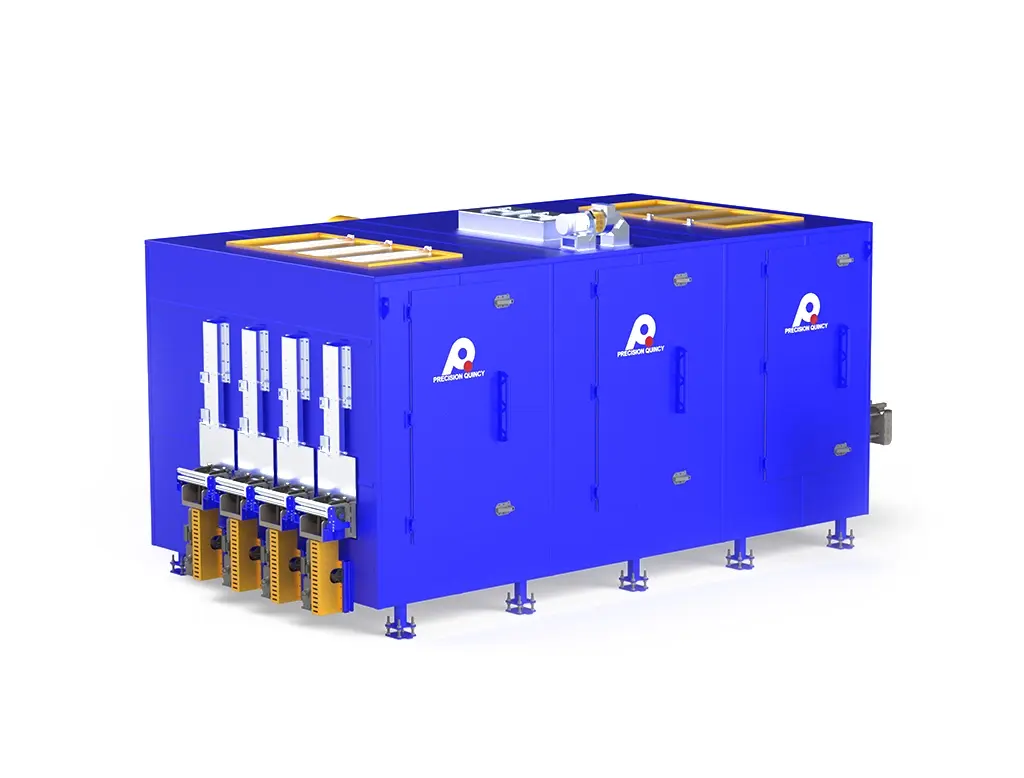
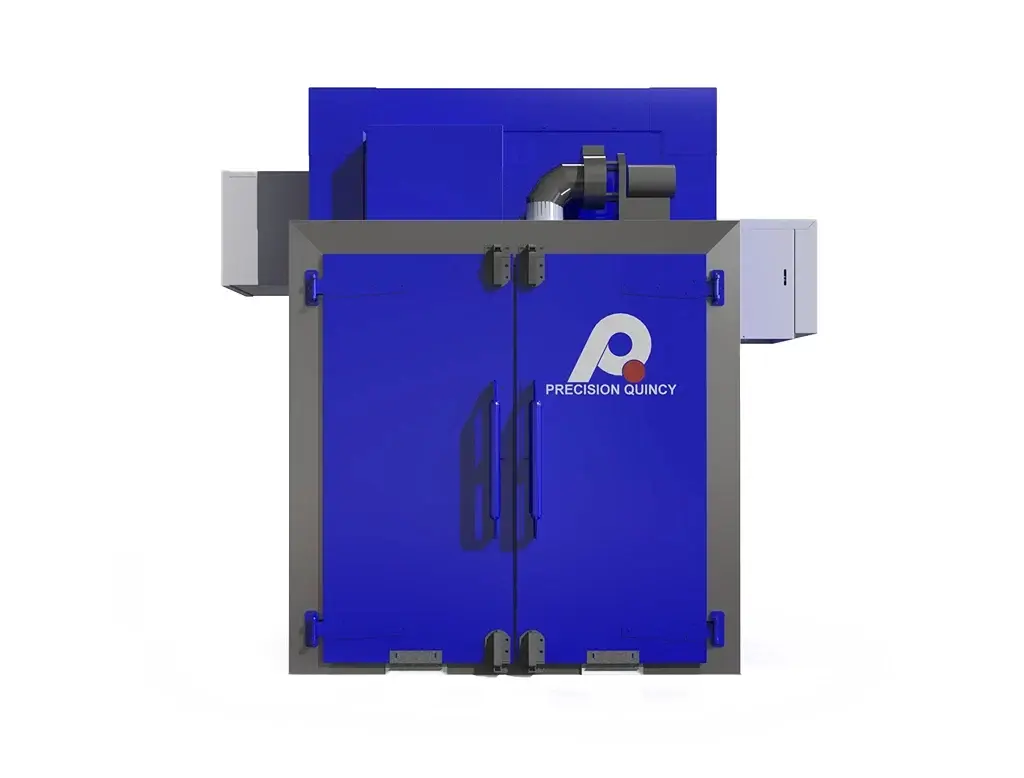
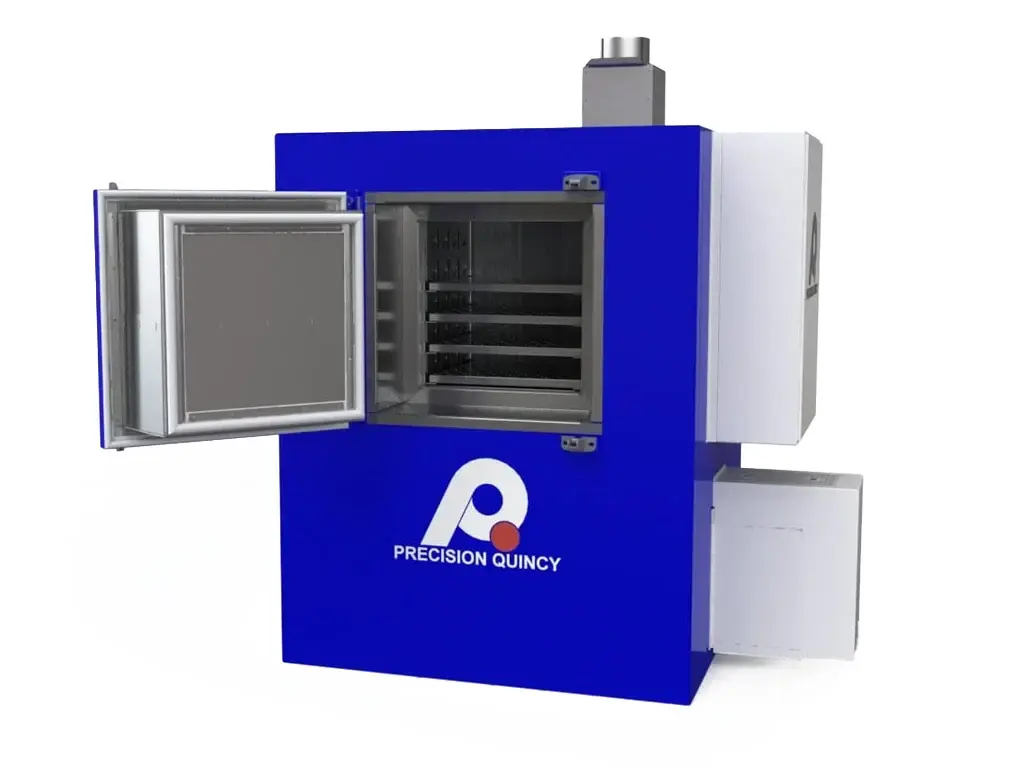
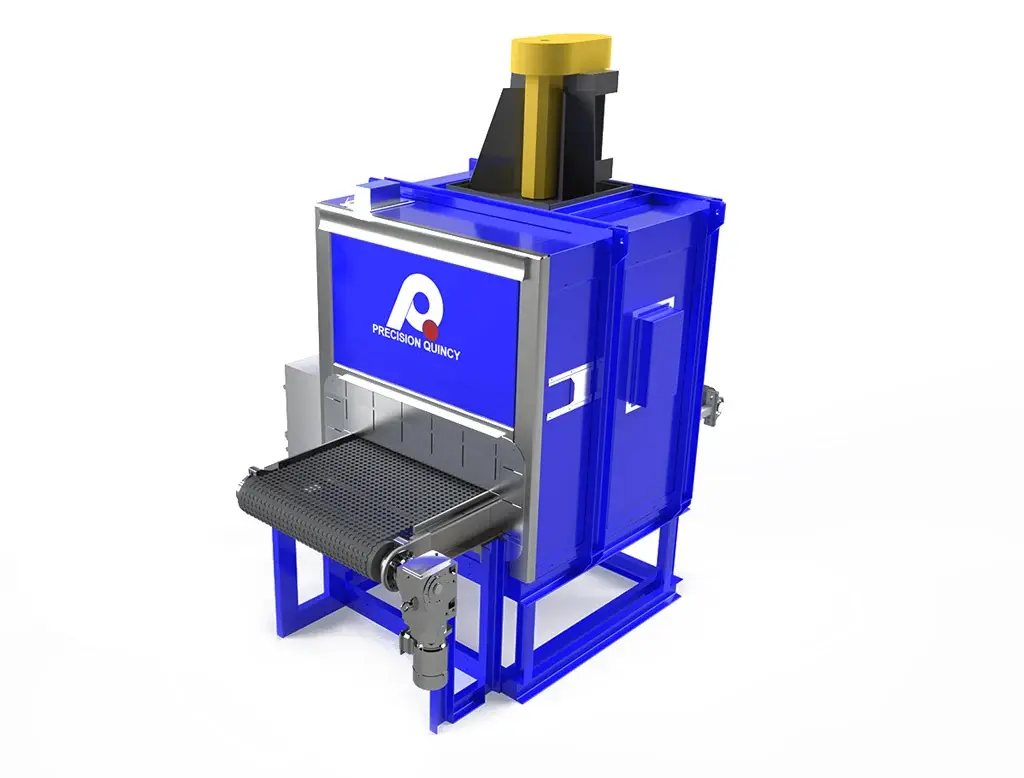
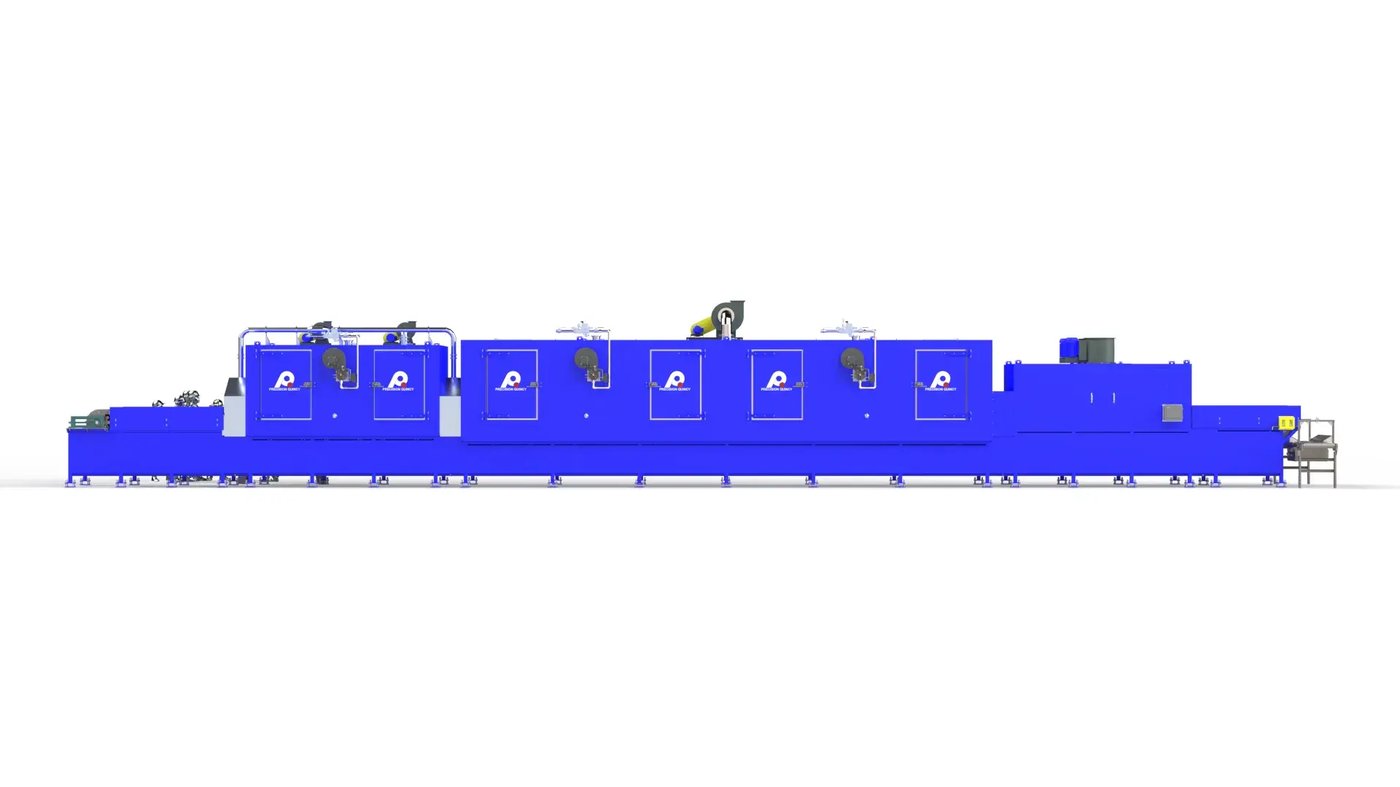
The final equipment concept is a three-stage conveyorized system made up of a preheat oven, a dual-zone high-heat cure oven, and an integral forced-air cooler with reversing unload capability. Product enters through the load section, passes through preheat, transitions into the two-zone cure oven, then moves through cooling before discharge.
The machine architecture uses a structural insulated shell design rather than light-gauge tongue-and-groove panel construction. The preheat oven uses 6-inch-thick insulated walls filled with 6 lb mineral wool. The high-heat oven uses a 10-inch wall system with 8 inches of 6 lb mineral wool plus 2 inches of 8 lb ceramic wool. The preheat section uses aluminized-steel interior and exterior construction, while the high-heat oven uses aluminized-steel exterior construction with a 304 stainless-steel interior. Proprietary separated inner and outer wall construction is used to accommodate thermal growth and limit external heat transfer.
Air delivery is provided through pressurized supply plenums with adjustable air ports and coordinated return plenums. The preheat section uses one NYB 278 PLR plug fan, and the high-heat oven uses two NYB 278 PLR plug fans. Heating is provided by Honeywell-Maxon OvenPak 415 direct-fired natural-gas burner systems. Exhaust is handled through dedicated exhaust takeoffs and roof-mounted exhausters, while the cooler uses high-volume forced-air intake and exhaust fans.
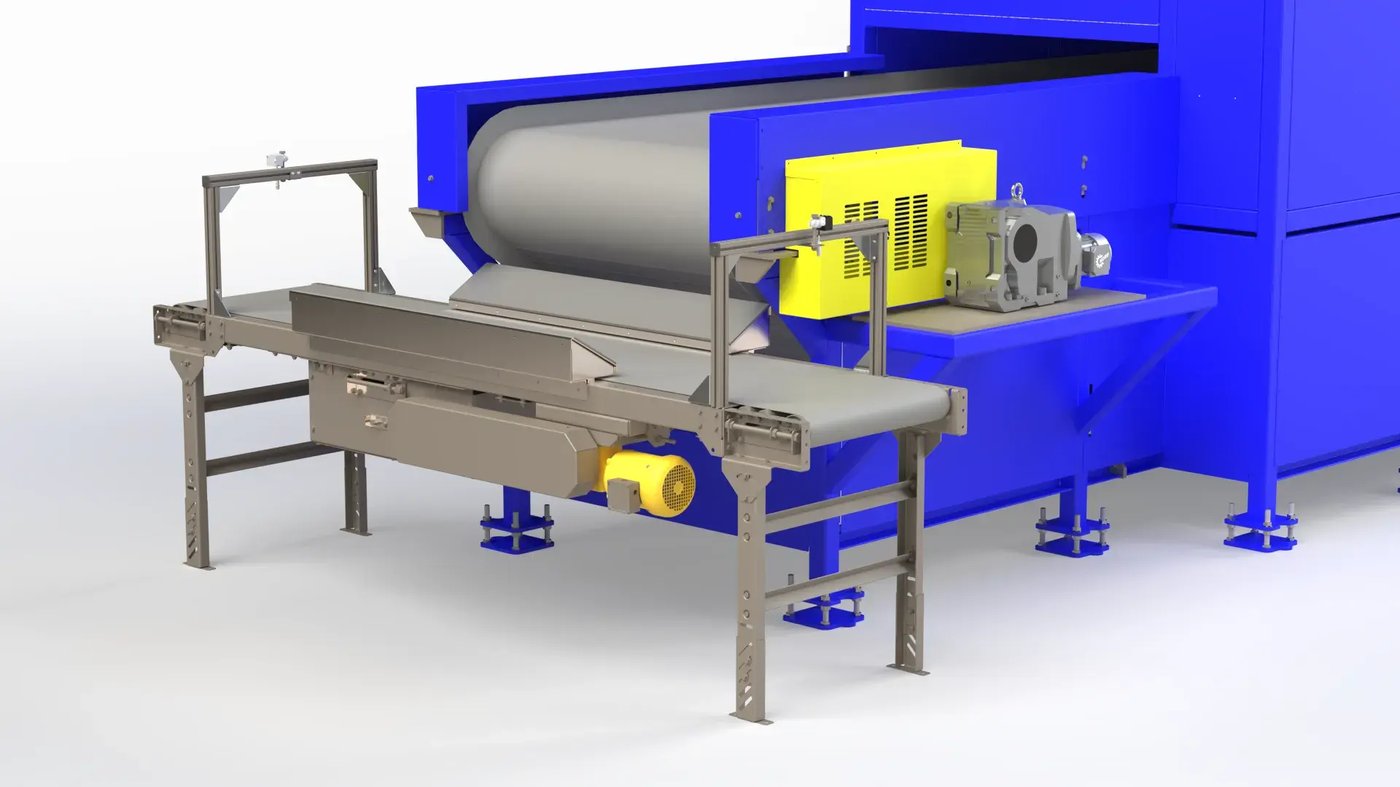
The handling architecture uses an 89R chain / B72 mesh belt conveyor with 3-inch side walls, manual catenary take-up, and Allen-Bradley PowerFlex 525 VFD-based speed control. The cooler discharge includes a reversing flat polyurethane unload conveyor with UHMW-lined stainless guides and bin-detection sensors for downstream transfer.
Controls and safety architecture are based on an Allen-Bradley CompactLogix platform with PanelView HMI, Ethernet-connected drives, flame safety, airflow proving, excess-temperature protection, gas pressure switches, stack light/alarm indication, and conveyor emergency stops. The overall system architecture aligns with NFPA 79, NFPA 86, and UL 508A open industrial control panel practices.
| OVEN CONFIGURATION | |
|---|---|
| Type | Continuous conveyorized preheat oven + dual-zone high-heat oven + forced-air cooler |
| Heated Zone Length | Preheat: 144 in chamber length; High heat: 408 in chamber length total across 2 zones |
| Width | 48 in conveyor surface width |
| Clear Height Above Belt / Work Dimensions | 10 in open height above conveyor surface; 55 in opening width |
| Equipment Overall Dimensions | Approx. 1026.16 in L x 145.94 in W x 151.87 in H |
| Inlet/Outlet Vestibules | External hooding before/after preheat; passive hood after high heat via cooler |
| Overall Length / Shipping | Approx. 85.5 ft overall line length; total system weight approx. 45,000 lb |
| Service Access | Side access doors on heated chambers; access panel on cooler; fan removal clearance behind fans |
| Explosion Relief | Explosion relief panels on high-heat oven |
| THERMAL HEAT POWER SYSTEM | |
|---|---|
| Operating Temperature | Preheat: 200–350°F; High heat: 350–700°F |
| Maximum Temperature | Preheat: 450°F; High heat: 850°F |
| Temperature Uniformity | ±15°F |
| Heating Zones | 1 preheat zone + 2 high-heat zones |
| Heat Source | Natural gas, direct fired |
| Heat Power | Preheat: 1,500,000 BTU/hr; High heat: 3,000,000 BTU/hr total |
| Emissions / Heat Control | Burner modulation via Kromschroder IC20E valve actuators; Honeywell-Maxon OvenPak 415 burners |
| RECIRCULATION / AIRFLOW SYSTEM | |
|---|---|
| Airflow Pattern | Vertical bottom-up airflow |
| Nozzle / Discharge Geometry | Adjustable laser-cut supply air ports with coordinated return plenum ports |
| Discharge Velocity | [Confirmed airflow pattern; discharge velocity not explicitly stated on GA/WD] |
| Fans | Preheat: 1 recirc fan; High heat: 2 recirc fans |
| Fan Motor | Preheat: 15 HP; High heat: 15 HP each |
| EXHAUST SYSTEM | |
|---|---|
| Minimum Exhaust | Preheat/hood: 1300 CFM + hood collection; High heat: 1600 CFM |
| Maximum Exhaust Capability | Cooler: two 12,000 CFM fans for forced cooling intake/exhaust |
| Control | Dedicated exhaust fans with airflow proving; cooler fans on VFDs |
| Basis | Class A coated fastener cure, 0.5 gal/hr VOC load per heated stage |
| CONVEYOR / HANDLING SYSTEM | |
|---|---|
| Configuration | Main oven conveyor with reversing unload conveyor |
| Drive | Main conveyor: 0.33 HP gear motor; unload: 0.5 HP gear motor |
| VFDs | Allen-Bradley PowerFlex 525 on main conveyor, unload conveyor, cooler intake fan, and cooler exhaust fan |
| Take-Up / Tensioning | Catenary take-up with manual adjustment; threaded/manual belt tension adjustment |
| Tracking | Positive sprocket engagement with guide rails |
| Drive Interface | PLC/Ethernet integrated drive control |
| Belt / Cart / Rail Return | External belt return path; reversing unload conveyor with UHMW-lined stainless guides |
| Conveyor / Load Capacity | 6–30 in/min; nominal 12 in/min; 38.71 lb/sq ft loading; 12,000 lb total evenly distributed |
| CONSTRUCTION MATERIALS / FINISH | |
|---|---|
| Primary Structure | Carbon steel structural frame internal to insulated walls |
| Interior | Preheat: aluminized steel; High heat: 304 stainless steel |
| Exterior | Aluminized steel |
| Paint / Finish | PQ Gray exterior; ANSI 61 gray control panel |
| Thermal Isolation | Preheat: 6 in wall with 6 lb mineral wool; High heat: 10 in wall with 8 in 6 lb mineral wool + 2 in 8 lb ceramic wool |
| SAFETY & COMPLIANCE | |
|---|---|
| NFPA 86 Classification | Class A |
| Burner / Heater Safety Hardware | Dungs flame safety and gas trains, proof-of-closure, airflow switches, gas pressure switches, excess-temperature controllers |
| Safety Notes | NFPA 79 / NFPA 86 / UL 508A open industrial control panel approach; conveyor E-stops; stack light and audible alarm; high-heat explosion relief panels |
| CONTROLS & ELECTRICAL | |
|---|---|
| PLC | Allen-Bradley CompactLogix 1769-L36ERM |
| HMI / Drives / Major Controls Notes | 10 in PanelView 800 HMI; unmanaged Ethernet switch; PowerFlex 525 VFDs; Gefran 650L excess-temperature controllers; Dold safety relay; Dungs flame safety; 480/3/60; full load amps 116 |
| PROCESS NOTES | |
|---|---|
| Process Notes | Coating cure for miscellaneous fasteners with preheat, high-heat cure, and forced cooling |
| Testing / Validation | Factory pre-assembly, pre-wiring, pre-test, balance, and oven uniformity adjustment/testing |
| Future / Expansion Notes | Reversing unload with bin-detection sensors included; field exhaust and site-specific code requirements by customer |