

Project Number: 5648
Electric Heated Vertical Batch Oven for Curing Tall Carbon Fiber Tubes
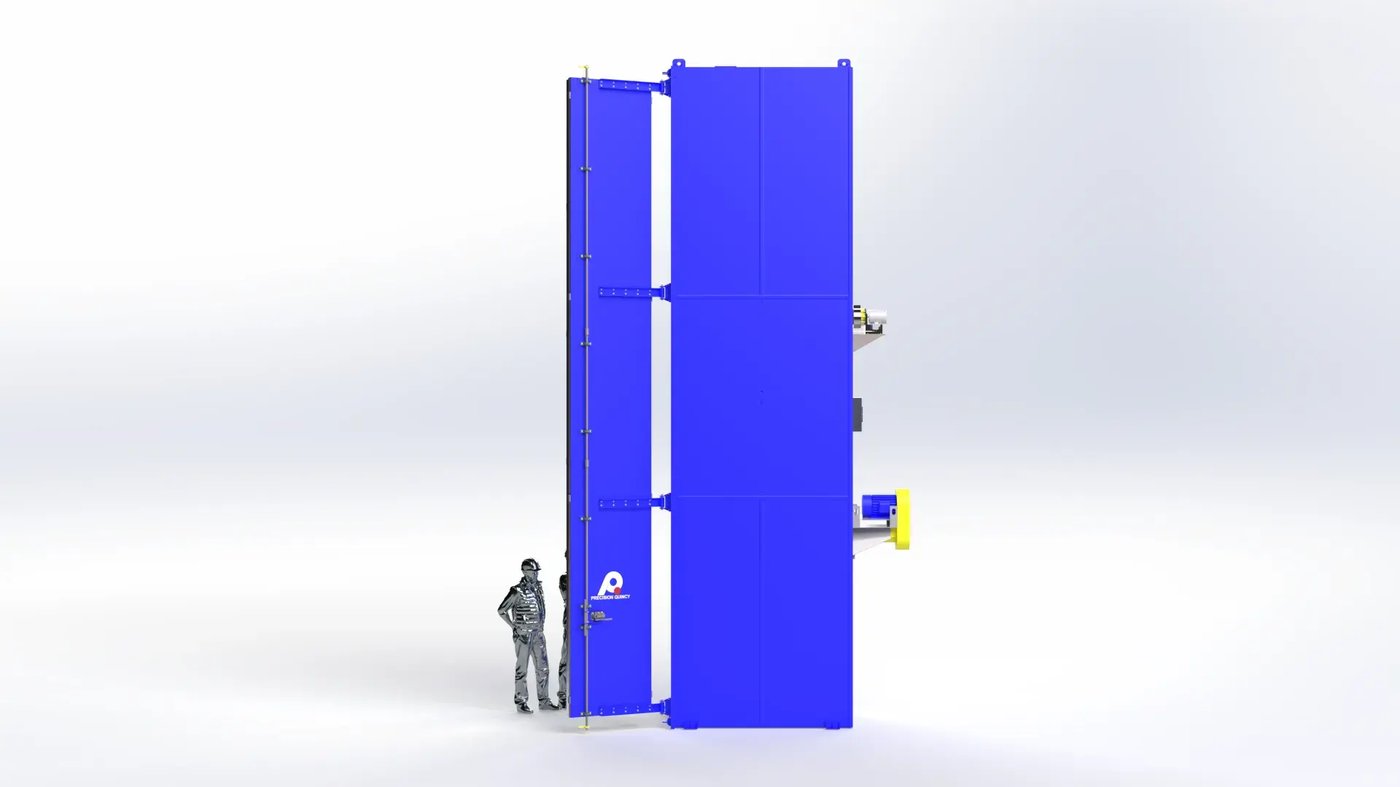
Overview
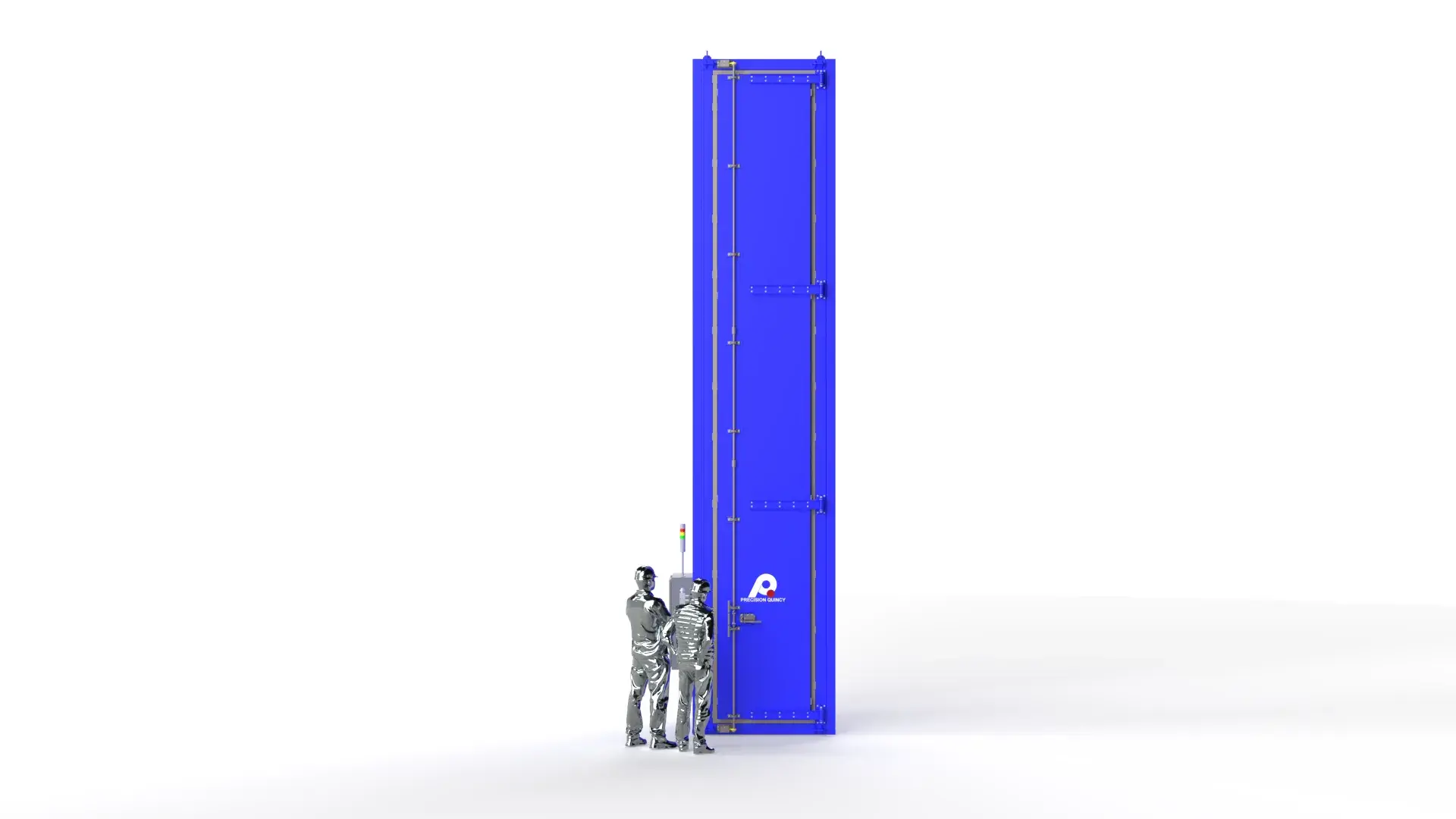
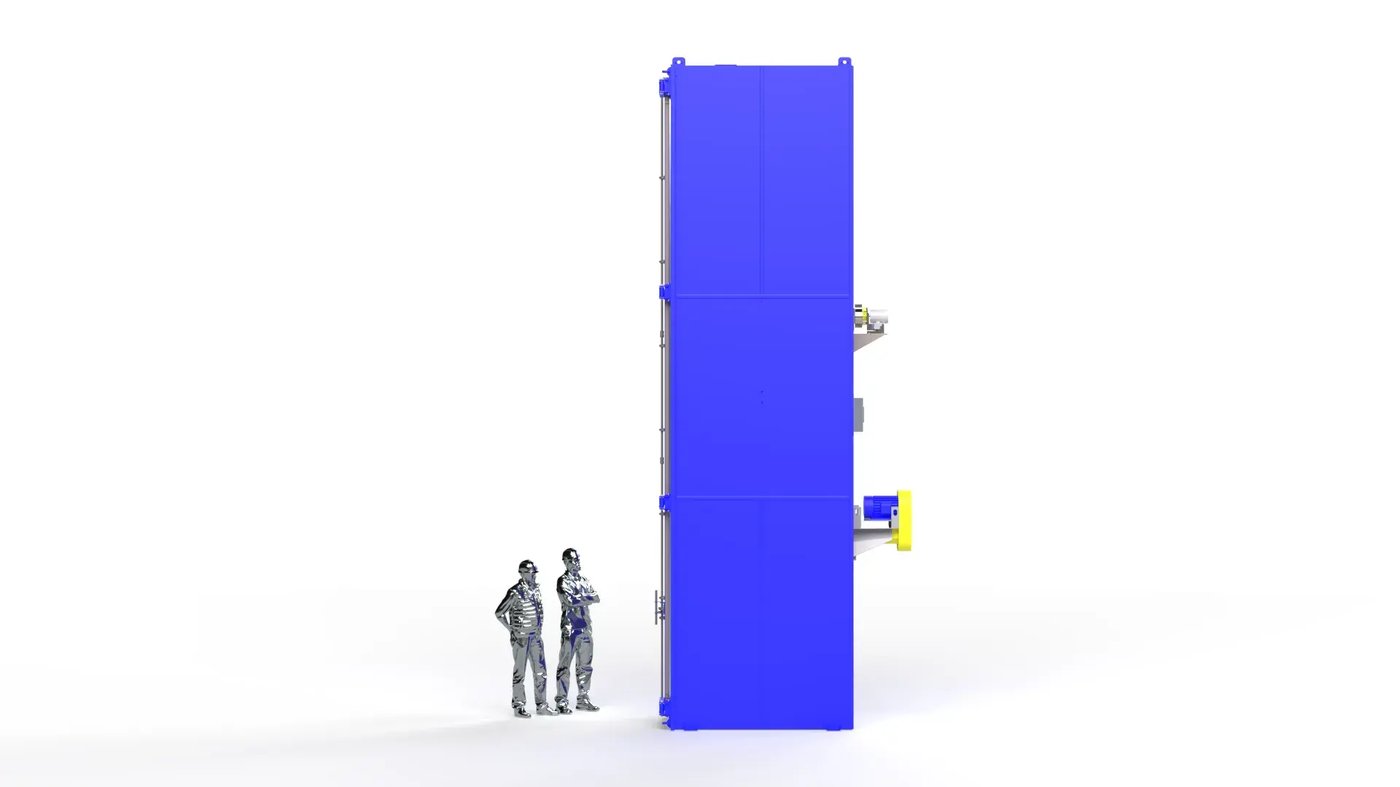
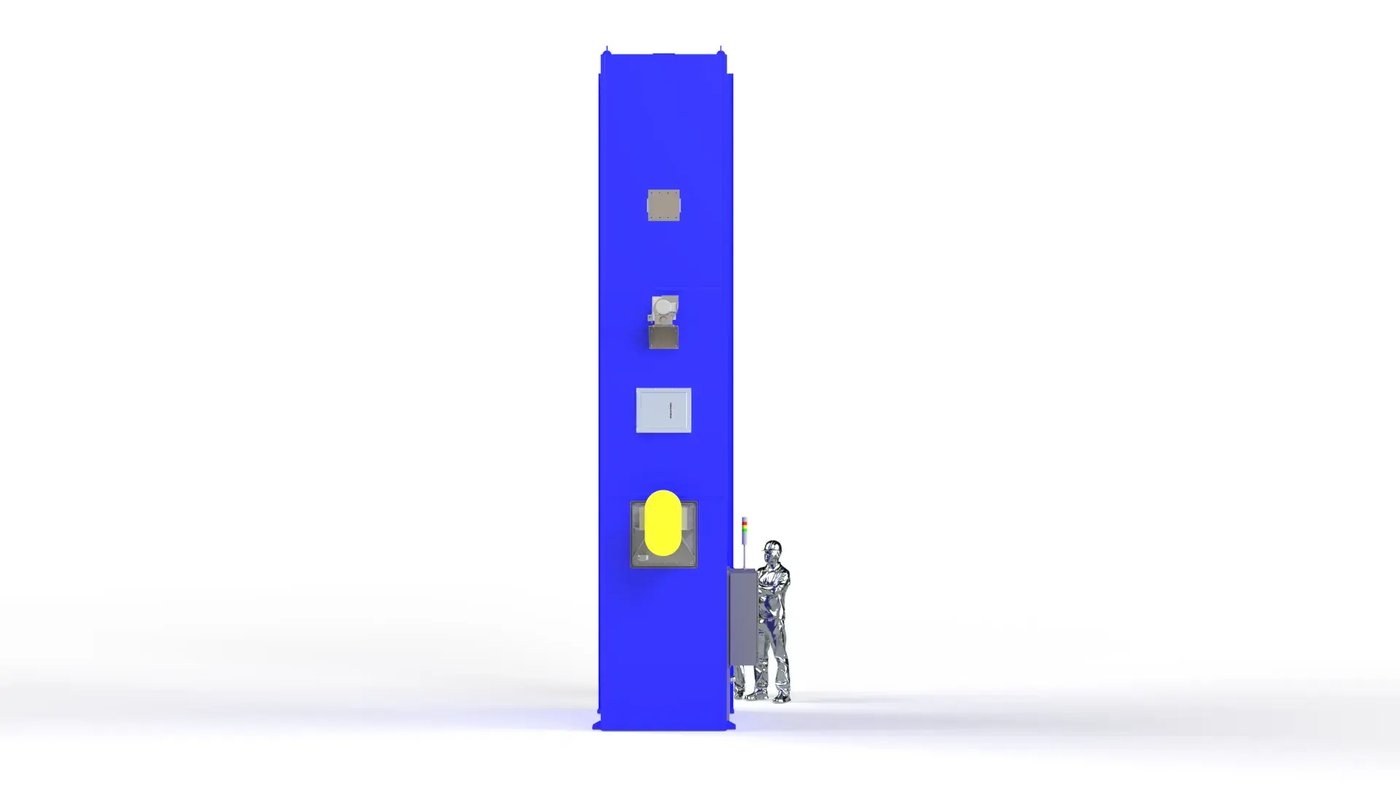
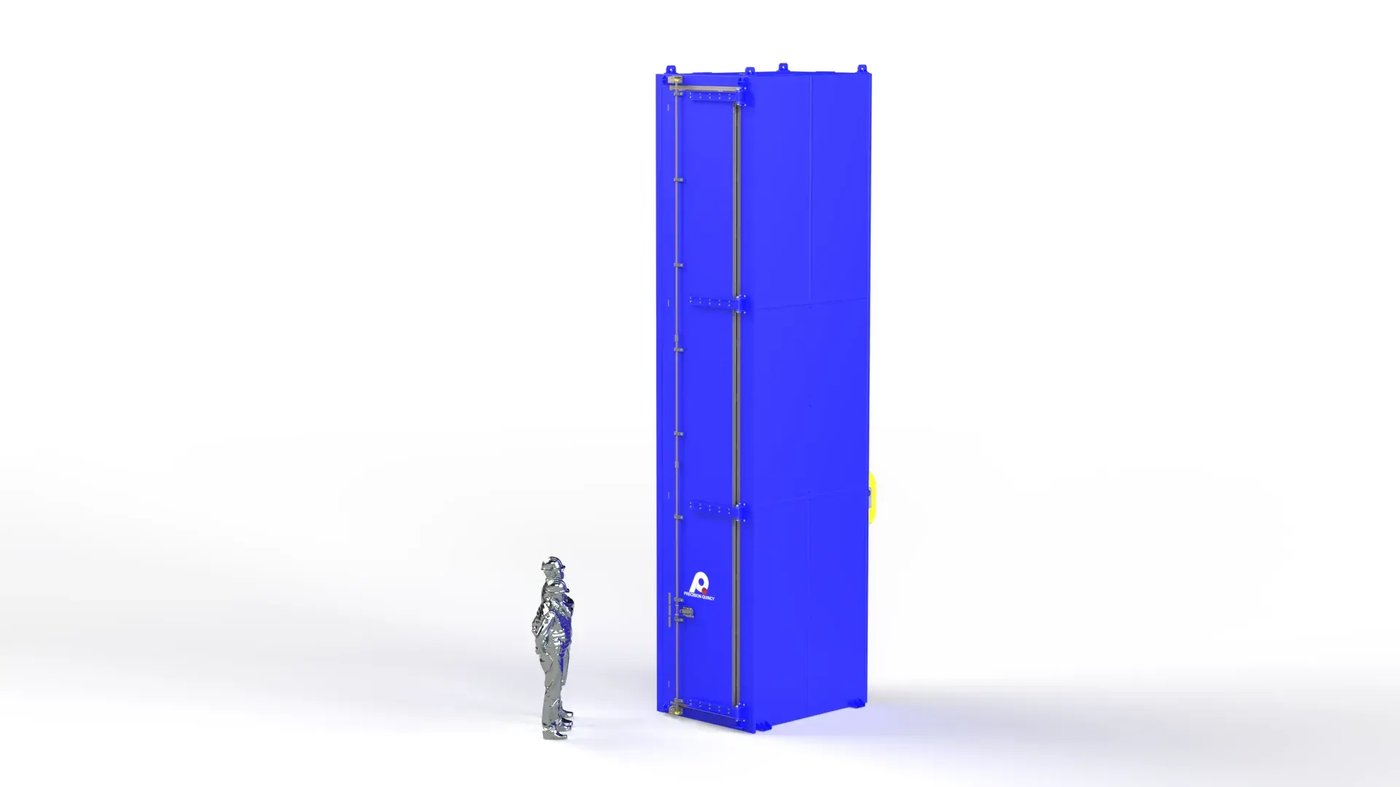
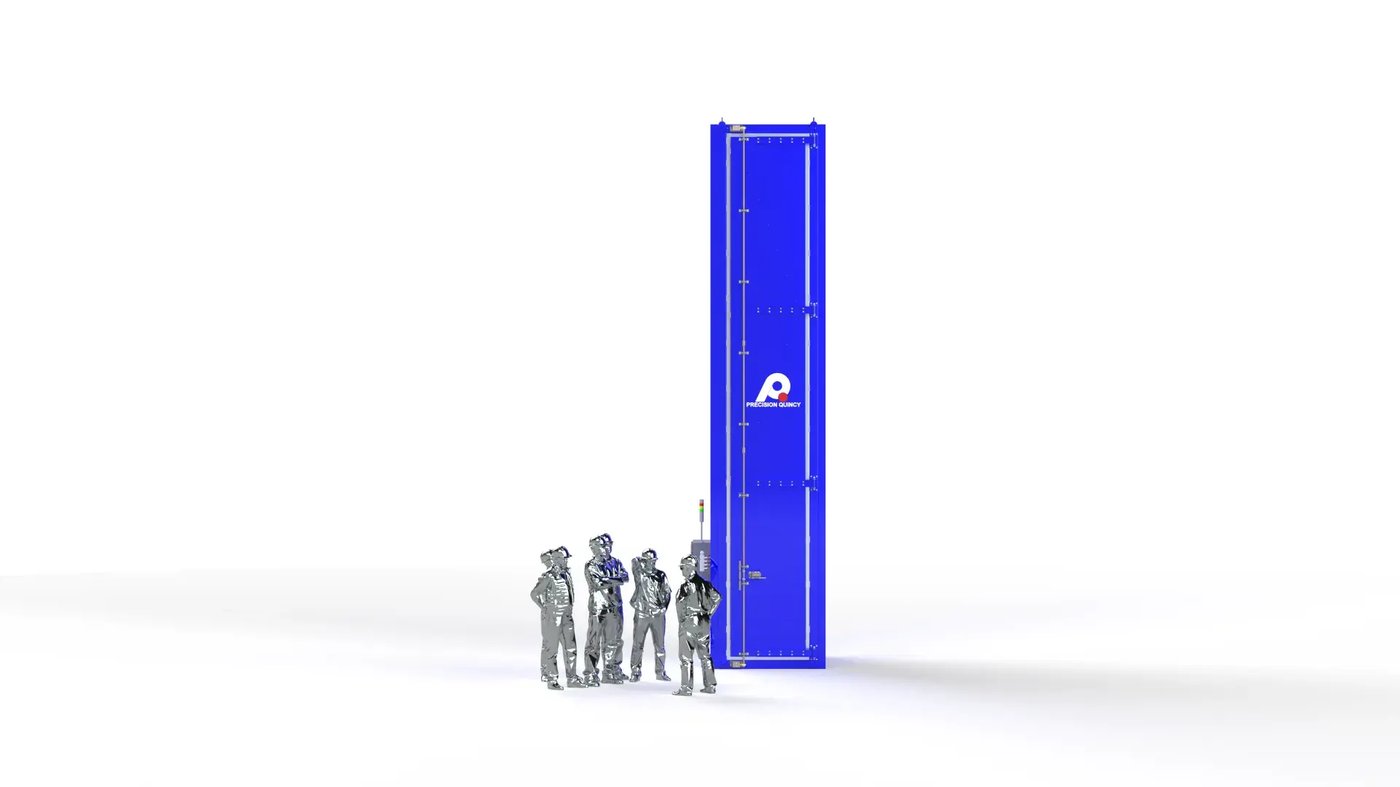
Precision Quincy engineered this oven as an electric heated Class A vertical batch oven for curing carbon fiber tubes. The customer application required a very tall heated work envelope for vertically oriented composite parts, while maintaining controlled thermal performance, safe volatile handling, and robust structural stability for installation in a demanding west-coast environment.
The oven was built around a 36 in W × 36 in L × 274 in H internal work area with an approximate internal volume of 213 cubic feet. The system was designed for a typical operating range of 350°F to 400°F, with a maximum operating temperature of 400°F and a required work area uniformity of ±10°F. To deliver that performance, Precision Quincy used a 72 kW electric heater bank arrangement, a Blower 208 PLR plug fan rated for 5,400 CFM at 2 in. W.c., and a full vertical airflow pattern tailored to the geometry of the product.
The equipment was configured as an NFPA 86 Class A oven based on a stated VOC load basis of approximately 0.11 to 0.13 gallons per batch. In addition to standard oven temperature control, the design includes a Eurotherm Nanodac controller with data acquisition, two Type J part thermocouple jacks, a tri-color visual alarm, a vacuum manifold with four ports, and a roof port with winch mounting provisions to support loading and process setup for long composite parts.
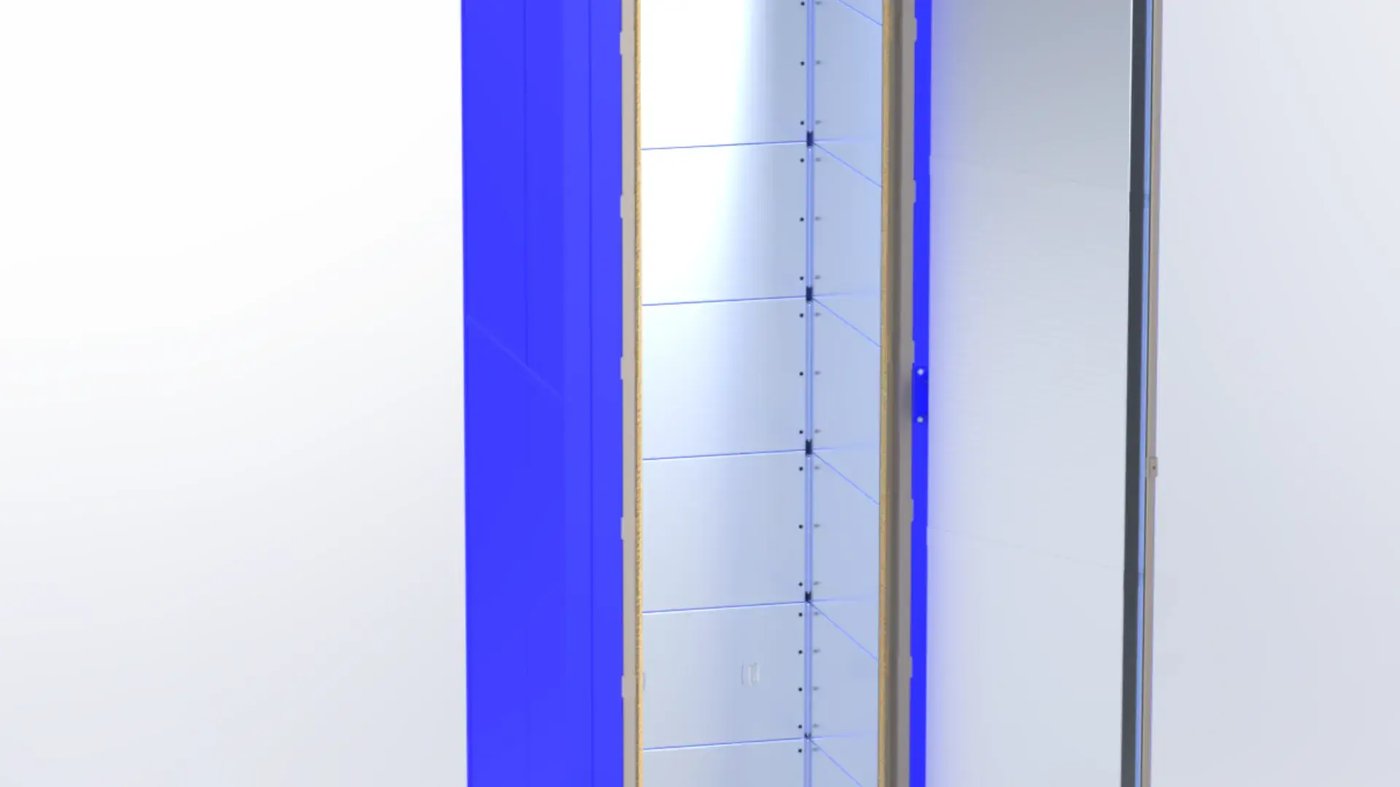
Because of the height and geometry of the system, the oven was engineered with an internal structural truss system that carries the primary load of the assembly while allowing the insulated shell system to perform its thermal function. The work chamber uses insulated pan construction that accommodates thermal expansion and contraction while helping protect the insulation system from erosion over time. Although seismic design was not a formal project requirement, the structure was intentionally engineered to address west-coast seismic conditions as an added safety measure. The oven was pre-assembled, pre-wired, and pre-tested in Precision Quincy’s facility before shipment, then shipped laid on its back so it could be transported and later craned into position and stood upright at the customer site. The oven uses a reinforced insulated shell with 9-inch-thick walls, a 2.5-inch insulated floor with 1/4-inch plate cover, and an external NEMA 1 control enclosure.
This oven was developed for the curing of tall carbon fiber tubes in a vertical batch process. The application required a very tall oven chamber, stable thermal conditions, safe handling of a Class A process load, and integrated provisions to support vacuum-connected composite processing and suspended or assisted vertical handling of long parts.
APPLICATION REQUIREMENT
- The equipment had to process carbon fiber tubes.
- The required process was curing.
- The oven had to support vertically oriented composite parts with extreme length relative to footprint.
- The process required provisions for vacuum connection and part temperature verification during curing.
WORK CHAMBER / LOAD REQUIREMENT
- Required internal work area: 36 in W × 36 in L × 274 in H.
- Approximate product load basis: 1,000 lbs.
- The equipment had to accommodate tall product geometry while preserving adequate airflow around the load.
- Product and fixture positioning had to minimize airflow restriction through the work chamber.
- The oven had to be structurally suitable for safe installation and use in a west-coast environment, including added attention to seismic stability.
- The shipping and installation concept had to account for the oven’s height, requiring the unit to be handled horizontally for transport and then raised upright at the installation site.
PROCESS REQUIREMENT
- The system had to support repeatable composite curing at elevated temperature.
- The design had to maintain thermal performance across a very tall vertical work area.
- The process architecture had to support monitoring of both chamber temperature and product temperature.
SAFETY REQUIREMENT
- The oven was required to be designed as an NFPA 86 Class A unit.
- The stated VOC load basis was approximately 0.11 to 0.13 gallons per batch of standard solvent / o-xylene basis, requiring exhaust and purge provisions appropriate for Class A operation.
- The oven required airflow proving, purge timing, excess-temperature protection, and visual fault/status indication.
UTILITY / SITE REQUIREMENT
- Required electrical service: 460V / 3PH / 60Hz.
- Approximate electrical load: 100.3 FLA.
- Design elevation basis: less than 1,000 ft above sea level.
- Shipping / installation access basis: 12 ft W × 16 ft H dock / door size.
INSTALLATION / STRUCTURAL REQUIREMENT
- The oven required consideration for building support and stability due to its height.
- The oven required additional mounting to the building frame for final support and stability.
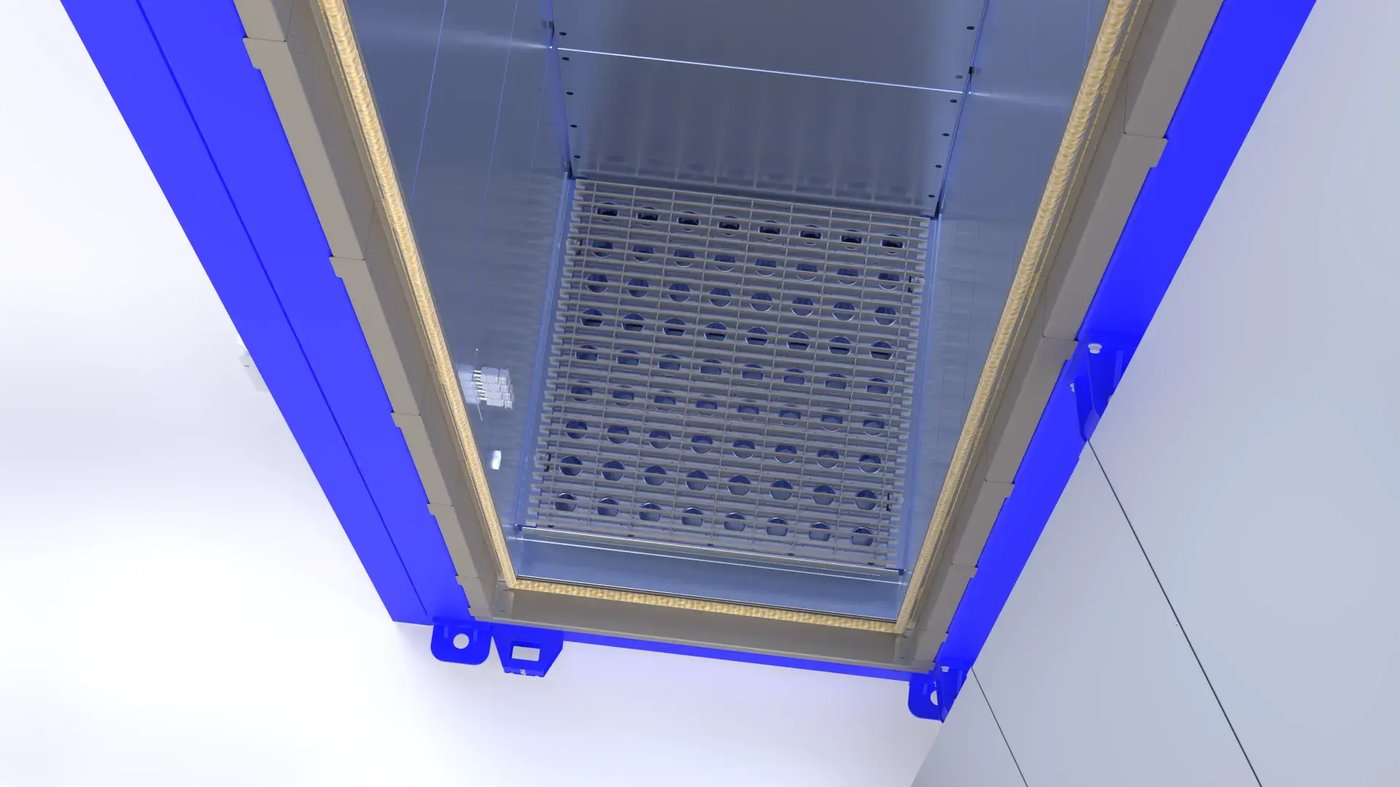
- A bar grating surface is mounted over ductwork to make the surface below the work area load bearing.
- Because of the overall height, the oven was shipped and installed using a laydown-and-standup approach rather than being transported upright.
These thermal process requirements were established from the customer’s need to cure tall carbon fiber tubes in a controlled vertical batch environment with integrated temperature verification and Class A exhaust / purge protection.
TEMPERATURE CAPABILITY
- Typical operating range: 350°F to 400°F.
- Maximum operating temperature: 400°F.
- Required work area temperature uniformity: ±10°F.
PROCESS BASIS
- The thermal process basis is curing of carbon fiber tubes.
- The application requires stable heat transfer over an unusually tall vertical chamber.
- The process includes provisions for part temperature monitoring in addition to chamber control.
HEAT INPUT REQUIREMENT
- Heat source: electric resistance heat.
- Total installed heat: 72 kW.
- Heater arrangement: two 36 kW heater banks, each made up of 12 elements at 3 kW per element.
- Heating elements: incoloy sheathed electric elements.
AIRFLOW DELIVERY REQUIREMENTS
- Required airflow style: full vertical airflow.
- Recirculation airflow basis: 5,400 CFM.
- Recirculation static pressure basis: 2 in. W.c.
- Recirculation fan basis: NYB 208 PLR plug fan with 5 HP motor.
EXHAUST / VENTILATION BASIS
- Exhaust airflow basis: 130 CFM.
- Exhaust fan basis: PQ1 exhauster delivering 130 CFM at 1 in. W.c. With 0.75 HP motor.
- Maximum VOC load basis: approximately 0.11 to 0.13 gallons per batch.
- Oven classification basis: NFPA 86 Class A.
- The oven includes an adjustable gravity exhaust / damper arrangement and Class A purge sequencing.
THERMAL INSTRUMENTATION / CONTROL BASIS
- Primary process controller: Eurotherm Nanodac controller with data acquisition.
- Work area high-limit controller: Eurotherm 3216i excess-temperature controller.
- Thermocouple type: Type J.
- Temperature inputs include work area temperature plus two part thermocouple channels.
SAFETY / CLASSIFICATION BASIS
- Oven classification basis: NFPA 86 Class A.
- Safety architecture includes airflow switches on process-critical fans, purge timer, heater-bank shutdown on unsafe condition, and tri-color status / alarm indication.
To deliver the customer and thermal process requirements for this oven, Precision Quincy developed the following equipment concept and architecture.
OVERALL CONCEPT
- One electric heated vertical batch oven.
- Designed for curing tall carbon fiber tubes.
- The design uses an integrated rear heat chamber with vertical recirculation and a tall narrow work envelope.
- The structure incorporates an internal truss system to carry the primary vertical load of the assembly.
- The thermal shell uses insulated pan construction to accommodate expansion and contraction while protecting the insulation system.
HEATING ARCHITECTURE
- Heat source: electric resistance heat.
- Total heat input: 72 kW.
- Heater construction: incoloy sheathed elements.
- Heater bank arrangement:
- Two 36 kW heater banks
- 12 elements per bank
- 3 kW per element at 460V
- The controls include solid-state relays and backup contactors for the heater banks.
AIRFLOW / RECIRCULATION ARCHITECTURE
- Airflow pattern: full vertical airflow.
- Recirculation fan concept:
- Blower 208 PLR plug fan
- 5,400 CFM @ 2 in. W.c.
- 5 HP TEFC motor
- Belt-driven arrangement
- Exhaust fan concept:
- PQ1 exhauster
- 130 CFM @ 1 in. W.c.
- 0.75 HP ODP motor
- Supply ductwork uses adjustable slot nozzles for balancing and uniform airflow distribution.
CHAMBER / CONSTRUCTION ARCHITECTURE
- Internal work area: 36 in W × 36 in L × 274 in H.
- Approximate exterior dimensions: 78.22 in W × 121.75 in D × 306 in H.
- Wall construction: double-wall insulated shell with structural reinforcement.
- Structural support concept: internal truss system carrying the primary load of the assembly.
- Thermal shell concept: insulated pan construction allowing expansion and contraction while protecting insulation from erosion.
- Wall system thickness: 9 inches.
- Insulation: 9 in of 6 lb density mineral wool.
- Interior material: aluminized steel.
- Exterior finish: PQ blue, RAL 5005.
- Floor construction: 2.5-inch insulated floor with 1/4-inch plate cover.
- The design includes bar grating over ductwork to create a load-bearing surface below the work area.
- The structure was designed with added attention to seismic stability for west-coast installation conditions.
DOOR / ACCESS ARCHITECTURE
- Door style: single insulated access door on one end.
- Door construction: 4-inch-thick double-wall door with reinforced framing, gasketed seal, and pressure-release latching provisions.
PROCESS INTEGRATION ARCHITECTURE
- Vacuum manifold with four ports.
- Four internal/external vacuum connection points for process hookup.
- Two Type J thermocouple jacks for product monitoring.
- 3-inch roof port and winch mounting plate to support vertical handling / suspension of product.
- Roof-port / winch arrangement is rated for up to 2,000 lbs max capacity, with customer-supplied winch and pulleys.
CONTROLS ARCHITECTURE
- Primary controller: Eurotherm Nanodac with data acquisition.
- High-limit controller: Eurotherm 3216i.
- Control enclosure: 36 in × 36 in × 12 in NEMA 1 enclosure.
- Panel type: UL 508A Open Industrial Control Panel.
- Operator interface includes:
- Exhaust fan start/stop
- Recirculation fan start/stop
- Heat bank 1 and 2 switches
- Safety chain status indication
- Batch start pushbutton
- Alarm silence pushbutton
- Tri-color stack light with audible alarm
SAFETY / COMPLIANCE ARCHITECTURE
- Oven classification: NFPA 86 Class A.
- Applicable standards noted on project drawings: NFPA 79, NFPA 86, UL 508A.
- Safety functions include:
- Mechanical purge timer
- Airflow switches on exhaust and recirculation fans
- Work area high-limit protection
- Heater shutdown when safe operating conditions are not met
SHIPPING / INSTALLATION ARCHITECTURE
- The oven was pre-assembled, pre-wired, and pre-tested before shipment.
- Because of its height, the oven was shipped laid on its back and then stood upright on site using crane handling.
- The final installation approach was developed around the physical realities of transport, move-in, and safe erection of the equipment.
| OVEN CONFIGURATION | |
|---|---|
| Type | Electric heated vertical batch oven |
| Quantity | 1 oven |
| Application | Curing carbon fiber tubes |
| Internal Work Area | 36 in W × 36 in L × 274 in H |
| Interior Volume | 213 cubic feet |
| Approximate Product Load | 1,000 lbs |
| Approximate Oven Weight | 4,400 lbs |
| Approximate Exterior Dimensions | 78.22 in W × 121.75 in D × 306 in H |
| THERMAL HEAT POWER SYSTEM | |
|---|---|
| Operating Temperature Range | 350°F to 400°F |
| Maximum Operating Temperature | 400°F |
| Temperature Uniformity | ±10°F |
| Heat Source | Electric resistance heat |
| Total Installed Heat | 72 kW |
| Heater Bank Arrangement | 2 × 36 kW banks |
| Heater Elements | 24 total, 3 kW each @ 460V |
| Heater Element Type | Incoloy sheathed |
| RECIRCULATION / AIRFLOW SYSTEM | |
|---|---|
| Airflow Pattern | Full vertical airflow |
| Recirculation Fan | NYB 208 PLR plug fan |
| Recirculation Airflow | 5,400 CFM |
| Recirculation Static Pressure | 2 in. W.c. |
| Recirculation Fan Motor | 5 HP |
| Recirculation Fan Motor Type | TEFC |
| Fan Drive Method | Belt-driven |
| EXHAUST SYSTEM | |
|---|---|
| Exhaust Fan | PQ1 exhauster |
| Exhaust Airflow | 130 CFM |
| Exhaust Static Pressure | 1 in. W.c. |
| Exhaust Fan Motor | 0.75 HP |
| Exhaust Fan Motor Type | ODP |
| CONSTRUCTION MATERIALS / SHELL SYSTEM | |
|---|---|
| Shell Style | Double-wall insulated shell with structural reinforcement |
| Wall Thickness | 9 in |
| Insulation | 9 in of 6 lb density mineral wool |
| Interior Material | Aluminized steel |
| Exterior Finish | PQ Blue, RAL 5005 |
| Floor Construction | 2.5 in insulated floor with 1/4 in plate cover |
| Door Style | Single insulated end door |
| Door Thickness | 4 in |
| Structural Note | Additional building-frame mounting required for support and stability |
| PROCESS INTEGRATION FEATURES | |
|---|---|
| Vacuum System | 1 manifold with 4 ports |
| Roof Port | 3 in roof port |
| Winch Provision | Mounting plate with customer-supplied winch and pulleys |
| Winch Capacity Basis | 2,000 lbs max |
| Part Thermocouple Jacks | 2 Type J jacks |
| Visual Alarm | Tri-color stack light with audible alarm |
| SAFETY & COMPLIANCE | |
|---|---|
| Classification | NFPA 86 Class A |
| Maximum VOC Load | 0.11 to 0.13 gallons per batch basis |
| Purge / Proving Devices | Mechanical purge timer and airflow switches |
| High-Limit Protection | Eurotherm 3216i excess-temperature controller |
| Structural Safety Consideration | Engineered with added attention to west-coast seismic stability |
| CONTROLS & ELECTRICAL | |
|---|---|
| Primary Process Controller | Eurotherm Nanodac with data acquisition |
| High-Limit Controller | Eurotherm 3216i |
| Thermocouples | Type J |
| Control Enclosure | 36 in × 36 in × 12 in NEMA 1 enclosure |
| Panel Listing | UL 508A Open Industrial Control Panel |
| Primary Power | 460V / 3PH / 60Hz |
| Full Load Amperage | 100.3 A FLA |
| Stack Light / Alarm | Patlite 3-tier stack light with audible alarm |
| PROCESS SUMMARY | |
|---|---|
| Product | Carbon fiber tubes |
| Market / Application | Composite curing |
| Process Type | Vertical batch curing with part-temperature monitoring and vacuum integration provisions |
| Key Verification Concept | Repeatable control of temperature, airflow, exhaust, purge, and product temperature |
| Special Feature Set | Tall vertical chamber, vacuum ports, roof port, winch mounting provisions, and crane-assisted stand-up installation concept |