

Project Number: 5495
Electric Rubber Core Preheat Oven for Automated Rubber Wheel Core Heating in a High-Throughput Manufacturing Line
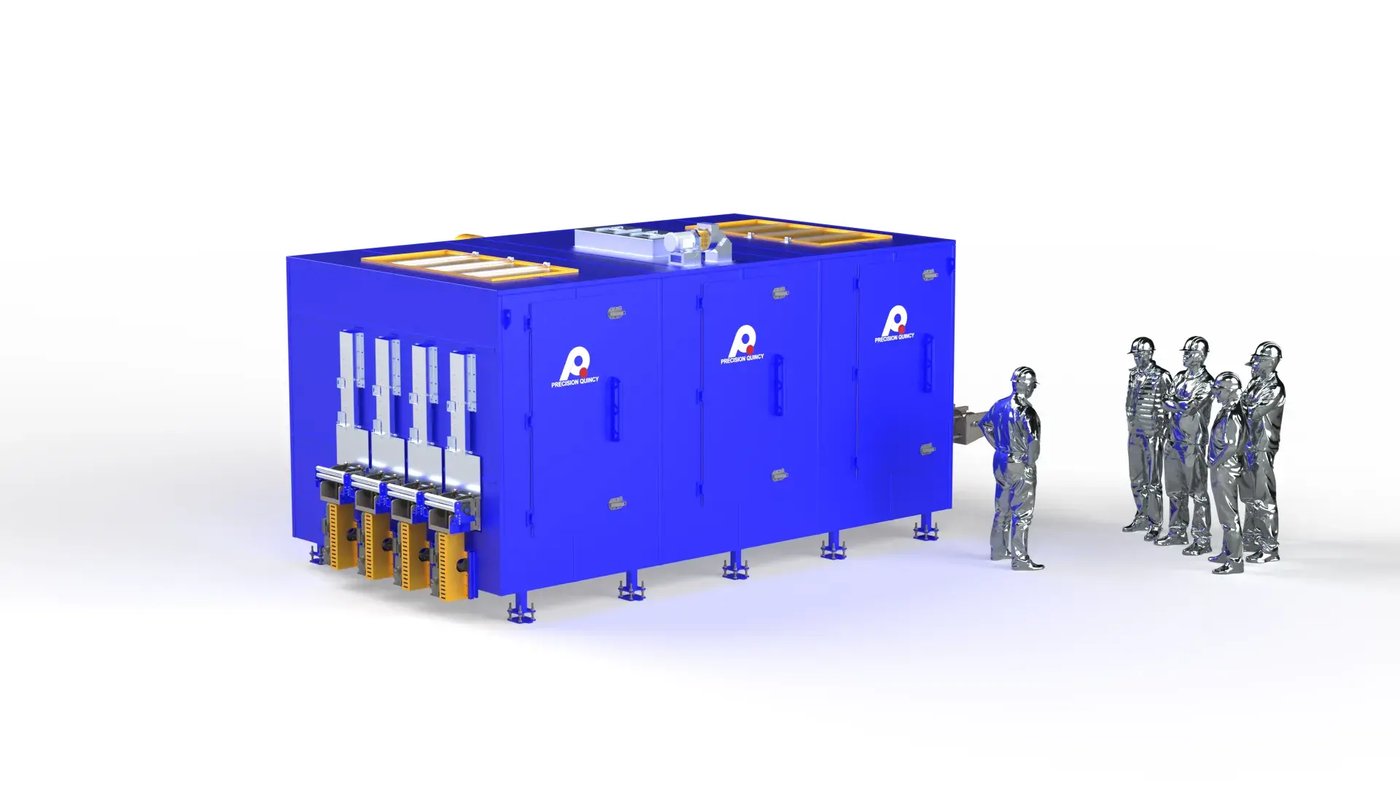
Overview
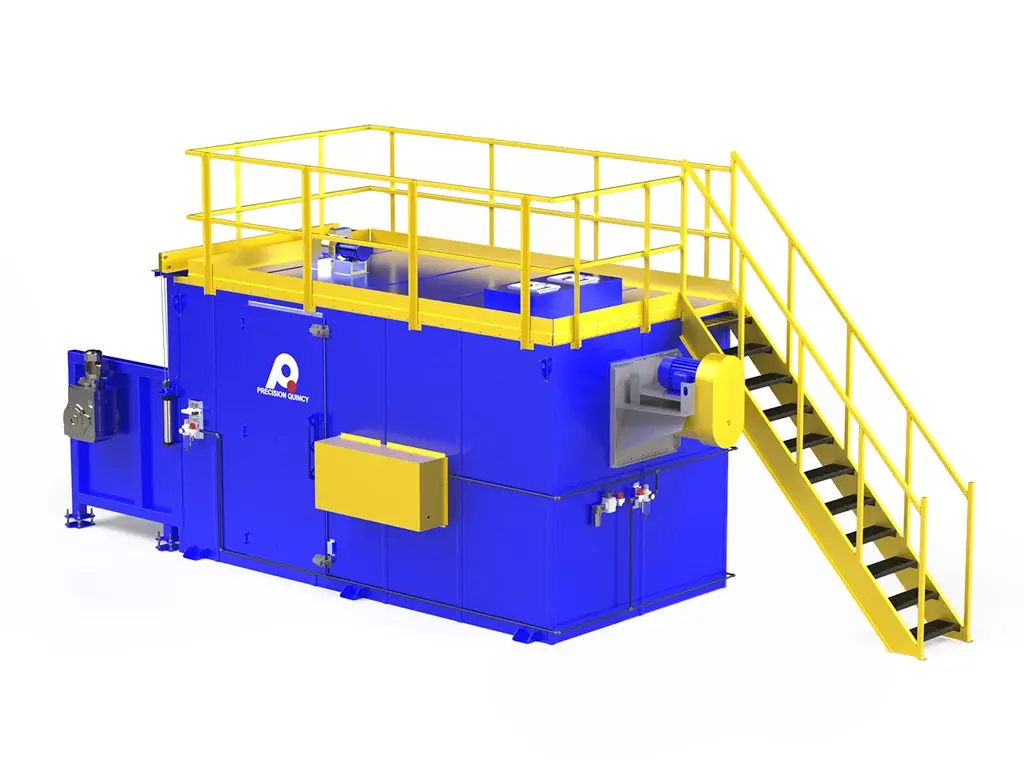
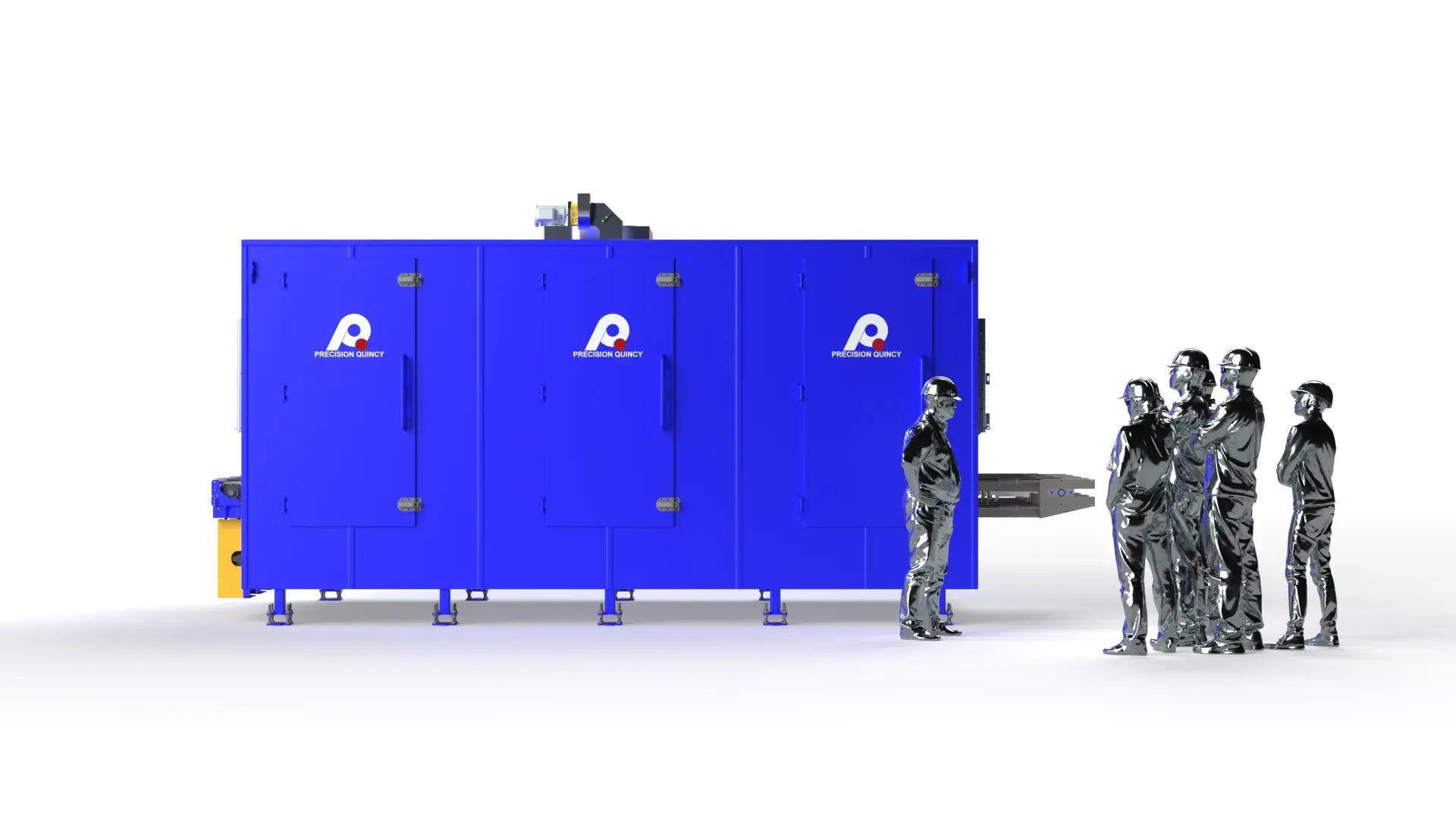
The project was developed as a dedicated rubber core preheat oven within a larger automated wheel-manufacturing system. Rather than treating preheat as a secondary function, this oven was engineered as its own process module so the thermal condition of the incoming core could be controlled before it moved into later production stages.
In this application, the oven had to do more than simply raise product temperature. It had to accept parts from automated handling, maintain repeatable indexed movement through the heated chamber, protect process sequencing with door and conveyor interlocks, and discharge parts in a predictable condition for the next operation. That combination of thermal duty and automation duty made the machine a true production-line oven, not just a stand-alone batch heating chamber.
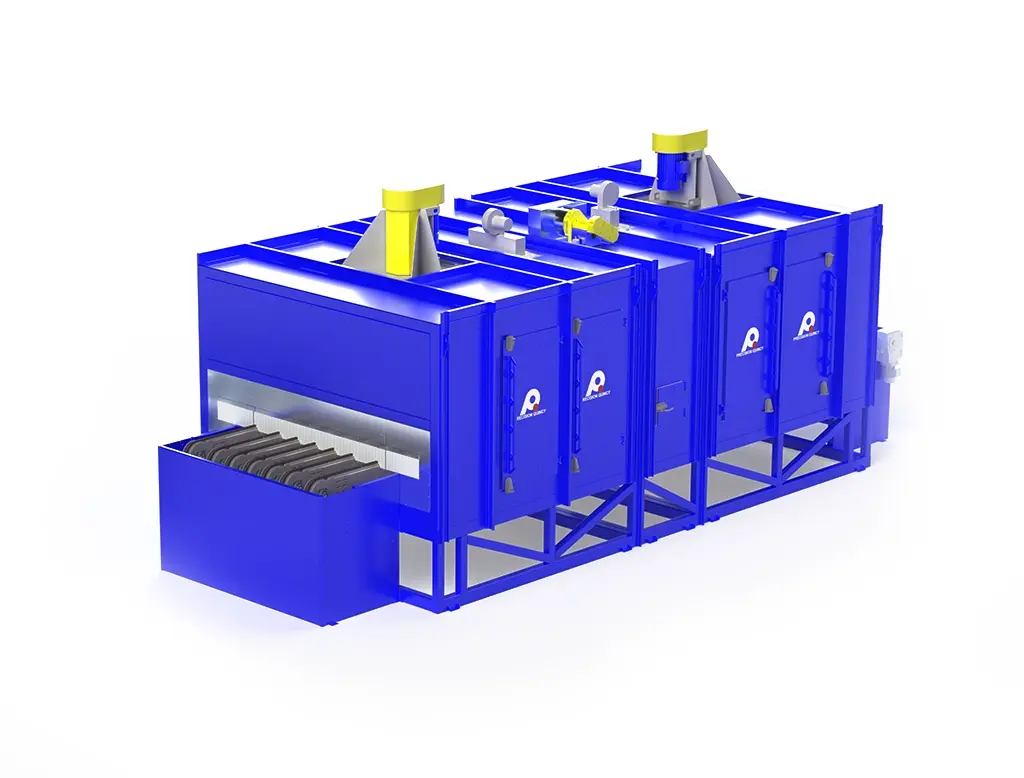
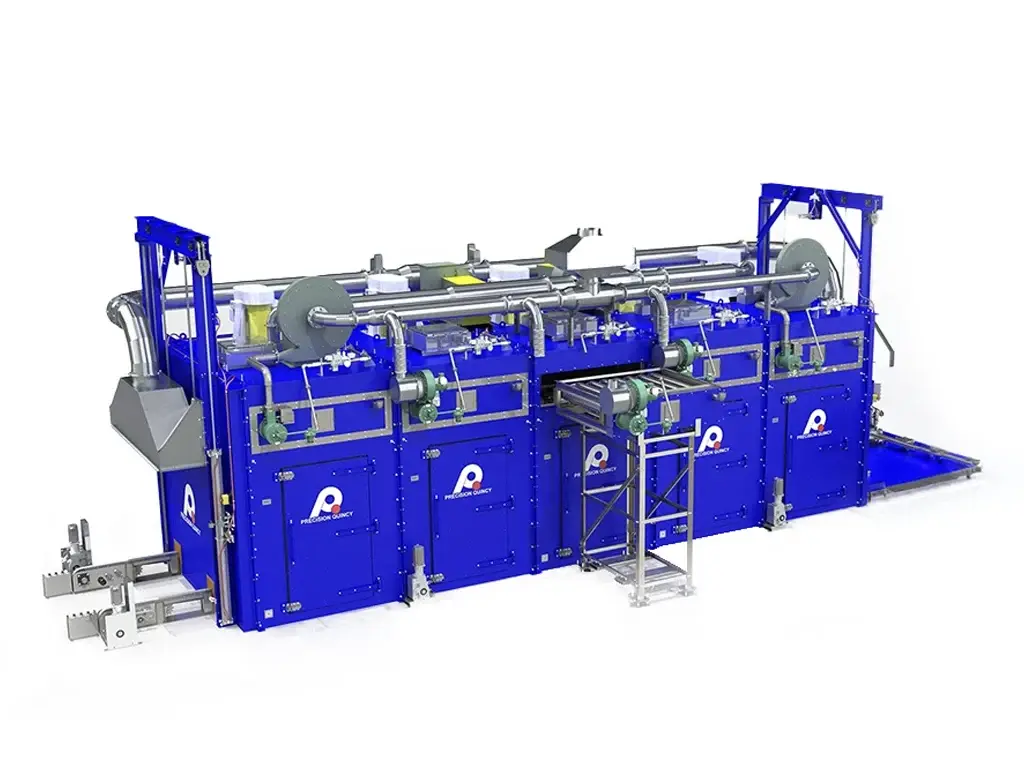
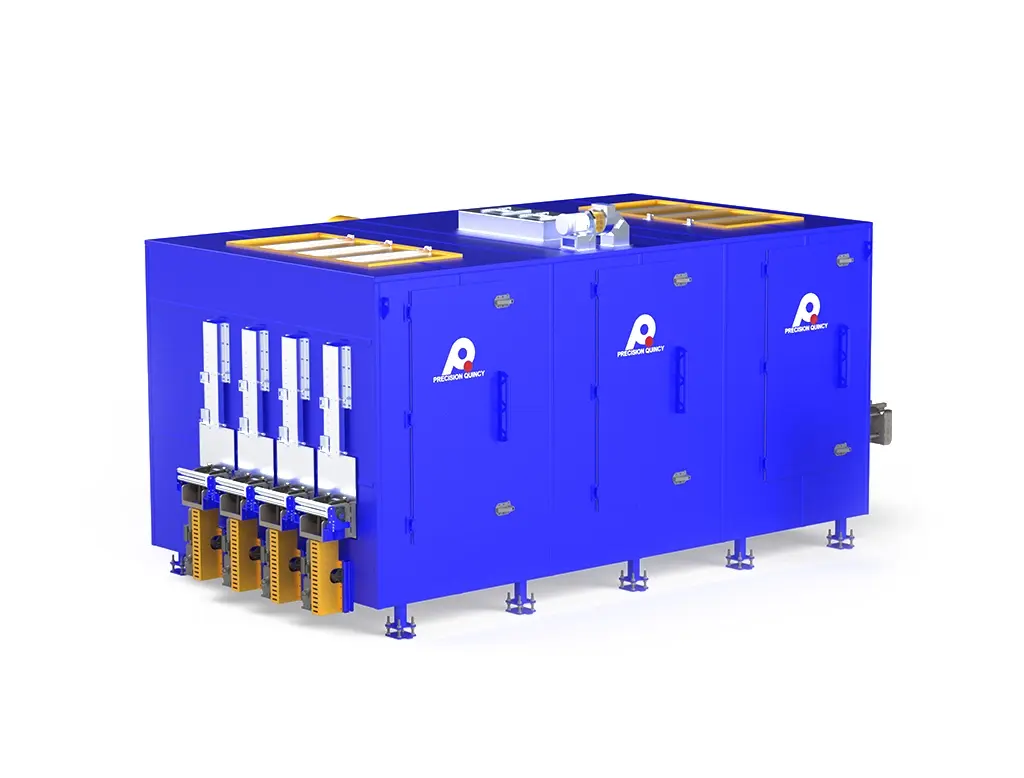
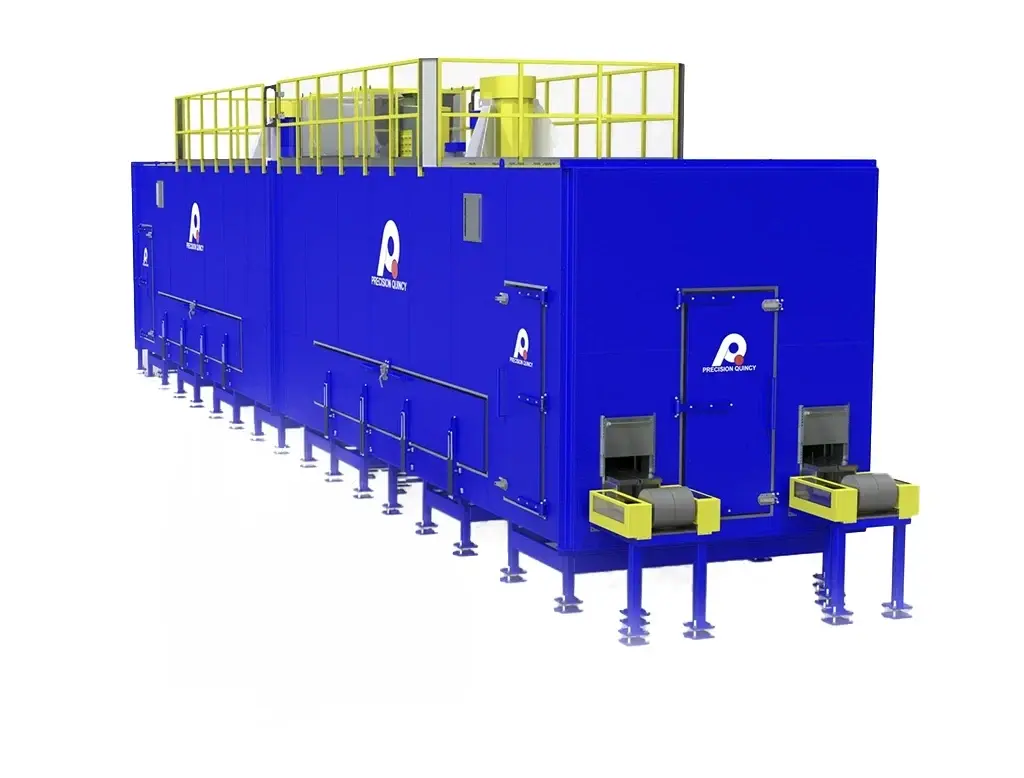
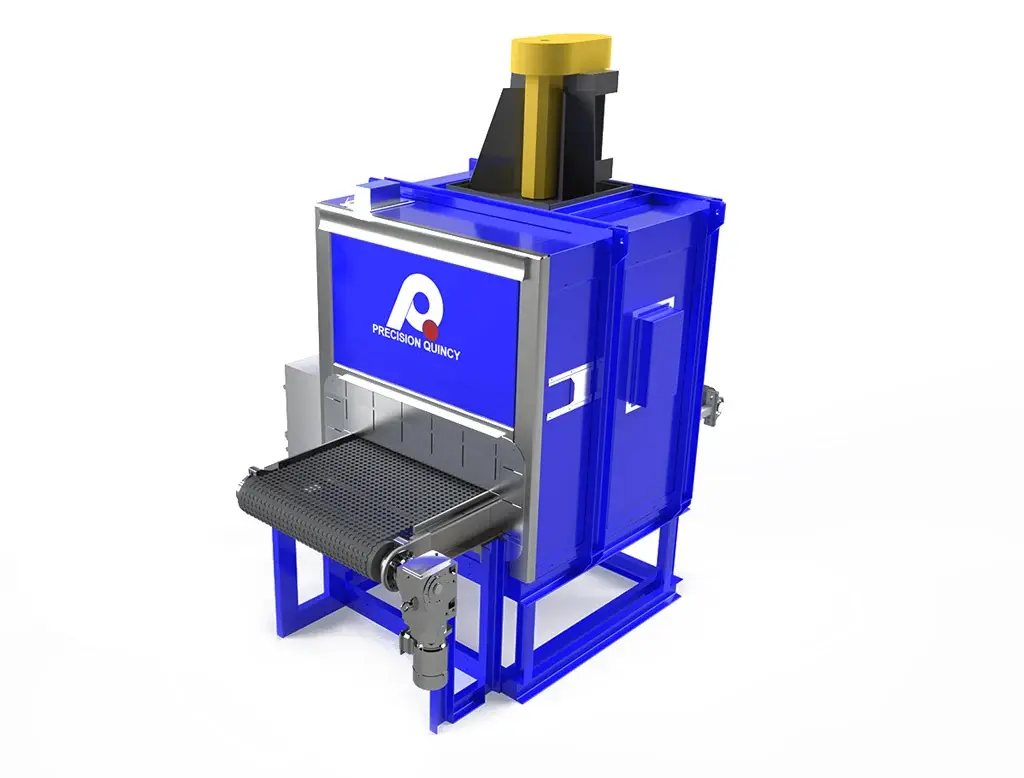
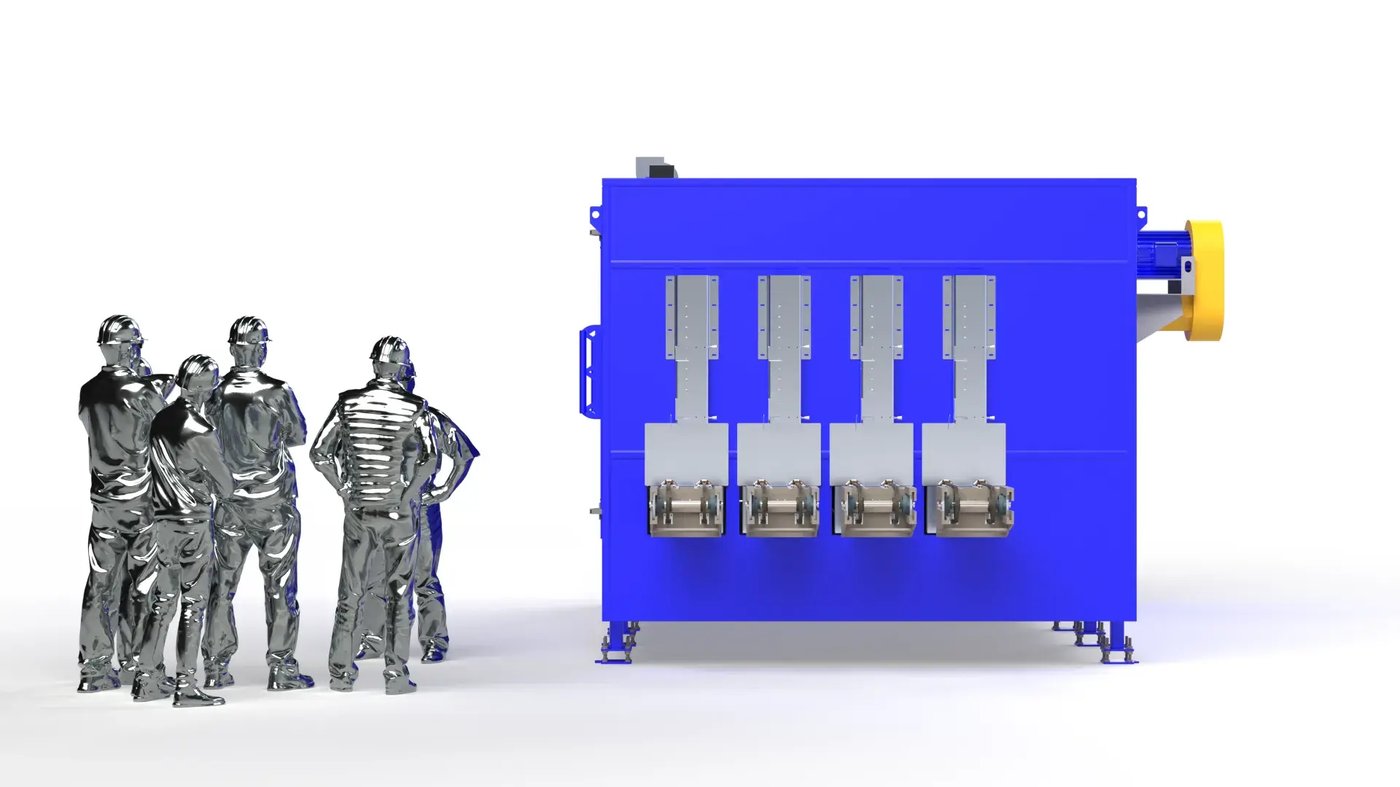
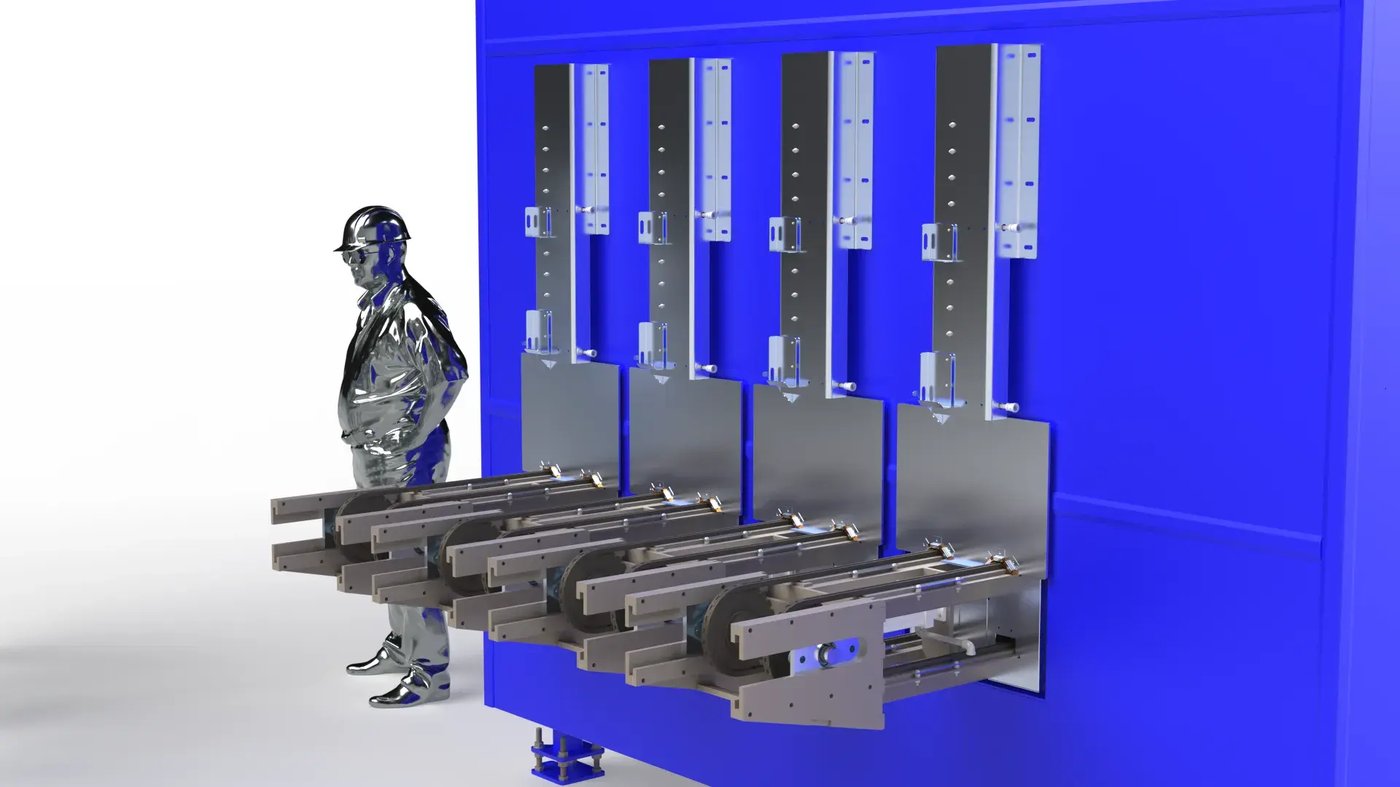
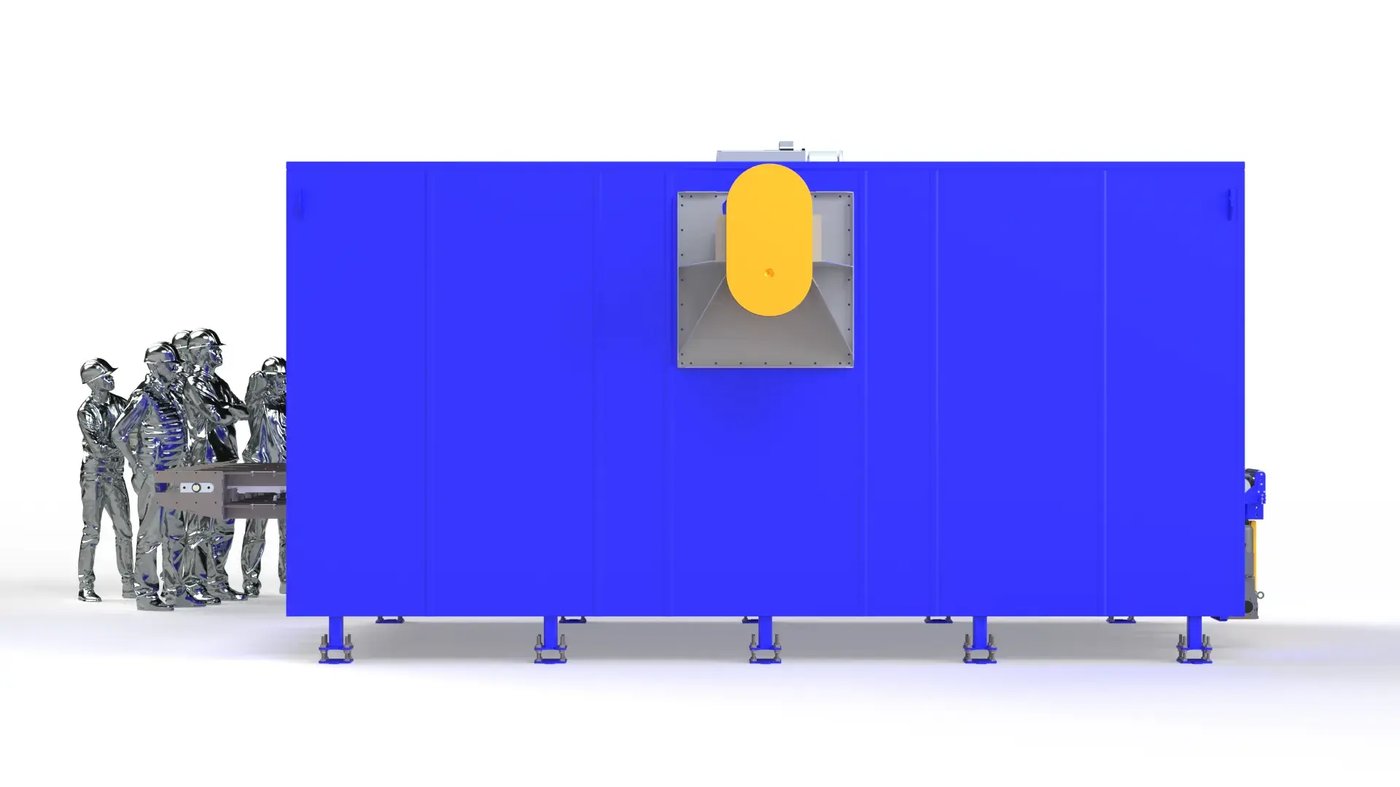
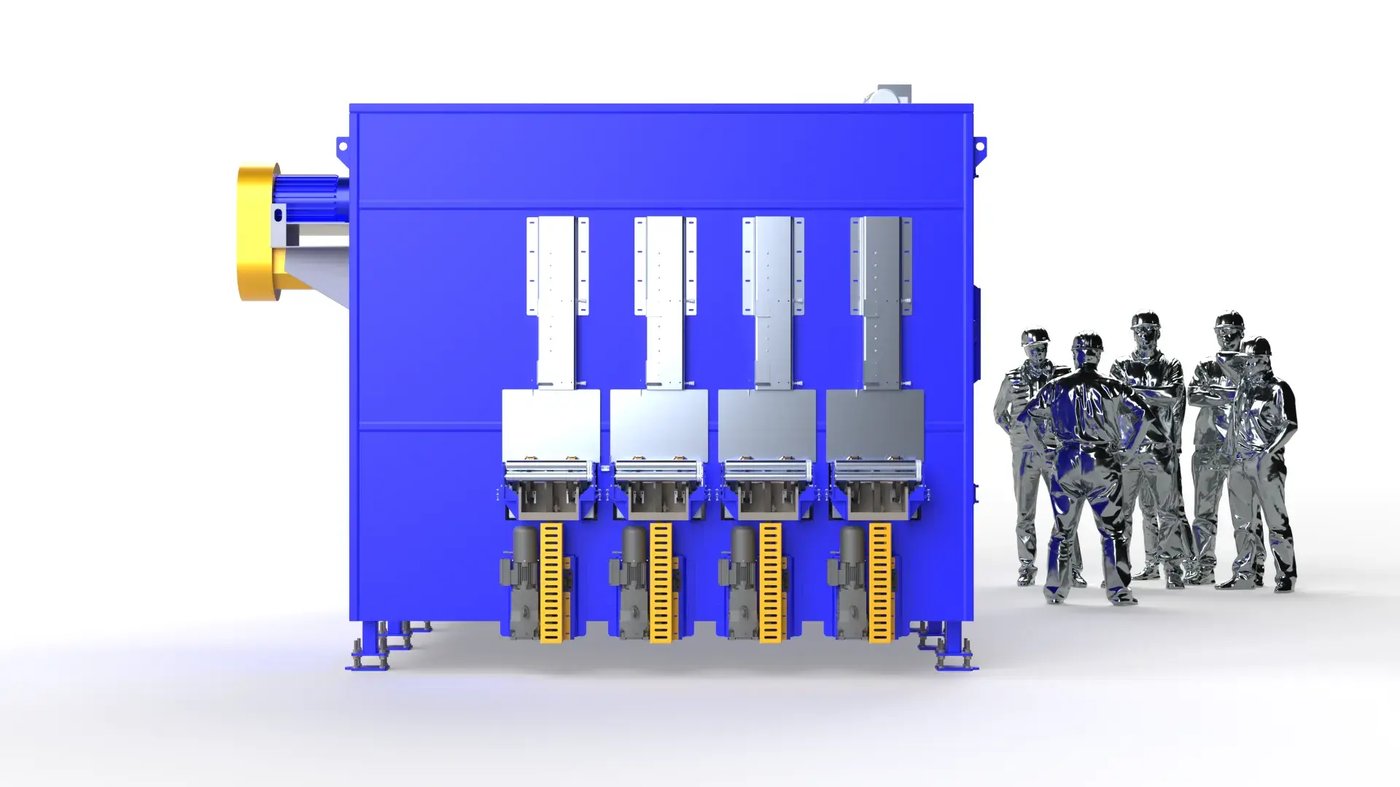
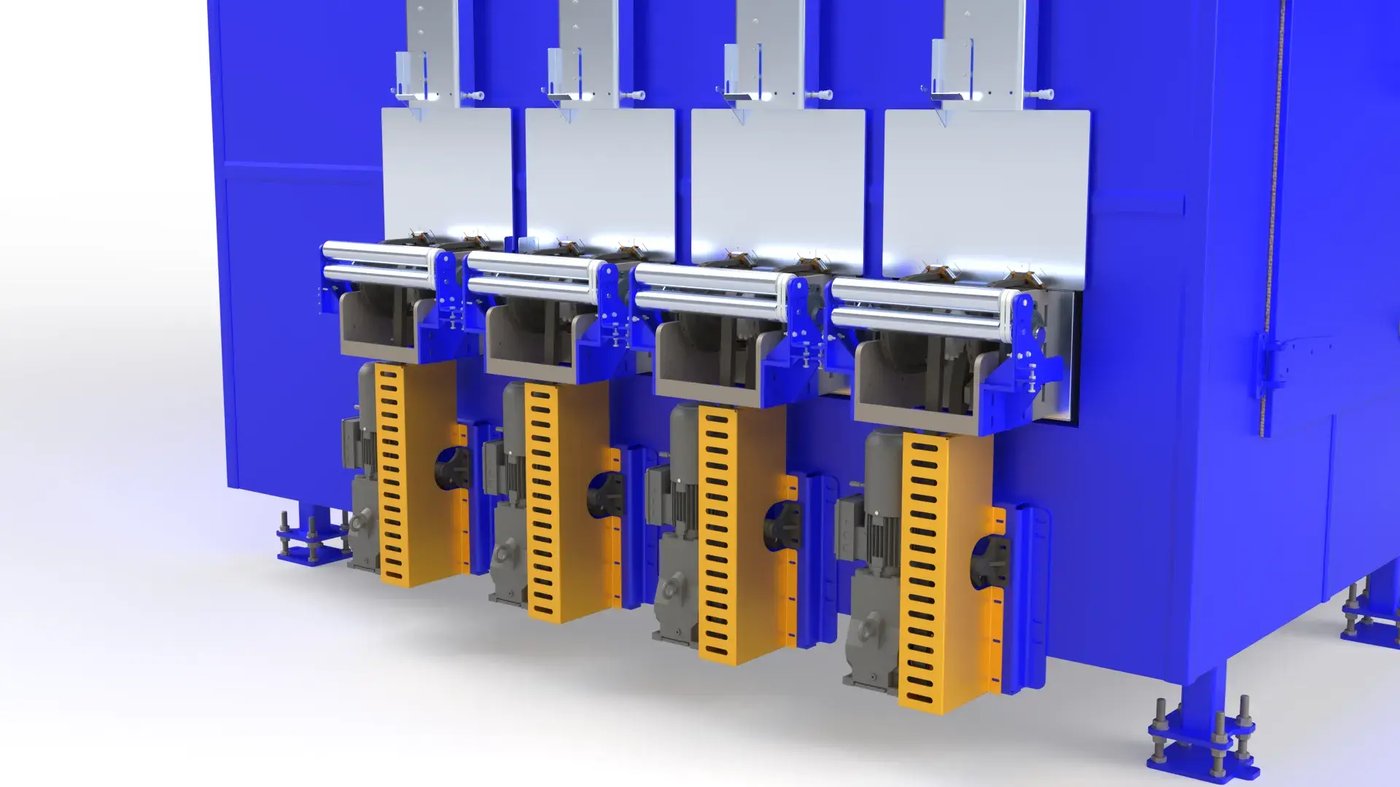
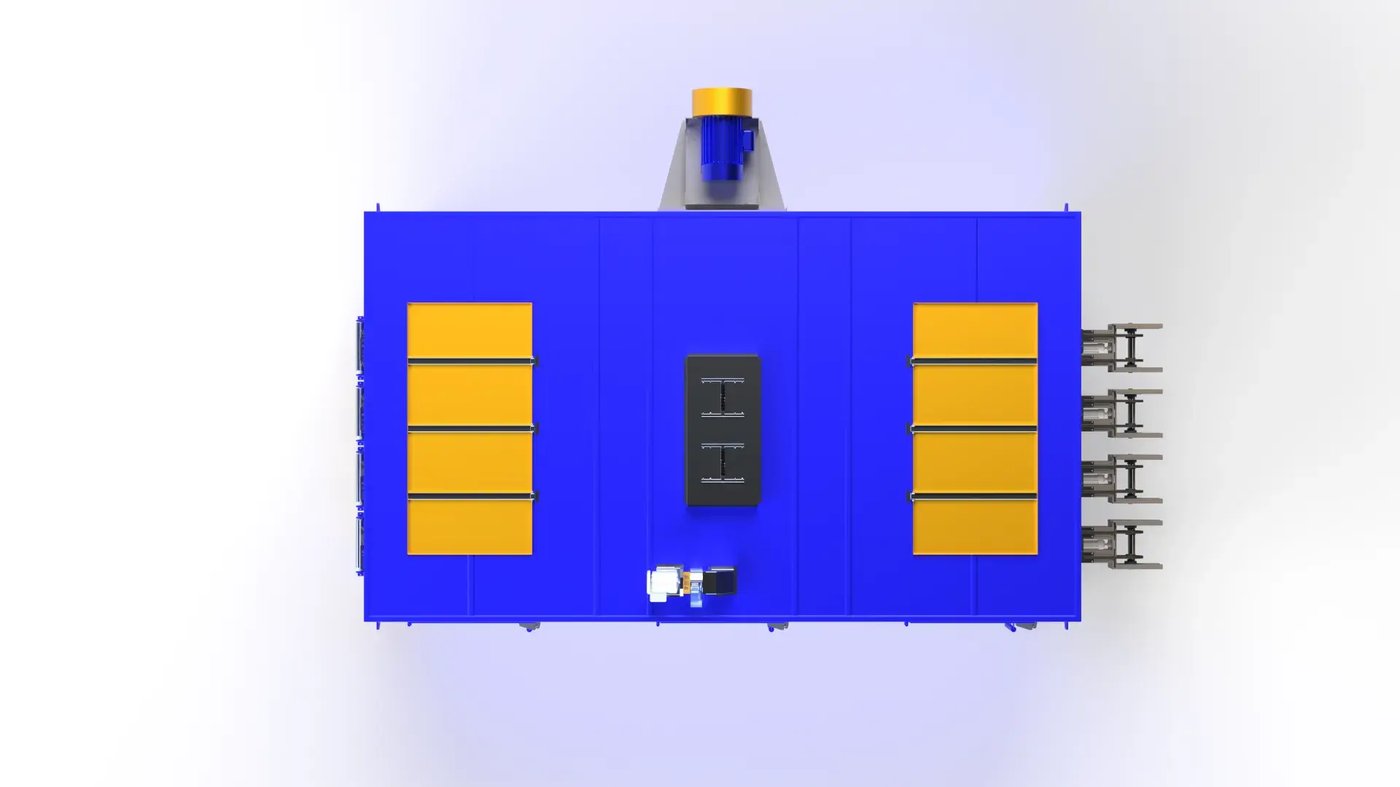
The final system uses electric resistance heat, high-volume vertical-down recirculation airflow, powered exhaust, and four indexed conveyor paths arranged through a single-level heated chamber. Multiple pneumatic vertical lift doors and a remote-mounted control enclosure support integration into a larger automated line while keeping the oven body focused on airflow, heating, and product movement.
This project is a strong example of Precision Quincy’s ability to engineer specialized process modules inside a larger automated production architecture. The oven was designed around the exact thermal and material-handling requirements of the preheat step, giving the overall line a controlled starting point for downstream processing.
The process requirement was to preheat rubber wheel cores in a way that supported automated line flow, repeatable timing, and consistent product condition. Because the equipment was part of a multi-stage manufacturing system, the oven needed to function as a synchronized line module rather than an isolated heat chamber.
The resulting oven uses four indexed conveyor paths with pneumatic vertical lift doors on both ends, allowing the machine to serve as a controlled preheat buffer between surrounding manufacturing steps. This is especially important in automated wheel production, where variation in starting temperature can negatively affect later process consistency, timing, and product quality.
The machine was also designed to work with customer-supplied product positioning and fixturing. That made airflow access through and around the load an important part of the overall process requirement, since effective preheat performance depends on maintaining sufficient air passage through the work zone instead of blocking circulation around the product mass.
THAT REQUIREMENT DROVE SEVERAL KEY DESIGN NEEDS:
- The oven had to accept product on multiple conveyor lanes and maintain orderly indexed progression through the heat chamber.
- Product handling had to stay compatible with automated upstream and downstream equipment.
- The machine had to provide predictable dwell time and discharge condition so later operations could begin with a known product state.
- Door motion, conveyor movement, purge logic, and safety proving all had to support production-line reliability.
- The heating process had to be aggressive enough to move product toward the required elevated temperature band without compromising flow through the rest of the system.
The thermal duty of the project was to elevate incoming rubber core assemblies from approximately 170°F entering temperature to a controlled 170°F to 220°F operating band, with a 250°F maximum oven rating. The process was designed as a forced-convection electric preheat stage with enough airflow and heat input to move substantial product mass through a repeatable indexed cycle.
The oven uses 90 kW of electric resistance heat and a large NYB 338 PLR recirculation fan delivering approximately 22,000 CFM at 3.5 in. W.c. That airflow is directed in a vertical-down pattern across the product zone, giving the machine the circulation intensity needed for conveyorized preheat service.
Because the process included a defined solvent basis, the machine was designed as an NFPA 86 Class A oven with powered exhaust, airflow proving, purge logic, and over-temperature protection. Exhaust is handled by a PQ1 exhauster delivering approximately 550 CFM at 1 in. W.c.
Product moves through the machine on four indexed conveyor sections. The oven holds 36 parts inside heat and indexes product 24 inches every 224.8 seconds, producing a total dwell time in heat of approximately 35.5 minutes. Each conveyor is rated for up to 1,110 lb of product load.
Uniformity was specified at ±15°F, measured at nine locations on slot orifices. That level of control is appropriate for a preheat application where the objective is not simply hot air exposure, but repeatable conditioning of product before the next manufacturing stage.
Taken together, the thermal design reflects a deliberate process objective: high airflow, moderate temperature, controlled dwell, and Class A safety architecture packaged into a line-ready preheat module.
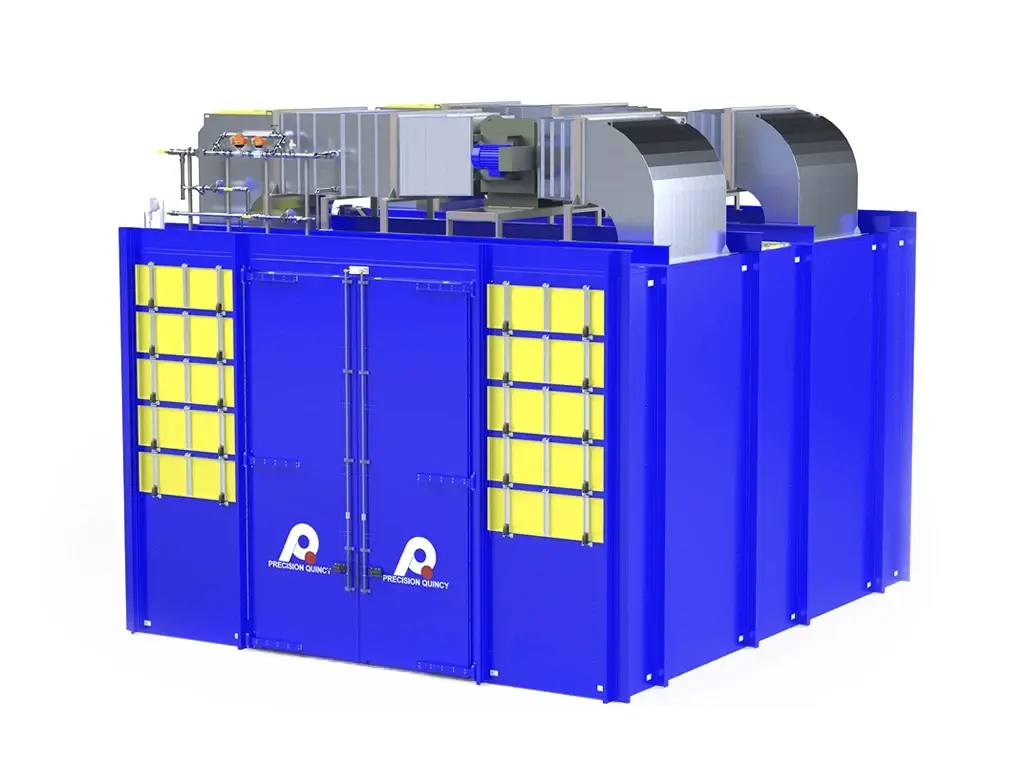
Precision Quincy’s equipment concept for the project was to build a dedicated conveyorized preheat module that could operate as a reliable thermal station inside a larger automated wheel-manufacturing line. The machine combines a heavily insulated oven body, indexed multi-lane conveying, high-volume recirculation airflow, powered exhaust, and remote-mounted controls into one coordinated package.
The oven uses a single-level four-conveyor layout with two lines of C2040 steel roller chain per conveyor. This arrangement allows multiple product paths through one heated chamber while preserving repeatable indexed movement and controlled dwell. Conveyor motion is driven at 10 ft/min during each index, with timed advancement rather than continuous travel.
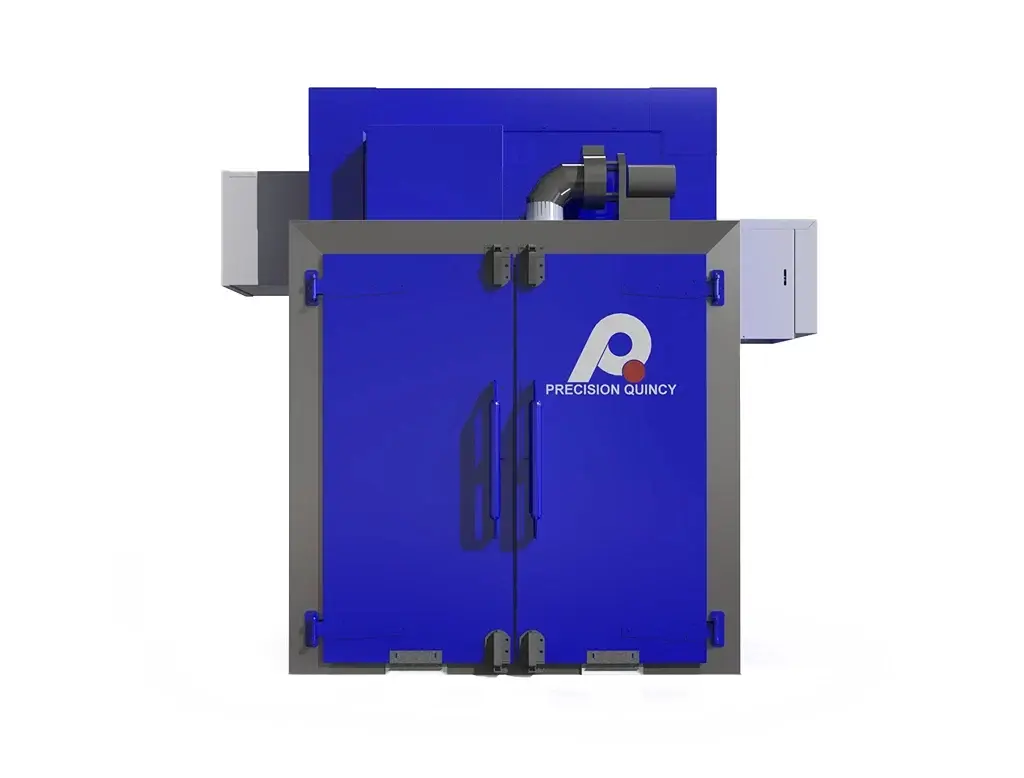
A major architectural feature is the use of pneumatic vertical lift doors at both ends of the oven. Combined with position sensing and air-train monitoring, these doors help isolate the heated chamber while supporting automated transfer into and out of the preheat station.
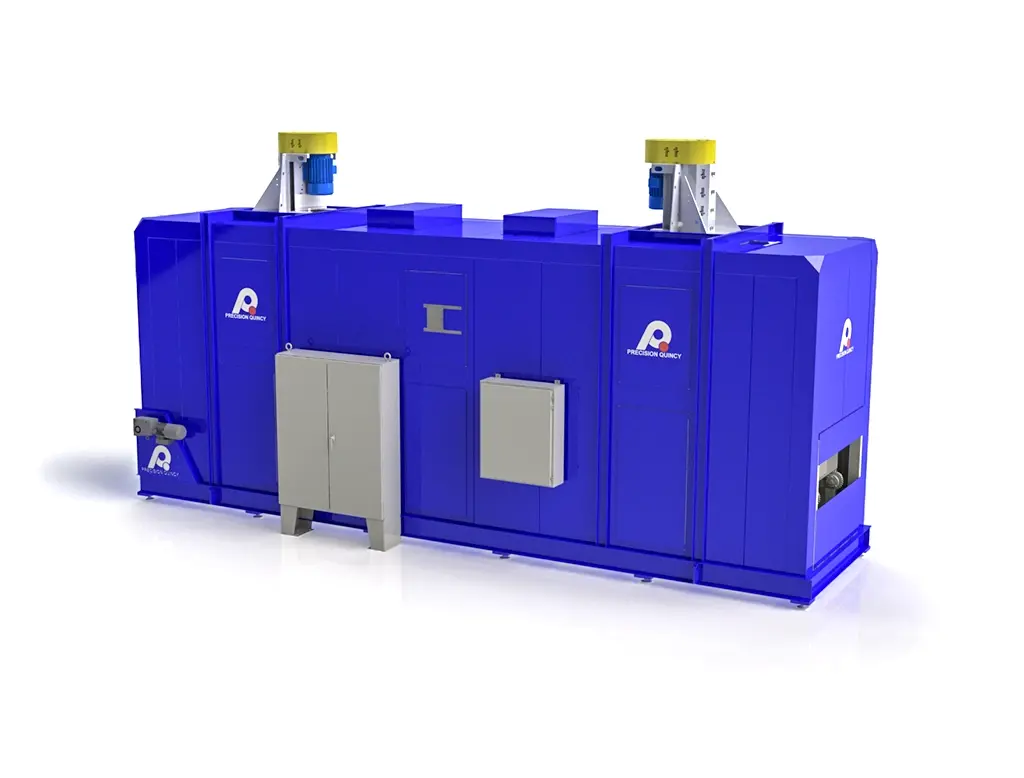
Air movement follows a vertical-down airflow pattern supplied by the large top-mounted plug fan and heater bank assembly. This is well suited to conveyorized product support, where heated air must be driven downward through and around the work while maintaining repeatable circulation across multiple load positions.
The control concept is equally important to the overall architecture. The project uses a remote-mounted NEMA 12 control enclosure with an Allen-Bradley platform built around a GuardLogix 5580 controller, dual 1756-EN2T EtherNet/IP communication modules, POINT I/O / POINT Guard I/O, PowerFlex 527 drives, a 12 in. PanelView Plus 7 HMI, Stratix 5700 managed switches, and an independent Gefran 650L high-limit controller. This structure supports conveyor indexing, fan proving, purge timing, heater control, door status monitoring, safety I/O, and machine-level diagnostics while keeping the oven body itself clean and serviceable.
The machine also includes a top-mounted junction box and remote field wiring arrangement so the enclosure can be mounted away from the oven body. That separation is useful in automated installations where control access, line layout, and serviceability all matter.
Overall, the architecture of the project reflects Precision Quincy’s broader approach to production-line equipment: design the oven as a complete process module, not just a hot box. Heating, airflow, product handling, controls, safety, and installation strategy were all developed together around the requirements of the preheat step.
THE SHELL AND WALL PACKAGE WERE ENGINEERED WITH SUBSTANTIAL INSULATION THICKNESS:
- 6 in. Thick side walls, roof, and floor with 6 lb mineral wool
- 4 in. Thick end walls and doors with 6 lb mineral wool
| OVERALL SYSTEM SUMMARY | |
|---|---|
| Equipment Name | Rubber Core Preheat Oven |
| Application | Automated rubber wheel core preheat |
| Oven Type | Electric forced-convection indexed conveyor oven |
| Safety Classification | NFPA 86 Class A |
| Heat Source | Electric resistance |
| Operating Temperature | 170°F–220°F |
| Maximum Temperature | 250°F |
| Uniformity | ±15°F |
| Airflow Direction | Vertical down |
| Recirculation | NYB 338 PLR, 22,000 CFM at 3.5 in. W.c. |
| Exhaust | PQ1 exhauster, 550 CFM at 1 in. W.c., 0.75 hp |
| Heat Capacity | 90 kW total |
| Design Elevation | 1,015 ft |
| Electrical Service | 480/3/60 |
| Approx. Full Load Amps | 172.8 A documented on final wiring package |
| Air Service | 80 psi inlet pressure |
| Finish | PQ Blue exterior, ANSI 61 gray control enclosure, unpainted aluminized interior |
| PROCESS AND CONVEYOR DATA | |
|---|---|
| Parts in Heat | 36 |
| Entering Product Temperature | 170°F |
| Required Exit Temperature | 220°F |
| Conveyor Arrangement | Four conveyors, single level |
| Conveyor Construction | Two lines of C2040 steel roller chain per conveyor |
| Conveyor Speed | 10 ft/min during index |
| Index Distance | 24 in. Every 224.8 sec |
| Total Dwell in Heat | 35.5 min |
| Conveyor Capacity | 1,110 lb max product load per conveyor |
| Maximum Part Diameter for Door Clearance | 15.6 in. |
| Spacing Between Stations | 24 in. |
| Conveyor Elevation | 42 in. |
| OVEN CONSTRUCTION AND DIMENSIONS | |
|---|---|
| Side Wall / Roof / Floor Insulation | 6 in. Thick with 6 lb mineral wool |
| End Wall / Door Insulation | 4 in. Thick with 6 lb mineral wool |
| Product Chamber Length | 203 in. |
| Product Chamber Width | 23 in. × 4 conveyor paths |
| Product Chamber Height | 23 in. |
| Overall Length | 258.33 in. |
| Overall Width | 164.42 in. |
| Overall Height | 124.94 in. |
| Oven Body Depth | 212.18 in. |
| Oven Body Width | 128.68 in. |
| Oven Body Height | 112.12 in. |
| Conveyor Depth | 242.50 in. |
| Opening Width | 16.60 in. |
| Clearance Height Above Conveyor | 12.12 in. |
| MECHANICAL COMPONENTS | |
|---|---|
| Recirculation Fan Motor | 20 hp |
| Exhaust Fan Motor | 0.75 hp |
| Conveyor Drives | (4) conveyor motors, 0.25 hp each |
| Exhaust / Air Safety | Airflow switches on exhaust and recirculation systems |
| Doors | Pneumatic vertical lift doors on both ends |
| Special Safety Feature | Explosion relief panels on oven |
| CONTROLS AND ELECTRICAL ARCHITECTURE | |
|---|---|
| Main Control Enclosure | Remote-mounted NEMA 12, 72 in. × 72 in. × 16 in. With 12 in. Floor stands |
| Junction Box | Top-mounted NEMA 12, 24 in. × 24 in. × 8 in. |
| PLC Platform | Allen-Bradley GuardLogix 5580 |
| PLC CPU | 1756-L81ESK |
| Network Modules | Dual 1756-EN2T EtherNet/IP modules |
| Distributed I/O | Allen-Bradley POINT I/O and POINT Guard I/O |
| HMI | Allen-Bradley PanelView Plus 7, 12 in. |
| VFD Platform | Allen-Bradley PowerFlex 527 |
| Network Infrastructure | Allen-Bradley Stratix 5700 managed switches |
| High-Limit Protection | Gefran 650L, thermocouple type J |
| Safety Inputs | Four machine E-stops monitored through safety I/O |
| Purge Timer | 13 minutes |
| Diagnostics / Access | RJ45 access point and Ethernet-based device networking |
| Independent Device Monitoring | Door position sensors, airflow switches, pressure sensors, motor protection contacts, thermocouple input |