
Project Number: 5571
Electric Stress-Relief / Tempering Oven for H13 Die Steel Processing
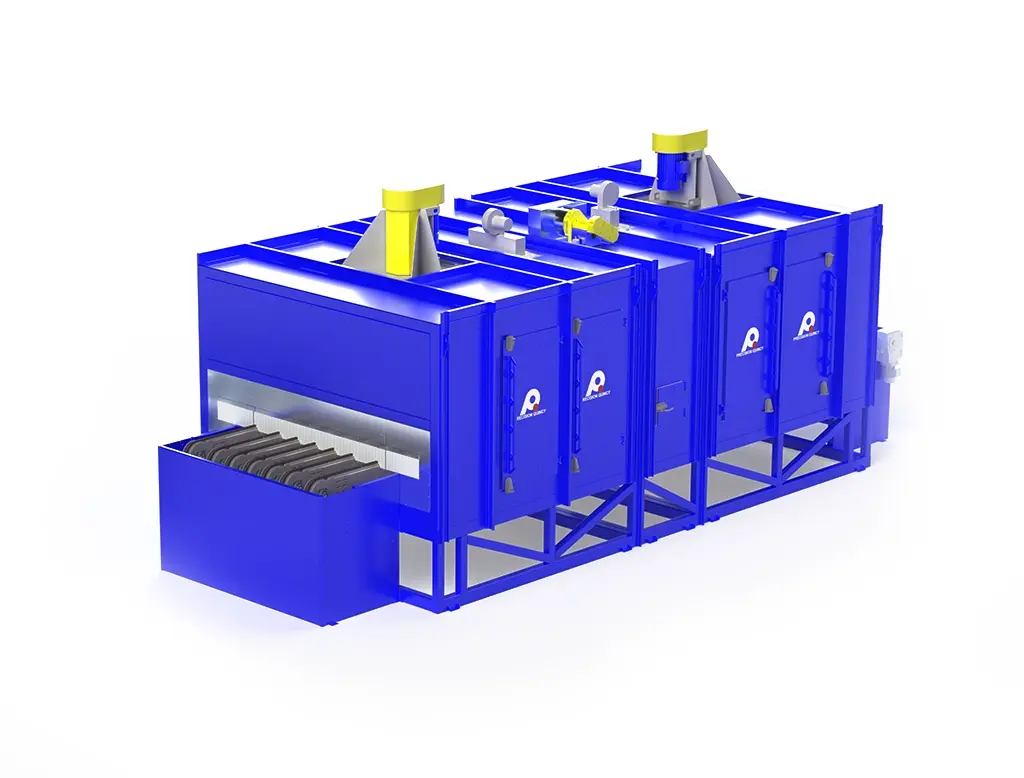
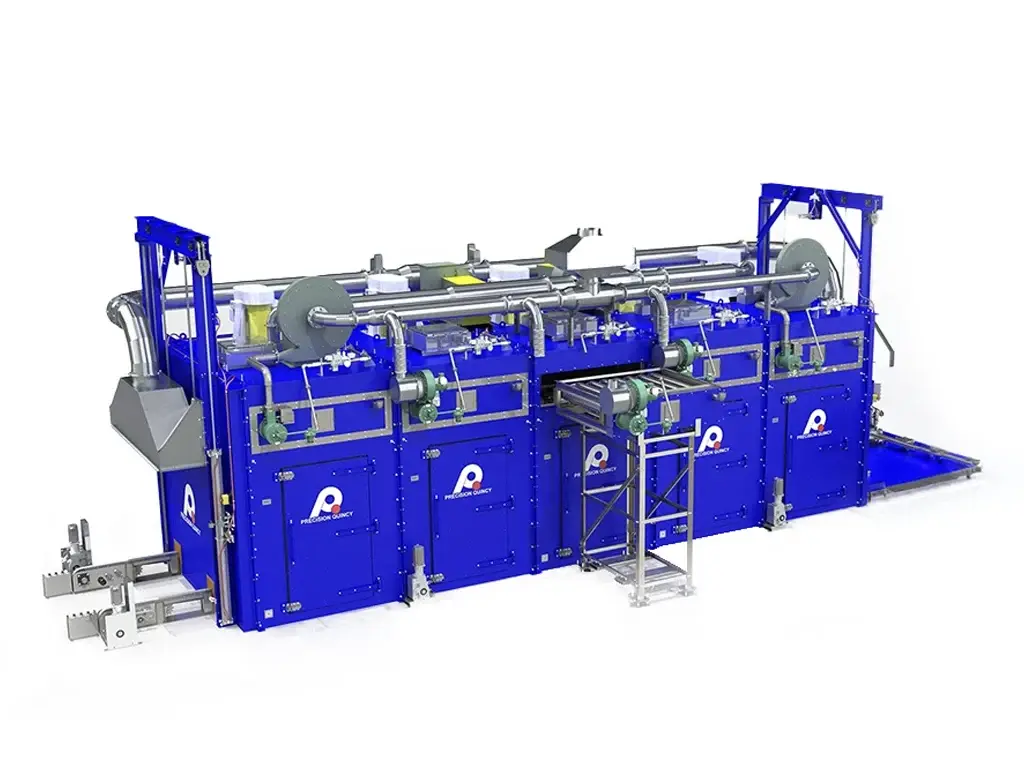
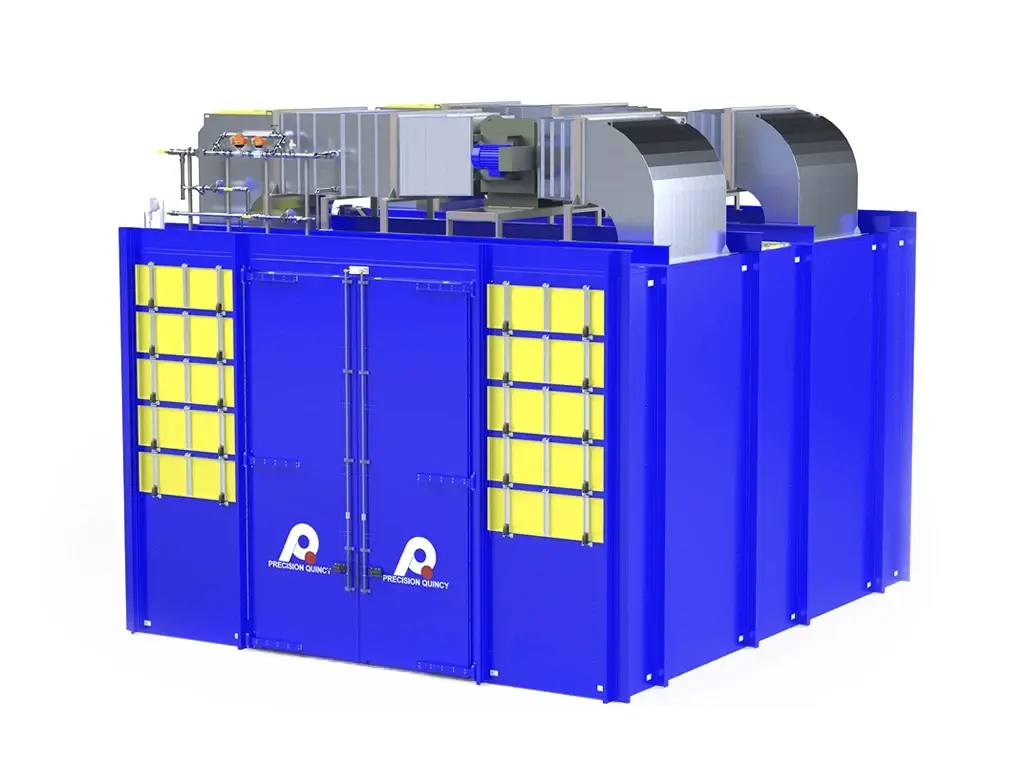
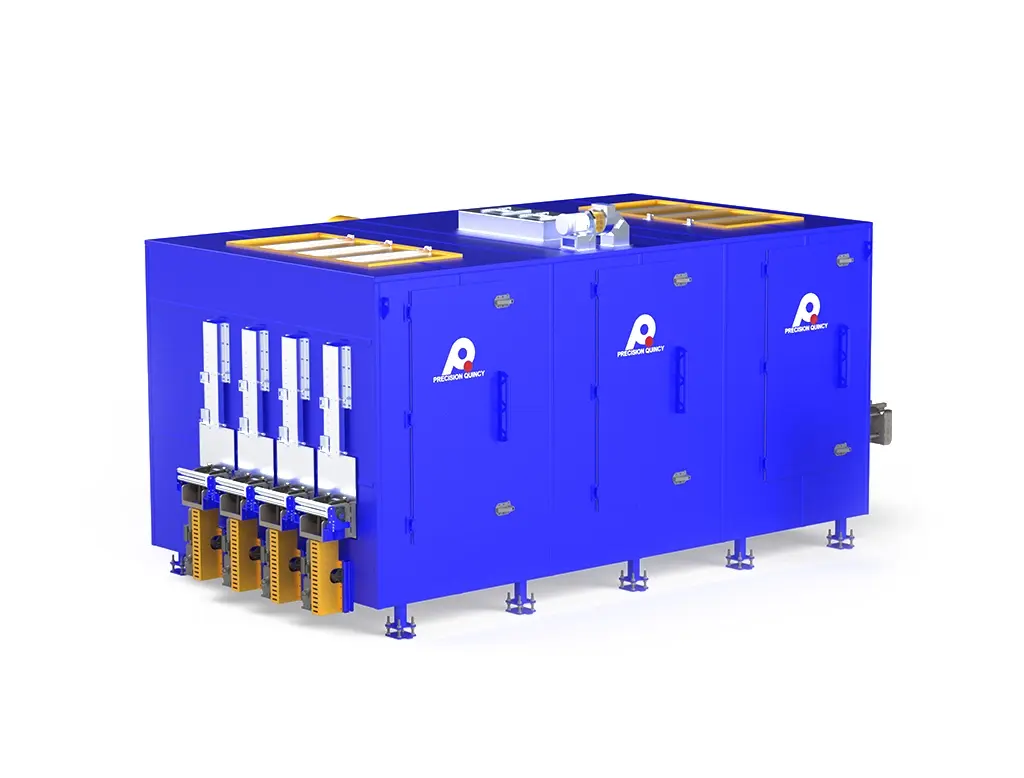
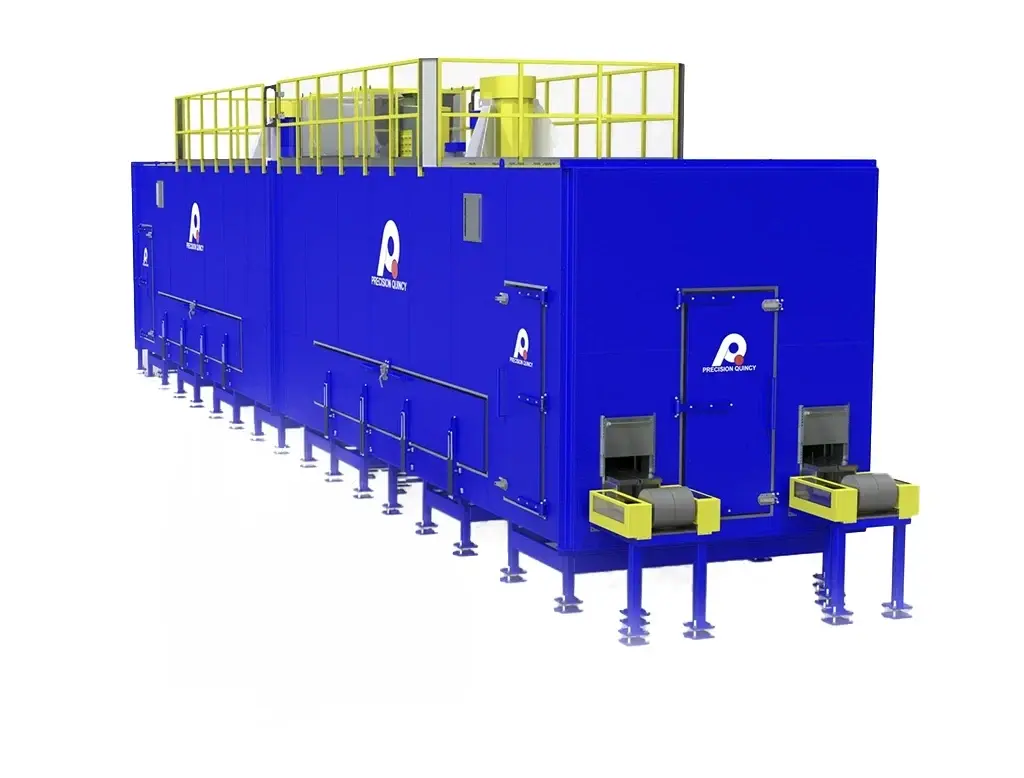
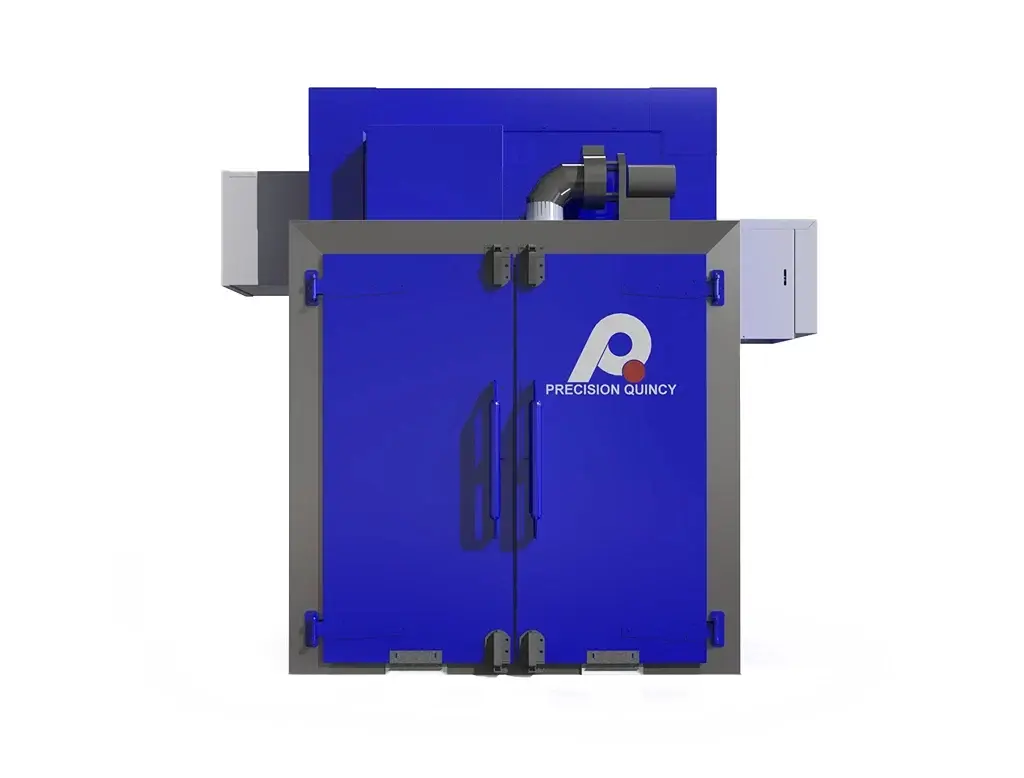
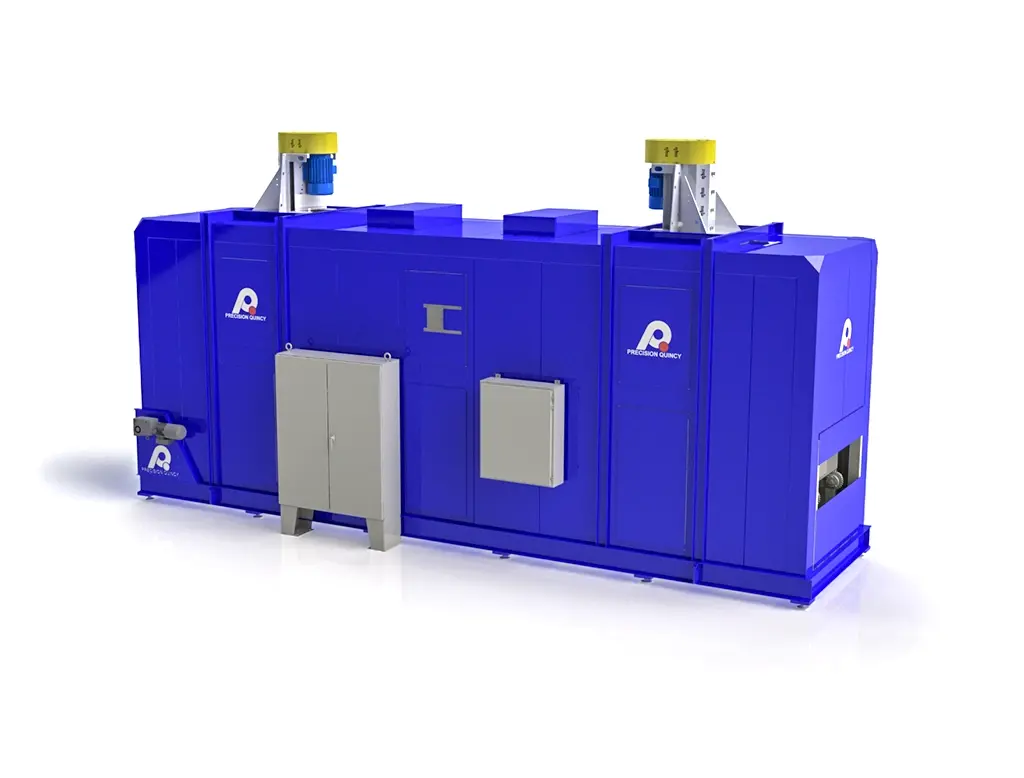
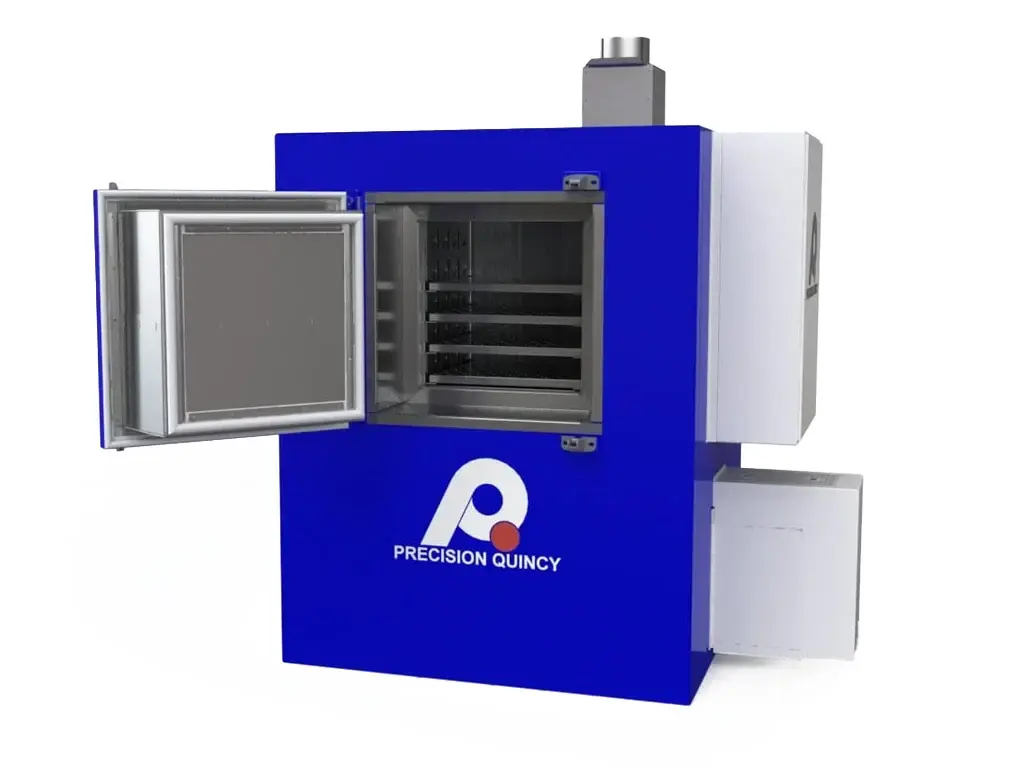
Electrically heated batch oven engineered for a die casting manufacturer's operation to process H13 die steel tooling for stress-relieving and tempering service at elevated temperature using a heavy-duty rear heat chamber, high-temperature insulated wall system, plug-fan-driven combination airflow, and a flexible recipe-capable control platform intended to support customer-side process validation across multiple time-and-temperature combinations.
_Featured.webp)
.webp?width=1400&name=5571%20ALLISON%20WALKER%20(3).webp)
.webp?width=1400&name=5571%20ALLISON%20WALKER%20(4).webp)
.webp?width=1400&name=5571%20ALLISON%20WALKER%20(5).webp)
.webp?width=1400&name=5571%20ALLISON%20WALKER%20(6).webp)
.webp?width=1400&name=5571%20ALLISON%20WALKER%20(8).webp)
.webp?width=1400&name=5571%20ALLISON%20WALKER%20(7).webp)
Overview
Precision Quincy engineered this electrically heated batch oven for a die casting manufacturer in Lewisburg, Tennessee to process H13 die steel tooling used in aluminum die-casting operations. The equipment was intended for high-temperature stress-relieving and tempering service in the approximate operating range of 1100°F to 1200°F, with the final production recipe to be validated by the customer through internal trials using the oven's flexible programmable control system.
The oven was designed around a required internal work chamber of 48 in W × 48 in D × 72 in H while maintaining high-temperature construction suitable for repeated operation at elevated heat. The thermal package combines 72 kW of electric heat with a rear-mounted heat chamber, high-temperature layered insulation, and recirculated combination airflow to support a specified workroom uniformity of ±15°F. Because the application involved H13 die steel rather than solvent-bearing product, the system was designed as a Class B oven with gravity exhaust rather than a VOC-driven Class A architecture.
To support durability at temperature, Precision Quincy used a structurally reinforced double-wall construction with 16-gauge stainless steel interior liners, 16-gauge mild steel exterior skins, a 6-inch insulated floor with guide tracks, and a high-temperature wall build-up using ceramic fiber and mineral wool. Air movement is provided by a rear heat chamber and plug-fan-driven recirculation system, while the controls package includes a programmable ramp/soak-capable temperature controller with non-encrypted data acquisition to support process development and customer validation after installation. The result is a compact but heavy-duty batch heat-treating oven tailored for die-shop service rather than general-purpose batch heating.
The customer required a batch oven for its facility to process H13 die steel tooling used in aluminum die-casting operations. The documented process intent was stress relieving, though the operating range and application also align with tempering service for die components. The equipment was intended to give the customer a controlled high-temperature platform for running and validating different internal process recipes.
APPLICATION REQUIREMENT
- The oven had to process H13 die steel components used in large-scale aluminum die-casting production.
- Documented process basis: stress relieving. The same operating range is also consistent with tempering service for H13 die tooling.
- The equipment supports die-casting-tool heat-treatment at a facility processing approximately 750,000 lb/day of aluminum.
WORK CHAMBER REQUIREMENT
- Required internal work chamber: 48 in W × 48 in D × 72 in H.
- The equipment had to provide usable batch space for large die-steel components.
- Lowest documented load size: 80 lb of H13 die steel.
THERMAL VALIDATION REQUIREMENT
- The customer required a system capable of running different time-and-temperature combinations.
- Final thermal process settings were to be established through customer-run trials at the customer facility.
- The oven therefore needed recipe flexibility rather than a single locked production cycle.
- Data collection capability was required to support validation and internal process confirmation.
SAFETY / PROCESS CLASSIFICATION REQUIREMENT
- No VOC load was associated with the application.
- The process basis was therefore Class B rather than Class A.
- Only a gravity exhaust requirement was needed rather than solvent-driven powered exhaust sizing.
UTILITIES / FABRICATION REQUIREMENTS
- Required power: 460V / 3PH / 60Hz; approximately 115 A FLA.
- Equipment was built and FAT-tested at Precision Quincy's facility before shipment.
These thermal process requirements were established from the intended H13 die-steel stress-relief / tempering application and the final documented equipment design.
TEMPERATURE CAPABILITY
- Maximum operating temperature capability: 1200°F.
- Typical operating range: 1100°F to 1200°F.
- Required workroom temperature uniformity: ±15°F.
PROCESS BASIS
- The thermal process basis was stress relieving of H13 die steel.
- The same operating range is also consistent with tempering service for H13 tooling.
- Final production recipes were intended to be determined by the customer through internal validation trials after installation.
HEAT INPUT REQUIREMENT
- Total installed electric heat: 72 kW.
- Heating elements: 3 kW low-watt-density electric elements.
AIRFLOW DELIVERY REQUIREMENTS
- Required airflow style: combination horizontal / vertical recirculation airflow.
- Recirculation airflow basis: 4,790 CFM @ 2 in. w.c.
- Air delivery is generated through a rear heat chamber and plug-fan-driven recirculation system.
EXHAUST / PROCESS REMOVAL BASIS
- No VOC or solvent removal load applies to this process.
- Exhaust requirement is limited to gravity exhaust consistent with a Class B electric oven.
THERMAL PROCESSING FLEXIBILITY
- The oven was intended to support multiple ramp / soak or time / temperature combinations.
- Process qualification was to be established by customer trial work rather than by a single fixed production recipe.
To deliver the customer and thermal process requirements for high-temperature H13 die-steel stress-relieving / tempering service, Precision Quincy developed the following equipment concept and architecture.
OVERALL CONCEPT
- Electrically heated batch oven designed for stress relieving / tempering of H13 die steel tooling.
- Rear-mounted heat chamber architecture with structurally reinforced double-wall pan construction.
- Built and FAT-tested at Precision Quincy prior to shipment.
HEATING ARCHITECTURE
- Heat source: electric. Total installed heat: 72 kW.
- Heat generated by 3 kW low-watt-density heating elements; heat chamber mounted on the rear of the oven.
AIRFLOW / RECIRCULATION ARCHITECTURE
- Airflow pattern: combination horizontal / vertical airflow.
- Recirculation fan: heavy-duty Chicago Blower BT200 plug fan — 4,790 CFM @ 2 in. w.c., 3 HP motor, belt-driven, stainless steel fan wheel.
- Ductwork material: 304 stainless steel.
CHAMBER / CONSTRUCTION ARCHITECTURE
- Internal work chamber: 48 in W × 48 in D × 72 in H.
- Construction is structurally reinforced double-wall / pan-constructed with structural steel frame supporting interior and exterior skins as separate layers.
- Interior liner: 16-gauge stainless steel pans. Exterior skin: 16-gauge mild steel.
- Floor: 6-inch insulated floor with guide tracks.
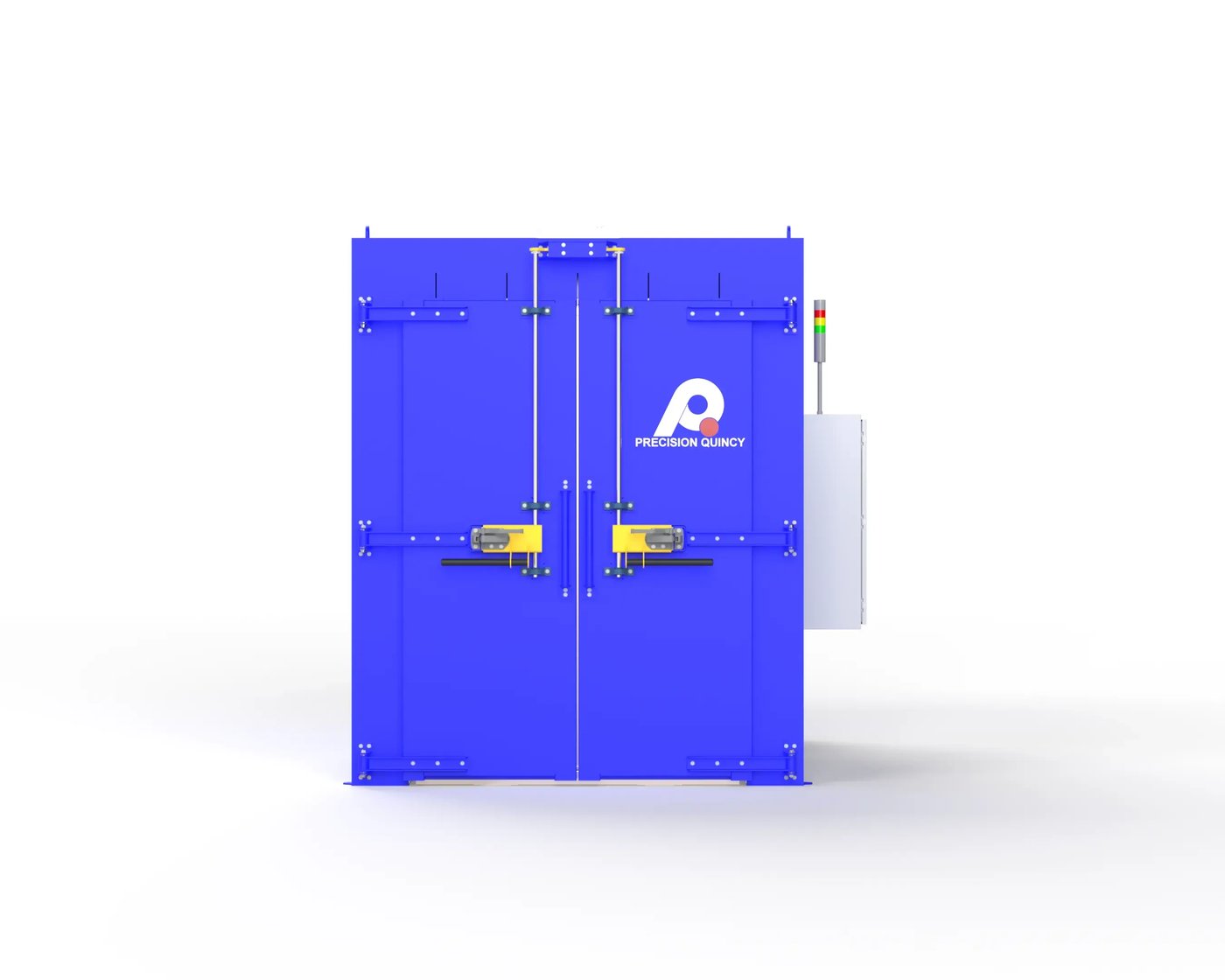
- Door style: bi-parting swinging doors with explosion-relief door latches.
INSULATION ARCHITECTURE
- Wall thickness: 10 in. Inner hot-face: 4 in of 8 lb density ceramic wool. Outer layer: 6 in of 6 lb density mineral wool.
- Insulation is layered by temperature duty, with higher-temperature insulation at the hotter inner portion of the wall system.
CONTROLS ARCHITECTURE
- Temperature controller: Watlow F4T ramp/soak controller with non-encrypted data acquisition.
- Control concept supports flexible customer validation of time / temperature recipes.
- Three-tier stack light with audible alarm included.
SAFETY / COMPLIANCE ARCHITECTURE
- NFPA 86 classification: Class B. No VOC load.
- Exhaust concept: gravity exhaust.
| OVEN CONFIGURATION | |
|---|---|
| Type | Electric batch stress-relief / tempering oven for H13 die steel |
| Project Location | Lewisburg, Tennessee |
| Customer | A die casting manufacturer |
| Application | Stress relieving / tempering of H13 die steel tooling |
| Internal Work Chamber | 48 in W × 48 in D × 72 in H |
| Overall Equipment Dimensions | 99.5 in W × 144.5 in D × 106 in H |
| Approx. Weight | Approx. 6,100 lb |
| Floor Construction | 6 in insulated floor with guide tracks |
| Door Style | Bi-parting swinging doors with explosion-relief door latches |
| Build / FAT Location | Built and FAT-tested at Precision Quincy |
| THERMAL HEAT POWER SYSTEM | |
|---|---|
| Maximum Operating Temperature | 1200°F |
| Typical Operating Range | 1100°F to 1200°F |
| Temperature Uniformity | ±15°F |
| Heat Source | Electric |
| Total Installed Heat Input | 72 kW |
| Heating Element Type | 3 kW low-watt-density electric elements |
| Process Basis | Stress relieving / tempering of H13 die steel |
| RECIRCULATION / AIRFLOW SYSTEM | |
|---|---|
| Airflow Pattern | Combination horizontal / vertical airflow |
| Recirculation Fan | Chicago Blower BT200 plug fan |
| Recirculation Airflow | 4,790 CFM |
| Recirculation Static Pressure | 2 in. w.c. |
| Fan Motor | 3 HP |
| Drive Type | Belt-driven |
| Fan Wheel | Stainless steel |
| Ductwork Material | 304 stainless steel |
| Heat Chamber Location | Rear-mounted heat chamber |
| EXHAUST SYSTEM | |
|---|---|
| Exhaust Type | Gravity exhaust |
| Process Basis | No VOC load / Class B application |
| CONSTRUCTION MATERIALS / FINISH | |
|---|---|
| Construction Style | Structurally reinforced double-wall / pan construction |
| Structural Frame | Structural steel |
| Interior Liner | 16 gauge stainless steel pans |
| Exterior Skin | 16 gauge mild steel |
| Wall Thickness | 10 in |
| Inner Insulation Layer | 4 in of 8 lb density ceramic wool |
| Outer Insulation Layer | 6 in of 6 lb density mineral wool |
| SAFETY & COMPLIANCE | |
|---|---|
| NFPA 86 Classification | Class B |
| VOC Basis | None |
| Stack Light | Three-tier stack light with audible alarm |
| CONTROLS & ELECTRICAL | |
|---|---|
| Temperature Controller | Watlow F4T ramp/soak controller with non-encrypted data acquisition |
| Primary Power | 460V / 3PH / 60Hz |
| Full Load Amperage | Approx. 115 A FLA |
| Control Function | Supports customer trial-based recipe validation |
| PROCESS SUMMARY | |
|---|---|
| Product | H13 die steel |
| Process Type | Stress relieving / tempering |
| Lowest Documented Load | 80 lb |
| Facility Context | Approx. 750,000 lb/day of aluminum processing |