

Project Number: 5514
Electrically Heated Conveyor Oven with Cooldown Zone for Medical Device Lamination
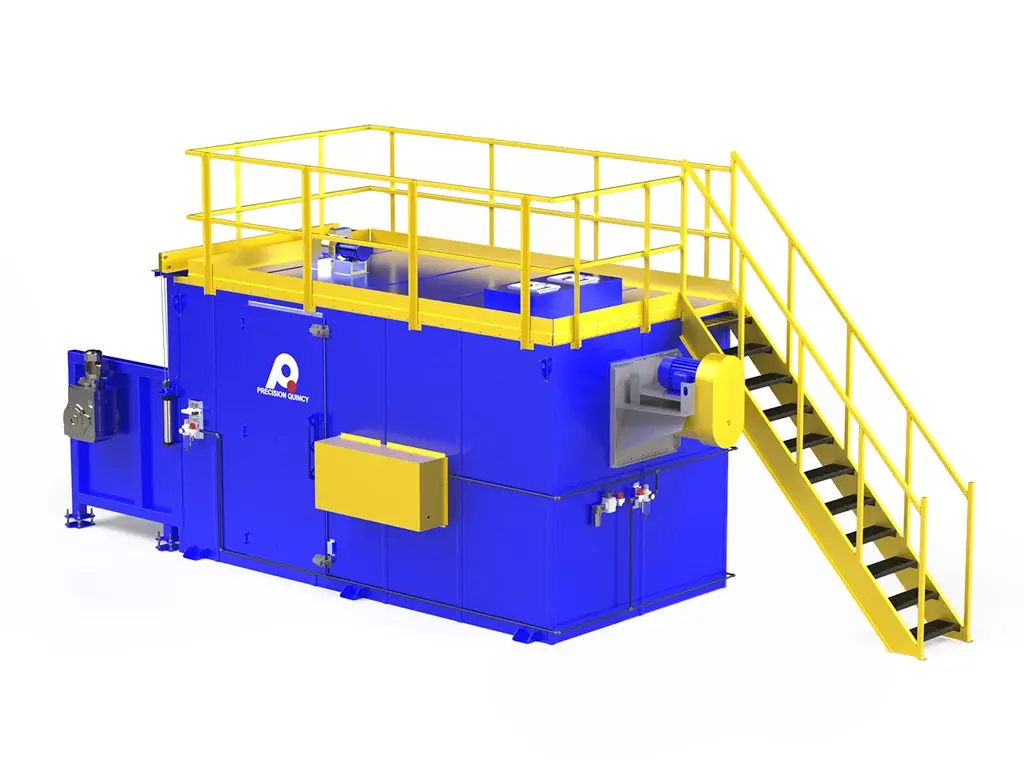
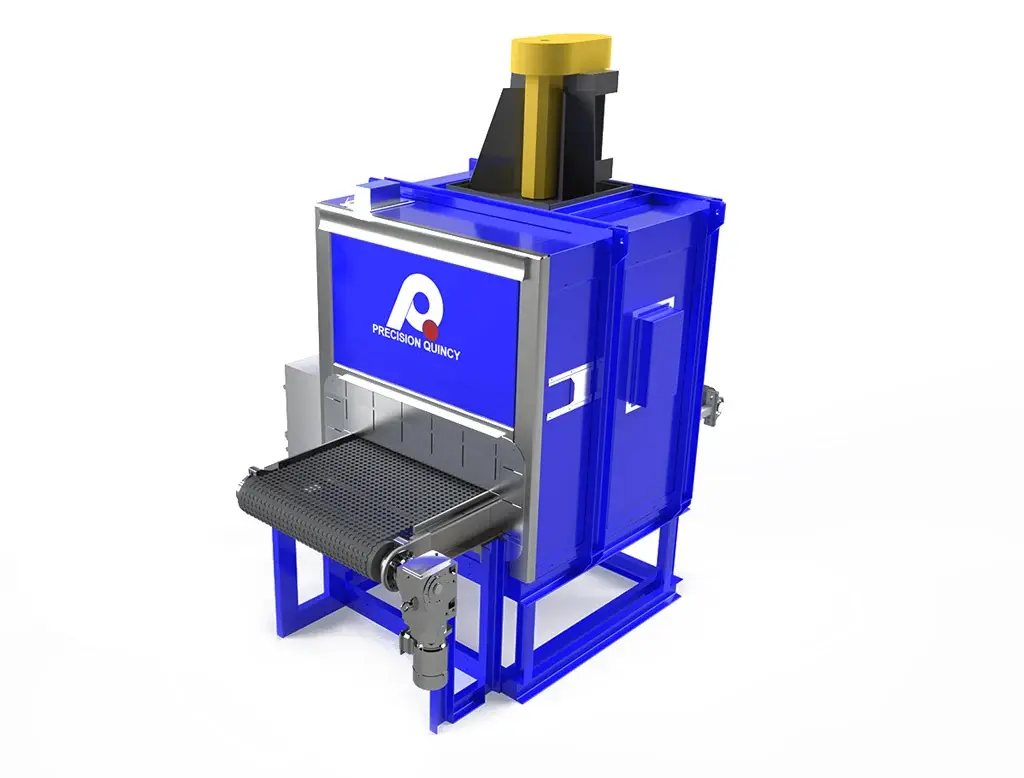
Electrically heated Class A overhead-conveyor oven engineered for a PTFE-liner lamination process in a medical manufacturing environment — combining full vertical-up airflow through MERV 14 filtered supply ducts, ±5°F uniformity at 390°F, 108 kW electric resistance heating, negative-pressure containment, 304 stainless-steel product-area construction with color-cleaned welds, food-grade lubrication, Pacline overhead conveyor at 600 parts/hour, integrated cooldown zone, perimeter fencing with safety laser scanners, and a multi-section no-field-weld installation architecture.
_Featured.webp)
.webp?width=1400&name=5514%20COOK%20(3).webp)
.webp?width=1400&name=5514%20COOK%20(4).webp)
.webp?width=1400&name=5514%20COOK%20(5).webp)
.webp?width=1400&name=5514%20COOK%20(6).webp)
.webp?width=1400&name=5514%20COOK%20(7).webp)
Overview
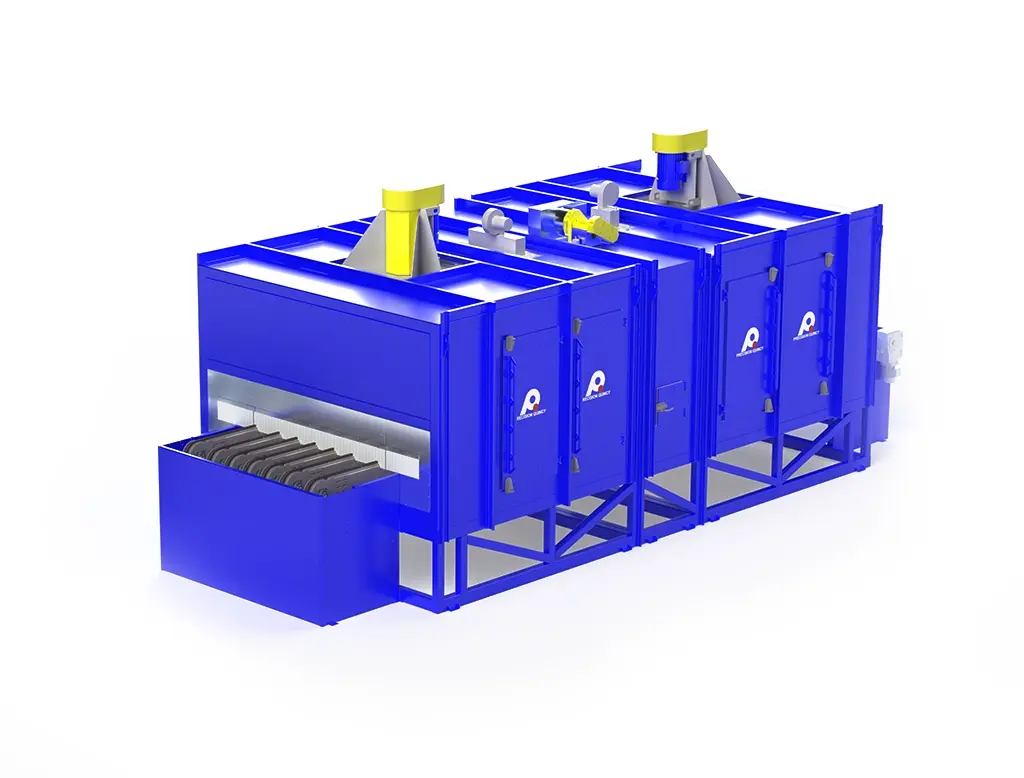
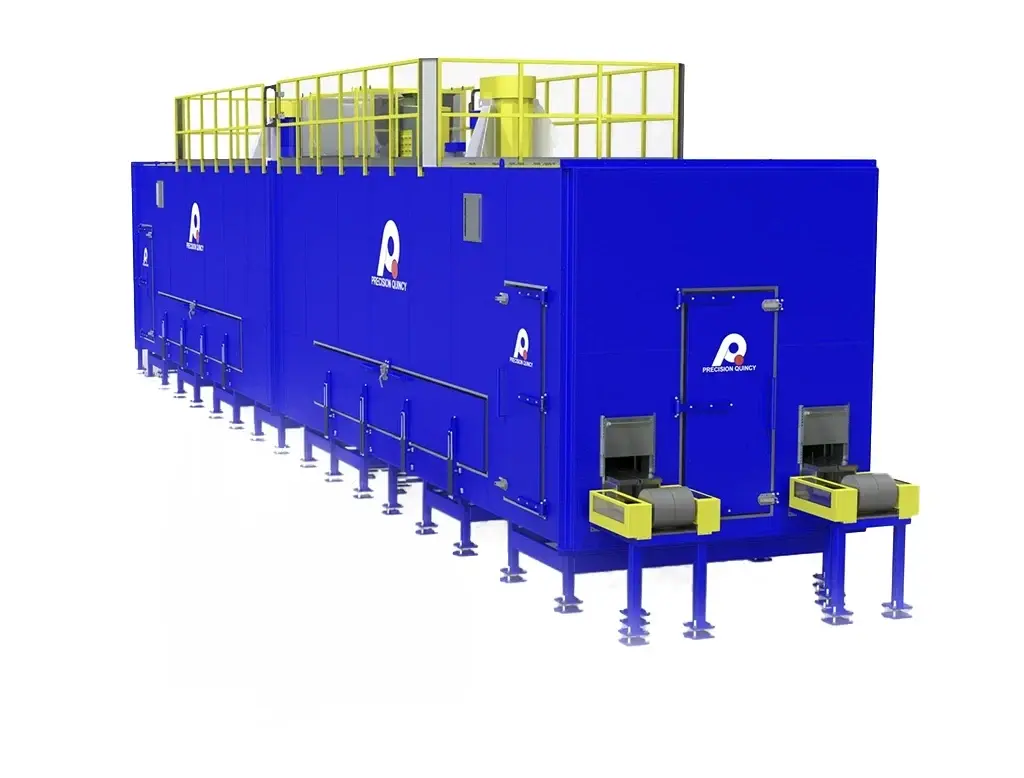
A conveyorized thermal process system was engineered for laminating a nylon outer jacket to an inner PTFE liner material on medical device components. The equipment was designed around customer-provided racks and an overhead Pacline conveyor arrangement, with the process built to support a nominal 10-minute dwell, approximately 600 parts per hour, and hanger loads up to 15 lb per hanger. The oven was also designed to maintain a medical and cleanliness-conscious build approach through the use of stainless-steel product-area materials, food-grade lubrication, and product shielding from conveyor debris.
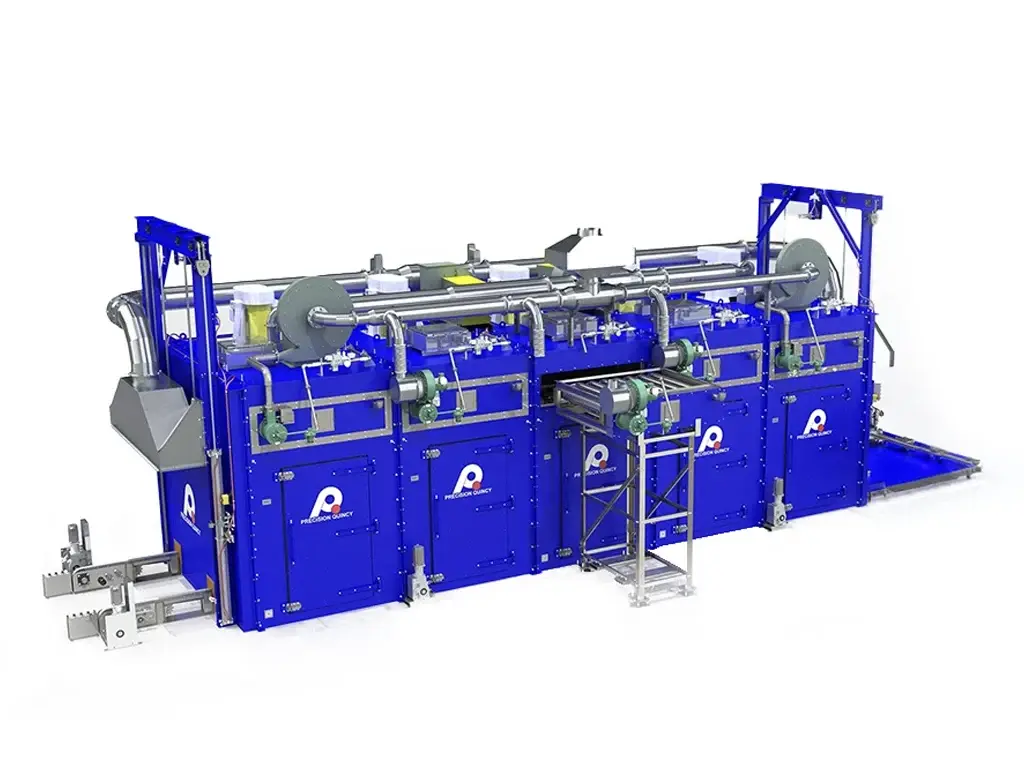
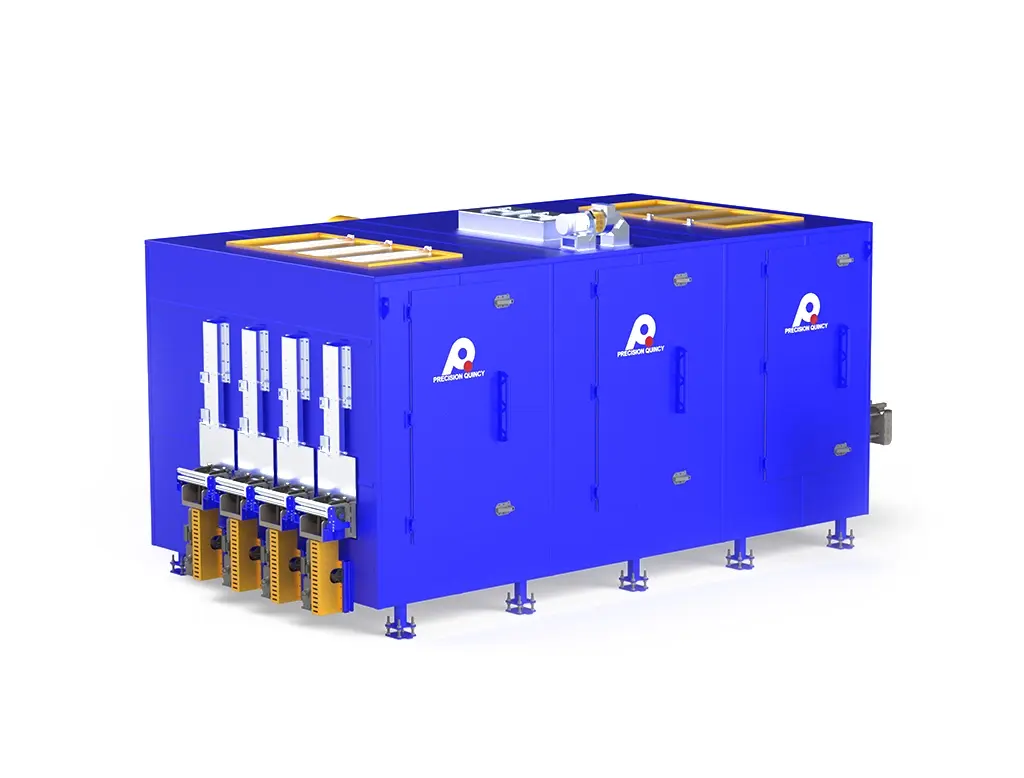
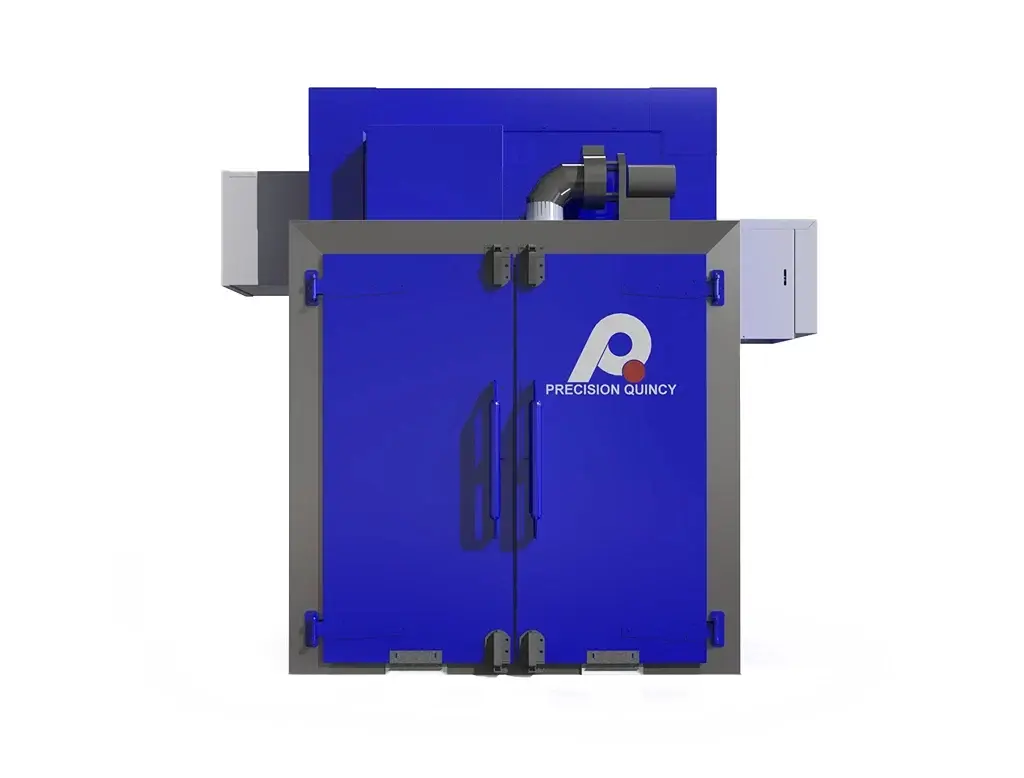
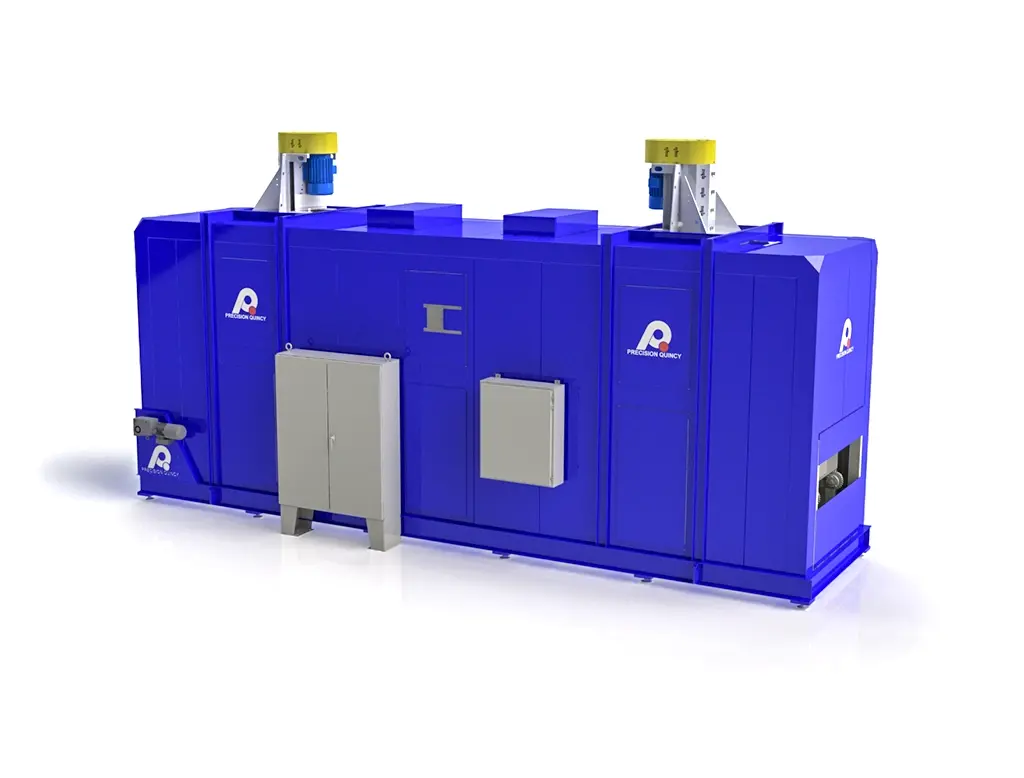
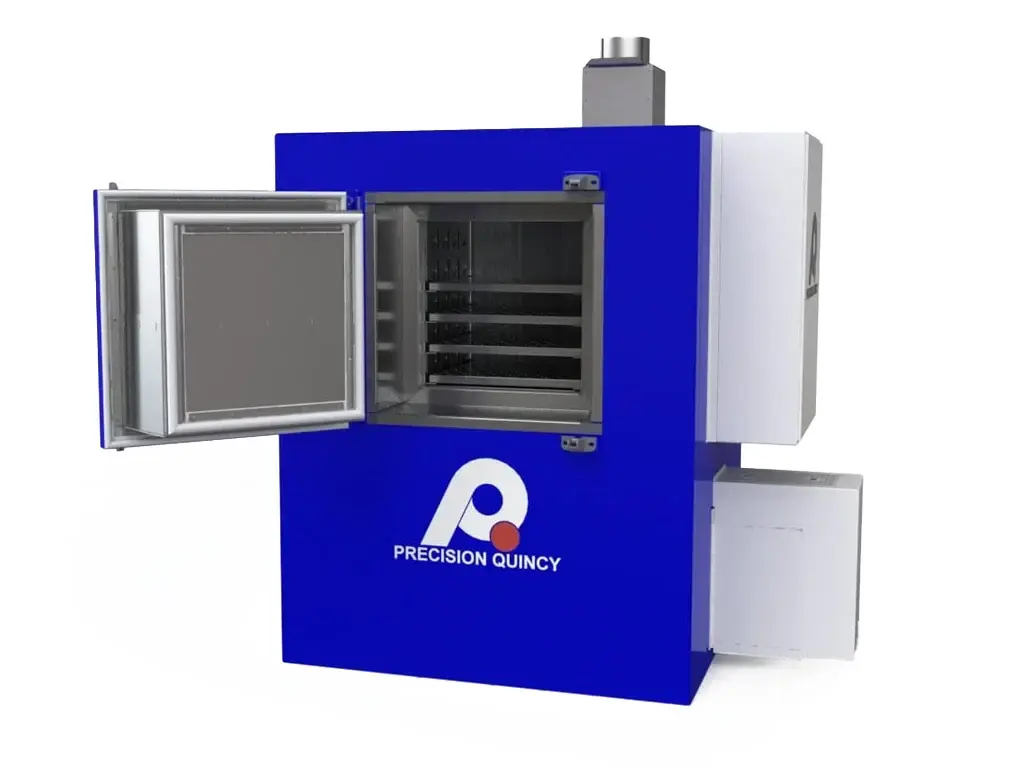
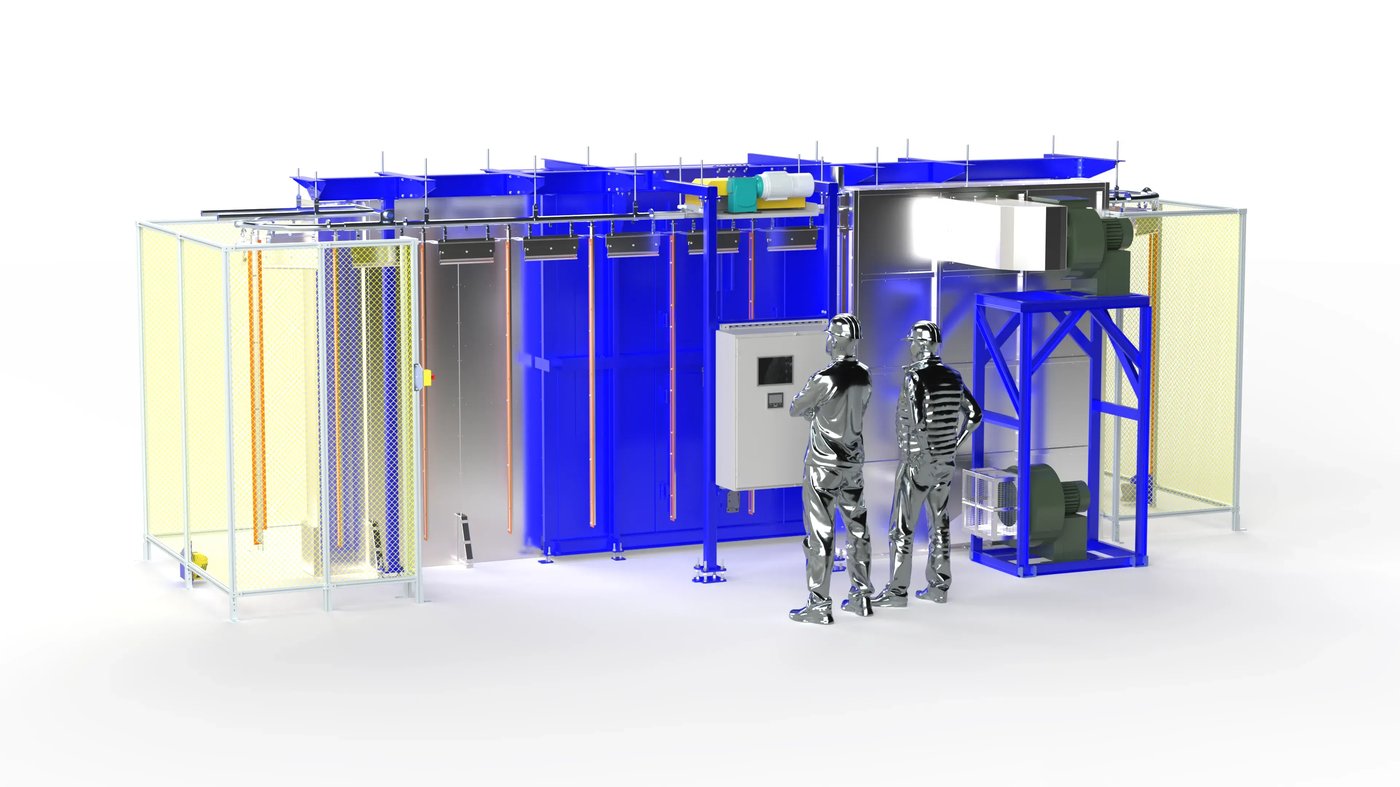
The final concept is an electrically heated Class A conveyor oven with a single heated work zone followed by an ambient cooldown zone, using full vertical-up airflow through MERV 14 filtered supply ducts to process tall hanging racks while maintaining negative internal pressure. The system combines a heated oven body, stainless inlet and outlet vestibules with vestibule heat-recovery fans, a separate cooldown section, perimeter fencing with safety laser scanners, overhead-conveyor handling, and Allen-Bradley-based controls with HMI and VFD integration.
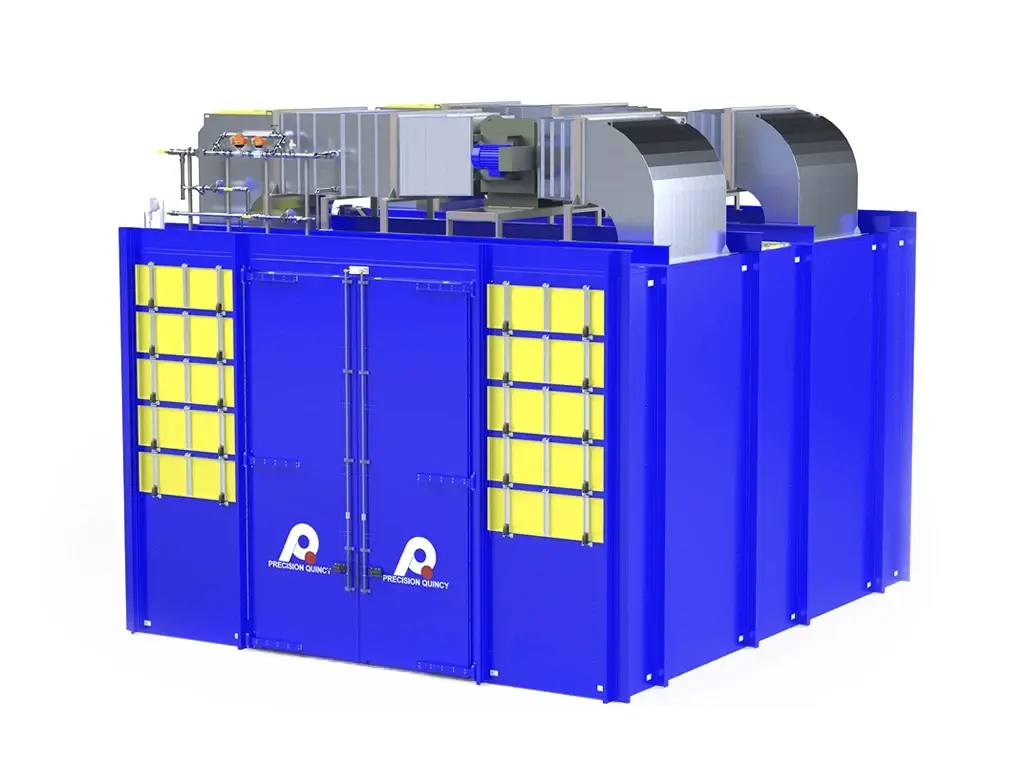
A defining challenge of this installation was the constrained access path. Because the equipment was being installed in a clean-room-related environment with limited access, the system had to be divided into more and smaller sections than would normally be preferred. The equipment was designed to be lifted through an upper-level hatch, moved into position, and assembled without field welding at the final installation location — making the sectioning architecture more complex than a conventional open-access installation.
The process requirement was to conveyorize a lamination operation joining a nylon outer jacket to an inner PTFE liner on elongated minimally invasive medical device components. The system was designed around customer-provided product racks and hanger geometry moving on an overhead conveyor through the full thermal and cooldown sequence.
APPLICATION REQUIREMENT
- The equipment had to thermally support a lamination process joining a nylon outer jacket to a PTFE inner liner on medical device components.
- The design was based on customer-provided racks with an envelope of approximately 73.5 in high by 19.25 in wide, carrying 30 parts per hanger at 25 total product hangers in the system.
- Production basis: approximately 600 parts per hour using a 10-minute dwell time.
CLEANLINESS AND CONTAMINATION-CONTROL REQUIREMENTS
- Food- and medical-grade lubrication was required for all moving parts. Specified conveyor lubricant: Schaeffer's 450 Food Grade H-1 Hi-Temp Chain Lube.
- A debris guard was required between the product hook and conveyor to prevent falling debris from reaching the product, with no direct line of sight between the conveyor and the product.
- Stainless materials and color-cleaned stainless welds were required in all product-exposed areas.
CONTAINMENT / ROOM-PROTECTION REQUIREMENT
- The oven internal pressure was required to be negative to help prevent exhaust or particulate from escaping into the surrounding area.
- The level of negative pressure was noted to require post-build adjustment, as excessive negative pressure can affect uniformity.
SAFETY / OPERATOR ACCESS REQUIREMENTS
- E-stops provided at the control enclosure, conveyor load side, and conveyor unload side — each affecting the oven conveyor only.
- Perimeter fencing, exhauster guarding, and safety laser scanners at the inlet and outlet were incorporated into the final configuration.
FACILITY / INSTALLATION CONSTRAINTS
- The system had to be divided into more and smaller sections than would normally be preferred due to constrained clean-room-related installation access.
- The equipment was designed to be lifted through an upper-level hatch and assembled in place without field welding. Heaviest expected shipped section: 3,000 lb.
UTILITY REQUIREMENT
- Required electrical service: 480V / 3PH / 60Hz.
These thermal process requirements were established from the need to laminate medical device components on hanging racks moving continuously through a controlled Class A conveyor system.
TEMPERATURE CAPABILITY
- Normal operating temperature: 390°F. Maximum temperature capability: 475°F.
- Required temperature uniformity: ±5°F, measured at 9 points off the supply filter outlet.
- Higher-temperature food-grade lubrication was required to support the 475°F maximum temperature capability.
DWELL / THROUGHPUT BASIS
- Process dwell basis: 10 minutes. Conveyor rate: approximately 0.667 ft/min.
- Production basis: approximately 600 parts per hour.
HEAT INPUT REQUIREMENT
- Heat source: electric resistance heat. Total installed heat: 108 kW across three heater banks.
- Heat control: SSR-controlled heat banks with backup contactors and Watlow F4T single set-point controller.
AIRFLOW DELIVERY REQUIREMENTS
- Airflow pattern: full vertical-up airflow through MERV 14 filtered supply ducts across the heated section.
- Heated-zone recirculation airflow: 2,400 CFM at 4 in. w.c.; 3 HP recirculation fan with VFD.
- Fan: NYB 128PLR plug fan.
EXHAUST / VENTILATION BASIS
- Heated-zone exhaust: 225 CFM at 1 in. w.c.; 0.75 HP exhauster. Exhauster capable of 550 CFM if required.
- Maximum VOC load: approximately 0.47–0.50 gal/hr on an o-xylene basis.
- Oven classification: NFPA 86 Class A. Internal pressure maintained negative.
VESTIBULE / ENERGY RECOVERY
- Inlet and outlet vestibules are each 68 in long.
- Each vestibule uses a PQ1 vestibule heat-recovery fan rated at 225 CFM at 1 in. w.c. to recover heat at the oven openings.
COOLDOWN REQUIREMENT
- An ambient cooldown zone is located downstream of the heated zone.
- Cooling zone airflow: two NYB 128PLR GP fans at 2,400 CFM each with 3 HP VFD-driven motors.
- The cooldown zone lowers product to a more manageable handling temperature before unload.
To deliver the thermal process requirements for this medical device lamination application, the following equipment concept and architecture was developed.
OVERALL CONCEPT
- One electrically heated overhead-conveyor Class A oven with filtered vertical-up airflow, stainless product-area construction, vestibule heat recovery, and an integrated post-heat ambient cooldown section.
- A Pacline overhead round-track conveyor carries hanging customer racks through load, heated process, cooldown, and unload positions within a guarded, fenced system.
HEATING ARCHITECTURE
- Heat source: electric resistance heat. Total installed heat: 108 kW across three heater banks.
- Heat control: solid-state relays with backup contactors. Process controller: Watlow F4T. Work-area thermocouple type: Type J.
- Work-area excess-temperature protection: Gefran 650L high-limit controller.
AIRFLOW / RECIRCULATION ARCHITECTURE
- Heated zone: NYB 128PLR plug fan — 2,400 CFM at 4 in. w.c.; 3 HP motor with VFD. Air delivered through MERV 14 filtered supply ducts in full vertical-up pattern.
- Cooldown zone: two NYB 128PLR GP fans at 2,400 CFM each; 3 HP motors with Allen-Bradley PowerFlex 525 VFDs.
- Exhaust: PQ1 exhauster ducted to outside the facility — 225 CFM nominal, 550 CFM maximum capability. Return and exhaust arrangement maintains negative internal pressure.
- Vestibule heat-recovery fans (PQ1, 225 CFM at 1 in. w.c.) at both the inlet and outlet vestibule to recover heat at the oven openings.
CONVEYOR / HANDLING ARCHITECTURE
- Conveyor type: Pacline round-track overhead conveyor with spring-loaded take-up.
- Drive: Nord right-angle helical-bevel gearmotor (or equivalent), 0.5 HP, VFD-controlled via Allen-Bradley PowerFlex 525.
- Load capacity: 15 lb per hanger; 300 lb total; 25 total product hangers.
- Dedicated product hanger with debris guard and no direct line of sight between the conveyor and the product.
- Two thru-beam sensors monitor part position at unload and overtravel locations. Conveyor oiler output included in controls wiring.
CHAMBER / CONSTRUCTION ARCHITECTURE
- Heated zone work area: 80 in length; 58.75 in wide oven body; 88 in work area height; 12 in work area width each side; 78 in product opening height.
- Overall equipment dimensions: approximately 287.75 in L × 148.90 in W × 110.48 in H.
- Interior heated-zone wall material: 20 ga 304 stainless steel. Supply duct material: 304 stainless steel. Vestibules: 304-2B stainless steel. All welded stainless color cleaned.
- Exterior wall material: 20 ga mild steel, finished PQ Blue. Insulation: 4 in of 6 lb mineral wool.
- Interior seams sealed with Sil-Bond RTV 6500. Gasketing: silicone / silicone-coated fiberglass.
SAFETY / COMPLIANCE ARCHITECTURE
- NFPA 86 Class A. Applicable standards: NFPA 79, NFPA 86, UL 508A.
- Access doors also serve the NFPA 86 explosion-relief function. Perimeter fencing, safety laser scanners at inlet and outlet, and exhaust heat shield/exhauster guard incorporated.
- E-stops at control enclosure, conveyor load side, and conveyor unload side — each affecting oven conveyor only.
CONTROLS ARCHITECTURE
- PLC: Allen-Bradley Micro850. HMI: 10 in Allen-Bradley PanelView 800.
- Controls split into a separate high-voltage enclosure and a low-voltage / operator enclosure.
- Ethernet switch: Allen-Bradley 1783-US8T unmanaged switch. VFDs: Allen-Bradley PowerFlex 525. Local EtherNet/IP-style addressing for PLC, HMI, controller, and VFDs.
SHIPPING / INSTALLATION ARCHITECTURE
- The oven is split into multiple shippable sections for constrained clean-room installation access.
- Designed to be lifted through an upper-level hatch and assembled without field welding. Heaviest expected shipped section: 3,000 lb.
- Equipment pre-assembled, pre-wired, pre-tested, and uniformity tested before shipment.
| OVEN CONFIGURATION | |
|---|---|
| Type | Electrically heated overhead-conveyor Class A oven with ambient cooldown zone |
| Application | PTFE-liner lamination for medical device components |
| Heated Zone Work Area | 80 in length; 88 in height; 12 in width each side; 78 in product opening height |
| Oven Body Width | 58.75 in |
| Inlet / Outlet Vestibules | 68 in each |
| Overall Equipment Dimensions | Approx. 287.75 in L × 148.90 in W × 110.48 in H |
| Explosion Relief | Access doors / top doors used to satisfy NFPA 86 explosion-relief requirement |
| Shipping Architecture | Multiple sectioned shipments; no field welding at installation; heaviest section 3,000 lb |
| THERMAL HEAT POWER SYSTEM | |
|---|---|
| Operating Temperature | 390°F |
| Maximum Temperature | 475°F |
| Temperature Uniformity | ±5°F (measured at 9 points off supply filter outlet) |
| Heating Zones | 1 heated zone plus 1 ambient cooldown zone |
| Heat Source | Electric resistance elements |
| Total Heat Power | 108 kW across 3 heater banks |
| Heat Control | SSR-controlled with Watlow F4T controller and backup contactors |
| Thermocouple Type | Type J |
| High-Limit Protection | Gefran 650L excess-temperature controller |
| RECIRCULATION / AIRFLOW SYSTEM | |
|---|---|
| Airflow Pattern | Full vertical-up airflow |
| Supply Filtration | MERV 14 supply duct filters |
| Heated-Zone Recirculation Fan | NYB 128PLR plug fan |
| Heated-Zone Airflow | 2,400 CFM at 4 in. w.c. |
| Heated-Zone Fan Motor | 3 HP with VFD |
| Cooldown-Zone Fans | Two NYB 128PLR GP fans |
| Cooldown-Zone Airflow | 2,400 CFM each |
| Cooldown-Zone Fan Motors | 3 HP each with Allen-Bradley PowerFlex 525 VFD |
| Vestibule Heat Recovery | PQ1 heat-recovery fans at inlet and outlet — 225 CFM at 1 in. w.c. each |
| EXHAUST SYSTEM | |
|---|---|
| Exhaust Fan | PQ1 exhauster ducted outside facility |
| Nominal Exhaust | 225 CFM at 1 in. w.c.; 0.75 HP motor |
| Maximum Capability | 550 CFM if required |
| VOC Load Basis | Approx. 0.47–0.50 gal/hr o-xylene basis |
| Pressure Basis | Negative internal pressure maintained |
| CONVEYOR / HANDLING SYSTEM | |
|---|---|
| Conveyor Type | Pacline round-track overhead conveyor |
| Drive | Nord right-angle helical-bevel gearmotor (or equivalent), 0.5 HP, VFD-controlled |
| VFD | Allen-Bradley PowerFlex 525 |
| Take-Up | Spring-loaded |
| Load Capacity | 15 lb per hanger; 300 lb total; 25 total product hangers |
| Throughput Basis | Approx. 600 parts/hr at 10-minute dwell; 30 parts per hanger |
| Product Hanger | Dedicated hanger with debris guard; no direct line of sight to conveyor |
| Part Sensing | Two thru-beam sensors at unload and overtravel positions |
| Lubrication | Schaeffer's 450 Food Grade H-1 Hi-Temp Chain Lube |
| CONSTRUCTION MATERIALS / FINISH | |
|---|---|
| Interior Heated Zone | 20 ga 304 stainless steel; 304-2B mill finish; color-cleaned welds |
| Supply Duct Material | 304 stainless steel |
| Vestibule Material | 304-2B stainless steel |
| Exterior | 20 ga mild steel; PQ Blue finish |
| Control Panel Finish | ANSI 61 gray |
| Thermal Insulation | 4 in of 6 lb mineral wool |
| Interior Seam Sealant | Sil-Bond RTV 6500 |
| Gasketing | Silicone / silicone-coated fiberglass |
| SAFETY & COMPLIANCE | |
|---|---|
| NFPA 86 Classification | Class A |
| Applicable Standards | NFPA 79, NFPA 86, UL 508A |
| Heater Safety | Purge timer, airflow switches, high-limit controller, and safety relay architecture |
| E-Stops | At control enclosure, conveyor load side, and conveyor unload side (conveyor only) |
| Perimeter Safety | Perimeter fencing and safety laser scanners at inlet and outlet |
| Negative Pressure | Internal oven pressure maintained negative to prevent exhaust escape to surrounding area |
| CONTROLS & ELECTRICAL | |
|---|---|
| PLC | Allen-Bradley Micro850 |
| HMI | 10 in Allen-Bradley PanelView 800 |
| Process Controller | Watlow F4T |
| High Limit | Gefran 650L |
| Ethernet Switch | Allen-Bradley 1783-US8T unmanaged switch |
| VFDs | Allen-Bradley PowerFlex 525 (conveyor and cooldown fans) |
| Control Cabinet | Separate high-voltage and low-voltage / operator enclosures |
| Primary Power | 480V / 3PH / 60Hz |
| Panel Listing | UL 508A Open Industrial Control Panel |
| PROCESS SUMMARY | |
|---|---|
| Product | Elongated minimally invasive medical device components (nylon outer jacket over PTFE inner liner) |
| Market / Application | Medical device manufacturing — polymer lamination |
| Process Type | Continuous overhead-conveyor thermal lamination with ambient cooldown |
| Cleanliness Basis | Food-grade lubrication, stainless product-area construction, debris guard, color-cleaned welds |
| Installation Basis | Multi-section no-field-weld assembly for constrained clean-room access path |
| Testing / Validation | Pre-assembled, pre-wired, pre-tested, and uniformity tested before shipment |
| Key Verification Concept | Repeatable vertical-up filtered heat delivery, negative-pressure containment, cleanliness-conscious construction, and controlled product handoff at 600 parts/hour |