

Project Number: 5339
Natural Gas Heated Conveyor Curing Oven for Modular Flow-Line Powder Coating of Office Furniture Components
Overview
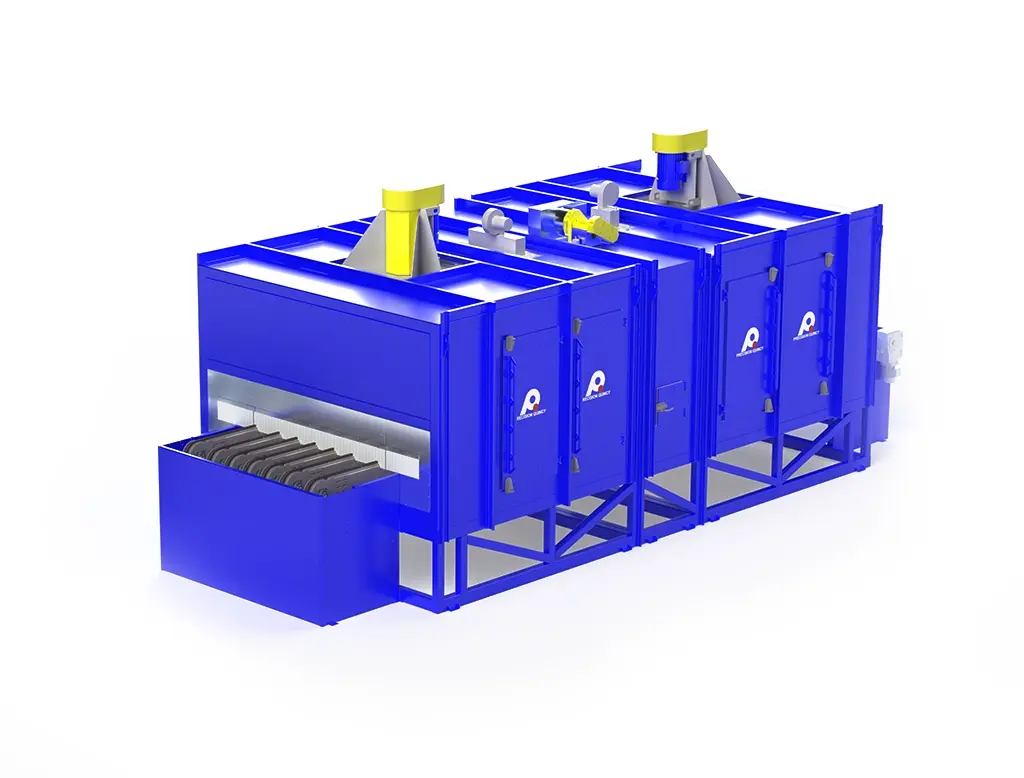
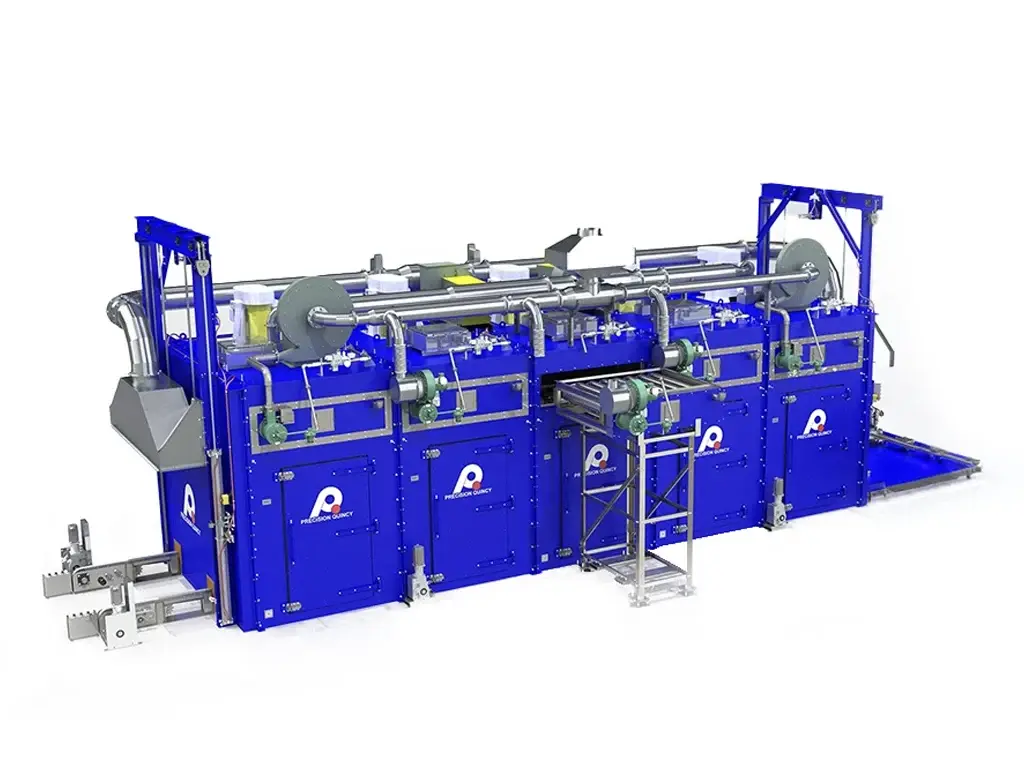
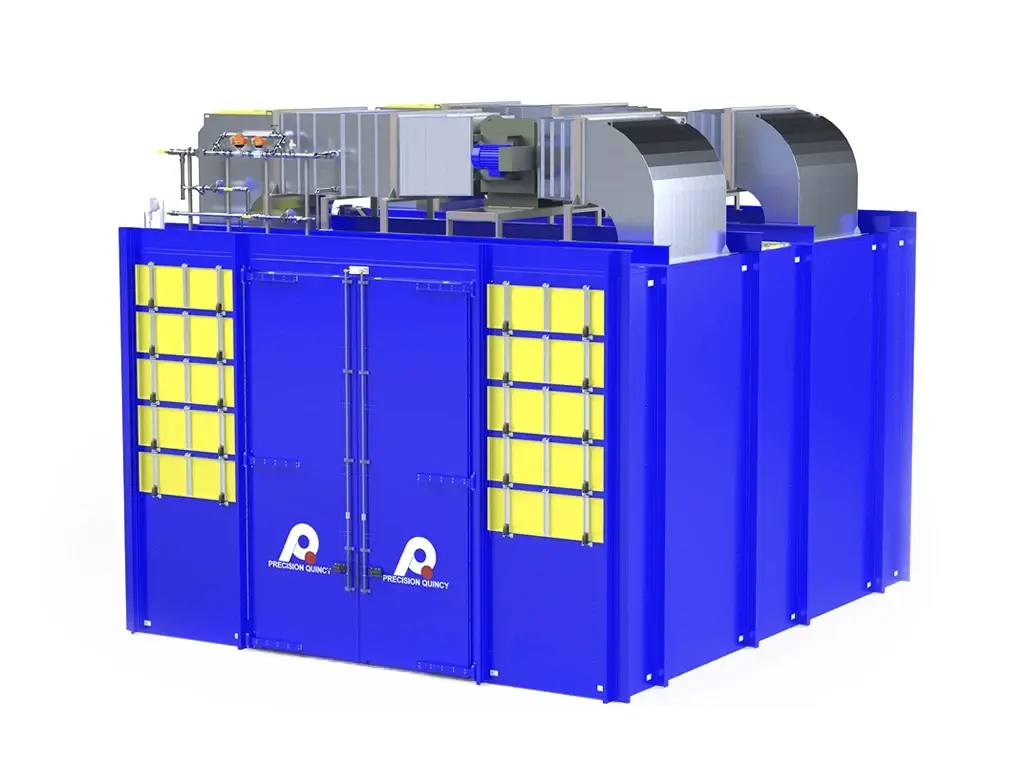
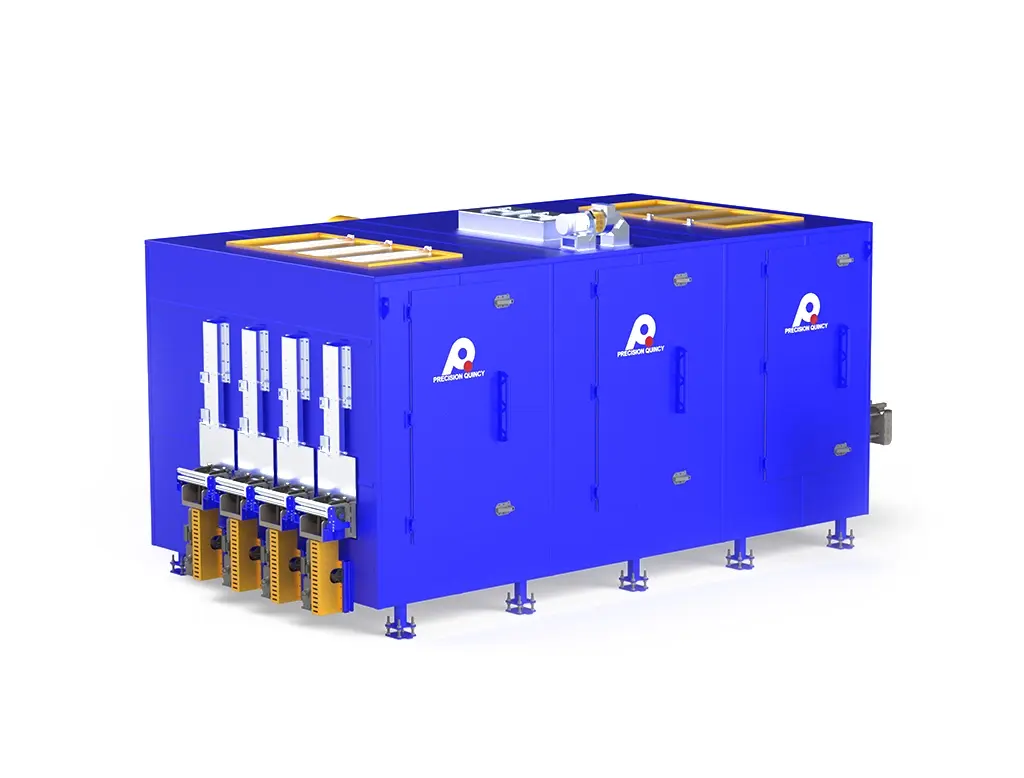
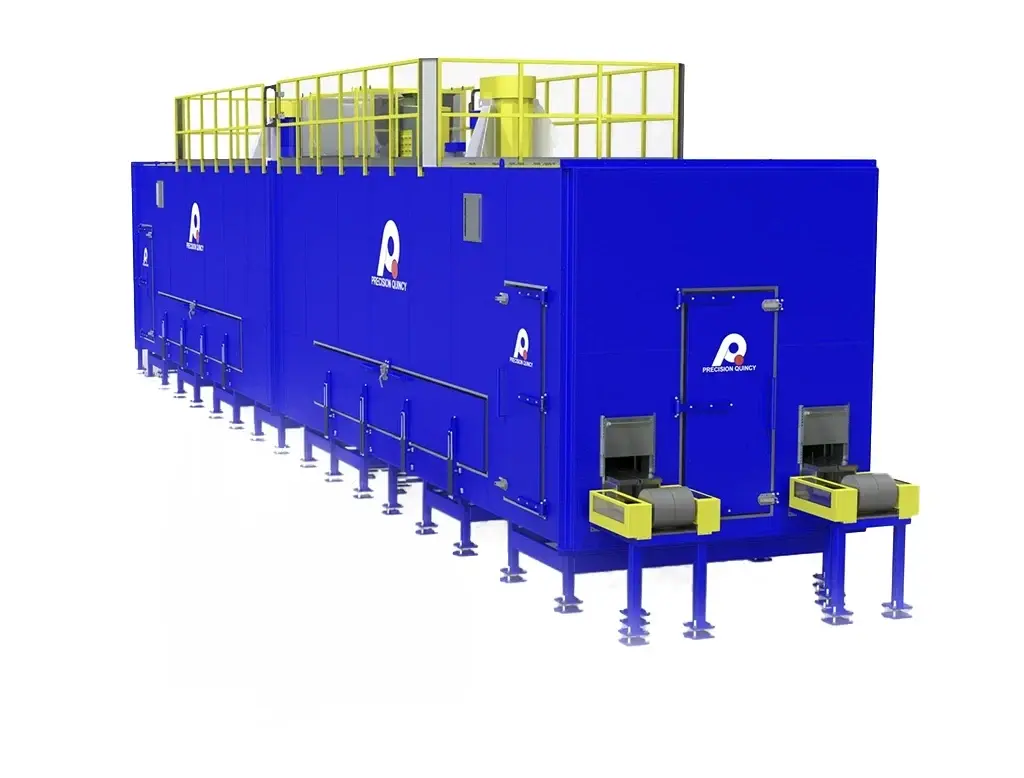
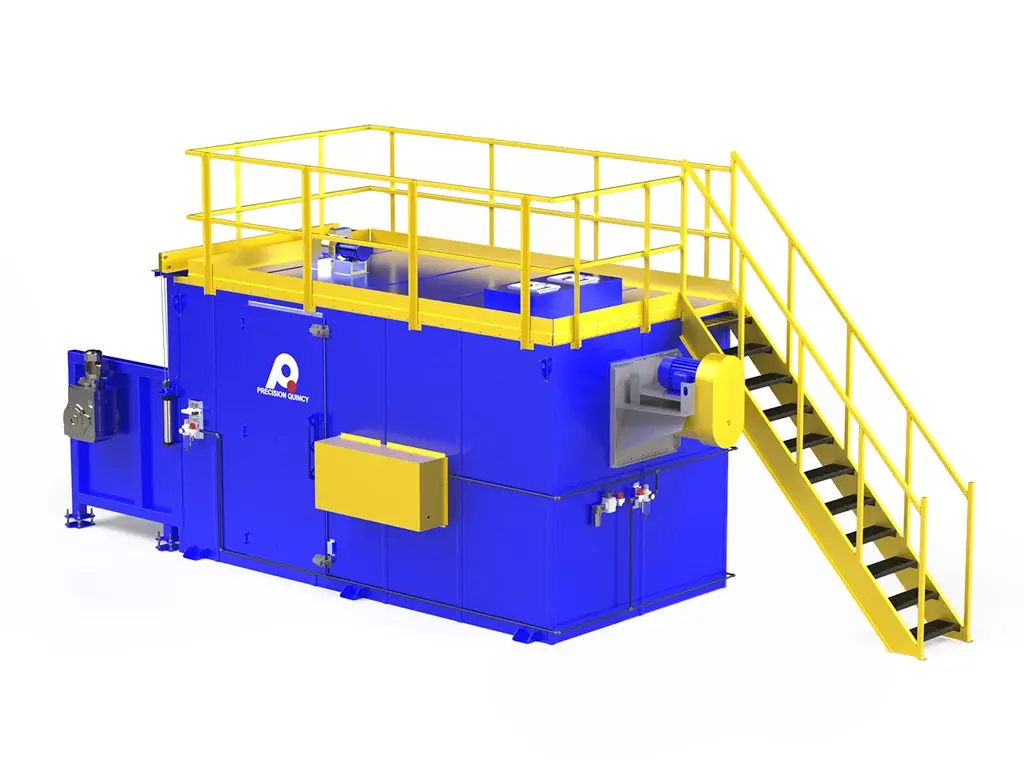
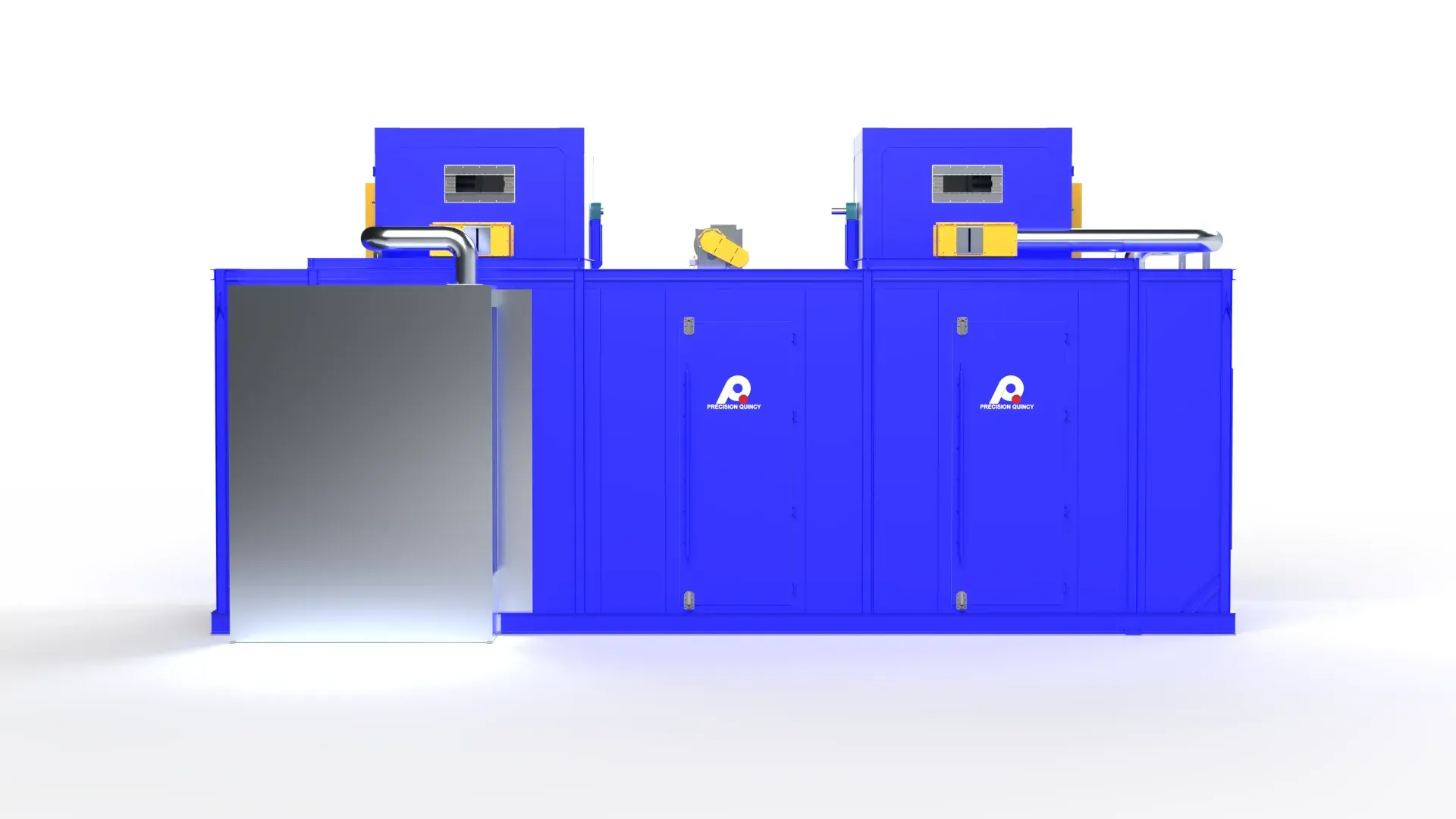
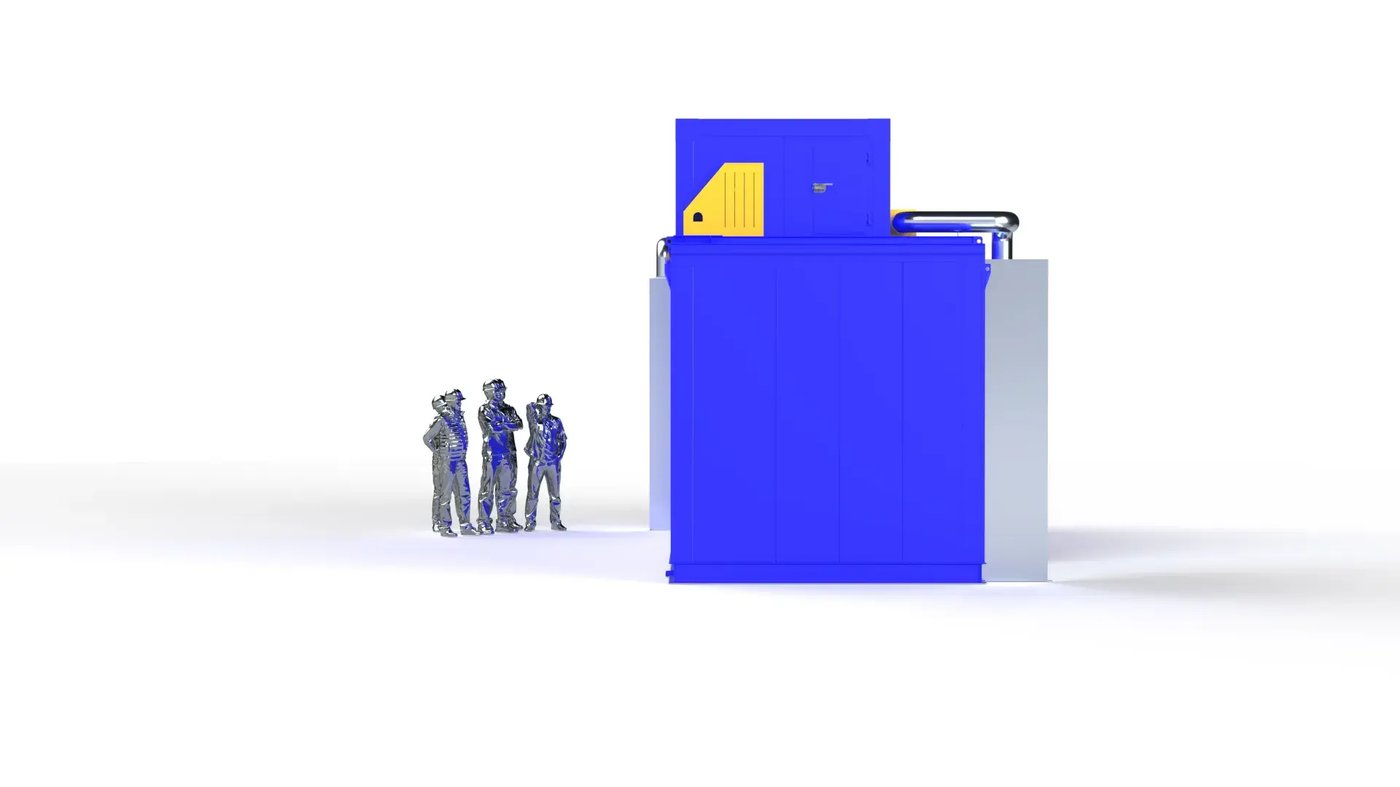
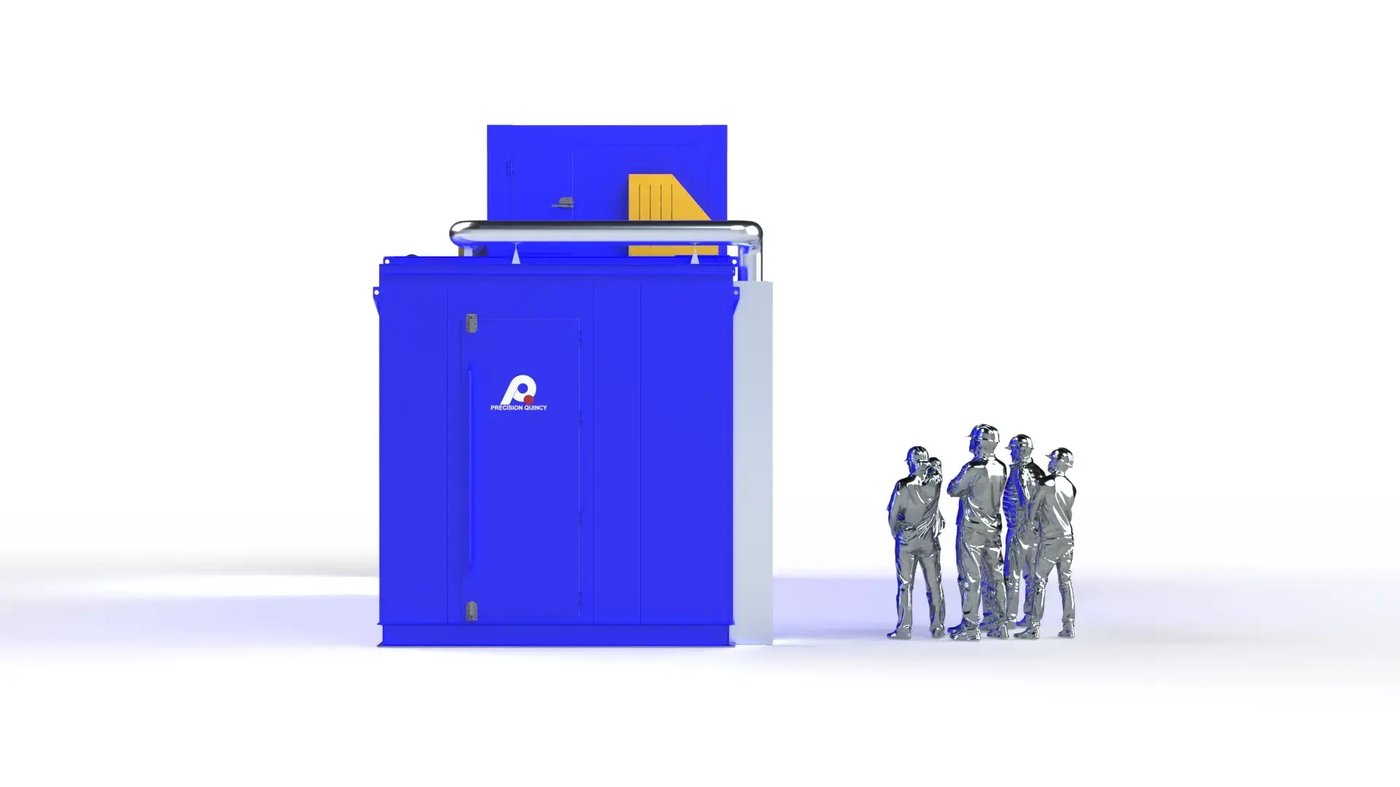
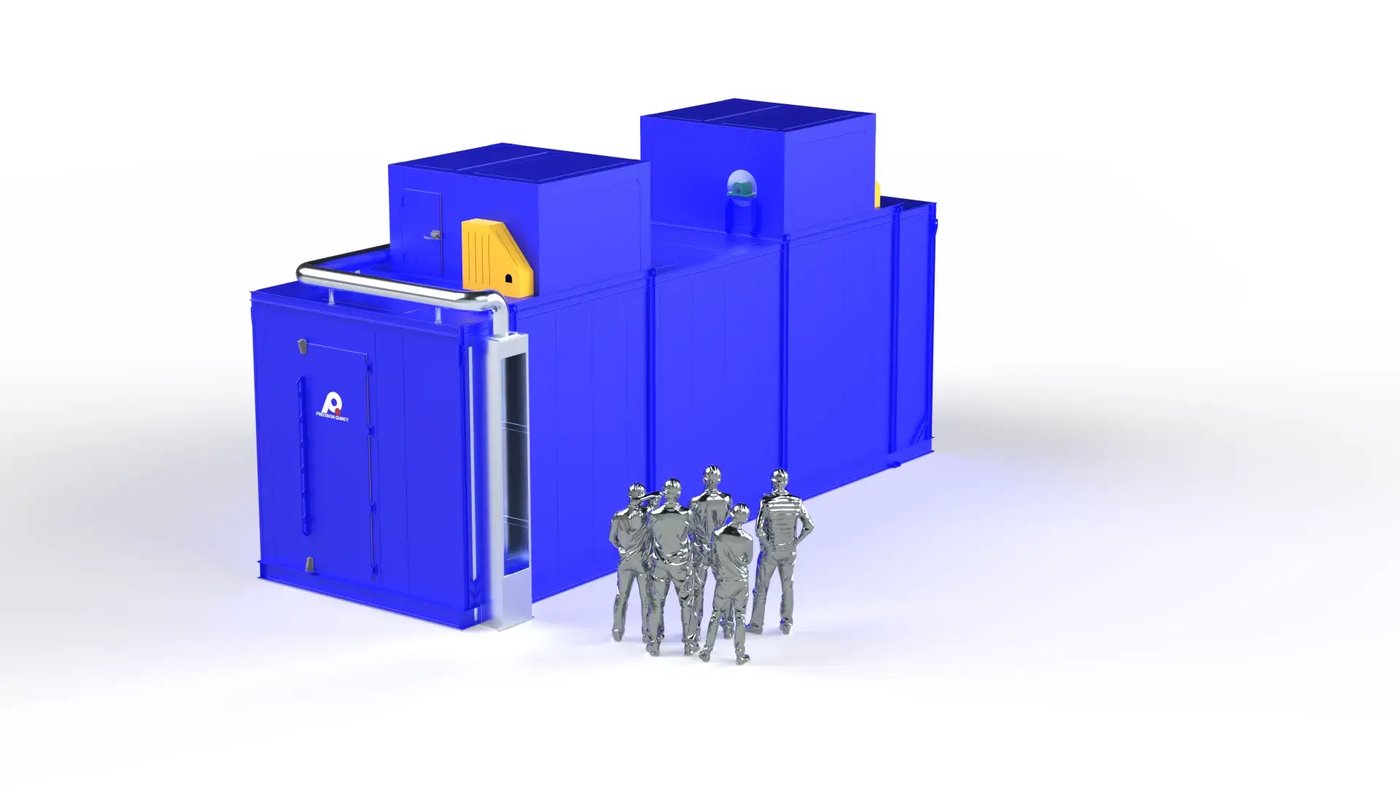
Precision Quincy engineered this oven as a natural-gas-heated conveyor curing oven for a continuous production line handling office furniture components suspended from an overhead conveyor. The application supported the customer’s move toward a more modular, cell-based manufacturing strategy, shifting away from dependence on one large centralized paint line and toward smaller linked process cells that could localize production functions within the broader finishing system.
Within that broader concept, this oven serves as the curing stage for powder-coated parts moving through a continuous conveyorized flow. The production environment involved a high mix of parts and varying production volumes, requiring a curing platform that could provide repeatable thermal performance while fitting into a more flexible distributed manufacturing arrangement.
The oven was designed around long hanging components associated with office furniture and architectural interior products, including kick plates and related components used in cubicle and office systems. The design basis used a part size of approximately 10 in × 72 in, arranged to create an approximate 10 in × 10 in × 72 in envelope, with two parts per mount at 18-inch centers. At that loading basis, the system was designed for approximately 360 parts per hour at 4.5 ft/min.
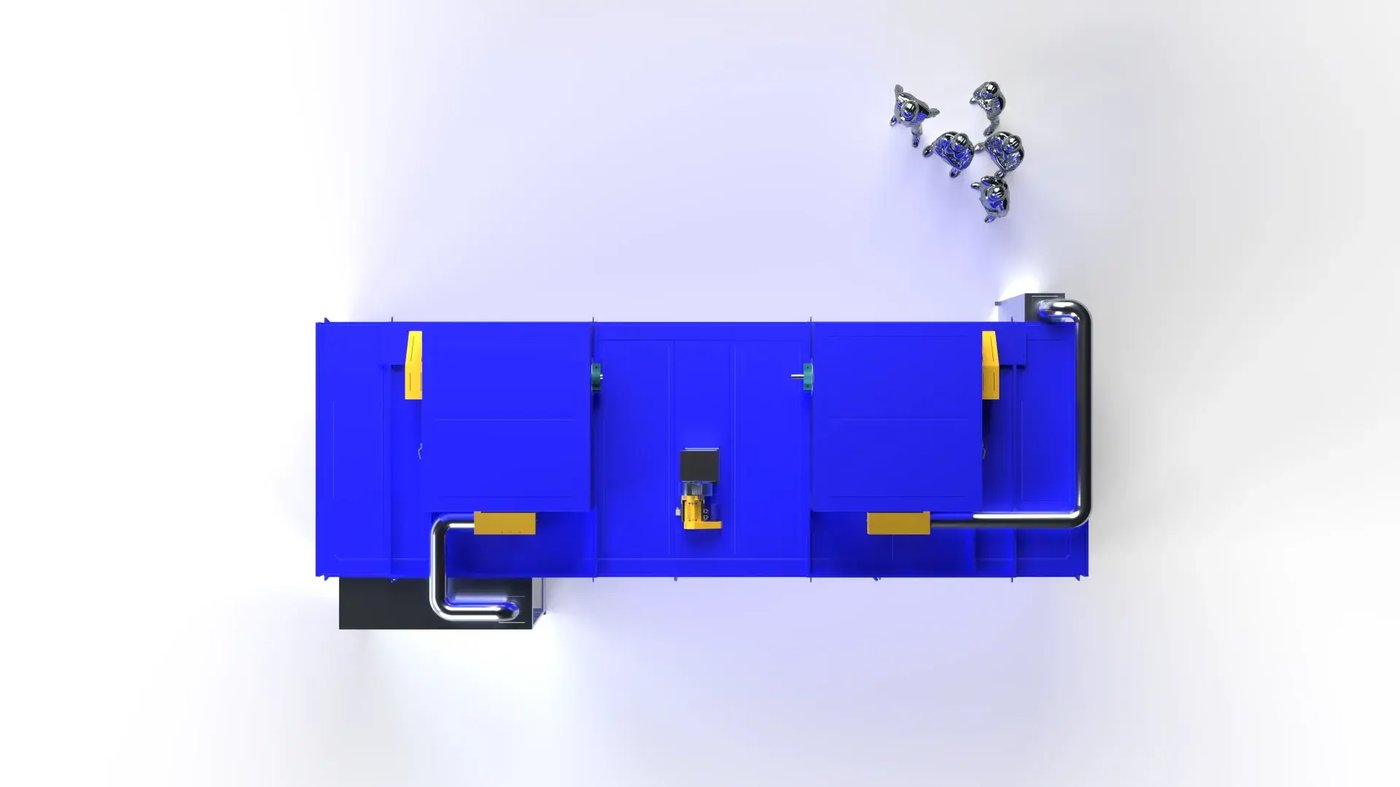
The equipment was built around an internal work chamber of approximately 89 in W × 367 in L × 107 in H, providing about 2,023 cubic feet of interior volume. The conveyor makes three passes through the oven to generate an approximate 20-minute dwell time, with 18-inch-radius corners required in the conveyor path geometry to accommodate the hanging product and conveyor routing.
The thermal process operates in a range of approximately 375°F to 425°F, with a maximum temperature of 430°F and a required work-area uniformity of ±10°F. To deliver that performance, Precision Quincy used two Access Combustion LP-18 natural gas burners rated at 1,500,000 BTU/hr each, two NYB Dual AK18 recirculation air kits delivering a combined 40,500 CFM at 2 in. W.c., and a PQ15 exhauster rated at 1,550 CFM at 1 in. W.c.. The oven uses full vertical airflow, 6-inch-thick insulated wall construction, and a WATLOW F4T controller inside a NEMA 1 UL 508A open industrial control panel.
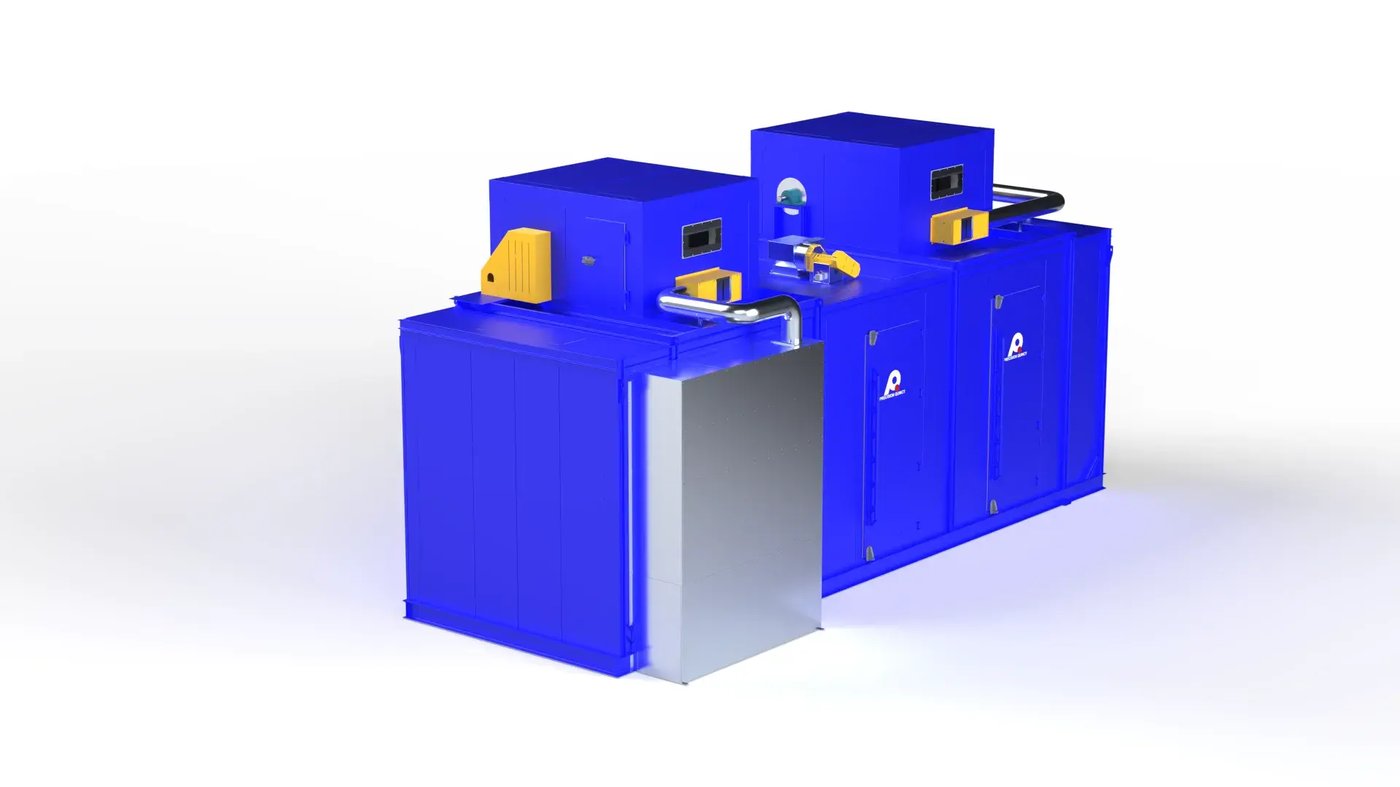
Because the oven had to process long hanging parts while fitting within practical shipment and installation constraints, the design incorporated inlet and outlet vestibules, a large top-mounted heat chamber arrangement, and a high-capacity internal airflow system to maintain process stability, heat containment, and continuous conveyor integration.
This oven was developed for a continuous manufacturing flow line requiring the powder coating cure of long hanging office furniture components conveyed through the oven on an overhead transport system. The project supported the customer’s move toward a more cell-based manufacturing layout, where multiple pieces of thermal-processing equipment function as modular production elements instead of relying only on one large centralized line.
APPLICATION REQUIREMENT
- The equipment had to support a continuous flow-line curing process rather than batch processing.
- The oven was intended for components associated with office furniture / cubicle systems, including kick plates and similar long formed parts.
- The production environment involved a high mix of parts with varying volumes, requiring a flexible curing platform rather than a narrowly optimized single-part system.
- The oven was designed around a part size of approximately 10 in × 72 in.
- The intended hanging arrangement creates an approximate 10 in × 10 in × 72 in part envelope.
- The process basis assumes two parts per mount at 18-inch centers.
MANUFACTURING / LINE INTEGRATION REQUIREMENT
- The oven had to fit into a broader modular manufacturing-cell concept.
- This curing oven functions as one piece of equipment within a larger conveyorized finishing sequence.
- The overall concept involved multiple thermal-processing stations rather than one large monolithic process line.
- The conveyor system itself is customer supplied, with the oven designed to interface to the conveyor path and mounting points.
THROUGHPUT / CONVEYANCE REQUIREMENT
- Required throughput basis: approximately 360 parts/hr at 4.5 ft/min.
- The conveyor path makes three passes inside the oven.
- Approximate dwell time basis: 20 minutes.
- Conveyor pathing required 18-inch-radius corners.
- The oven includes defined conveyor inlet and outlet openings plus conveyor mounting provisions.
WORK CHAMBER / LOAD REQUIREMENT
- Required internal work chamber: 89 in W × 367 in L × 107 in H.
- Interior oven volume: approximately 2,023 cubic feet.
- The oven had to support continuous transport of long suspended parts through multiple passes without compromising airflow or uniformity.
- The design had to maintain practical clearance for the hanging product while preserving airflow passage from supply to return.
PROCESS REQUIREMENT
- The system had to provide controlled powder-coating cure performance for continuously moving parts.
- VOC / powder basis is documented at 110 lb/hr of powder.
- The oven had to support repeatable thermal exposure for parts moving continuously through the chamber.
- Product loading and spacing had to be compatible with airflow passage through the oven to maintain process performance.
SAFETY REQUIREMENT
- The oven was required to be designed as an NFPA 86 Class A unit.
- The design required exhaust, purge, combustion, flame safeguard, gas-pressure-proving, proof-of-closure, and airflow-proving architecture suitable for a conveyorized natural-gas-fired curing oven.
- The oven includes an explosion relief panel, and the surrounding area must remain clear.
UTILITY / SITE REQUIREMENT
- Required electrical service: 460V / 3PH / 60Hz.
- Full load amps: 62.7 A on the GA revision basis.
- Required fuel: natural gas.
- Gas inlet pressure basis: 2 PSI at the oven utility connection.
- Gas flow basis: approximately 3,000 CFH on the GA revision basis.
- Design elevation: less than 1,000 ft above sea level.
- Installation access basis: 12 ft W × 16 ft H dock / door size.
INSTALLATION / SHIPMENT REQUIREMENT
- Approximate oven shipping weight: 25,160 lb.
- The oven was designed to ship partially assembled, with customer responsibility for unloading, move-in, utility connections, exhaust stack installation, and any reassembly of items removed for shipping.
- Shipping constraints remained an important part of the design basis because of the required product height, long work chamber, and overall equipment size.
These thermal process requirements were established from the customer’s need to cure powder-coated long hanging parts in a continuous conveyorized production environment.
TEMPERATURE CAPABILITY
- Operating range: 375°F to 425°F.
- Maximum operating temperature: 430°F.
- Required work-area temperature uniformity: ±10°F.
PROCESS BASIS
- The thermal process basis is continuous powder-coating cure.
- The process is executed with product moving through the oven on a three-pass overhead conveyor path.
- Approximate dwell time basis: 20 minutes.
- Approximate throughput basis: 360 parts/hr at 4.5 ft/min, assuming the stated hanging pattern.
- VOC / powder basis: 110 lb/hr of powder.
HEAT INPUT REQUIREMENT
- Heat source: natural gas.
- Burner arrangement: two Access Combustion LP-18 burners.
- Burner output: 1,500,000 BTU/hr each.
- Total heat input: 3,000,000 BTU/hr.
- Burner gas train architecture includes double safety shutoff with proof of closure, regulator, low- and high-gas-pressure switches, visual position indication, and Siemens SQM41.25 actuator-based modulation.
- Gas train design notes indicate burner-side regulated pressure at 17.0 in. W.c. With recommended gas-pressure switch settings of 10 in. W.c. Low and 21 in. W.c. High.
AIRFLOW DELIVERY REQUIREMENTS
- Required airflow style: full vertical airflow.
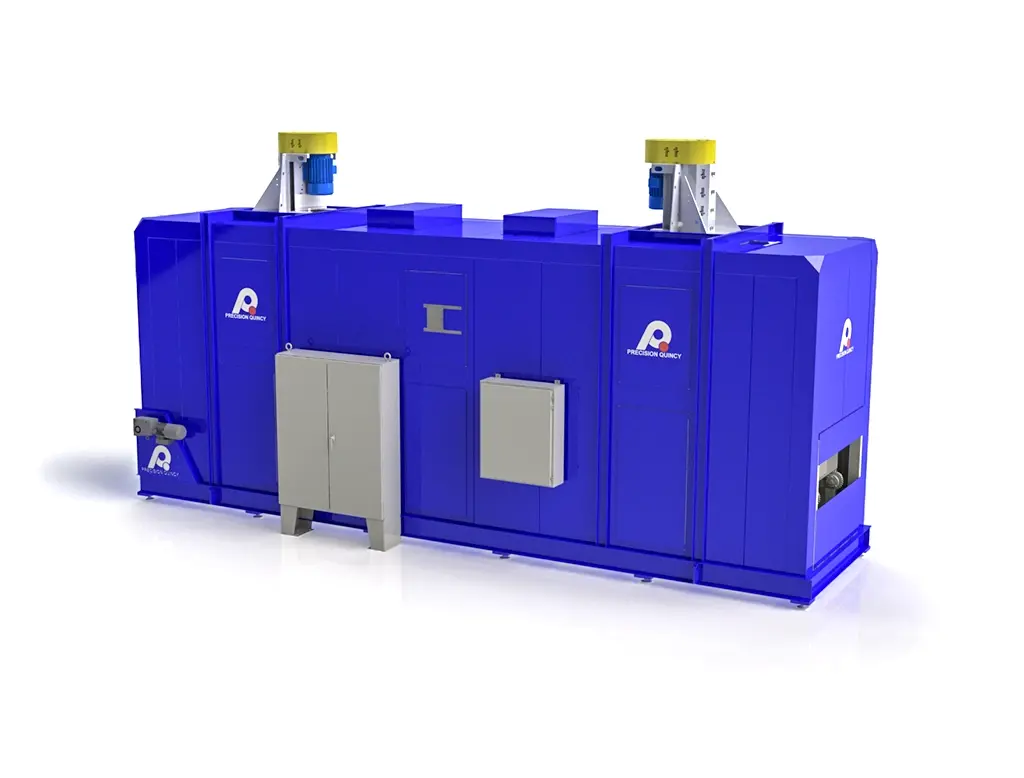
- Recirculation fan arrangement: two NYB Dual AK18 air kits.
- Total recirculation airflow basis: 40,500 CFM.
- Recirculation static pressure basis: 2 in. W.c.
- Recirculation fan motor basis: 15 HP each, using Allen-Bradley PowerFlex 4M VFDs.
EXHAUST / VENTILATION BASIS
- Exhaust airflow basis: 1,550 CFM at 1 in. W.c.
- Exhaust fan basis: PQ15 exhauster with 1.5 HP motor.
- Fresh air is pulled from the inlet and outlet vestibules to help reduce heat loss at the process openings.
- Burner and fresh-air inlets include MERV 1 or greater filtration.
- The exhaust system supports Class A purge and ventilation requirements for the process.
THERMAL INSTRUMENTATION / CONTROL BASIS
- Primary temperature controller: WATLOW F4T.
- Thermocouple type: Type J.
- Separate high-limit protection is provided for both combustion chambers and both work-area zones.
- The controller architecture includes outputs for 4–20 mA heat modulation, fan shutdown, and burner disable.
SAFETY / CLASSIFICATION BASIS
- Oven classification basis: NFPA 86 Class A.
- Dual-burner safety architecture includes Dungs flame safeguard controls, airflow switches, gas pressure switches, proof-of-closure logic, purge sequencing, and high-limit protection.
- Burners are individually enabled, fault-monitored, and manually resettable from the main control panel.
- The wiring package defines an operating sequence in which the exhaust fan starts first, followed by recirculation fans, then burner enable / purge / lightoff.
- The system includes a control note that fans are not to be shut down when the oven temperature is above 250°F.
To deliver the customer and thermal process requirements for this oven, Precision Quincy developed the following equipment concept and architecture.
OVERALL CONCEPT
- One natural-gas-heated conveyor curing oven.
- Designed for continuous flow-line cure of long hanging office furniture components.
- The conveyor makes three passes through the oven to achieve the required dwell time.
- The customer provides the conveyor, while Precision Quincy provides the oven, conveyor interface openings, and conveyor mounting provisions.
- The oven was developed as part of a broader modular manufacturing-cell approach, supporting a production layout built from multiple linked process stations rather than one centralized line.
HEATING ARCHITECTURE
- Heat source: natural gas.
- Burner arrangement: two Access Combustion LP-18 burners.
- Individual burner output: 1,500,000 BTU/hr.
- Total heat input: 3,000,000 BTU/hr.
- Gas train components include double safety shutoff valves with proof of closure, regulator, pressure switches, visual valve position indication, and actuator-based modulation.
- Burner gas control valve actuators: Siemens SQM41.25.
- Burner flame safety controls: Karl Dungs MPA4112 series.
AIRFLOW / RECIRCULATION ARCHITECTURE
- Airflow pattern: full vertical airflow.
- Recirculation fan concept:
- Two NYB Dual AK18 air kits
- 20,250 CFM at 2 in. W.c. Each
- 15 HP motor each
- Allen-Bradley PowerFlex 4M VFDs
- Exhaust fan concept:
- PQ15 exhauster
- 1,550 CFM at 1 in. W.c.
- 1.5 HP motor
- The design uses vestibules and a controlled exhaust strategy to reduce heat loss at the conveyor openings while maintaining required ventilation and purge performance.
CHAMBER / CONSTRUCTION ARCHITECTURE
- Internal work chamber: 89 in W × 367 in L × 107 in H.
- Interior volume: 2,023 cubic feet.
- Construction style: tongue-and-groove interlocking insulated panel oven with structural steel reinforcement.
- Wall thickness: 6 inches.
- Insulation: 6-inch, 6 lb density mineral wool.
- Interior material: aluminized steel.
- Exterior finish: RAL 9003 Signal White.
- Floor: 3-inch insulated floor.
- Heat chamber location: top-mounted dual heat chamber arrangement, using the same insulated construction concept as the main oven body.
- The chamber geometry had to balance process height requirements, long work length, and shipping constraints.
DOOR / ACCESS ARCHITECTURE
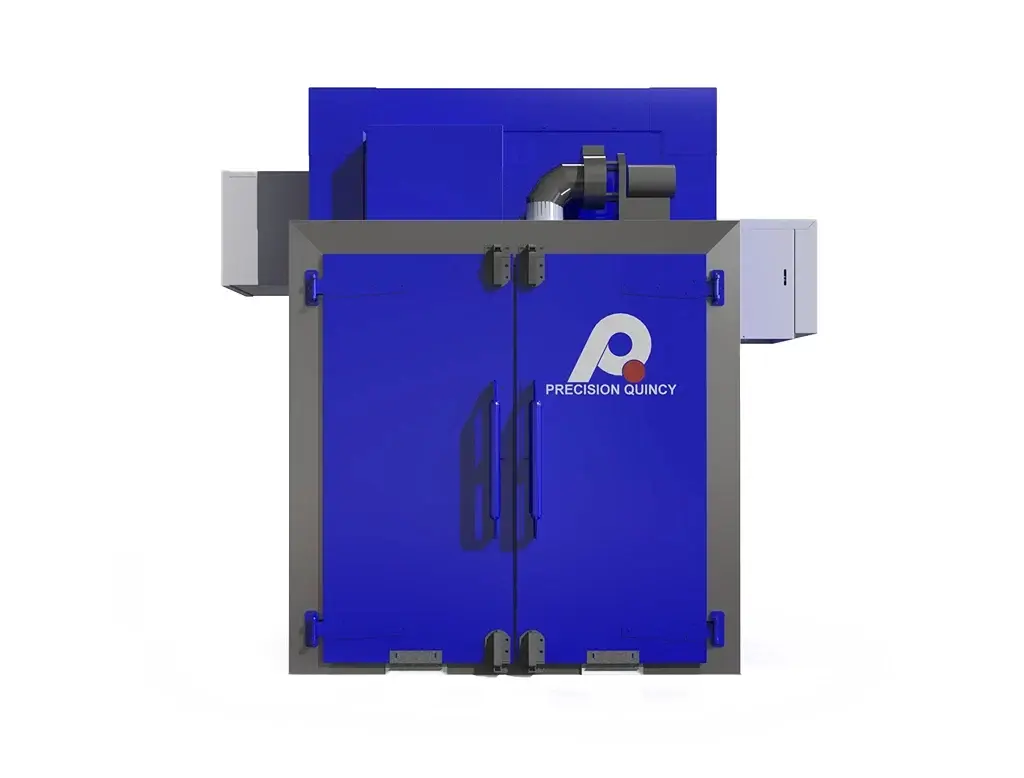
- Main access doors: three 6-inch-thick single doors on one end.
- Large service access doors are provided on the oven body and heat chamber.
- Conveyor interface openings are approximately 14 in W × 98 in H.
- Included inlet and outlet vestibules improve thermal containment at the conveyor openings.
- Internal vestibule geometry extends down from the ceiling to help separate the opening areas from the main heated chamber.
CONTROLS ARCHITECTURE
- Primary temperature controller: WATLOW F4T.
- Thermocouple type: Type J.
- Independent excess-temperature controllers are provided for:
- Combustion chamber #1
- Work area #1
- Combustion chamber #2
- Work area #2
- Control enclosure: 46 in × 46 in × 12 in NEMA 1 enclosure.
- Panel type: UL 508A open industrial control panel.
- Control panel includes a reserved 12 in × 12 in space for future customer remote I/O and an additional 8 in × 10 in spare panel area with DIN rail.
- The front panel includes dedicated controls and indication for exhaust fan, recirculation fans, burner #1, burner #2, flame safety reset, purging indication, and burner fault indication.
- The enclosure layout also includes dedicated starters / protectors for the two combustion blowers in addition to the exhaust and recirculation drives.
SAFETY / COMPLIANCE ARCHITECTURE
- Oven classification: NFPA 86 Class A.
- Applicable standards shown on the electrical documents: NFPA 79, NFPA 86, UL 508A.
- Burner safety hardware includes Dungs flame safety controls, gas pressure switches, proof-of-closure devices, ignition transformers, and combustion-airflow-proving devices.
- The oven includes an explosion relief panel with a required surrounding clear zone.
SHIPPING / INSTALLATION ARCHITECTURE
- Approximate shipping weight: 25,160 lb.
- Customer installation planning must account for overall size, exhaust ducting, vestibules, conveyor openings, and point-of-use clearance.
- A key architectural challenge was packaging the required product height and conveyor path into a section that remained practical to ship and install.
| OVEN CONFIGURATION | |
|---|---|
| Type | Natural-gas-heated conveyor curing oven |
| Quantity | 1 oven |
| Application | Continuous flow-line powder-coating cure of long hanging parts |
| Internal Work Chamber | 89 in W × 367 in L × 107 in H |
| Interior Volume | 2,023 cu ft |
| Conveyor Path | Three-pass internal path |
| Dwell Time Basis | Approx. 20 minutes |
| Throughput Basis | Approx. 360 parts/hr at 4.5 ft/min |
| THERMAL HEAT POWER SYSTEM | |
|---|---|
| Operating Temperature Range | 375°F to 425°F |
| Maximum Operating Temperature | 430°F |
| Temperature Uniformity | ±10°F |
| Heat Source | Natural gas |
| Burner Quantity | 2 |
| Burner Type | Access Combustion LP-18 |
| Burner Rating | 1,500,000 BTU/hr each |
| Total Heat Input | 3,000,000 BTU/hr |
| Utility Gas Inlet Pressure | 2 PSI |
| Gas Flow Basis | Approx. 3,000 CFH |
| Gas Train Design Max / Min | 5 PSI max / 2 PSI min |
| Regulated Pressure at Gauge | 17.0 in. W.c. |
| Design Elevation | <1,000 ft |
| RECIRCULATION / AIRFLOW SYSTEM | |
|---|---|
| Airflow Pattern | Full vertical airflow |
| Recirculation Fan Quantity | 2 |
| Recirculation Fan Type | NYB Dual AK18 air kits |
| Recirculation Airflow | 20,250 CFM each / 40,500 CFM total |
| Recirculation Static Pressure | 2 in. W.c. |
| Recirculation Fan Motor | 15 HP each |
| VFDs | Allen-Bradley PowerFlex 4M |
| EXHAUST SYSTEM | |
|---|---|
| Exhaust Fan | PQ15 exhauster |
| Exhaust Airflow | 1,550 CFM |
| Exhaust Static Pressure | 1 in. W.c. |
| Exhaust Fan Motor | 1.5 HP |
| Fresh Air Source | Pulled from inlet and outlet vestibules |
| CONSTRUCTION MATERIALS / SHELL SYSTEM | |
|---|---|
| Shell Style | Tongue-and-groove insulated panel construction with structural steel reinforcement |
| Wall Thickness | 6 in |
| Insulation | 6-inch, 6 lb density mineral wool |
| Interior Material | Aluminized steel |
| Exterior Finish | RAL 9003 Signal White |
| Floor | 3 in insulated floor |
| Main Access Doors | Three 6 in thick single doors on one end |
| Conveyor Openings | Approx. 14 in W × 98 in H, front and back |
| Vestibules | Included at inlet and outlet |
| SAFETY & COMPLIANCE | |
|---|---|
| Classification | NFPA 86 Class A |
| Powder / VOC Basis | 110 lb/hr of powder |
| Flame Safeguards | Karl Dungs MPA4112 series |
| Applicable Standards | NFPA 79, NFPA 86, UL 508A |
| Explosion Relief | Included / shown on GA |
| Gas Safety Valves | Double blocking with proof of closure |
| Gas Pressure Switches | Low and high pressure switches provided |
| CONTROLS & ELECTRICAL | |
|---|---|
| Temperature Controller | WATLOW F4T |
| Thermocouples | Type J |
| High-Limit Controllers | Partlow MIC 1161, two combustion chamber and two work-area high limits |
| Control Cabinet | NEMA 1 enclosure, 46 in × 46 in × 12 in |
| Panel Type | UL 508A open industrial control panel |
| Primary Power | 460V / 3PH / 60Hz |
| Full Load Amperage | 62.7 A |
| Reserved Remote I/O Space | 12 in × 12 in |
| Spare Panel Space | 8 in × 10 in with DIN rail |
| Burner Junction Boxes | Two NEMA 1, 16 in × 16 in × 6 in |
| SCCR | 5,000 A |
| PROCESS SUMMARY | |
|---|---|
| Product Basis | Long hanging office furniture components on overhead conveyor |
| Market / Application | Flow-line curing within a modular manufacturing-cell layout |
| Process Type | Continuous conveyor powder-coating cure through a three-pass oven path |
| Loading Basis | Two parts per mount at 18 in centers; approx. 10 in × 10 in × 72 in envelope |
| Key Verification Concept | Repeatable control of temperature, airflow, dwell time, combustion, and safe operating limits |