
Project Number: 5367
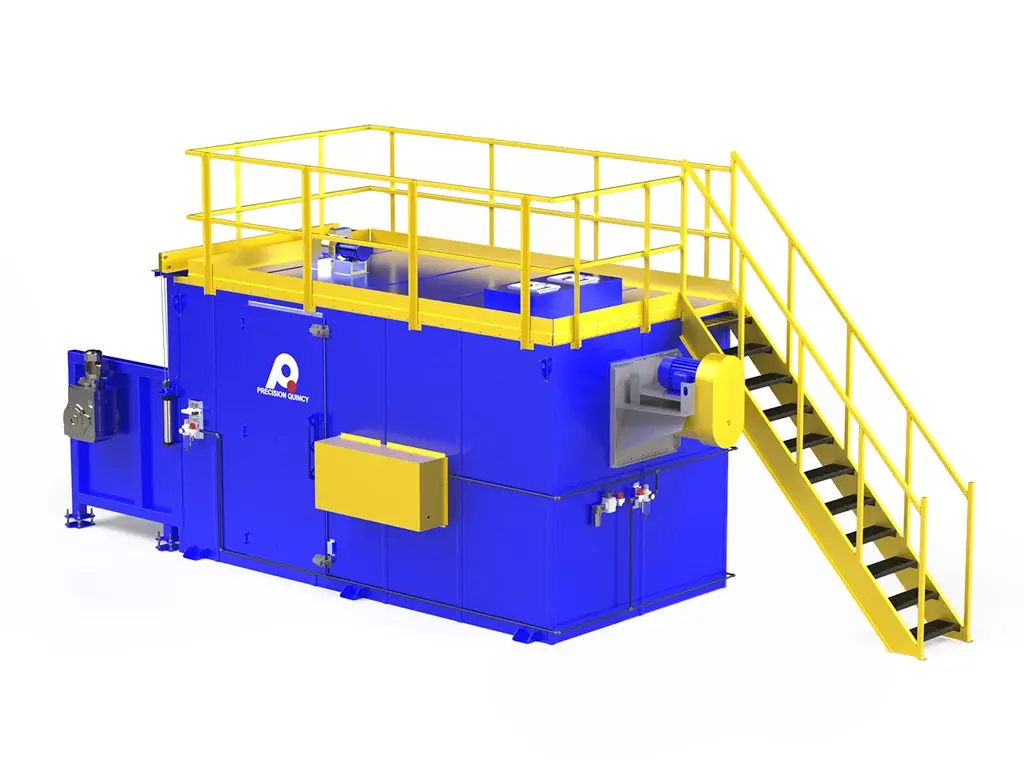
Natural Gas Heated Walk-In Composite Curing Oven for Large Steel COPV Composite Curing
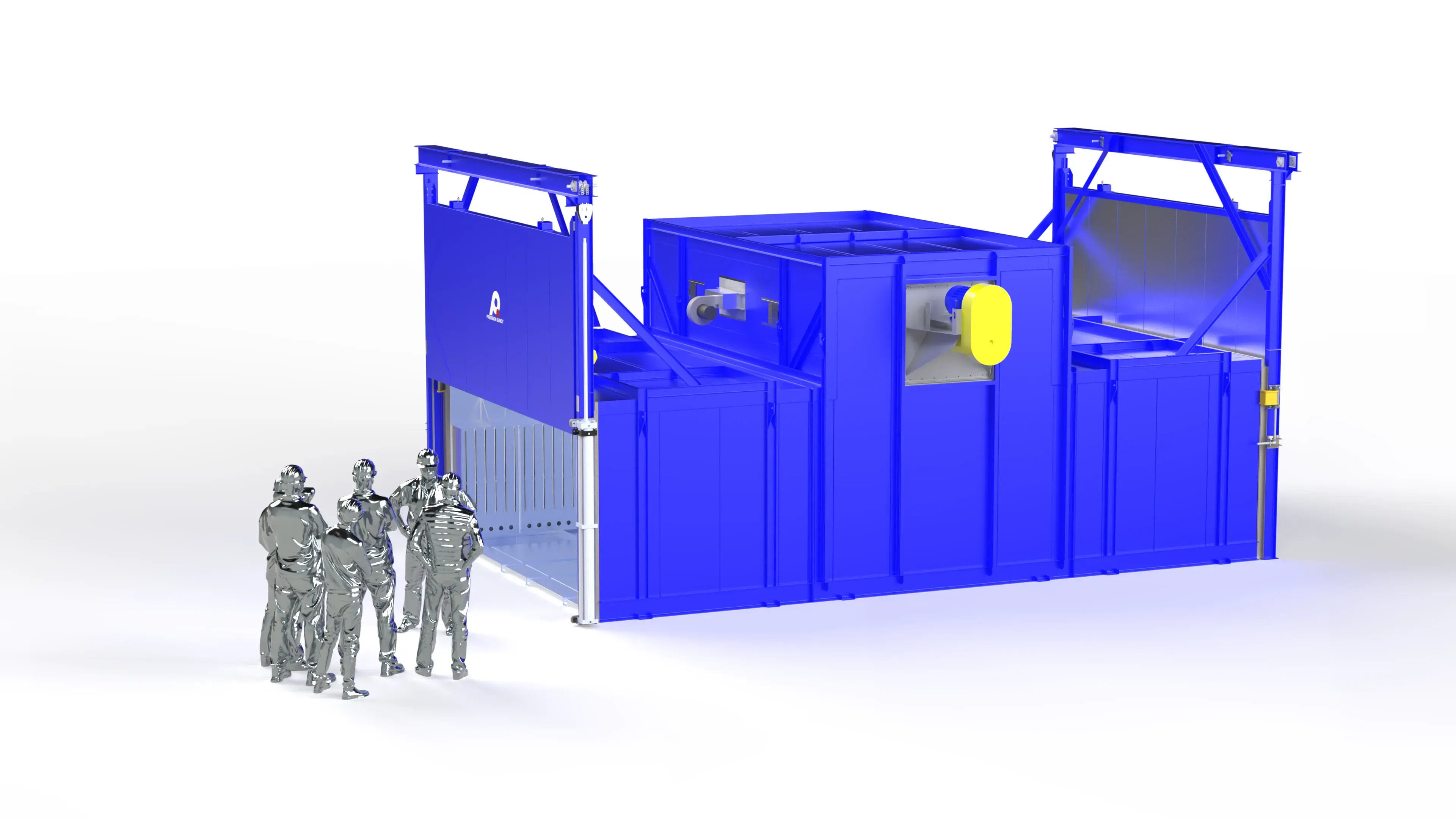
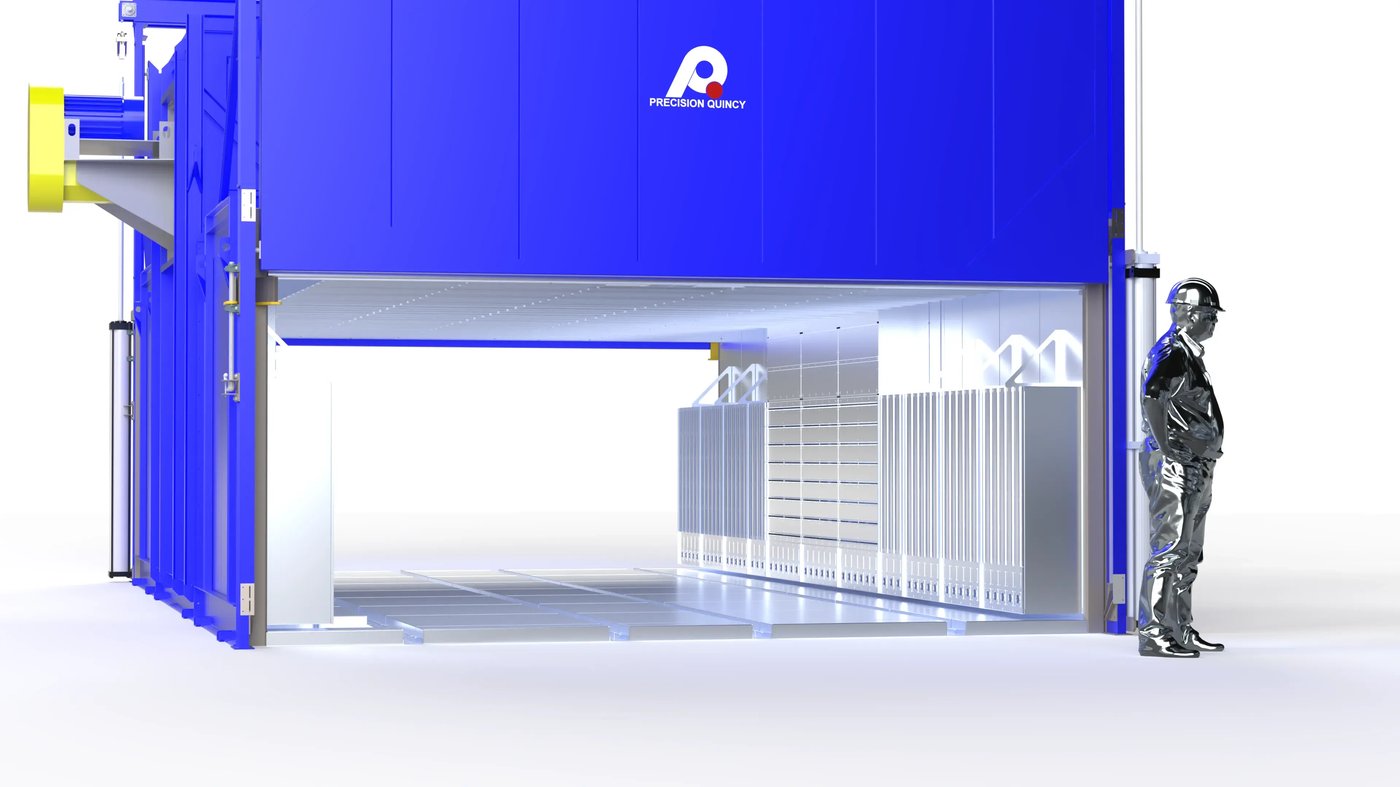
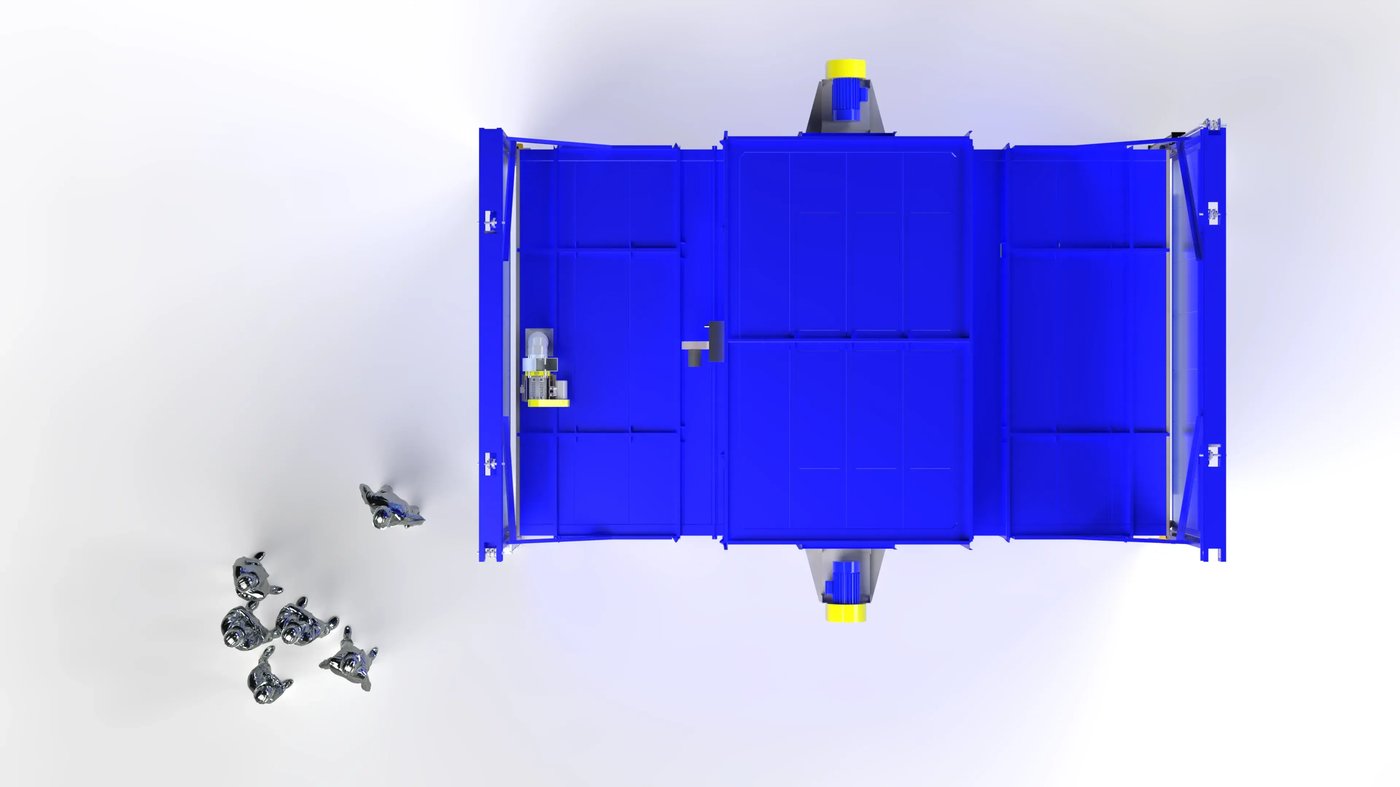
.webp?width=1400&name=5367%20CIMARRON%20(2).webp)
.webp?width=1400&name=5367%20CIMARRON%20(3).webp)
.webp?width=1400&name=5367%20CIMARRON%20(4).webp)
.webp?width=1400&name=5367%20CIMARRON%20(5).webp)
Overview
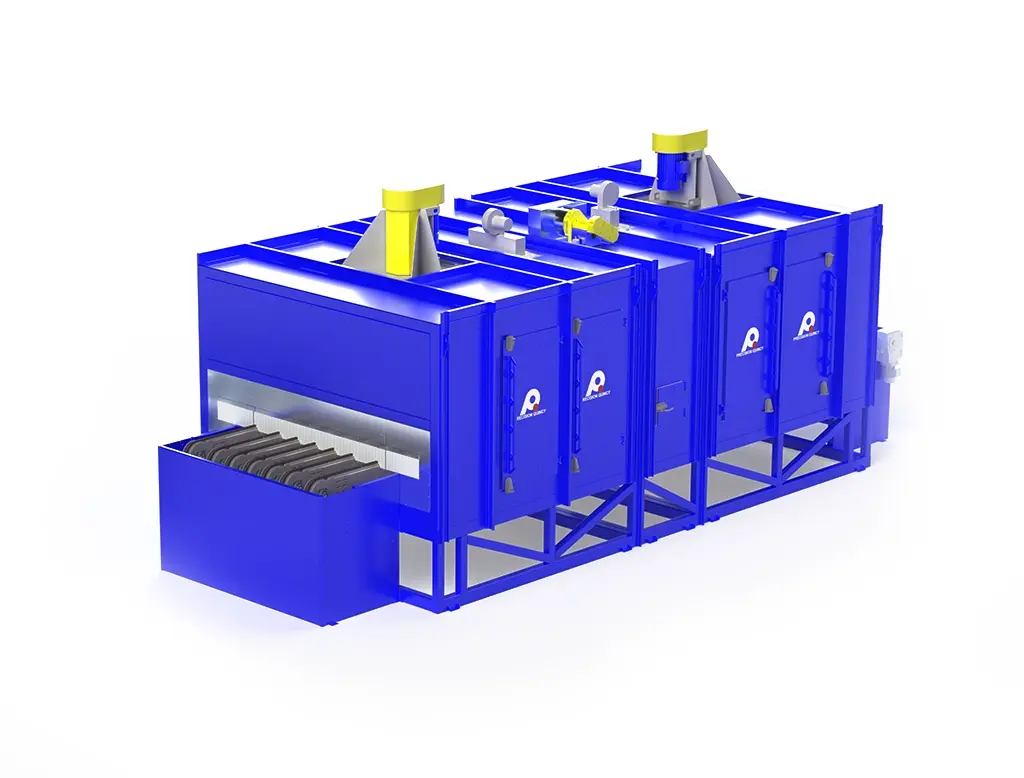
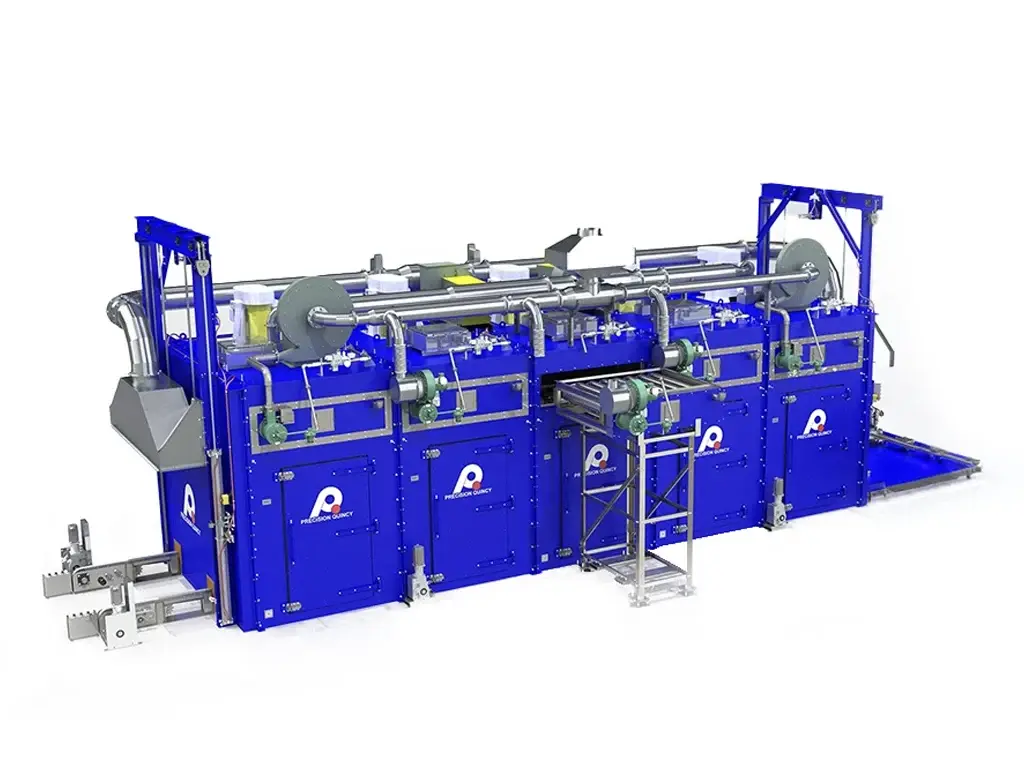
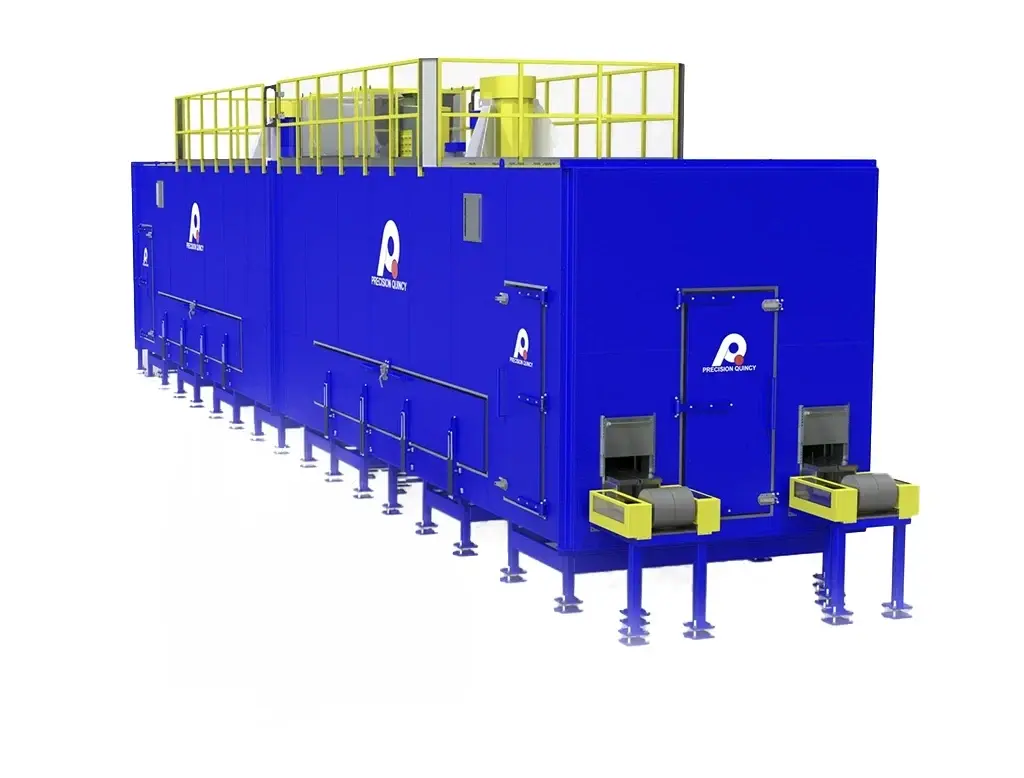
A natural-gas-heated walk-in batch oven was engineered for curing large steel composite overwrapped pressure vessels (COPVs) and other long tubular composite structures. The equipment supports a composite curing application requiring a large pass-through work chamber, repeatable airflow delivery, and Class A safety architecture suited for solvent-bearing composite processing. These COPVs serve applications including natural gas storage, aerospace, aviation, drone, and marine service.
The oven was built around a 144 in W × 300 in D × 72 in H work chamber designed for an operating temperature of 230°F, a maximum temperature of 375°F, and required workroom uniformity of ±5°F at 230°F. To deliver that performance, a top-mounted heat chamber was used with an Access Combustion LP-18 burner rated at approximately 1,400,000 BTU/hr and two New York Blower 338 PLR plug fans delivering approximately 45,000 CFM total at 2.5 in. w.c. through a combination horizontal-vertical airflow pattern.
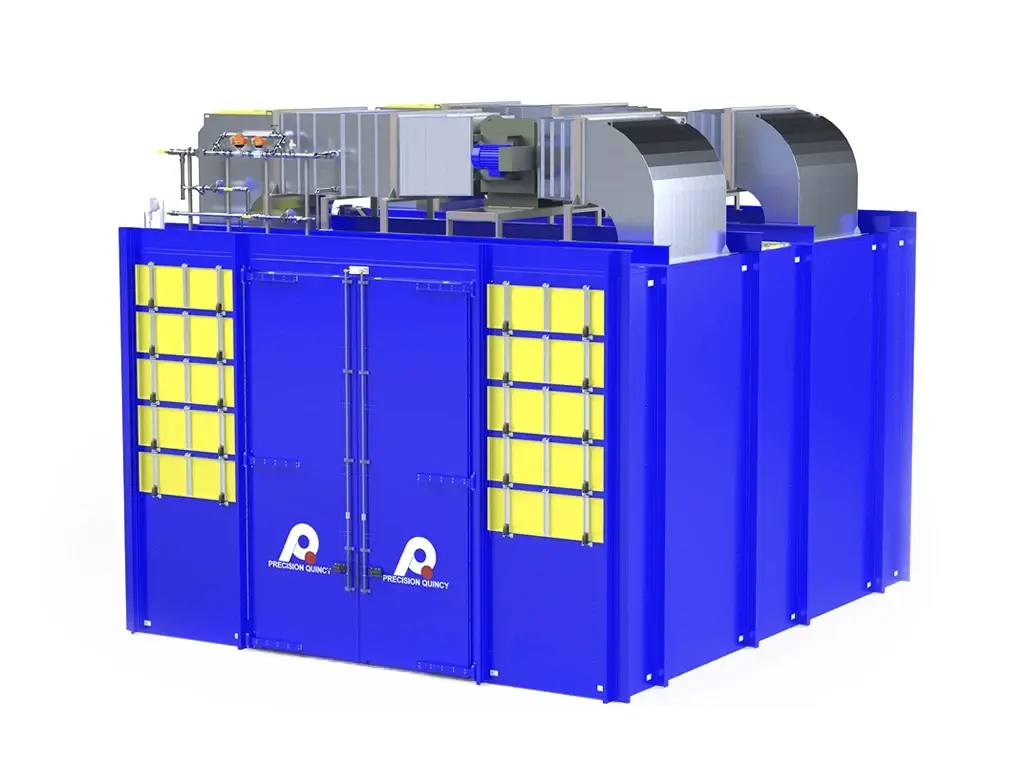
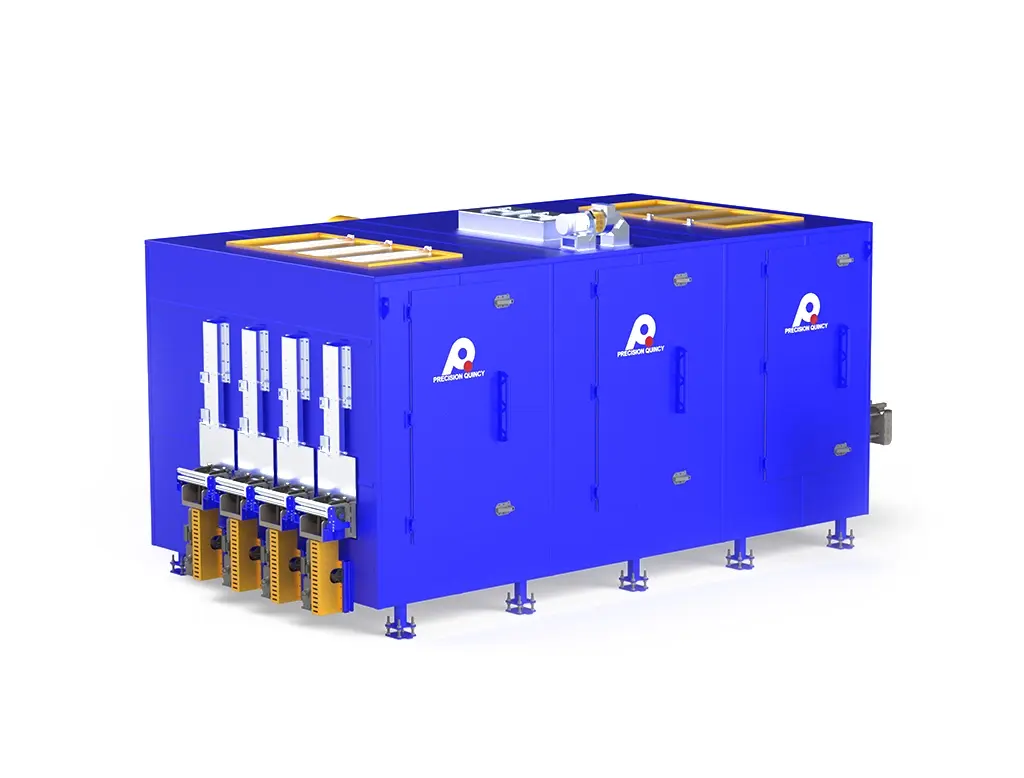
The equipment is configured as an NFPA 86 Class A oven with a PQ15 exhauster delivering approximately 1,098 CFM, a WATLOW F4T ramp/soak controller with data acquisition, and a NEMA 1 UL 508A open industrial control panel. The shell uses 4-inch-thick insulated panel construction with 4 inches of 6 lb density mineral wool, a structural steel base and frame, aluminized steel interior, and PQ Blue exterior. The design also includes powered vertical lift doors on both ends, an insulated floor with guide tracks, and a three-section shipment strategy for field installation.
The equipment was developed for a composite manufacturing application requiring the batch curing of large steel composite overwrapped pressure vessels (COPVs) and similar long tubular composite structures.
APPLICATION REQUIREMENT
- The equipment had to process large steel composite overwrapped pressure vessels (COPVs) and related tubular composite structures.
- The oven had to support a curing process requiring repeatable heat delivery across a large batch chamber.
- The application required equipment suited for long, large-format composite pressure-vessel loads rather than small packaged product.
- The finished COPV products support applications including natural gas storage, aerospace, aviation, drone, and marine service.
WORK CHAMBER / LOAD REQUIREMENT
- Required internal work chamber: 144 in W × 300 in D × 72 in H.
- Maximum product load basis: 2,500 lbs.
- The system had to support the loading and processing of long tubular composite pressure-vessel assemblies within a guided floor arrangement.
PROCESS REQUIREMENT
- The system had to support repeatable composite curing at a controlled operating temperature.
- A thermal process capable of holding a large work envelope to tight temperature tolerance was required.
- The process required airflow delivery that would maintain good heat transfer throughout the work area while accounting for large product geometry.
SAFETY REQUIREMENT
- The oven was required to be designed as an NFPA 86 Class A unit.
- The equipment required appropriate exhaust, combustion, and control architecture for safe natural-gas-fired operation in a composite curing environment.
UTILITY / SITE REQUIREMENT
- Required electrical service: 480V / 3PH / 60Hz.
- Required fuel: natural gas. Gas inlet pressure basis: 2 PSI.
- Natural gas flow basis: approximately 1,350–1,400 CFH.
- Air service inlet pressure: 80 PSI.
- Design elevation basis: less than 1,000 ft above sea level.
INSTALLATION / SHIPMENT REQUIREMENT
- The oven body was designed to ship in three sections for field reassembly.
- Shipping access basis included a 12 ft × 16 ft dock door.
-
The project required a large oven format while still remaining practical to transport and install.
These thermal process requirements were established from the need to cure large steel composite overwrapped pressure vessels (COPVs) in a controlled, high-airflow batch environment.
TEMPERATURE CAPABILITY
- Operating temperature: 230°F.
- Maximum operating temperature: 375°F.
- Required workroom temperature uniformity: ±5°F at 230°F operating temperature.
PROCESS BASIS
- The thermal process basis is composite curing.
- The application requires repeatable heat delivery across a large work envelope processing large steel composite overwrapped pressure vessels and similar tubular composite structures.
- The process required consistent airflow and temperature control around large product geometry occupying substantial chamber space.
HEAT INPUT REQUIREMENT
- Heat source: natural gas.
- Burner: Access Combustion LP-18. Heat input basis: approximately 1,400,000 BTU/hr.
- Natural gas inlet pressure basis: 2 PSI. Design elevation basis: less than 1,000 ft above sea level.
AIRFLOW DELIVERY REQUIREMENTS
- Required airflow style: combination horizontal-vertical airflow.
- Recirculation airflow basis: approximately 45,000 CFM total. Static pressure basis: 2.5 in. w.c.
- Air discharge concept included approximately 3,000 FPM supply slots with approximately 4,000 FPM bottom-row nozzles to force airflow below the load and into the center of the oven.
EXHAUST / VENTILATION BASIS
- Exhaust airflow basis: approximately 1,098 CFM.
- Exhaust fan basis: PQ15 exhauster delivering approximately 1,098 CFM at 1 in. w.c.
- VOC design basis: approximately 0.6 gallons per batch on an o-xylene basis.
- Oven classification basis: NFPA 86 Class A.
THERMAL INSTRUMENTATION / CONTROL BASIS
- Primary temperature controller: WATLOW F4T ramp/soak controller.
- Work area sensing thermocouple type: Type J.
- The system includes work-area temperature control with additional overtemperature protection for the work area and combustion chamber.
To deliver the thermal process requirements, the following equipment concept and architecture was developed for this composite curing application.
OVERALL CONCEPT
- One natural-gas-heated walk-in batch oven designed for curing large steel composite overwrapped pressure vessels (COPVs) and similar tubular composite structures.
- The design uses a top-mounted heat chamber and a pass-through vertical-lift-door arrangement.
HEATING ARCHITECTURE
- Heat source: natural gas. Burner: Access Combustion LP-18. Heat input basis: approximately 1,400,000 BTU/hr.
- Burner control valve actuator: Siemens SQM41.25.
- Gas train arrangement: NFPA 86 gas train with double blocking valves and proof of closure. Gas inlet pressure basis: 2 PSI.
AIRFLOW / RECIRCULATION ARCHITECTURE
- Airflow pattern: combination horizontal-vertical airflow.
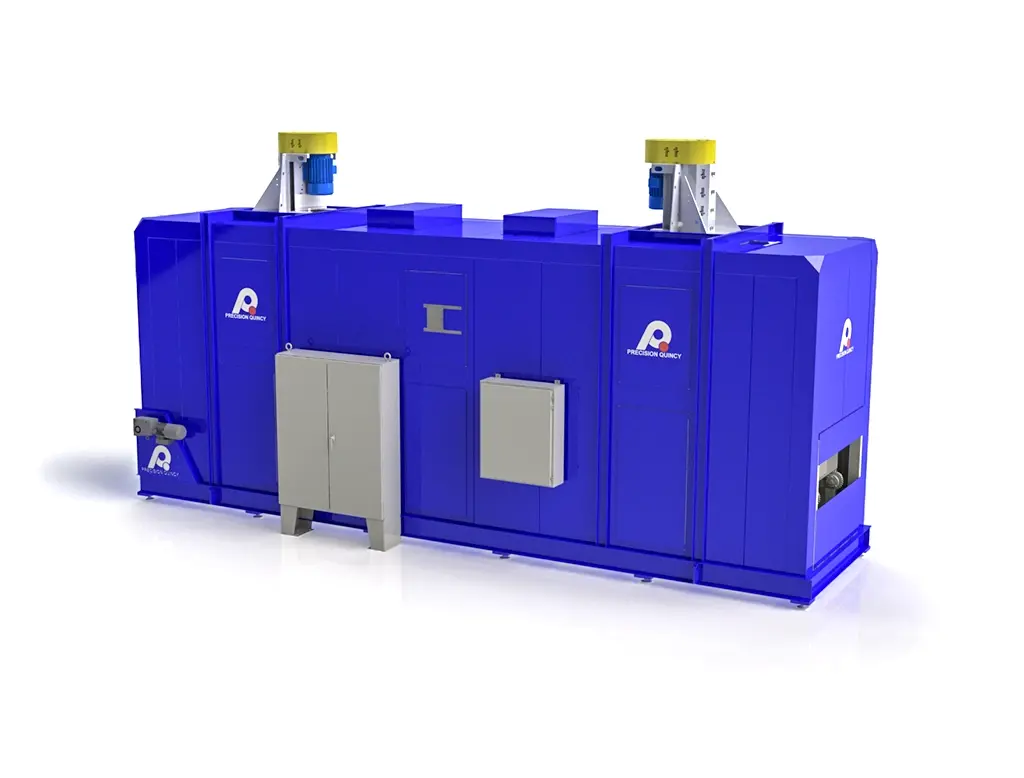
- Recirculation fans: (2) New York Blower 338 PLR plug fans delivering approximately 45,000 CFM total at 2.5 in. w.c.; (2) 20 HP motors.
- Supply duct system uses 3,000 FPM slots with 4,000 FPM bottom-row nozzles to drive airflow below the load and into the center of the work area.
- Exhaust fan: PQ15 exhauster delivering approximately 1,098 CFM at 1 in. w.c.; 1 HP motor.
- The design includes fresh-air dampers, an exhaust damper, and airflow proving on process-critical fans.
CHAMBER / CONSTRUCTION ARCHITECTURE
- Internal work chamber: 144 in W × 300 in D × 72 in H.
- Construction style: tongue-and-groove insulated panel construction with structural steel reinforcement and channel base frame.
- Wall system thickness: 4 inches. Insulation: 4 inches of 6 lb density mineral wool. Interior material: aluminized steel. Exterior finish: PQ Blue.
- Floor system: insulated floor with cart guide tracks and plate floor surface.
- The oven includes explosion relief plugs in the shell design.
DOOR / ACCESS ARCHITECTURE
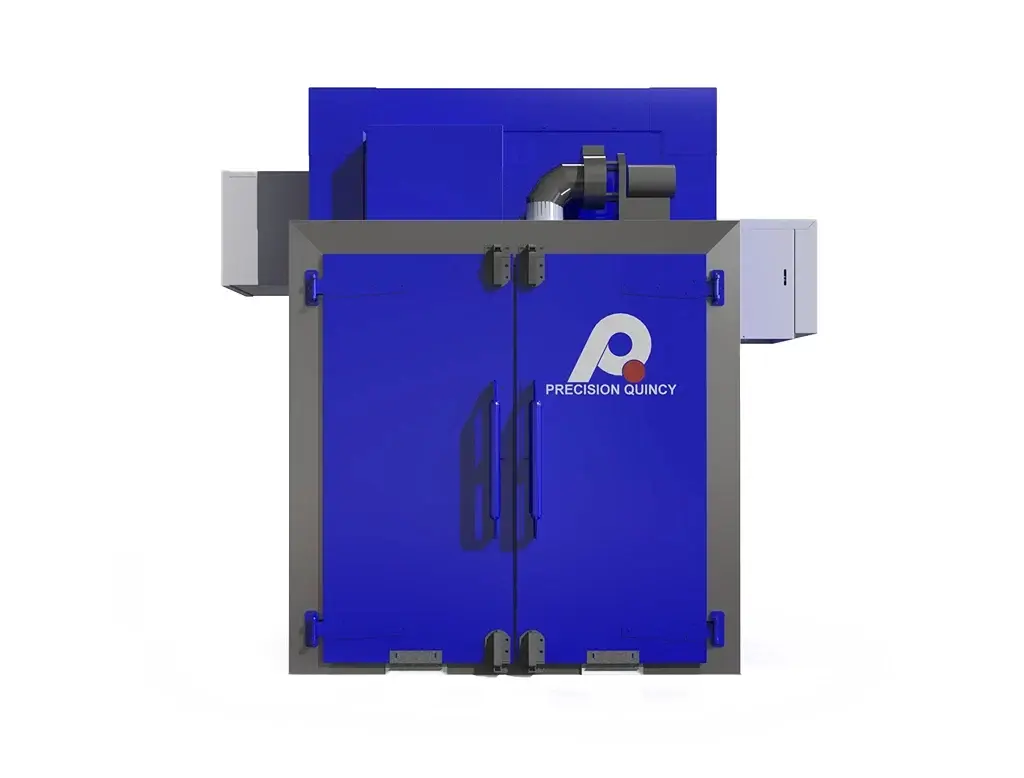
- Door style: powered vertical lift door on both ends of oven. Door thickness: 4 inches.
- Doors include manual safety latches for personnel entry.
- Front and rear door functions are pneumatically actuated through dedicated raise/lower door controls.
CONTROLS ARCHITECTURE
- Primary temperature controller: WATLOW F4T ramp/soak controller with data acquisition.
- Work area thermocouple type: Type J.
- Control enclosure: oven-mounted NEMA 1 UL 508A open industrial control panel.
- The design includes work-area excess-temperature protection, combustion-chamber excess-temperature protection, flame safety, gas pressure switches, airflow switches, and burner fault indication/reset.
- Flame safety package: Karl Dungs MPA4112.
- The control package uses a controller-based architecture rather than a PLC-based system.
SHIPPING / INSTALLATION ARCHITECTURE
- The oven body was designed to ship in three sections. Top door mast sections are removable for shipping.
- Shipping and installation basis developed around a 12 ft × 16 ft dock access opening.
| OVEN CONFIGURATION | |
|---|---|
| Type | Natural-gas-heated walk-in batch oven |
| Quantity | 1 oven |
| Application | Curing large steel composite overwrapped pressure vessels (COPVs) and similar tubular composite structures |
| Internal Work Chamber | 144 in W × 300 in D × 72 in H |
| Heat Chamber Arrangement | Top-mounted heat chamber |
| Door Arrangement | Powered vertical lift doors on both ends |
| Shipment Style | Three-section shipment for field reassembly |
| THERMAL HEAT POWER SYSTEM | |
|---|---|
| Operating Temperature | 230°F |
| Maximum Operating Temperature | 375°F |
| Temperature Uniformity | ±5°F at 230°F |
| Heat Source | Natural gas |
| Burner | Access Combustion LP-18 |
| Burner Heat Input | Approx. 1,400,000 BTU/hr |
| Natural Gas Inlet Pressure | 2 PSI |
| Natural Gas Flow Basis | Approx. 1,350–1,400 CFH |
| Design Elevation | < 1,000 ft above sea level |
| RECIRCULATION / AIRFLOW SYSTEM | |
|---|---|
| Airflow Pattern | Combination horizontal-vertical airflow |
| Recirculation Fans | (2) New York Blower 338 PLR plug fans |
| Recirculation Airflow | Approx. 45,000 CFM total |
| Recirculation Static Pressure | 2.5 in. w.c. |
| Recirculation Fan Motors | (2) 20 HP |
| Supply Duct Discharge | Approx. 3,000 FPM slots |
| Lower Discharge Rows | Approx. 4,000 FPM nozzles |
| EXHAUST SYSTEM | |
|---|---|
| Exhaust Fan | PQ15 exhauster |
| Exhaust Airflow | Approx. 1,098 CFM |
| Exhaust Static Pressure | 1 in. w.c. |
| Exhaust Fan Motor | 1 HP |
| Ventilation Basis | NFPA 86 Class A / VOC ventilation |
| CONSTRUCTION MATERIALS / SHELL SYSTEM | |
|---|---|
| Shell Style | Tongue-and-groove insulated panel construction with structural steel reinforcement |
| Wall Thickness | 4 in |
| Insulation | 4 in of 6 lb density mineral wool |
| Interior Material | Aluminized steel |
| Exterior Finish | PQ Blue |
| Floor Feature | Insulated floor with cart guide tracks and plate floor surface |
| Door Style | 4 in powered vertical lift doors on both ends |
| SAFETY & COMPLIANCE | |
|---|---|
| Classification | NFPA 86 Class A |
| VOC Design Basis | Approx. 0.6 gal/batch (o-xylene basis) |
| Flame Safety | Karl Dungs MPA4112 |
| Gas Train | Double blocking valves with proof of closure |
| Airflow Proving | Provided on process-critical fans |
| Applicable Standards | NFPA 79, NFPA 86, UL 508A |
| CONTROLS & ELECTRICAL | |
|---|---|
| Temperature Controller | WATLOW F4T ramp/soak controller |
| Data Acquisition | Non-encrypted |
| Thermocouples | Type J |
| High-Limit Protection | Work area and combustion chamber excess-temperature protection |
| Control Cabinet | Oven-mounted NEMA 1 UL 508A open industrial control panel |
| Burner Actuator | Siemens SQM41.25 |
| Primary Power | 480V / 3PH / 60Hz |
| Full Load Amperage | 59.8 A FLA |
| SCCR | 30,000 A |
| Compressed Air Requirement | 80 PSI inlet pressure |
| PROCESS SUMMARY | |
|---|---|
| Product | Large steel composite overwrapped pressure vessels (COPVs) / tubular composite structures |
| Market / Application | Composite curing for natural gas storage, aerospace, aviation, drone, and marine COPV applications |
| Process Type | Batch curing in a Class A natural-gas-heated walk-in oven |
| Load Basis | Up to 2,500 lbs max product load |
| Key Verification Concept | Repeatable control of temperature, airflow, combustion, VOC handling, and safe operating limits across a large work envelope |