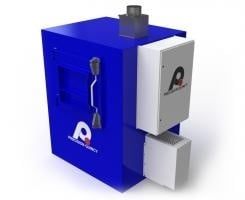
Industrial Batch Ovens
From compact cabinet ovens to full-scale walk-in systems — engineered for your process, built for production.
Two Categories of Batch Oven
Precision Quincy batch ovens fall into two main categories. Your workpiece size, loading method, and process requirements determine which one fits.
Walk-In Ovens
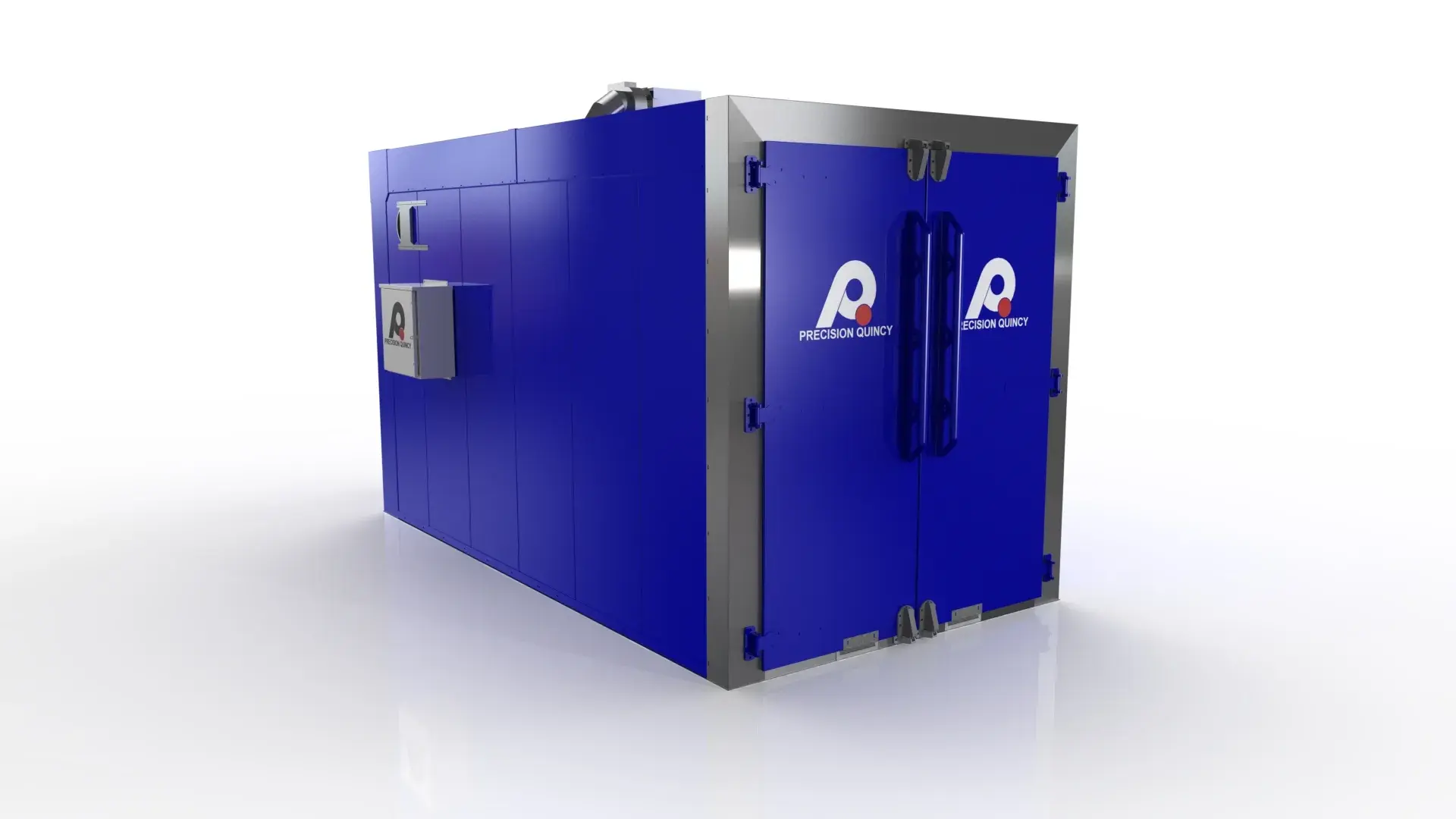
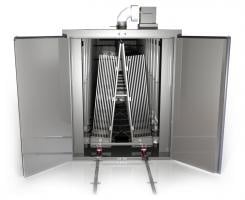
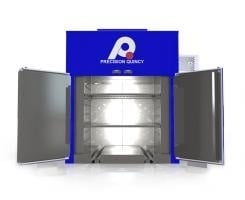
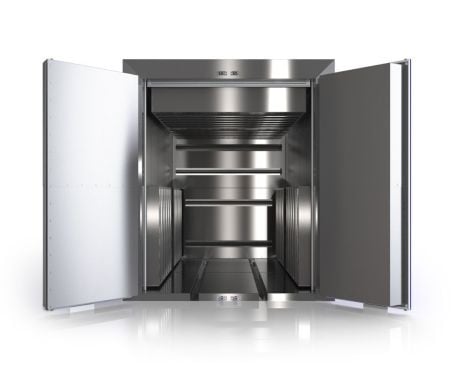
Configurable systems built around your process requirements — not fixed model numbers. Product is typically loaded by forklift, cart, pallet jack, or other handling equipment. Includes the HD Series heavy-duty walk-in family.
- 36"–240"+ interiors
- Up to 1500°F
- Gas or Electric
- Engineered to Order
- HD Series
Cabinet Ovens
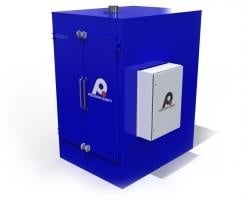
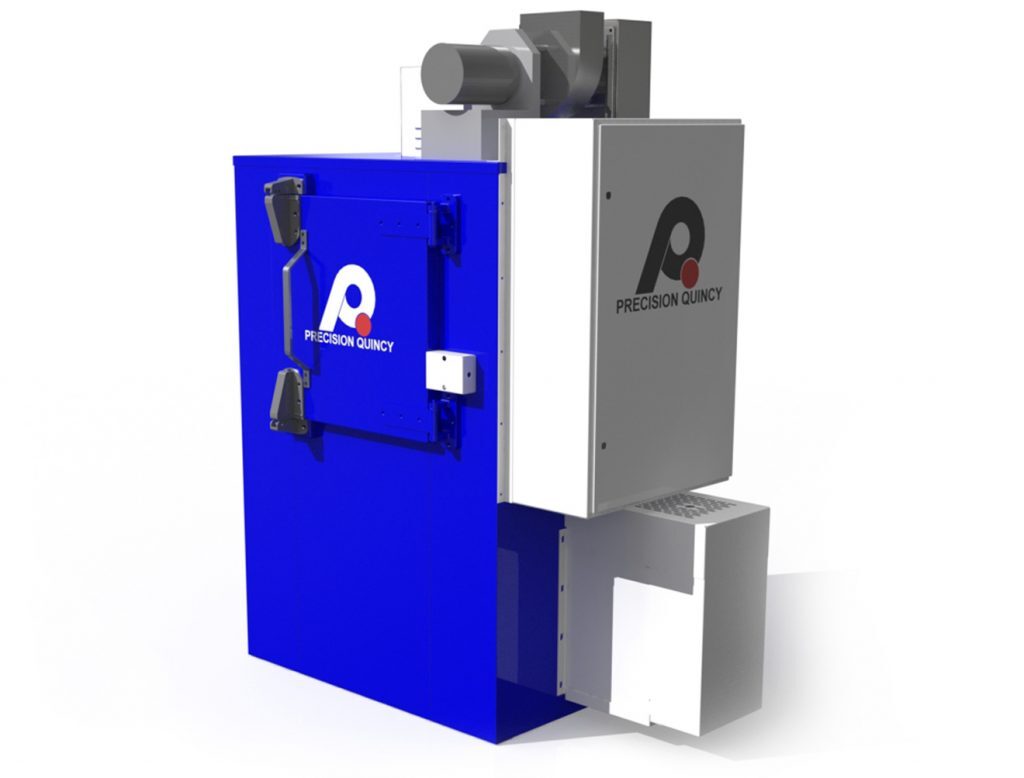
Defined-platform product families with standard chamber sizes, electric heat, and full horizontal airflow. Product is typically loaded by hand or with a shelf/rack. Two families: the compact X2 Series and the larger 40 Series.
- 20"–60" chambers
- 350°–1250°F
- Electric
- X2 Series
- Class A / B
- 40 Series
Three Questions That Define Your Oven
Instead of decoding model numbers, start with the decisions that actually matter for your process.
What temperature do you need?
Your maximum process temperature determines insulation, heating package, and which product families are available.
How large is the work chamber?
Chamber size is driven by workpiece dimensions, loading method, and required clearance — not just product size.
Standard platform or engineered?
Standard platforms ship faster with proven configurations. Engineered systems are built around your exact process.
Category 1
Walk-In Ovens
Configurable systems built around your process requirements. Product is typically loaded by forklift, cart, pallet jack, or other handling equipment. Most walk-in ovens are engineered to order — think of them as configured systems, not fixed model numbers.
Understanding Walk-In Ovens
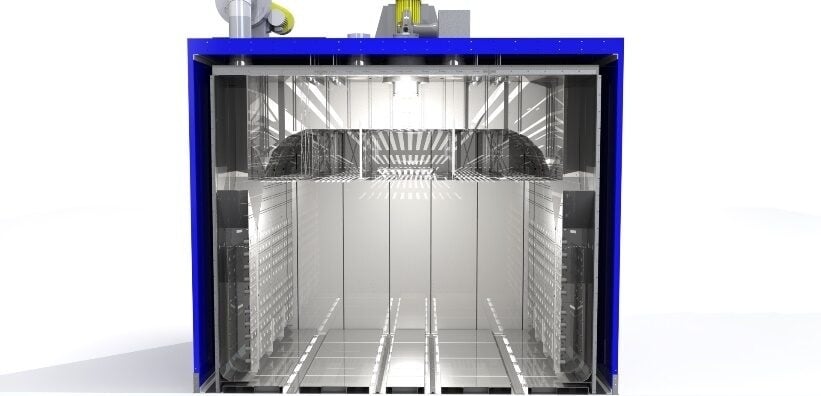
Walk-in ovens are often talked about as if they are standard products, but in practice, most industrial walk-in ovens are configurable systems built around process requirements. A better way to think about walk-in ovens is not as fixed model numbers, but as configured systems built from a set of architectural and performance choices.
Companion Guide
A Guide to Understanding Walk-In Ovens
Comprehensive reference covering shell construction, airflow strategies, air changes, sizing logic, loading considerations, uniformity, heat power, and the three-layer specification framework.
The Key Ingredients That Define a Walk-In Oven
Rather than showing millions of possible combinations, this overview helps you understand the main variables. Each walk-in oven is configured around your workpiece, thermal process, facility constraints, and performance expectations.
Temperature Range
From ~5°F above ambient up to 1500°F. Temperature drives insulation thickness, shell construction, and heat source selection.
Airflow Configuration
Horizontal-vertical, full horizontal, vertical up/down, alternating. Airflow pattern must be matched to product arrangement.
Shell Construction
Insulated panel, can-constructed, pin-style, or ceramic fiber module. Each has tradeoffs in thermal growth, structure, and serviceability.
Heat Source & Controls
Gas-fired or electric. Controls range from basic setpoint to ramp/soak recipes and cascade control for process-sensitive products.
Practical Dimensional Ranges
These ranges represent practical architectural capability — not a fixed catalog of stock models. Oven size should be driven first by the workpiece, required clearance, and loading method. Sizing & loading logic
Interior Widths
36–240+
inches
Interior Depths
36–240+
inches
Interior Heights
60–240
inches
Temperature Span
~Ambient–1500
°F
How to Think About Specifying a Walk-In Oven
A walk-in oven specification is better understood as three layers than as a single model number. Full specification framework
Customer Process Requirements
What is the workpiece? How is it loaded? What process takes place? What are the facility constraints, utility requirements, and production needs?
Thermal Process Requirements
Operating temperature or range, uniformity requirement, heating rate, airflow style and air change level, VOC/solvent handling if applicable.
Equipment Concept & Architecture
Shell thickness and construction type, heat chamber location, airflow configuration, controls package, heat source, serviceability, shipping, and installation layout.
Airflow Categories
Impingement, distribution & air changesPQ Product Family › Walk-In Ovens › HD Series
HD Series — Heavy-Duty Walk-In Ovens
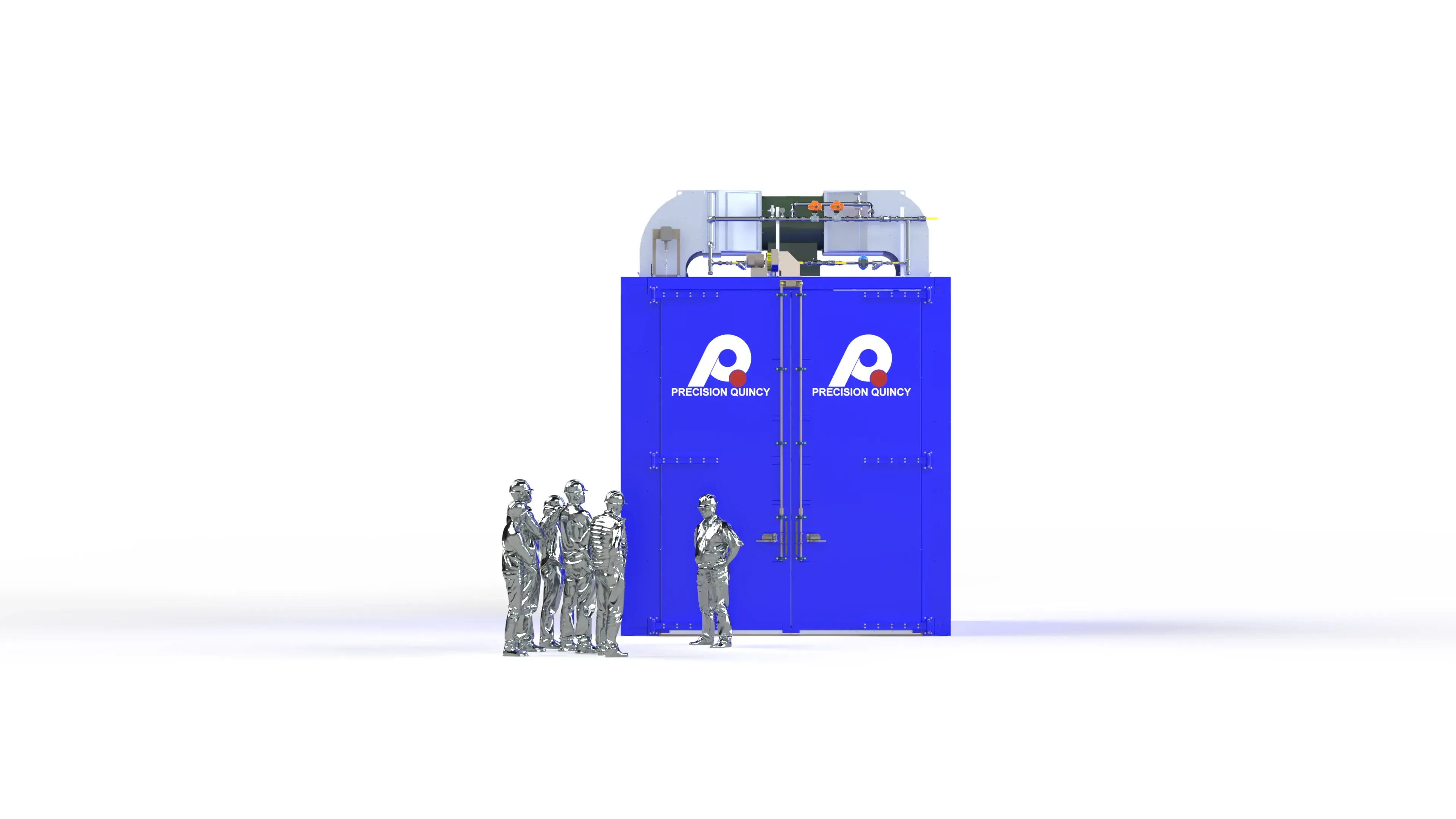
Precision Quincy's HD Series is an engineered-to-order walk-in oven family for applications up to 850°F. Organized by temperature tier and mechanical arrangement, with high airflow, exceptional uniformity, and heavy-duty construction.
Temperature Families
HD Series — full specifications, construction features & applicationsHD4
500°F max
4" insulated wall
HD5
650°F max
5" insulated wall
HD6
750°F max
6" insulated wall
HD7
850°F max
7" insulated wall
Two Mechanical Configurations
Back-Mount (B)
Rear-mounted heat chamber with full top return duct. Designed for facilities where ceiling height is the primary constraint.
Best fit when:
- Ceiling height is limited
- Longer footprint is acceptable
- Rear service access is preferred
- Low external height package is important
Top-Mount (T)
Overhead heat chamber with standard top return duct. Designed for facilities where floor space is the primary constraint.
Best fit when:
- Floor space is more constrained
- Vertical space is available
- Smaller overall footprint matters most
- Same process coverage within each temp class
Each HD oven is engineered around the process, load, airflow requirements, facility constraints, and installation conditions. Available gas-fired or electric, Class A or Class B, factory wired and tested before shipment.
Uniformity & performance Air changes & heat transfer Loading considerations
Category 2
Cabinet Ovens
Defined-platform product families with standard chamber sizes. Product is typically loaded by hand or with a shelf/rack system. Electric heat, full horizontal airflow, welded steel construction. Two product families: X2 Series and 40 Series.
Batch Ovens
Project 1
Project 2
Project 3
Projects 4
Projects 5
Projects 6
Cabinet Ovens › X2 Series
X2 Series — Compact Industrial Cabinet Ovens
8 standard chamber sizes from 20" to 50". Available in Standard (350–800°F) and HT (1000–1200°F) temperature tiers. Electric heat, full horizontal airflow, Class A or B.
Built for Repeatable Batch Processing
The X2 Series is a defined-platform product family — not a custom-engineered line. Select a standard chamber size and temperature class, and Precision Quincy matches the correct heating package, airflow system, and controls to your process.
If your application falls outside the published X2 framework, Precision Quincy can evaluate a more custom-engineered solution.
-

Space-saving design with full horizontal airflow
-
Welded steel construction
-
Factory wired and tested before shipment
-
Meets or exceeds NFPA 86, NFPA 70, OSHA, UL
-
Class A or Class B availability
-
X2 HT extends the platform to 1000°F and 1200°F
40 Series Standard Models
Common Applications Across All Batch Ovens
Two Categories of Batch Oven
Precision Quincy batch ovens fall into two main categories. Your workpiece size, loading method, and process requirements determine which one fits.
Natural Gas Heated Walk-In Oven for Industrial Repair and Heat Treat Processing
Outdoor Steam-Heated Batch Curing Oven for Defense-Industry Confidential Materials
Steam-Heated Batch Preheat Ovens for Defense-Industry Steel Components
Not sure which oven fits your process?
Our engineering team can help match the right oven family, temperature class, and configuration to your application.